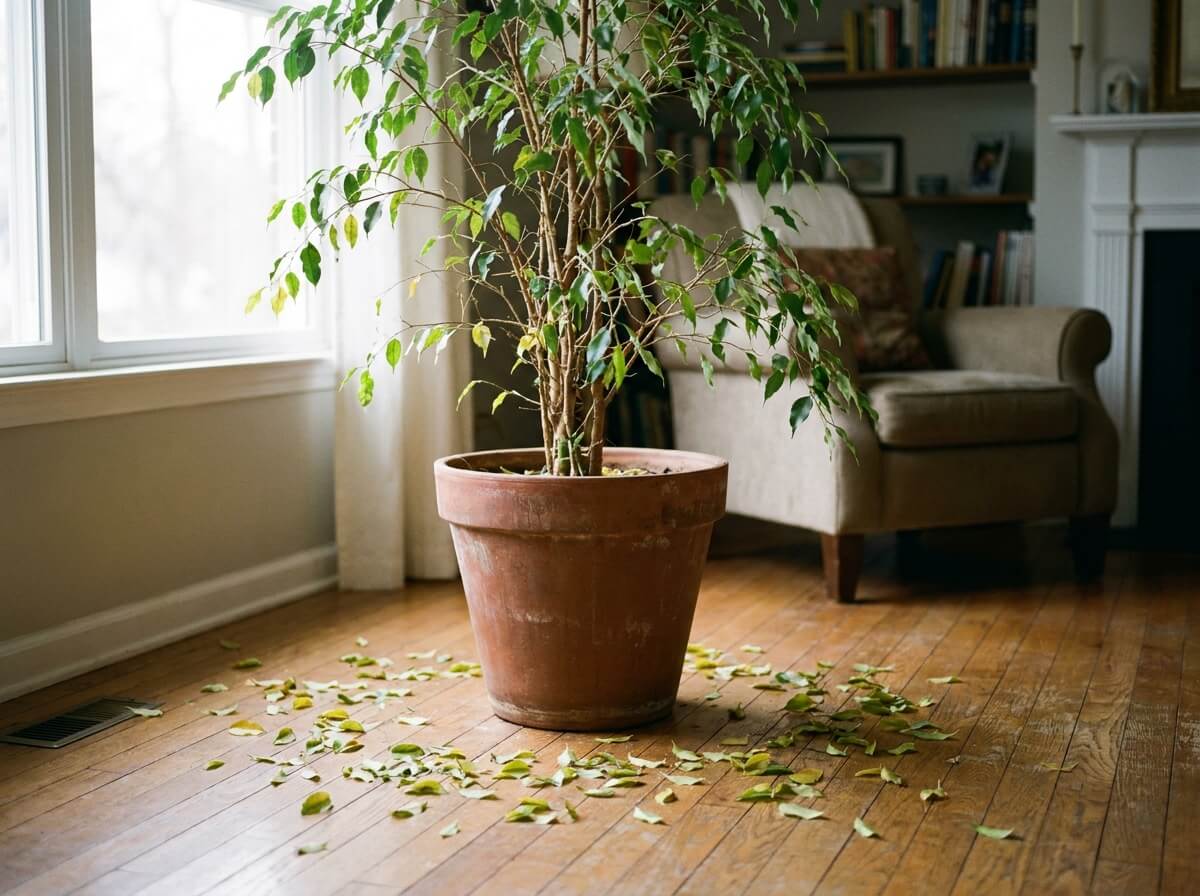
A weeping fig that sheds leaves is not necessarily ill. Dropping foliage is how this species answers any change in its conditions, and it is the single most common complaint about the plant.
The mistake that follows is almost always the same: the owner reaches for the watering can. In the majority of cases that makes matters worse, because too much water causes leaf drop far more often than too little.
Why a weeping fig drops leaves at all
The species builds each leaf for the exact conditions it experienced when that leaf formed — light intensity above all. Change those conditions and the existing foliage becomes unsuitable, so the plant discards it and grows a replacement set adapted to the new situation.
That has two consequences worth holding on to:
Leaf fall after a move is a normal adjustment, not a symptom. It stops on its own once the plant has re-equipped itself
Leaf fall with no change of conditions is a symptom, and the cause is nearly always at the roots
Telling the two apart is the whole diagnosis.
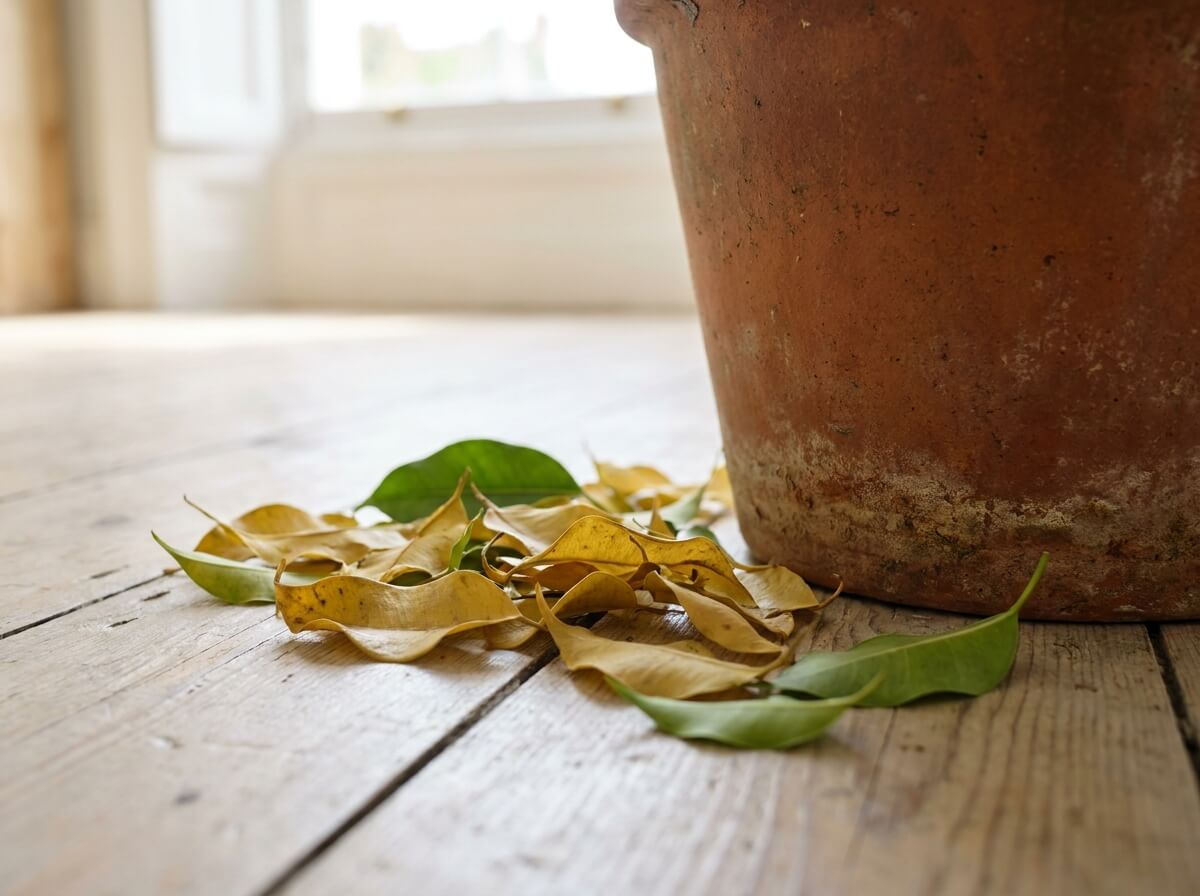
Yellow leaves falling one by one point to the roots. Green leaves falling suddenly point to a shock — a move, a draught, a change of room.
The seven causes, in order of frequency
A change of position. The commonest cause by a wide margin, including a move of only a metre or a quarter turn of the pot. Leaves fall for two to four weeks, then it settles
Overwatering. Roots starved of air rot, the plant cannot draw water, and the leaves yellow from the base of the plant upwards before dropping. The compost stays wet and may smell sour
Dry air. Radiators and heated rooms take humidity below what the plant tolerates. Leaf edges brown first, then whole leaves fall
A cold draught. A doorway, an open window, or foliage touching cold glass. Leaf fall is sudden and often one-sided, on the exposed face of the plant
Falling light levels. Between autumn and late winter the light in a room can drop by a factor of ten. The plant sheds accordingly — see our guide to caring for houseplants through winter
Repotting shock. Disturbed roots cannot supply the existing canopy. The fix is patience, not fertiliser — the method is set out in our ficus repotting walk-through
Pests.Red spider mite in dry heated air, and scale insects on the stems, both cause a slow steady leaf loss with sticky residue or fine webbing
How to tell which one it is
Four checks settle it in a couple of minutes:
Push a finger three centimetres into the compost. Wet means overwatering; bone dry throughout means the opposite. Damp is correct
Look at the colour of what fell. Yellow leaves mean a root problem. Green leaves that dropped while still firm mean shock or draught
Check whether the loss is even. One-sided loss points to a draught or a cold pane; loss all over points to water, light or a move
Turn a leaf over and look at a stem joint. Fine webbing means spider mite; small brown limpet-like bumps mean scale
What to do — and what to avoid
Settle on one position and leave the plant there. Bright indirect light, away from a door, a radiator and cold glass. The single most effective measure is to stop moving it
Water only when the top three centimetres are dry, then water thoroughly and empty the saucer. Never let the pot stand in water
Raise humidity in a heated room: group plants together, or stand the pot on a tray of moist gravel with the base clear of the water
Do not feed a plant that is dropping leaves. Fertiliser on damaged roots makes the injury worse. Wait for new growth
Do not prune bare branches straight away. Wood that looks dead often reshoots; scratch the bark with a fingernail and look for green underneath before cutting
How long recovery takes
After a move: leaf fall stops within two to four weeks, new leaves appear in six to eight
After overwatering: allow one to two months, and only if the roots were not lost. Reduce watering rather than compensating with feed
After a pest attack: leaf fall stops once the infestation does, and the canopy rebuilds over a season
A plant reduced to bare branches with firm green wood underneath is still viable. One with soft brown wood at the base is not
My ficus lost half its leaves after I moved it. Will it recover?
Almost certainly, provided you leave it alone. Leaf fall after a move stops within two to four weeks and new growth follows in six to eight. Do not water more, do not feed, and above all do not move it again.
Are the leaves yellow or green when they fall?
It is the most useful clue you have. Yellow leaves falling gradually indicate a root problem, usually too much water. Firm green leaves dropping suddenly indicate a shock: a move, a cold draught, or contact with cold glass.
Should I mist the leaves?
Misting raises humidity for a few minutes only and does little. A tray of moist gravel under the pot, or grouping several plants together, holds humidity around the foliage far more effectively and also discourages red spider mite.
My weeping fig is bare. Is it dead?
Not necessarily. Scratch the bark with a fingernail: green underneath means the wood is alive and will reshoot. Soft brown wood at the base means the roots have rotted, and the plant will not come back.
Does repotting stop leaf drop?
No, and it usually makes it worse by adding a second shock. Repot only when roots fill the pot and emerge from the drainage holes, and choose a moment when the plant is not already shedding.
Written by Gaspard Lorthiois | Loves helping out, especially when it comes to growing things. Worked in herbal medicine, runs a farm, and dabbles in tech. Master's degree and engineer.