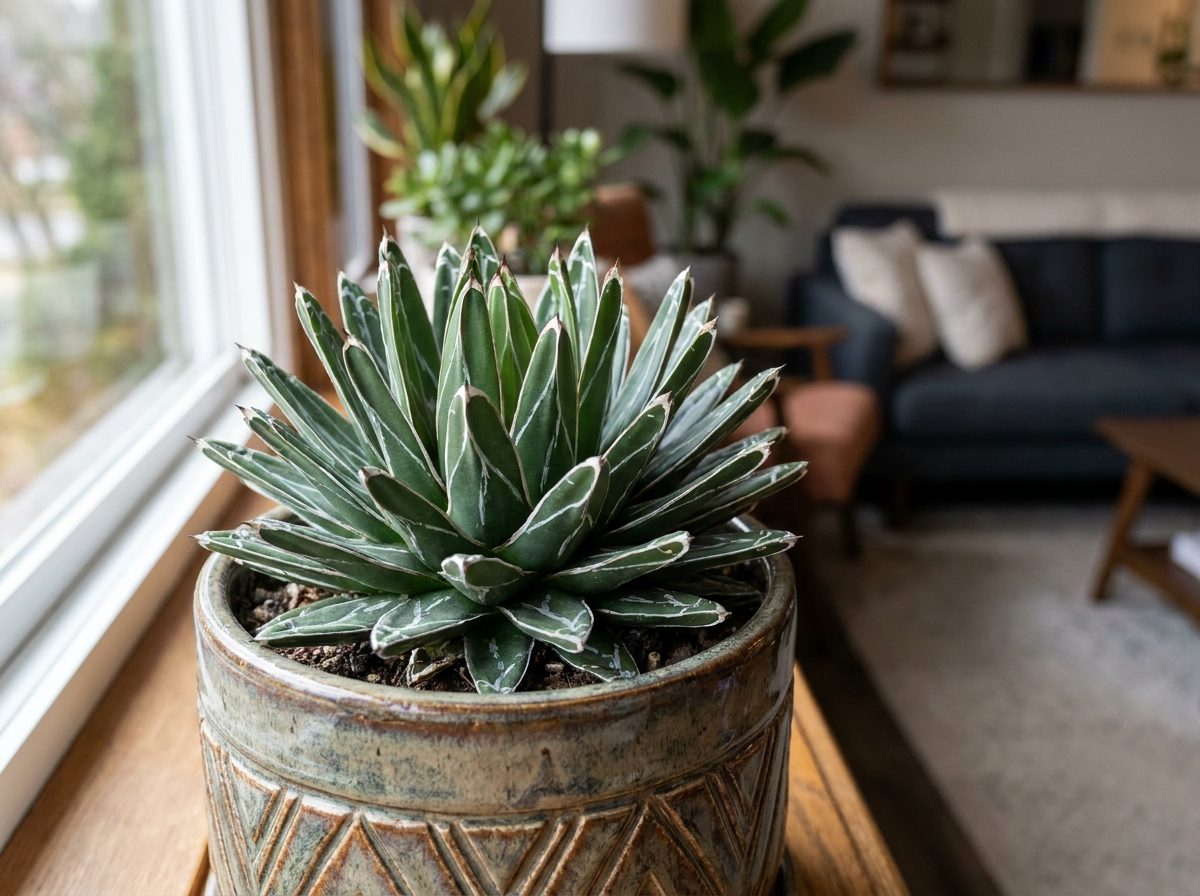
Few succulents look as deliberately designed as Agave victoriae-reginae, whose stiff, dark green leaves are pencilled with chalk-white lines and packed into an almost perfect geometric dome. It is a slow, compact and solitary plant, which makes it ideal for pots, gravel gardens and sunny raised beds where larger agaves would quickly overwhelm their neighbours. Each leaf ends in a hard black spine, so position it thoughtfully — well back from paths and seating.
Growing conditions
Give this agave the sunniest, most open spot you have — a minimum of six hours of direct sun keeps the rosette tight and the leaf markings crisp. In shade or under overhanging branches the leaves lengthen, the symmetry is lost and the plant becomes far more vulnerable to rot.
Drainage matters more than fertility. A gritty, mineral compost — roughly equal parts loam-based compost, horticultural grit and coarse sand — suits it perfectly, and a neutral to alkaline pH reflects the limestone soils of its native range. Heavy, water-retentive clay is the single most common cause of failure.
Cold itself is less of a problem than cold combined with wet. Plants kept dry at the root will often shrug off −8 to −10 °C, but the same plant sitting in a saturated winter border may collapse at freezing point, so in Britain, Ireland and much of northern Europe a sheltered rain-shadow position or a pot that can be moved under cover is the safer choice.
How to plant Agave
Plant between late April and early July, once the soil has warmed and roots can establish quickly in rising temperatures. Autumn planting leaves the roots inactive just as the wet season arrives.
Space plants 45–60 cm apart so each mature rosette keeps its outline and air circulates freely between them.
Set the plant so the base of the lowest leaves sits just above soil level — burying the crown invites rot.
Dig in plenty of coarse grit, and on heavy ground build a raised mound or berm 20–30 cm high rather than fighting the drainage.
Water in once to settle the roots, then leave it alone for two to three weeks before watering again.
This species is usually solitary and rarely offsets, so propagation is by seed, or by bulbils produced on the flowering spike of a mature plant.
Agave victoriae-reginae displayed as a houseplant in a home interior
Care through the seasons
Spring: Brush out fallen leaves and debris trapped between the leaves, where damp material can cause scarring. Begin watering as temperatures rise above about 12 °C, and apply a single weak, low-nitrogen feed to container plants. Move pots that have overwintered indoors back outside gradually to avoid scorch.
Summer: Water containers thoroughly when the compost has dried right through, perhaps every two to three weeks in hot weather; garden plants rarely need anything. Overfeeding and overwatering produce soft, oversized leaves that spoil the symmetry. Tidy any spent lower leaves by cutting them flush with a sharp knife.
Autumn: Taper watering from early September so the plant enters winter on the dry side. Top-dress the surface with fresh grit or gravel to keep the lower leaves clear of damp soil. This is the time to move tender container specimens into a cold greenhouse or porch.
Winter: Growth stops completely and the plant needs no water at all below about 7 °C. Keep rain off in-ground plants with a sheet of glass or an open-sided cloche, leaving the sides free for airflow.
Best varieties to grow
Several selections are grown, differing mainly in leaf width, markings and variegation.
Agave victoriae-reginae ‘Compacta’ — a smaller, denser rosette rarely exceeding 25 cm, excellent for shallow pans and troughs.
Agave victoriae-reginae ‘Golden Princess’ — narrow golden-yellow leaf margins set against dark green, slow and much sought after.
Agave victoriae-reginae ‘White Rhino’ — broad creamy-white marginal variegation; strikingly beautiful but needs slight shade at midday to avoid scorch.
Agave victoriae-reginae subsp. swobodae (often sold as ‘Porcupine’) — longer, narrower leaves giving a looser, spikier silhouette.
Pests, diseases and common problems
Crown and basal rot: Leaves yellow, soften and pull away easily, usually after a wet winter. Remove affected tissue with a clean blade, dust with sulphur, and replant into pure grit — prevention through drainage is the only reliable cure.
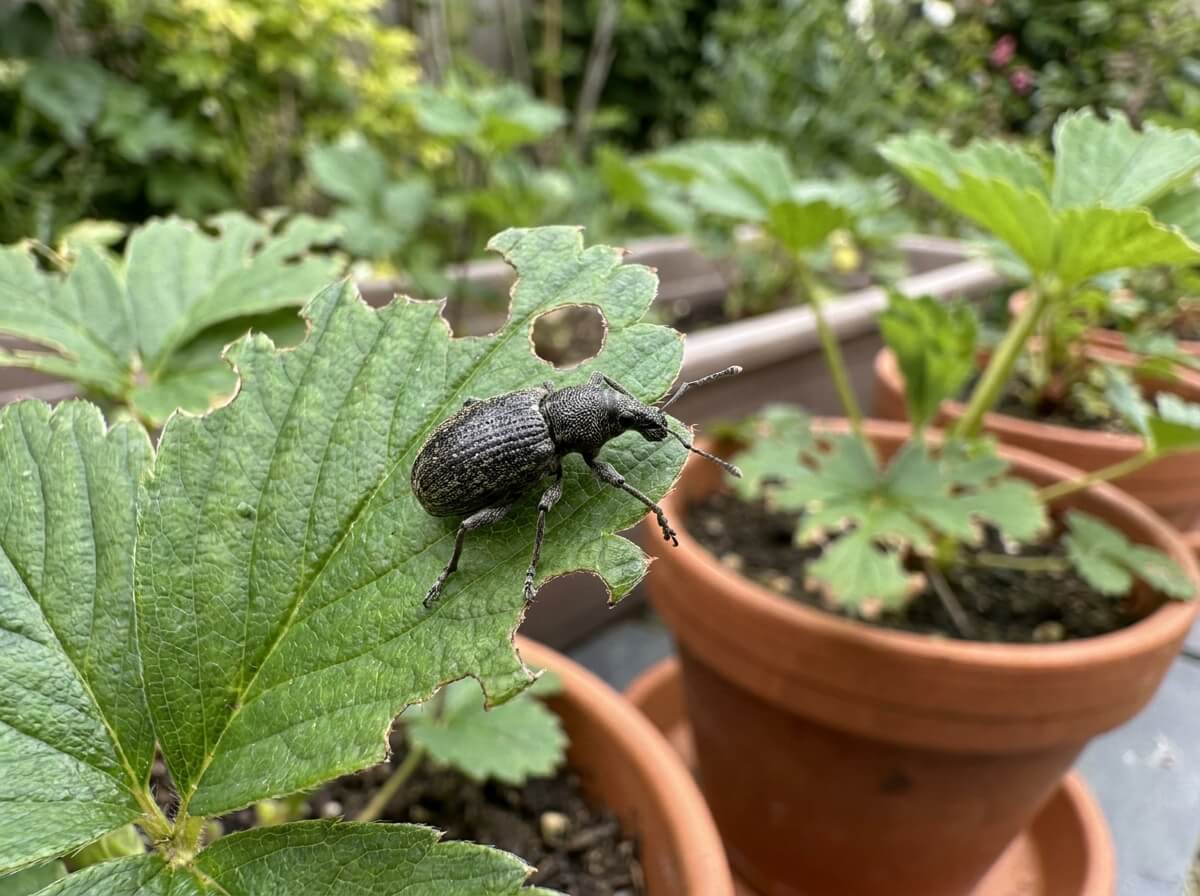
Agave snout weevil: The rosette collapses suddenly in summer as grubs tunnel into the core; more a problem in warm climates than cool ones. Lift and destroy affected plants promptly and avoid replanting agaves in the same spot.
Mealybugs and scale: White woolly patches or brown discs hide in the leaf axils and on roots. Dab with cotton wool soaked in surgical spirit, or drench with an insecticidal soap, repeating at ten-day intervals.