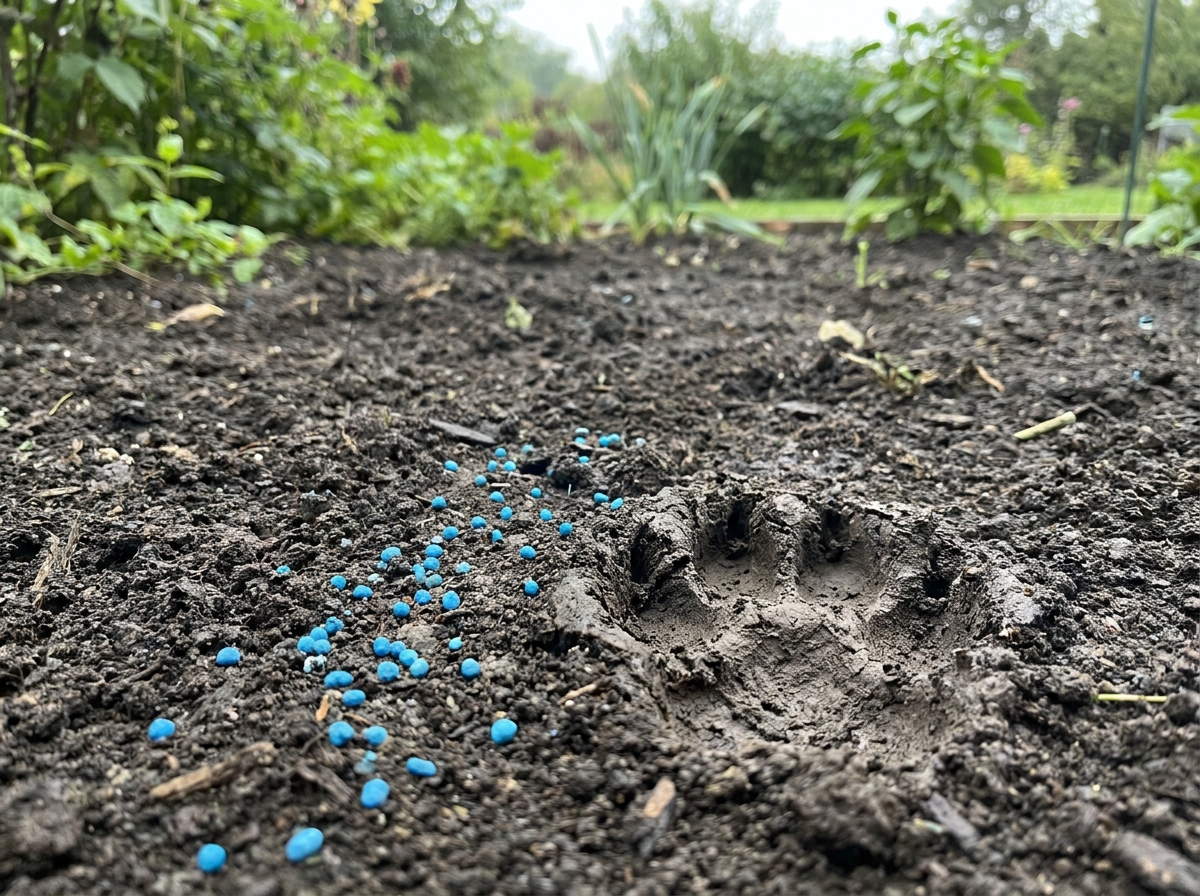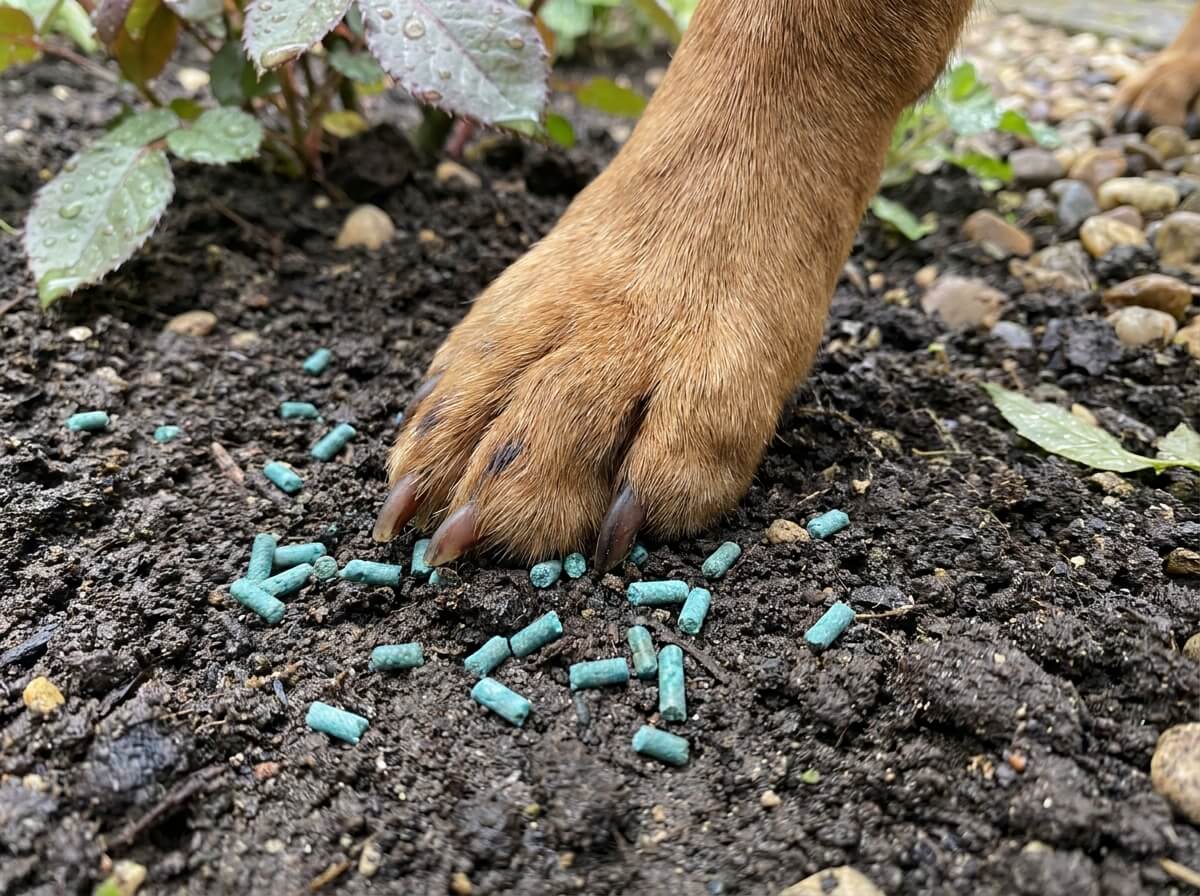
Slug bait is one of the most casually applied products in any summer garden — and one of the most dangerous things a dog can encounter on your property. Traditional pellets based on metaldehyde can cause fatal seizures in dogs after ingesting only a small amount. The risk is real, it is fast-moving, and it is entirely preventable. Here is exactly what the danger looks like and what to use instead.
The active ingredient in classic blue-green slug pellets is metaldehyde. It is a compound that disrupts the central nervous system with alarming speed. In dogs, even a relatively small dose — sometimes less than a teaspoon of pellets depending on body weight — can trigger muscle tremors, uncontrolled seizures. Without emergency veterinary treatment, death can occur within 24 hours.
The cruelty of the **issue** is that dogs are drawn to the pellets. Manufacturers bind the metaldehyde into a bran or cereal matrix. This **does wonders for** holding its shape outdoors. And that cereal base smells like food to a dog’s nose.
So, a curious dog working through a newly treated border is not behaving strangely — it is behaving exactly as a dog would.
According to the Veterinary Poisons Information Service, metaldehyde consistently ranks among the top causes of poisoning calls from domestic gardens in the UK each year. The ASPCA Animal Poison Control Center lists it similarly for North America. It happens in **proper** gardens, every summer.
When metaldehyde was banned for outdoor use in the UK in 2022, iron phosphate products rushed in to fill the gap. These were marketed heavily as wildlife-friendly and safe around pets. The thing is, the reality is **a bit dodgy**.
Pure iron phosphate at the concentrations used in slug bait is generally low-risk. But several commercial formulations include EDTA (ethylenediaminetetraacetic acid) as a stabilising agent. And EDTA significantly increases iron phosphate’s toxicity in mammals. The RHS advises caution with any pelleted slug product around pets and wildlife, regardless of the active ingredient on the label.
Check the full ingredient list, not just the front-of-pack claim. If EDTA appears anywhere — skip it.
Effective slug control without any pellets is entirely achievable. The options that genuinely work:
None of these require you to keep your dog away from treated areas. That alone makes them worth the switch.
Speed here is **non-negotiable**; more than with almost any other garden poison. Symptoms appear within 30 to 60 minutes of ingestion. They escalate fast.
Watch for:
Do not wait to see whether symptoms worsen. Call your vet or emergency animal poison line immediately. Tell them what the dog may have eaten. Get moving.
A dog that stops convulsing after treatment may still face liver damage in the days following. A follow-up check at 72 hours is not optional.
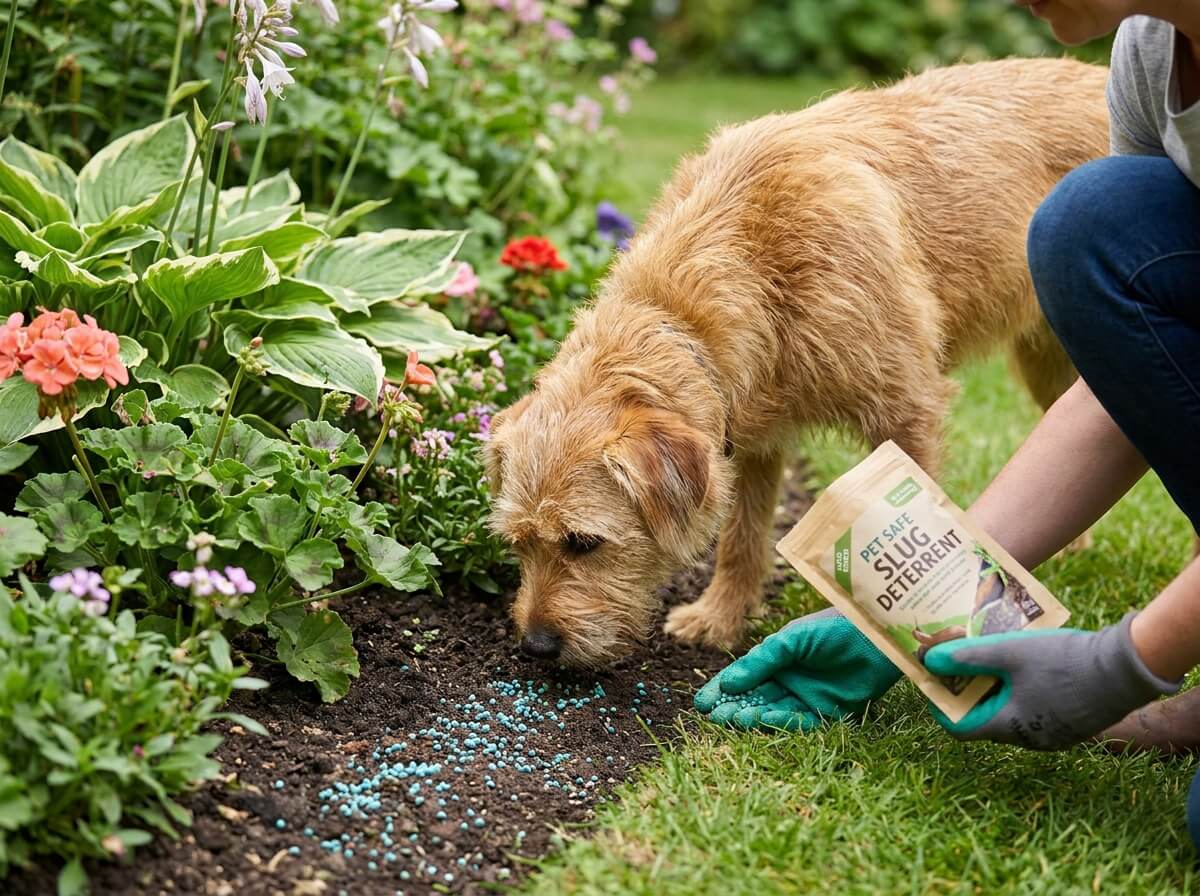
Smart tip: Check your shed for old metaldehyde stock — even if you switched products, leftover pellets from previous seasons are still lethal.
Metaldehyde was banned for outdoor use in the UK in 2022. It remains legal in many US states, Canada, Australia, and South Africa. Always check local regulations before purchasing any slug product.
The toxic dose of metaldehyde for dogs starts at around 100mg per kilogram of body weight. However, effects can appear at lower doses depending on the individual animal. A small dog eating a scattering of pellets from a single treated border is at genuine risk.
Yes. Hedgehogs and thrushes eat slugs directly. And a slug that has ingested metaldehyde carries residual toxin.
Metaldehyde poisoning in hedgehogs is well-documented. It contributes significantly to population decline.
Immediately, wearing gloves, **pull off** as many pellets as possible. Dispose of them in sealed household waste, not compost. Water the area thoroughly to **properly dilute** any residue in the soil surface. Then, keep dogs away from that border for at least 48 hours.