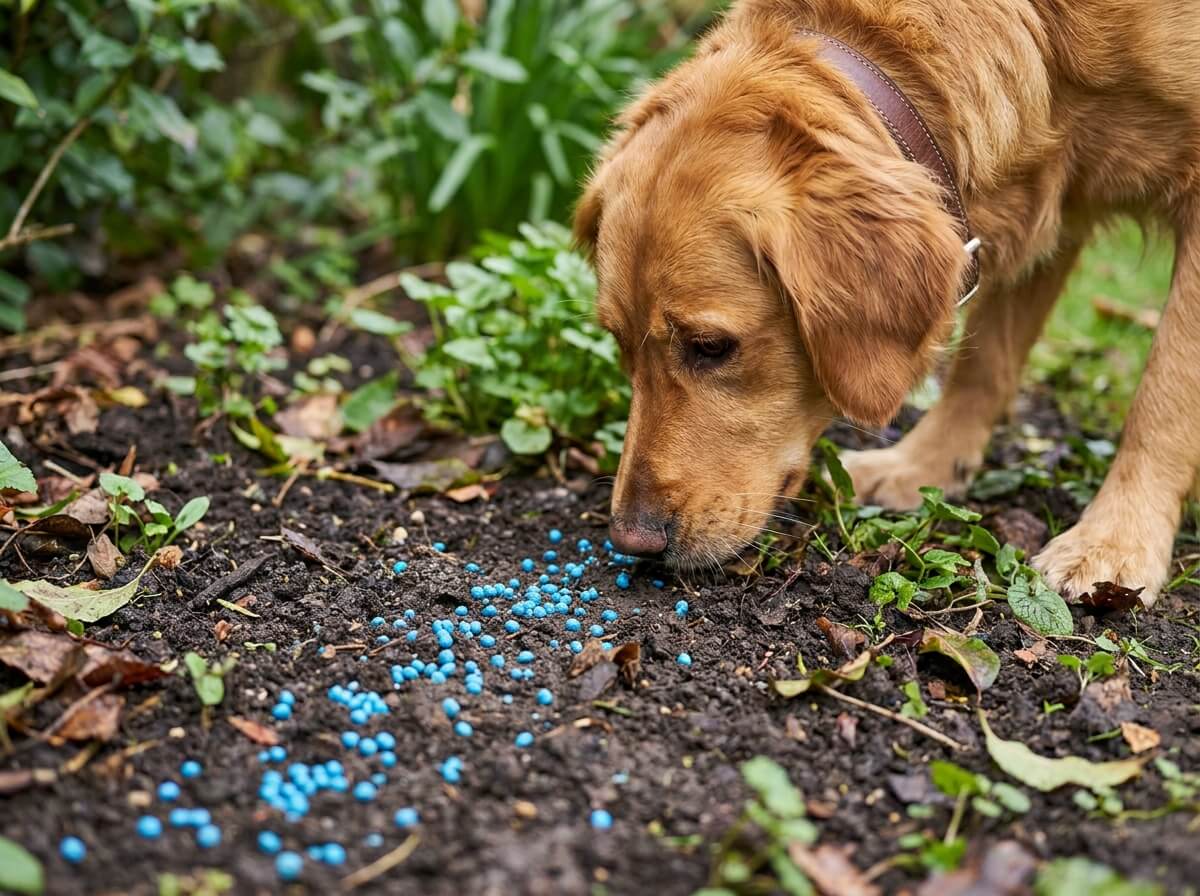
Slug pellets are scattered in millions of gardens every summer — and most dog owners do not give them a second thought. They absolutely should. Metaldehyde-based slug bait is acutely toxic to dogs. It is fast-acting, and frequently fatal if treatment is delayed. The pellets are designed to attract molluscs, but the cereal binders that make them irresistible to slugs make them equally appealing to dogs. This is a properly dodgy situation.
Metaldehyde is the active compound in most traditional blue slug pellets. It disrupts the central nervous system with brutal speed. Symptoms can appear within 30 minutes of ingestion.
The issue is not just toxicity. It is that dogs actively seek these pellets out. So, they look like a tasty treat.
The pellets are manufactured with grain-based fillers — wheat, rice, bran — that bind the active ingredient and give the bait its shape. To a dog, that is not poison. That is a snack. Dogs frequently consume entire packs left unattended in sheds or garages. You cannot let your guard down here. It is not quite right how these things are designed for safety.
Methiocarb pellets, another older formulation, are even more toxic. They have been phased out by the RHS due to wildlife and pet risks.
Fast. That is the word that matters here. Within 30 to 60 minutes, your dog will show muscle tremors. This is a fine, whole-body shaking that owners sometimes mistake for cold or excitement. Then comes incoordination. But, within 2 to 4 hours, full tonic-clonic seizures begin. Untreated, hyperthermia sets in as the body temperature rockets from uncontrolled muscle activity. Organ failure follows quickly. The Veterinary Poisons Information Service (VPIS) consistently lists metaldehyde as one of the leading causes of fatal poisoning in UK dogs. A dog treated within 1 hour of ingestion has a far better prognosis than one brought in after symptoms have progressed. Do not wait to see whether it gets worse.
Call your vet or an emergency animal hospital immediately. Tell them you suspect metaldehyde ingestion, when it happened, and roughly how much the dog may have eaten. Do not induce vomiting at home unless a vet specifically instructs you to. Seizures can begin suddenly. A vomiting dog can aspirate. So, never attempt this on your own.
Treatment at the clinic typically involves inducing vomiting if caught early, activated charcoal to limit absorption, IV fluids, and muscle relaxants or anticonvulsants for seizure control. Recovery is possible with fast action. Without it, survival rates drop sharply.
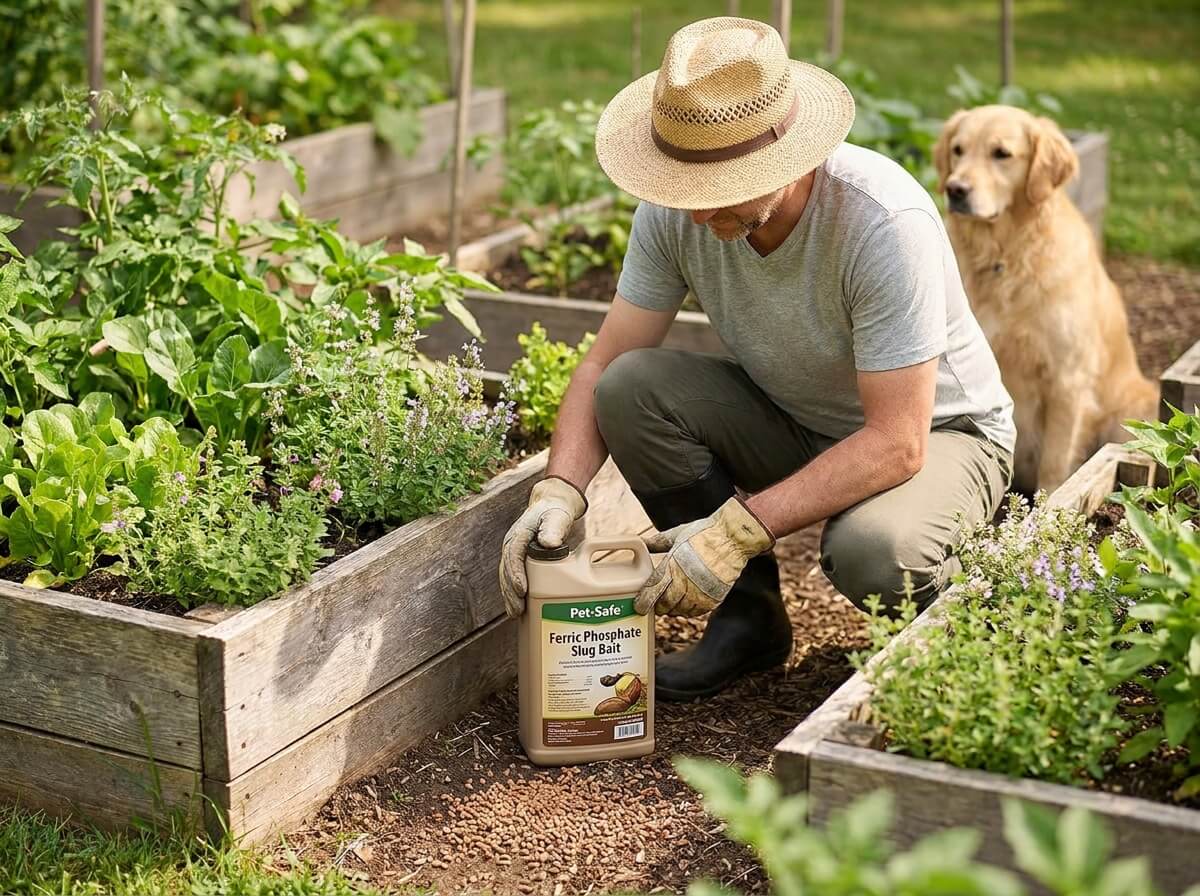
Ferric phosphate (iron phosphate) slug pellets — sold under brands like Slug Gone, Ferramol, and Growing Success Advanced Slug Killer — are just as effective as metaldehyde. They are safe around dogs, cats, and wildlife. They work by disrupting the slug’s digestive system, and unused pellets simply break down into iron and phosphate in the soil. And this makes sense.
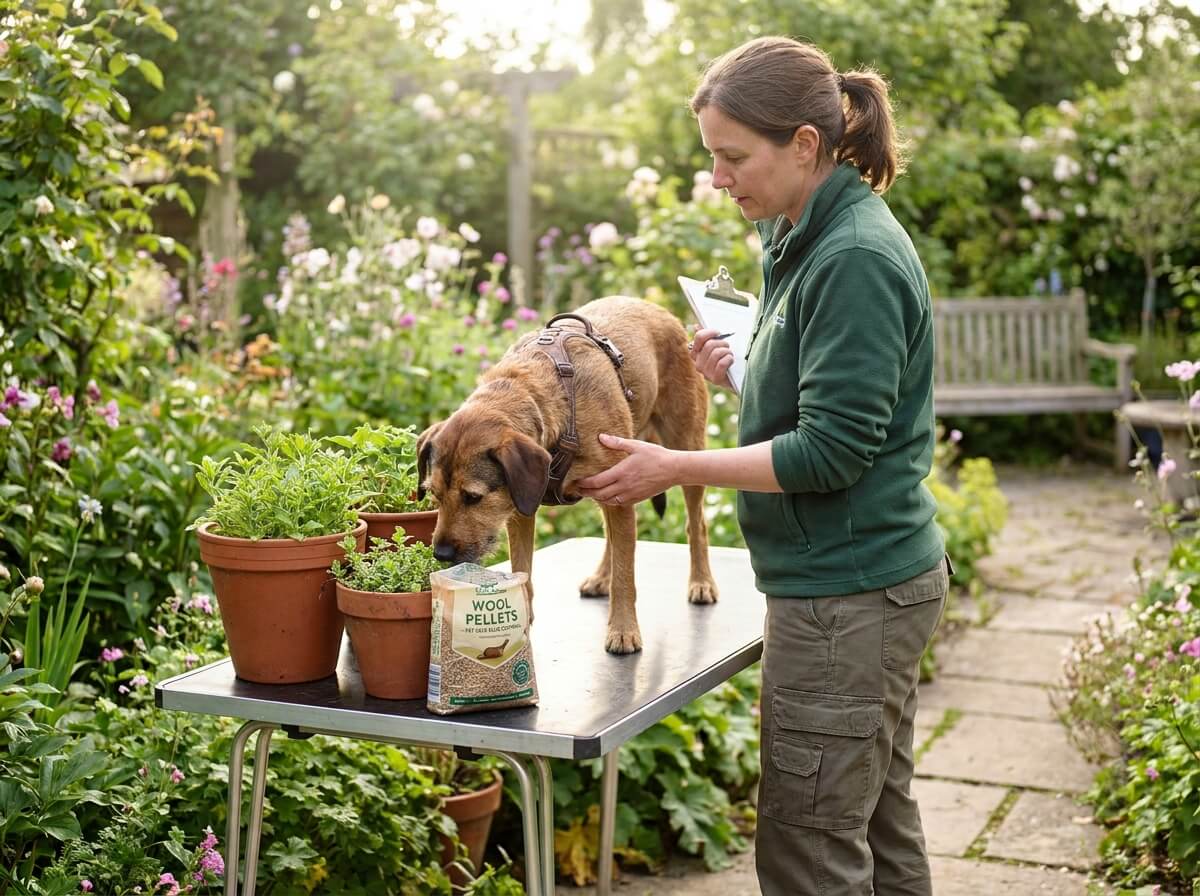
Wool pellet barriers, copper tape, and nematode treatments (Nemaslug) are completely non-toxic alternatives worth using around raised beds and vulnerable plants. If you have dogs — or visiting dogs, because neighbours’ pets count too — swap out every product in your shed right now. Make it sorted.
And if you have already applied metaldehyde pellets this season: rake them up, bin them, and replace them today. The slugs can wait. That is the non-negotiable part.
Smart tip: Ferric phosphate pellets work as well as metaldehyde — there is no reason to keep the toxic version.
Symptoms can begin within 30 minutes of ingestion. Seizures typically develop within 2 to 4 hours. So, there is no safe window for a “wait and see” approach. The thing is, this can quickly become irreversible.
No. Metaldehyde and methiocarb pellets are toxic.
Ferric phosphate pellets are considered safe for pets and wildlife. They are approved for organic gardening.
Yes, immediately. Symptoms can be delayed, and by the time tremors appear, the toxic dose is already absorbed. Early intervention does wonders for the outcome.
Metaldehyde is toxic to hedgehogs, birds, and other garden wildlife. Switching to ferric phosphate does wonders for protecting the whole garden ecosystem, not just your dog — and hedgehogs are one of the gardener’s best natural allies against slugs. But do not take chances.