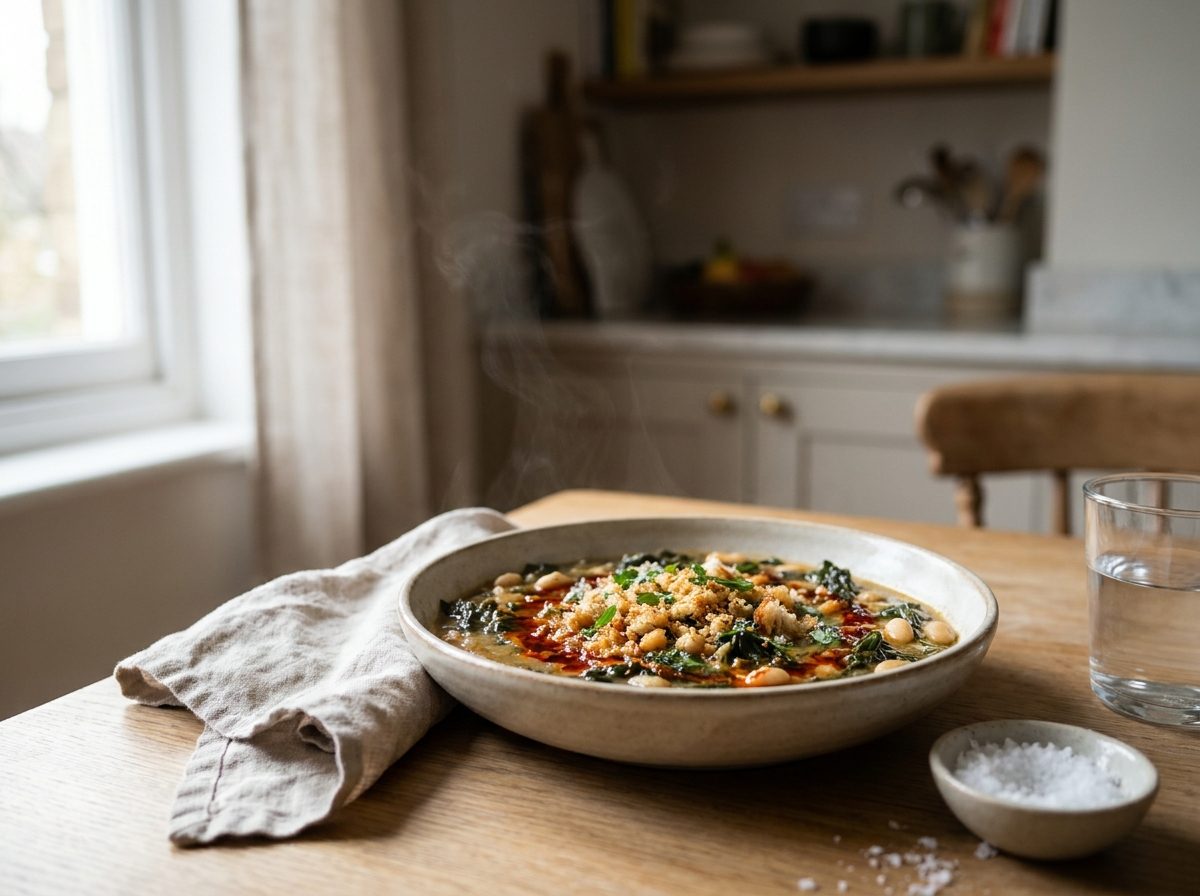
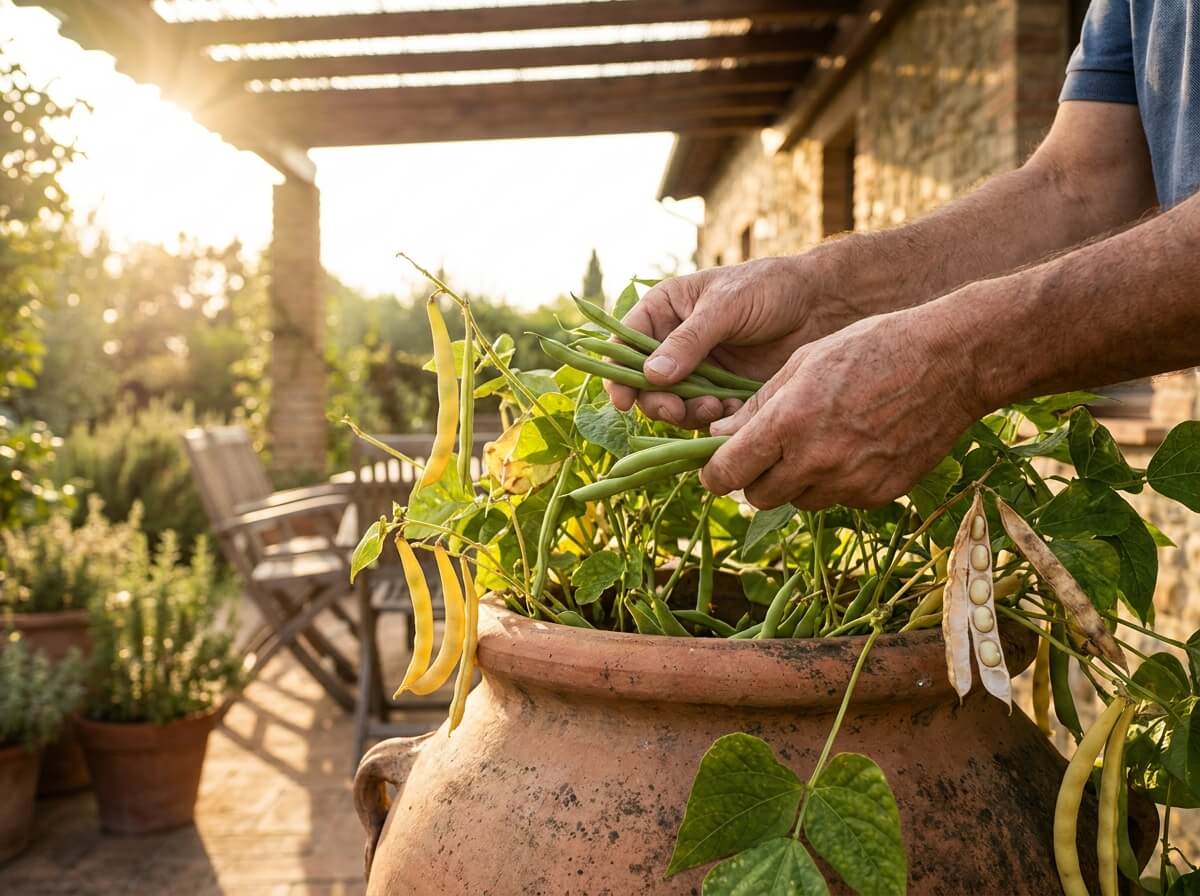
Cavolo nero is the last plant standing in the vegetable patch when everything else has gone to slush — its blistered, blue-black straps actually improve after the first frosts, when the plant converts stored starch into sugar as antifreeze. That sweetness is what makes this stew work: an hour of slow simmering collapses the leaves into something silky and almost meaty, propped up by creamy white beans and a raw garlic-chilli oil spooned over at the table.
⏱ Prep 20 min🔥 Cook 65 min👥 Serves 4📊 Level Easy
Ingredients for 4 people
1 lb 2 oz (500 g) cavolo nero, or curly kale / collard greens
6 tbsp (90 ml) extra virgin olive oil, divided
1 large onion (about 7 oz / 200 g), finely diced
8 garlic cloves, divided
2 tbsp (30 g) tomato paste
2 x 14 oz cans (2 x 400 g) cannellini or butter beans, drained, liquid reserved
3 cups (750 ml) vegetable or chicken stock
1 piece Parmesan rind, about 2 in (5 cm), or 1 tbsp white miso
1 sprig rosemary, or 4 sprigs thyme
1 tsp dried chilli flakes
1 tbsp red wine vinegar
4 thick slices sourdough or country bread
Flaky salt and coarsely ground black pepper
The Recipe
Fold each cavolo nero leaf in half along the midrib and strip the leaf away with a sharp tug — the central rib stays fibrous and squeaky even after an hour of simmering, while the leaf goes silky. Slice the tender upper portions of the stems finely and keep them with the onion; tear the leaves into rough 2 in (5 cm) pieces. Do not skip the stripping: it is the difference between a stew and a mouthful of string.
Warm 3 tbsp (45 ml) of the olive oil in a heavy pot over medium-low heat and cook the onion and sliced stems for 10–12 minutes, stirring now and then, until the onion is translucent and the pieces slump when pressed with a spoon. You want no colour beyond the faintest gold at the edges — browning here pushes the base towards bitterness instead of the mellow sweetness that carries the kale.
Grate in 4 of the garlic cloves along with the rosemary sprig and cook for 60 seconds only, until the kitchen smells sharply of garlic but the shreds are still pale. Garlic turns acrid the moment it tans, and this base will cook for another hour.
Stir in the tomato paste and keep it moving for 2 minutes until it darkens from bright red to brick and starts catching on the bottom of the pot. This cooks off the raw, tinny note and builds the savoury depth that beans alone cannot provide.
Add the torn leaves in three or four handfuls, turning each batch in the hot oil until it drops in volume and flips from matte grey-green to glossy dark green before adding the next. Coating the leaves in fat before any liquid goes in keeps their flavour concentrated rather than leaching it straight into the broth.
Pour in the stock and the reserved bean liquid, tuck in the Parmesan rind, and bring to a bare simmer — a lazy bubble every second or two, nothing more. Cover partially and cook for 40–45 minutes, until a leaf squashed against the side of the pot offers no resistance at all. Add the beans for the final 15 minutes so they heat through without disintegrating.
Crush about a ladleful of the beans against the side of the pot with a wooden spoon and stir them back in. Their starch thickens the liquid into something that clings to the greens instead of pooling at the bottom of the bowl — a cheat that replaces flour or cream entirely.
While the stew finishes, slice the remaining 4 garlic cloves wafer-thin and set them in the last 3 tbsp (45 ml) olive oil in a small pan over low heat. Cook 3–4 minutes until the slices are pale straw-coloured and the sizzling slows, then pull the pan off the heat and stir in the chilli flakes — residual heat blooms their fragrance and colour without scorching them black.
Season the stew with the vinegar, flaky salt and plenty of black pepper, tasting as you go; the acid is what stops an hour of long cooking from tasting flat. Toast the bread, rub each slice with a cut garlic clove, set one in each warm bowl and ladle the stew over. Spoon the garlic chilli oil across the top and let it stand 3 minutes so the bread softens underneath but keeps a crust at the edges.