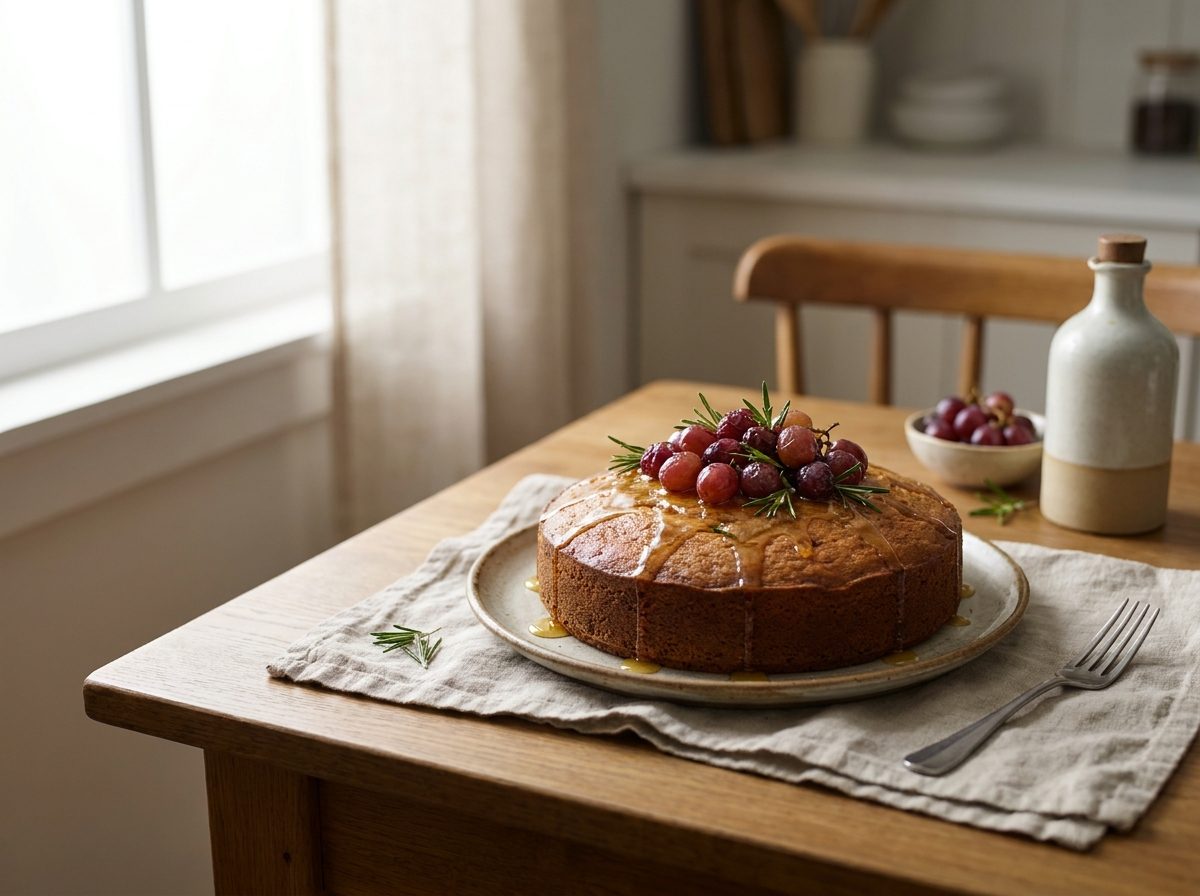
A grapevine asks for a wall, a wire and one hard winter pruning, then hands back more fruit than any household can eat fresh — the last bunches hanging on after the first cold nights, skins dusted with bloom, sugars concentrated. This cake buries them whole in an olive oil crumb where they burst into pockets of warm juice, cut by rosemary and lemon. It keeps for four days and improves on the second.
⏱ Prep 20 min🔥 Cook 55 min👥 Serves 10📊 Level Easy
Ingredients for 10 people
3 cups (400 g) small seedless grapes, red or black, pulled from the stems
¾ cup (180 ml) fruity extra virgin olive oil (sunflower or light rapeseed oil works as a milder substitute)
1 tbsp very finely chopped rosemary needles, plus 2 whole sprigs
1 cup (200 g) caster sugar (superfine)
3 large eggs, at room temperature
½ cup (120 ml) plain whole-milk yogurt (or buttermilk, or whole milk with 1 tsp lemon juice)
Finely grated zest and 1 tbsp juice of 1 unwaxed lemon
2 cups (240 g) plain (all-purpose) flour
¼ cup (40 g) fine semolina or fine polenta
2 tsp baking powder
½ tsp fine sea salt
2 tbsp runny honey, for glazing
The Recipe
Warm the olive oil with the chopped rosemary in a small pan over low heat until it reaches about 140 °F (60 °C) — the surface should shimmer faintly and smell of pine within a minute, with no bubbling. Take it off the heat and leave it to infuse for 15 minutes while you prepare everything else. Rosemary’s aromatic compounds are fat-soluble, not water-soluble, so this step extracts far more perfume than stirring the herb into the batter raw. Do not let the oil smoke: scorched rosemary turns acrid and cannot be rescued.
Heat the oven to 350 °F (175 °C) and line a 9-inch (23 cm) springform tin with baking paper, then oil the sides. Wash and thoroughly dry the grapes on a towel — surface water makes them slide to the bottom of the batter instead of suspending in it. Toss them in a bowl with the lemon juice and 1 tablespoon of the measured flour; the flour gives the skins grip, the acid keeps the pigment ruby rather than grey.
Whisk the eggs and sugar together for a full 3 minutes, by hand or machine, until the mixture pales to the colour of clotted cream and falls from the whisk in a ribbon that sits on the surface for two seconds before sinking. This aeration is the cake’s only lift beyond the baking powder, and an olive oil crumb with no air in it bakes dense and greasy.
Pour in the infused oil in a thin, steady stream while whisking continuously, then whisk in the yogurt and lemon zest. Adding the oil slowly lets it emulsify into the egg foam instead of splitting it — the batter should look glossy and homogeneous, like a loose mayonnaise. If it looks curdled, your yogurt was fridge-cold; keep whisking for 30 seconds and it will come back together.
Sift the flour, semolina, baking powder and salt over the bowl and fold with a spatula in no more than 15 strokes, stopping while a few streaks of flour are still visible. Overworked batter builds gluten and gives a rubbery, tunnelled crumb. The semolina is there for texture: it holds the fruit juice without going soggy and gives the cake a faint sandy bite at the edges.
Scrape two-thirds of the batter into the tin and level it. Scatter over half the floured grapes, cover with the remaining batter, then press the rest of the grapes into the surface, spacing them so each slice will get its share. Layering this way stops the whole crop sinking into one jammy stratum at the base. Tuck the two rosemary sprigs on top and press them flat against the batter so they crisp rather than burn.
Bake for 50–55 minutes. At 30 minutes the top should be domed and pale gold; if it is already dark, tent it loosely with foil. It is done when the centre springs back under a fingertip and a skewer pushed into the crumb between two grapes comes out with only a moist crumb or two — hitting a grape will always give you juice, so test twice in different spots.
Warm the honey for 10 seconds until runny and brush it over the hot cake, letting it sink into the cracks around the burst fruit. Glazing while hot means the honey is absorbed rather than sitting as a sticky film. Cool in the tin for 20 minutes, then release the sides and let it finish cooling on a rack — cut any earlier and the hot fruit pockets will tear the crumb.