Home » Health » Black spruce: traditional uses, syrup and needle baths
Black spruce: traditional uses, syrup and needle baths
·
1
Black spruce is the resinous conifer of Canadian forests, and its European cousin, common spruce, fills the Alps with the same scent. Its bright spring shoots, its needles and its sticky gum have all been used in folk practice. This page sets out which part to gather, in what season, and how to turn it into a syrup, an infusion or a bath at home.
Black spruce at a glance
Item
Detail
Botanical name
Picea mariana (black spruce); Picea abies for European common spruce
Family
Pinaceae
Parts used
Young spring shoots, needles, resin (spruce gum), sap
Young shoots in late spring to early summer; needles all year; resin in late summer to early autumn
Taste
Resinous and balsamic, with a citrus tang and a faint bitterness
What it is credited with
Traditional herbalism classes spruce shoots among the expectorant and diaphoretic (sweat-promoting) plants, and young growth was taken as a drink by First Nations peoples to ease a stubborn cough.
In both French and Canadian folk practice, spruce sap and resin had a reputation for soothing a stuffy nose and a scratchy throat, when breathing felt tight.
Quebec tradition holds spruce chewing gum to be a digestive aid, and it was chewed on the move for a queasy, travel-sick stomach.
Young twigs were added to bathwater for their calming, restorative effect on tired bodies.
In European herbalism, baths made from needles — saplings paired with needles from older trees, where the aromatic compounds are more concentrated — were used to ease rheumatic aches and general nervous fatigue.
Spruce gum was also chewed to keep the mouth fresh and the teeth clean, a use recorded long before toothpaste.
Fermented spruce “beer”, left about 24 hours, has a folk reputation as gently laxative — though most people drink it simply because it is refreshing.
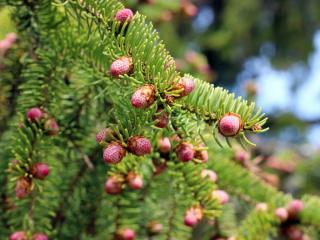
The bright young shoots are the part gathered in late spring
How to use it
Spruce shoot and honey syrup
Gather the soft, pale green shoot tips in late spring to early summer, when they are still tender enough to snap between your fingers.
In a clean glass jar, alternate a layer of shoots and needles with a layer of runny honey, pressing down lightly, until the jar is full.
Close the lid and stand the jar in full sunlight on a windowsill. A dark, fragrant syrup forms over two to four weeks.
Strain through clean cheesecloth, bottle, and keep in a cool dark cupboard or the fridge.
Traditional use: a spoonful taken slowly, once or twice in the day, over a short spell of a few days.
Needle infusion
Chop a small handful of fresh needles, pour over a large mug of water just off the boil, cover and leave 10 minutes.
Covering matters: the aromatic oils are what you are after, and they leave with the steam.
Taste is resinous and lemony. A slice of lemon or a little honey rounds it off.
Folk practice keeps it to a mug or two a day, for a week or so at a time rather than continuously.
Needle bath
Simmer a couple of good handfuls of needles and chopped young twigs in a large pan of water, lid on, for about 20 minutes.
Strain and pour the liquid into a warm bath; soak for around 15 to 20 minutes, in the evening for preference.
The whole bathroom fills with the smell of a forest — which is half the point.
Resin and kitchen use
Hardened droplets of gum can be picked off the bark in late summer to early autumn and chewed in small pieces.
Young shoots chop finely into sugar, vinegar or butter, and pair well with game, oily fish and cream desserts.
Forms of spruce preparation compared
Form
How it is made
What tradition uses it for
Honey syrup
Layers of young shoots and honey, jar left in sunlight two to four weeks, then strained
Taken by the spoonful for a tickly, dry cough
Infusion
Chopped needles steeped covered in hot water for 10 minutes
A warming, resinous drink through the cold months
Bath decoction
Needles and twigs simmered 20 minutes, strained into the bathwater
Soaking for stiff, aching limbs and general tiredness
Chewing resin
Hardened gum picked from the bark, chewed in small pieces
Freshening the mouth and settling the stomach
Fermented drink
Shoot extract fermented about 24 hours
Drunk chilled as a refreshment
Frequently Asked Questions
The one thing to remember: gather the soft green shoot tips in late spring to early summer and layer them with honey in a sunny jar — that syrup is the most useful thing spruce gives a household.
Which part of the black spruce do I actually pick?
The young shoot tips are the prize, picked in late spring to early summer while they are still soft and pale green. Needles can be taken all year for infusions and baths. Hardened resin droplets come off the bark from late summer into early autumn.
What does spruce taste like?
Resinous and balsamic, with a distinct citrus tang and a faint bitterness at the end. It is closer to lemon peel than to pine cleaner. Honey and lemon suit it, which is why the syrup is so popular.
How long does the honey syrup take to make?
Layer shoots and honey in a jar, close it and stand it in sunlight. The syrup forms over two to four weeks, then it is strained through cheesecloth and stored cool and dark. Never give a honey syrup to a baby under one year old.
Can I use black spruce every day?
Folk practice treats it as a short-term helper rather than a daily habit: a mug of infusion or a spoonful of syrup for a week or so, then a break. If you are pregnant, breastfeeding, giving it to a child, or taking any medication, ask a healthcare professional before starting.
Is black spruce the same tree as the European spruce?
They are close cousins in the Pinaceae family. Black spruce, Picea mariana, is native to Quebec and eastern Canada, while Europe’s single native spruce is common spruce, Picea abies, the Alpine tree also familiar as a Christmas tree. Both are used in the same traditional ways.
This information is provided for general interest and reflects the traditional use of plants. It is not a substitute for medical advice. If you are on medication, pregnant, or in any doubt, ask a healthcare professional.
Written by Gaspard Lorthiois | Loves helping out, especially when it comes to growing things. Worked in herbal medicine, runs a farm, and dabbles in tech. Master's degree and engineer.