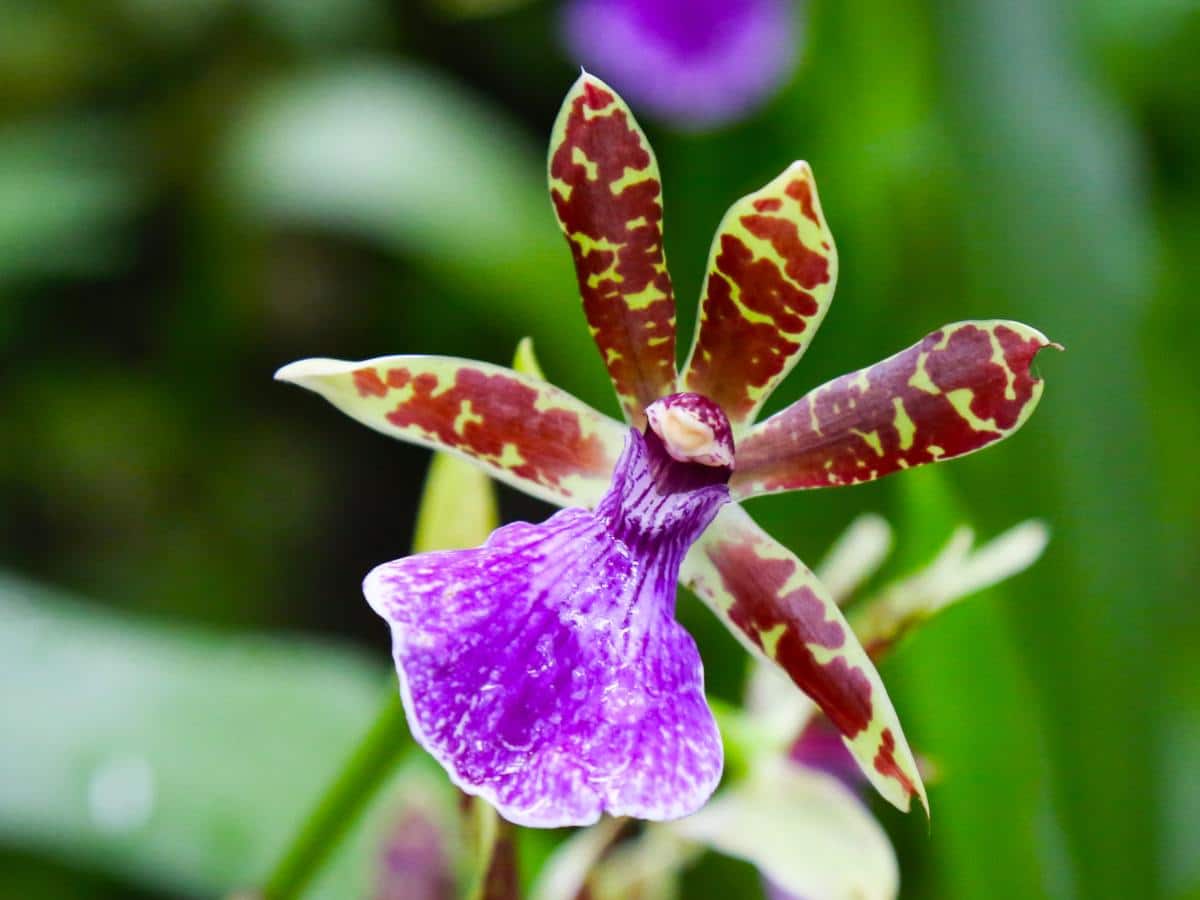
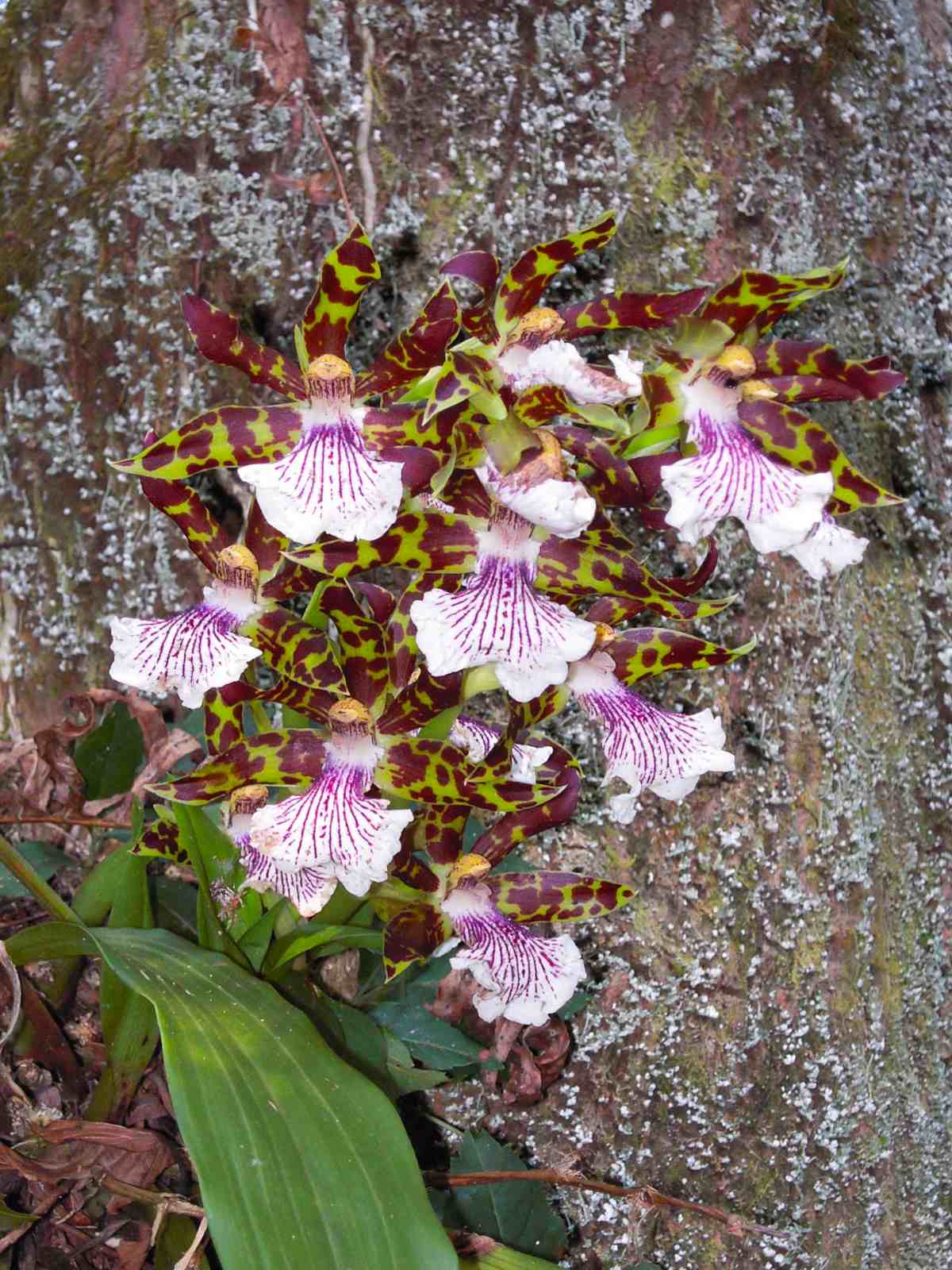
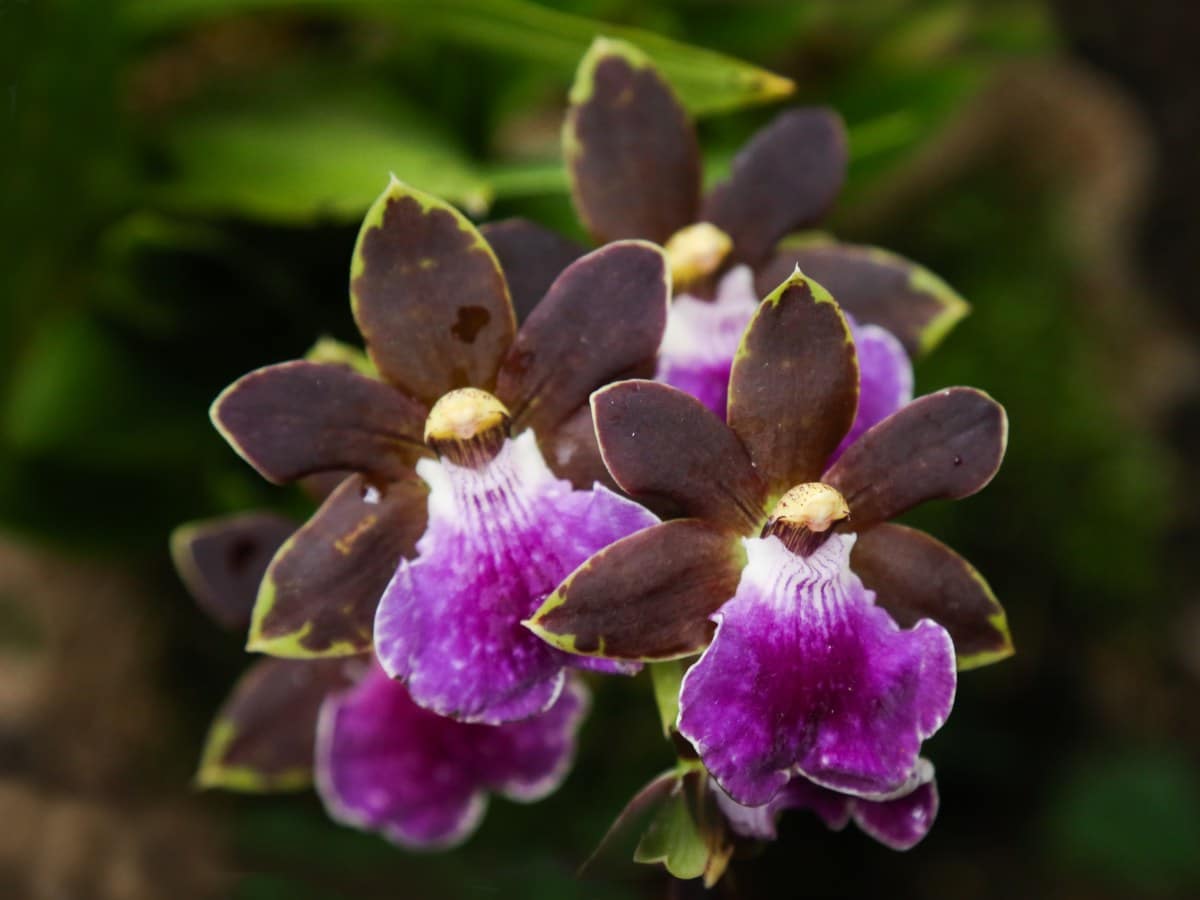
Wax-like flowers, spotted and striped, set green and brown petals around a broad white lip streaked with blue, violet and purple, and fill a whole room with a sharp, spicy-floral perfume. Zygopetalum is a winter-flowering orchid from Brazil and Columbia; give it plenty of light without direct sun, in a place with no heating, and it flowers freely.
| Botanical name | Zygopetalum |
|---|---|
| Family | Orchidaceae |
| Type | epiphyte, sometimes ground |
| Origin | Brazil and Columbia |
| Height | 16 in to 3 feet (40 cm to 1 m) |
| Flowering | winter |
| Flower colour | white, tan, pink, purple… all together |
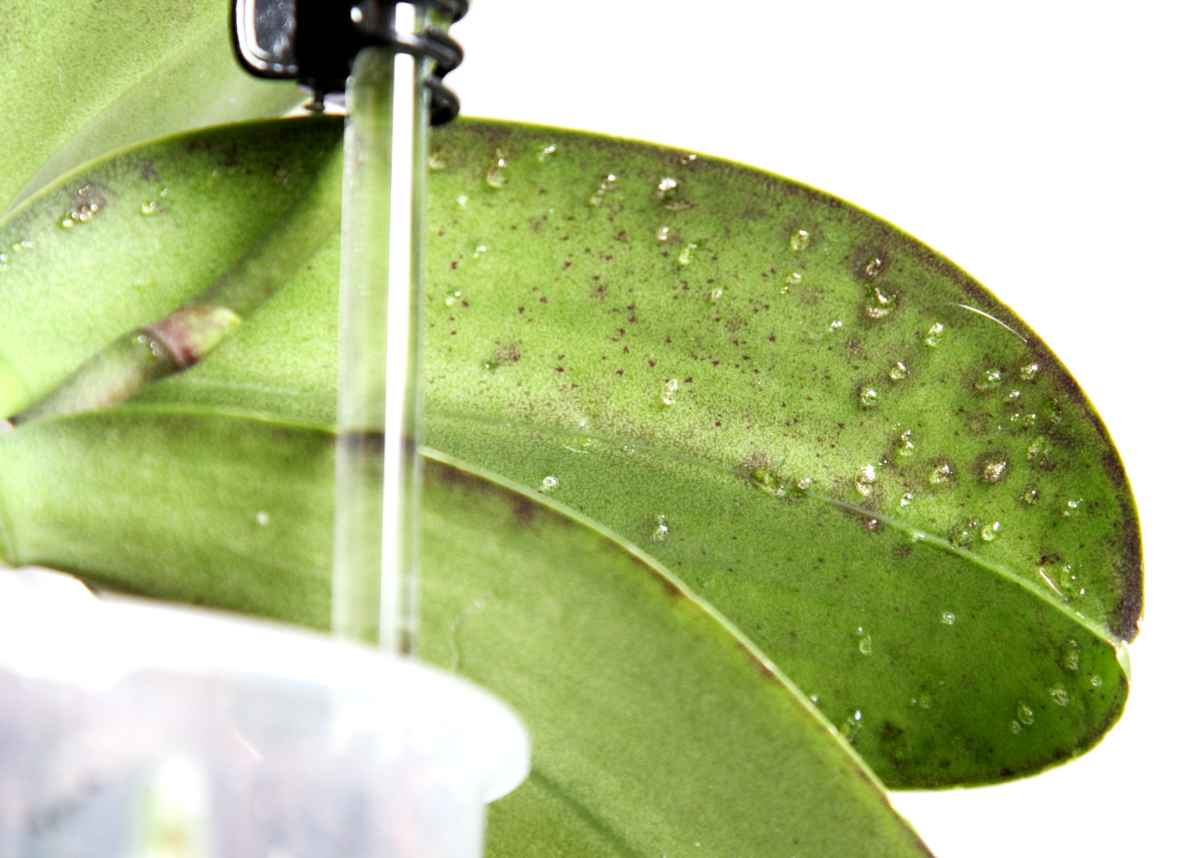
| Diseases and pests | scale, mites, rot |
| Exposure | lots of light |
| Hardiness | not hardy |
| Soil | well-draining, for orchids |
Here are all our tips to care for Zygopetalum orchids and benefit from their incredible, colorful blooms.
Varieties found in garden stores are quite easy to care for. The surprising blooms of Zygopetalum are covered with spots or stripes. They appear in winter and release a pleasant scent throughout the house.
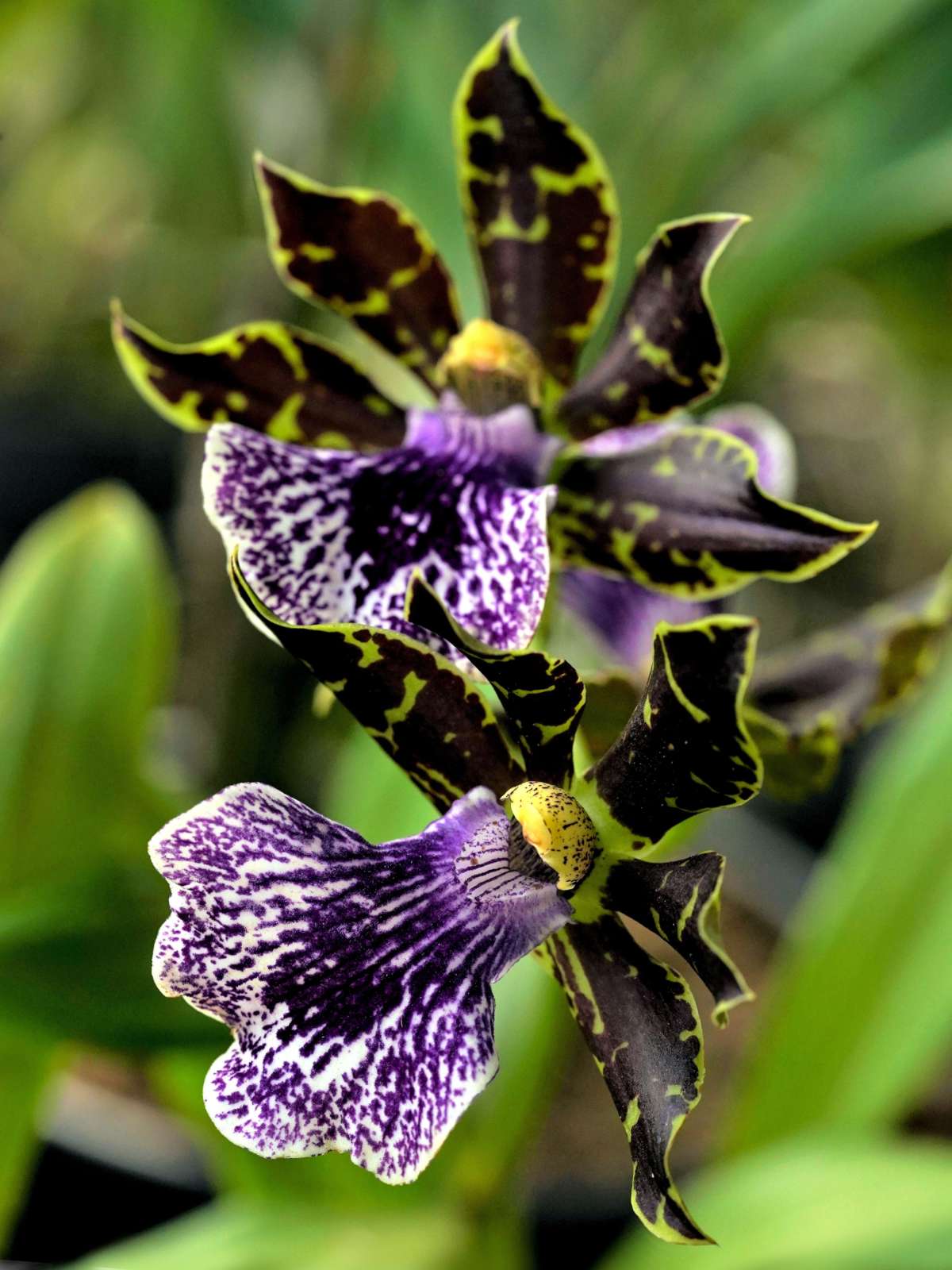
Zygopetalum orchids grow round pseudobulbs that extend from a short rhizome that sometimes branches out. Buds form at the base of the previous year’s pseudobulbs.
From the buds, long narrow leaves appear. These are lance-shaped and a shiny bright green color.
The floral scape reaches anywhere from 1 to 3 feet tall (25 to 90 cm), and it emerges from between the pseudobulb and the lowest leaves. From 2 to 15 wax-like flowers find their place on each stem.
They’re often very fragrant. Spicy and floral is sometimes used to describe this heady, sharp scent. Petals and sepals are usually green and brown, whereas the impressive large labellum is white with streaks of blue, violet and purple.
What this orchid asks for changes with the seasons: it drinks and feeds hard while growing, then rests cool as the flowers open. Here is the whole year at a glance.
| Season | Watering | Feeding | Main task |
|---|---|---|---|
| Midwinter | Once every 3 weeks; no misting needed | None | Flowers open and scent the house |
| Early to mid-spring | Soft water as the pot surface dries | Begin as soon as new shoots appear | Repot hybrids, once flowering has finished |
| Late spring to summer | About once a week; pot on damp clay pebbles | Diluted orchid fertiliser every fortnight | Let night and day temperatures swing widely to trigger blooming |
| Early autumn | As soon as the surface starts drying out | Last feed of the year | Plant thickens as it stocks up on nutrients |
Flush the pot with plain water between feeds so minerals never build up around the roots.
To thrive, Zygopetalum orchids need a lot of light but not direct sun. Usually, when leaves are a deep green hue, it means that the plant needs more light; oppositely, lighter yellow colors means it has the right amount of light.
As a temperate climate orchid, Zygopetalum must grow in a place with no heating. Temperatures must hover around:
During summer, Zygopetalum loves it when temperatures swing strongly between night and day: this triggers blooming.
Zygopetalum needs a pot with special orchid mix that contains bark, 20% peat, and a little perlite.
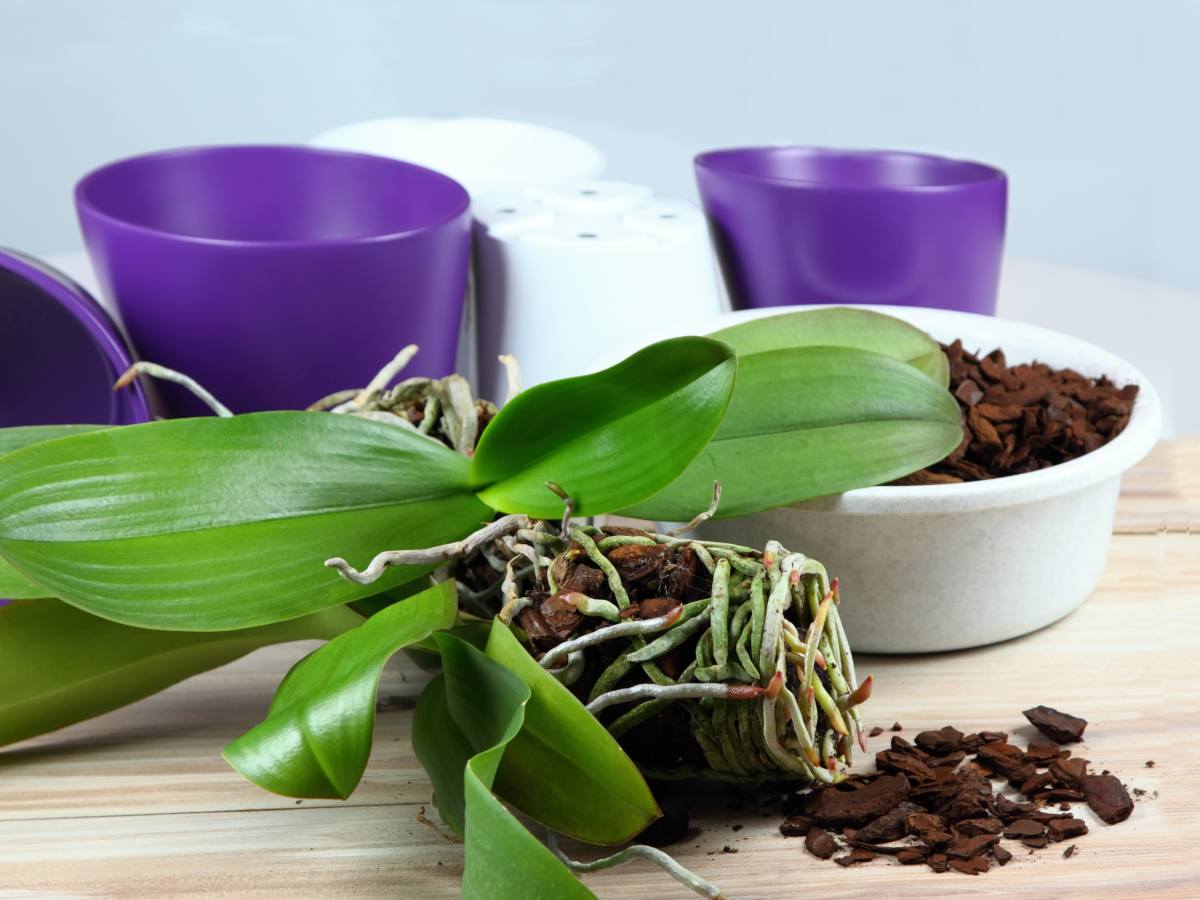
A fast grower, hybrid Zygopetalum tend to quickly extend out of its pot. It doesn’t like feeling cramped, so the way forward is to repot your orchid every year in spring, as soon as the blooming has died off. Note that wild species don’t need such frequent repotting, usually every 2 to 3 years is enough.
Zygopetalum needs relatively moist substrate at all times, though never to the point that it gets all soggy. From spring to summer, use soft water as soon as the surface of the pot starts drying out (once a week on average). In winter, you won’t need to water as often: once every 3 weeks is enough.
No need to mist this orchid in winter. However, in summer, you can set the pot on a bed of clay pebbles in a saucer filled with water: this increases air moisture around the plant.
Zygopetalum is a very hungry plant: give it fertilizer often! Start when you see new shoots appearing, and keep on giving more until early fall. All this fertilizer is important for the plant to stock up on nutrients: it’ll grow thicker as it prepares to bloom.
Use a diluted fertilizer made specifically for orchids, and give it together with your watering every fortnight. Idealy, you’d give this fertilizer by soaking the entire root section for an hour. After that, lift it out of the water/fertilizer mix, and let excess water drip away. When it stops dripping, you can settle it back in its pot.
Note: water at least once abundantly without fertilizer before applying fertilizer again. Washing out unused fertilizer is important to avoid buildup of minerals around the Zygopetalum’s roots.