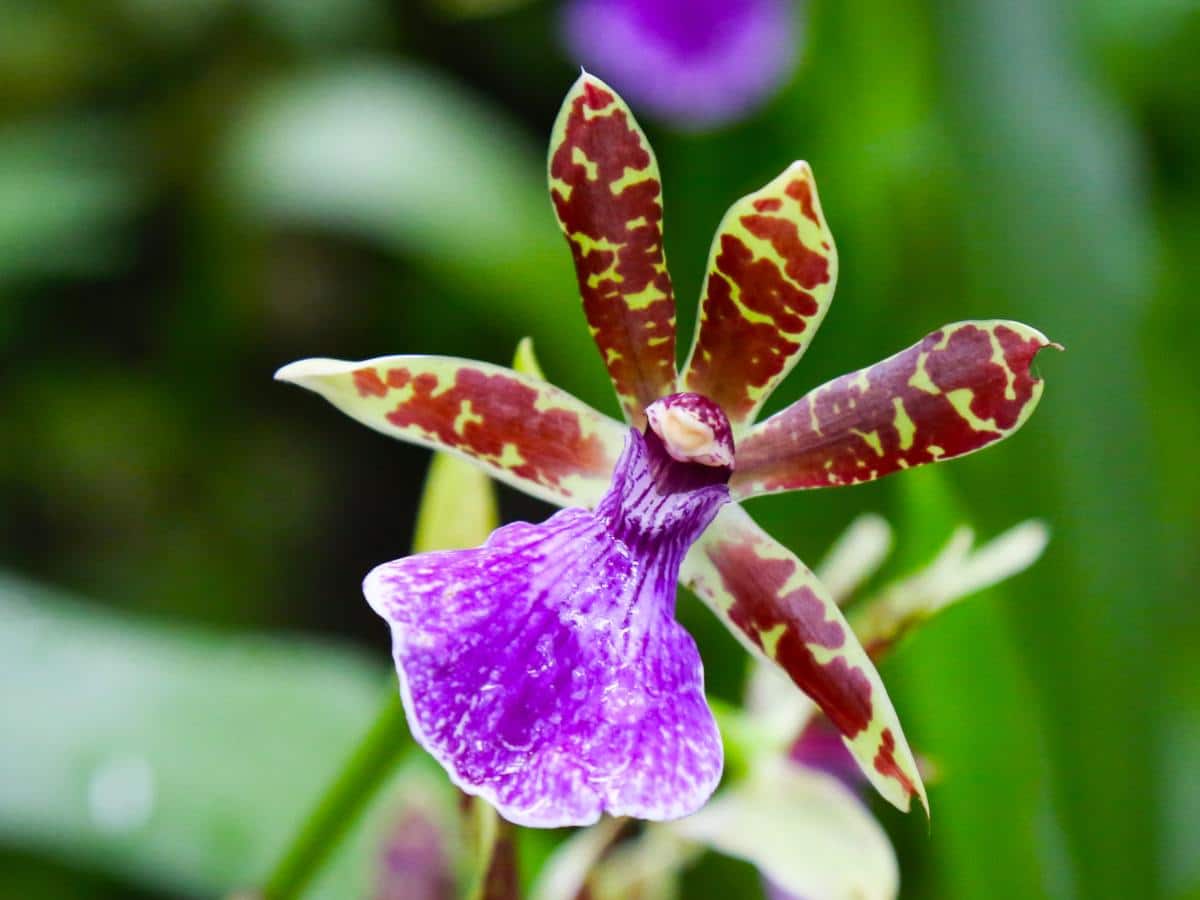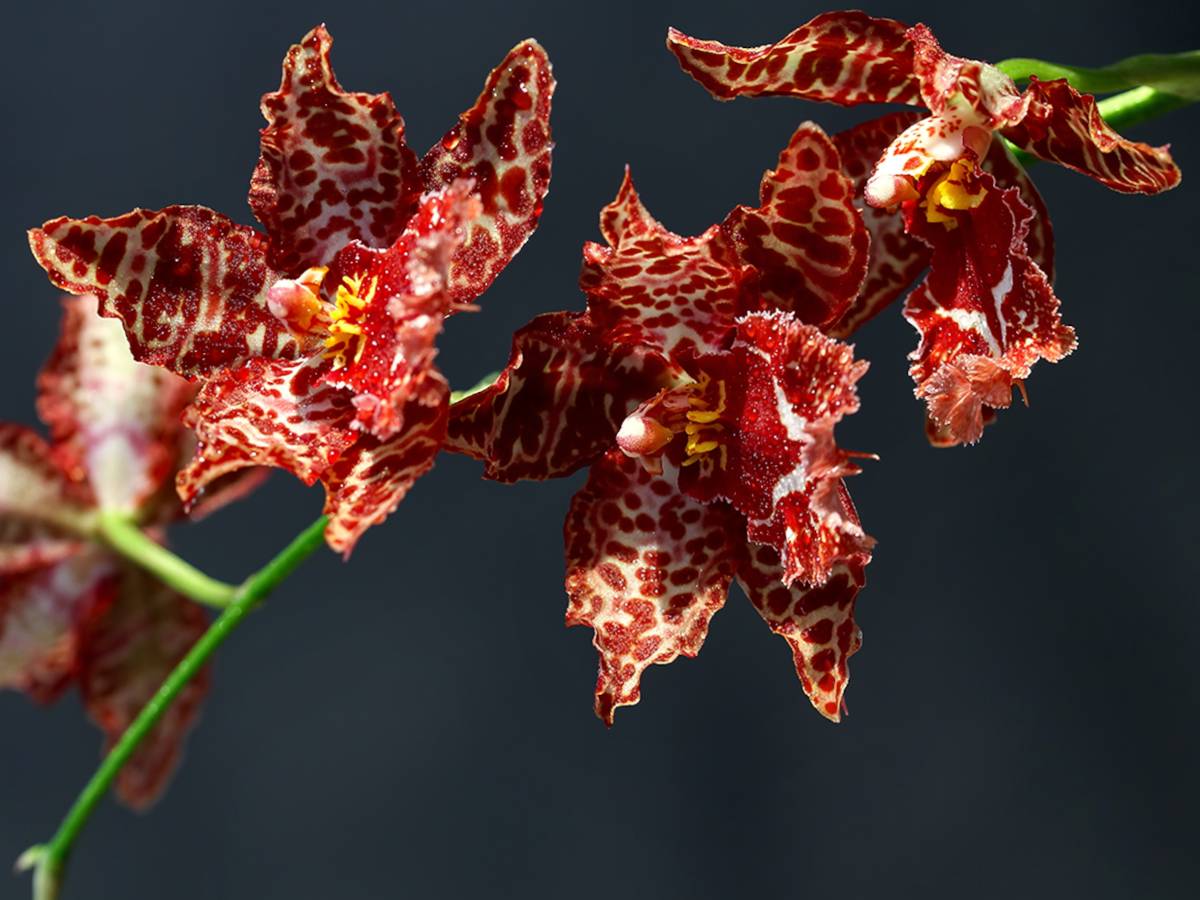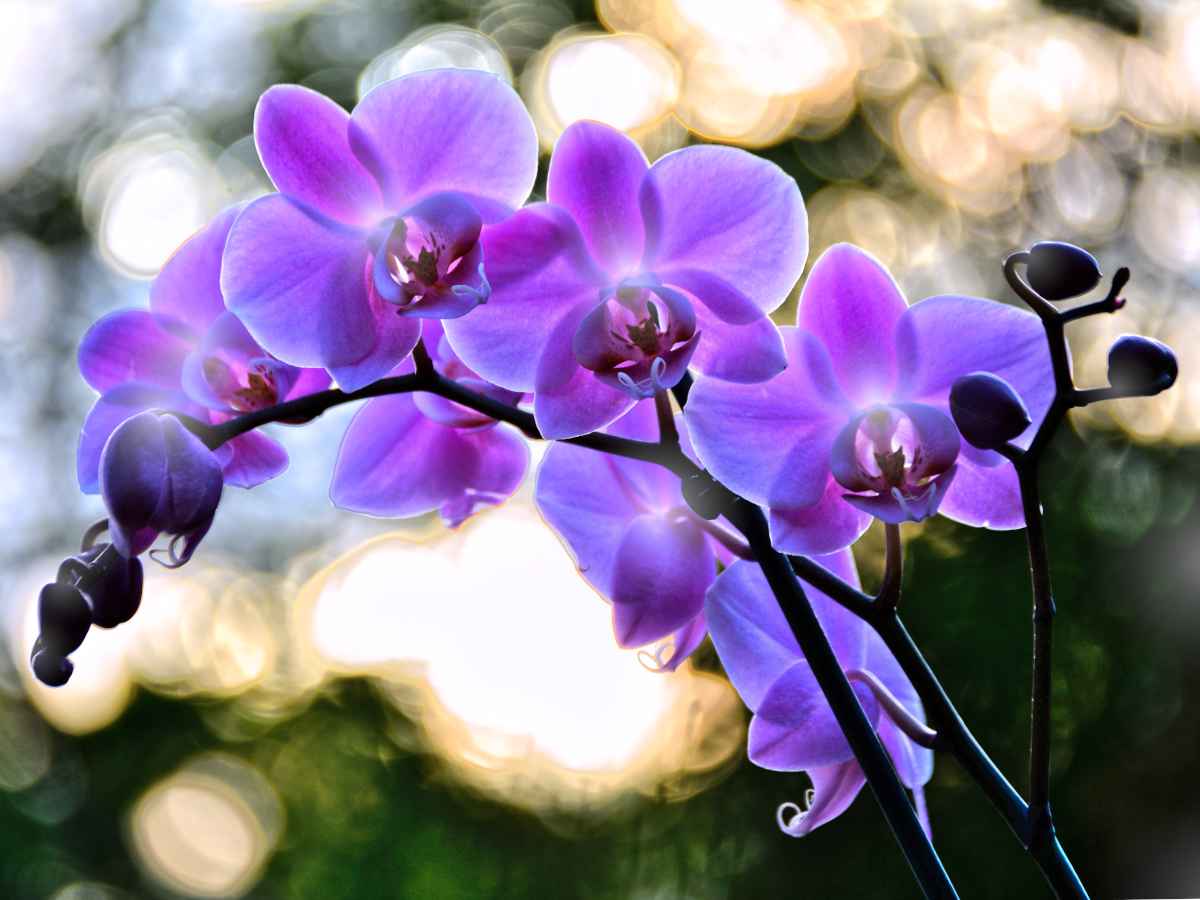
The orchid family is a surprising caste, seemingly bred from jewels of pure light. 750 different genuses, 20,000 species and thousands of hybrids!
Epiphyte orchids form the majority of the marvelous exotic beauties that enchant our homes with their curious shapes and delicate flowers.
Read also:
Epiphyte orchids have a distinctive structure and growth pattern. As their name hints (from the Greek word epi meaning “above” and phyton meaning “plant”), they grow on trees. However, these aren’t parasite plants because they don’t derive nourishment from the tree itself. They collect dissolved nutrients that are present in rainwater as it flows along the trunk and through the debris that accumulates in their roots.
There are two types of growth patterns that orchids rely on. Some have a crawling rhizome from which swollen stems (pseudobulbs) emerge which bear flowers. Others grow new shoots and elongate themselves and bear flowers from elegant scapes. The latter of the two is probably the one from which the last orchid you got as a gift comes from!
Everything an epiphyte orchid asks for follows from the way it lives on a tree trunk. Here are the five conditions that decide whether it thrives indoors.
| Growing factor | What the orchid wants | What it dislikes |
|---|---|---|
| Light | A lot of light, near a window | Direct sunlight, because in the wild there is always shade above it |
| Growing medium | Special orchid substrate of peat, pine bark or polyurethane foam | Roots trapped in ordinary soil mix |
| Pot | A clear plastic pot, small enough for the roots | A large pot where water gathers after watering |
| Air and humidity | A saucer of moist glass or plastic marbles, feet in the air | Drafts |
| Feeding during growth | Liquid potted plant fertiliser at half dose, diluted with rainwater | Full-strength feeding, since they need little |
| Rest phase | Very little water and no disturbance | Watering as if it were still growing |
Get the light right first: the rest follows from the orchid’s life on a tree trunk.
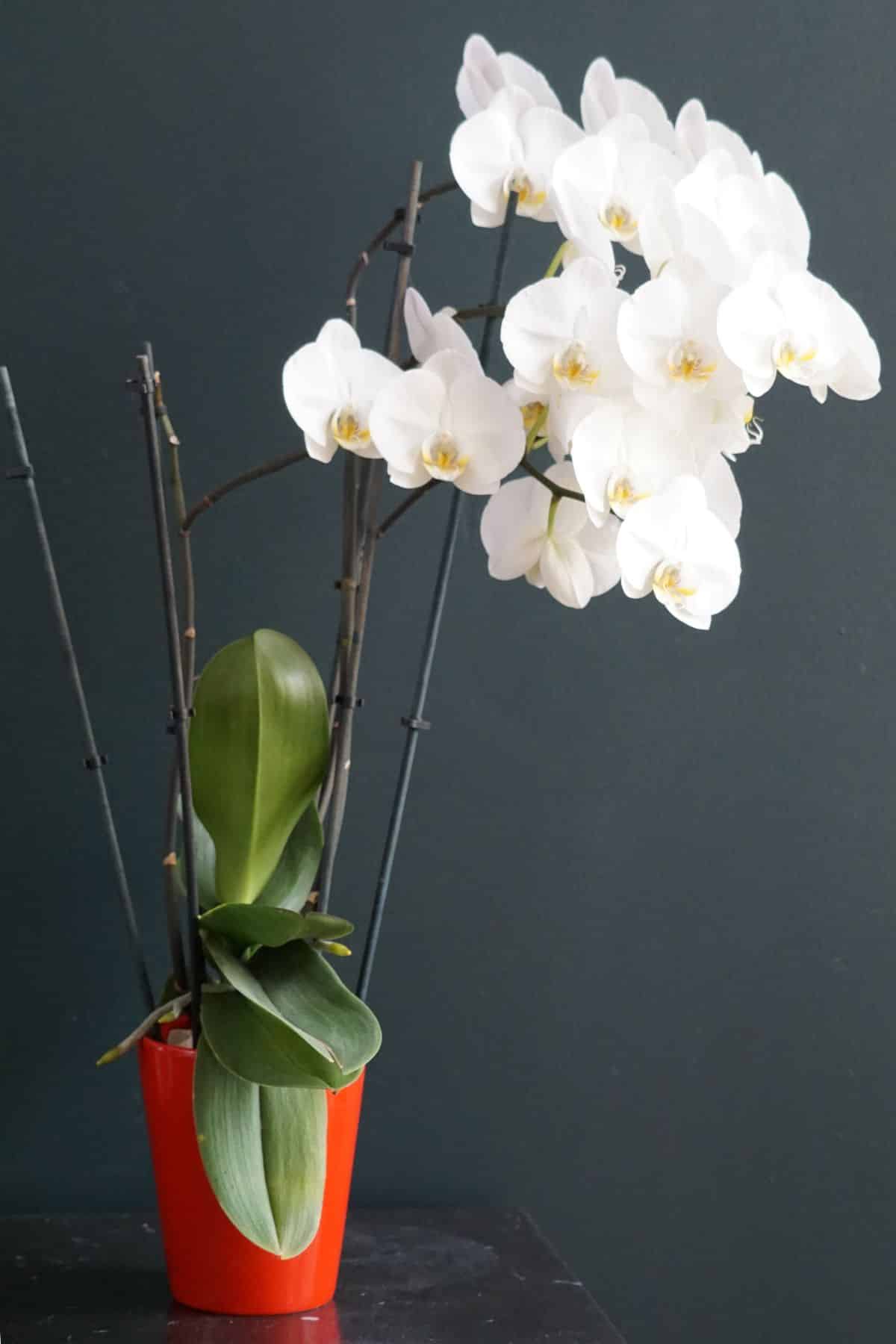
Given the way they operate, epiphyte orchids don’t cope well with having their roots trapped in soil mix, unless it is extremely light and airy. If possible, prefer using special orchid substrate, that drains extremely well. This is sold in gardening stores (peat, pine bark, polyurethane foam…).
And don’t choose a large pot for it where water might accumulate after watering: it won’t like it at all!
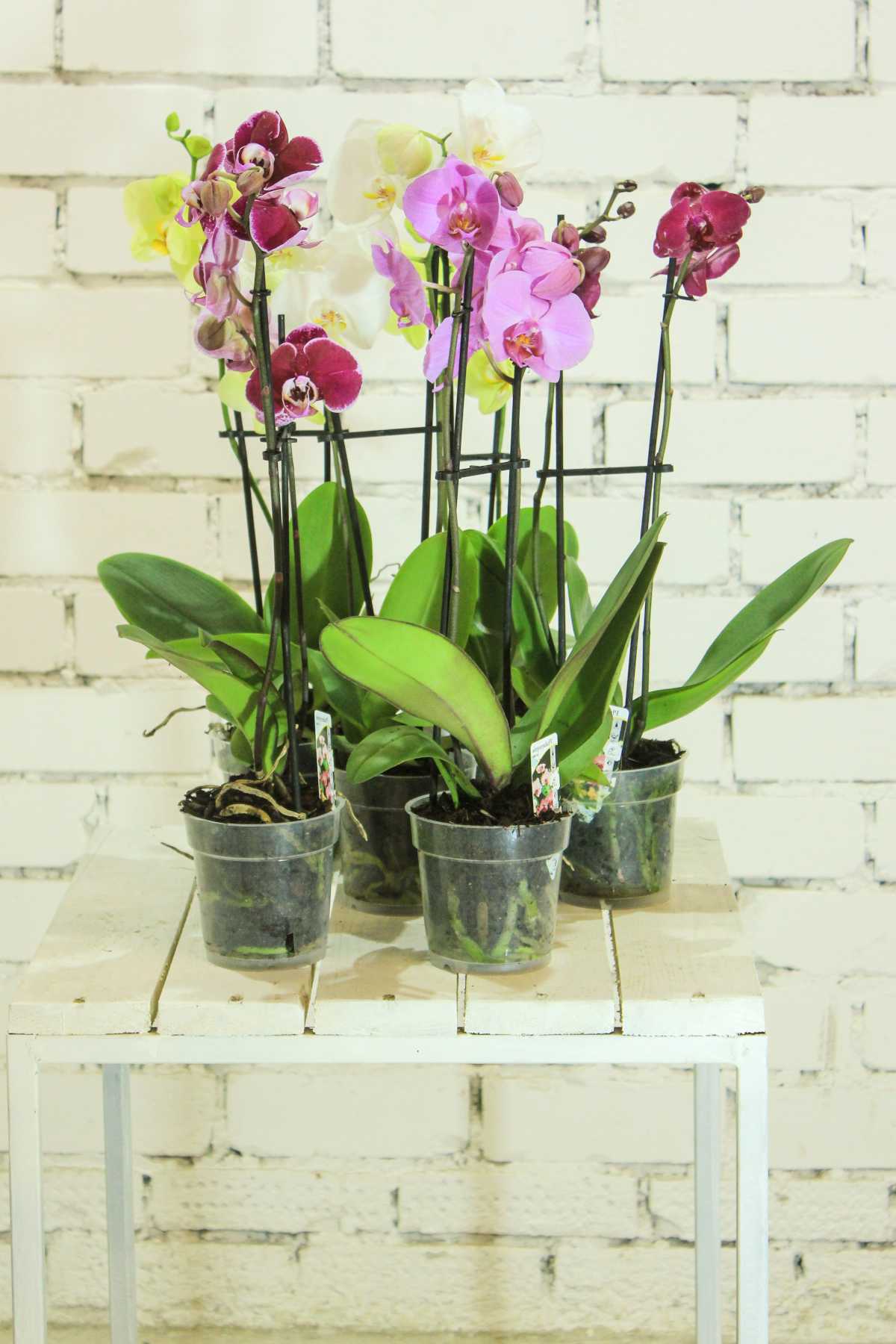
Actually, most often, these plants are sold in a clear plastic pot which is the best option for them as long as their roots don’t overrun them too much.
They like exposing their feet to the air! Place this pot on a saucer layers with glass or plastic marbles which are kept moist. Set this away from drafts and near a window: it needs a lot of light but, curiously, not direct sunlight.
This is due to its natural habitat: alongside the trunks of trees, there’s always a cover of shade above it.
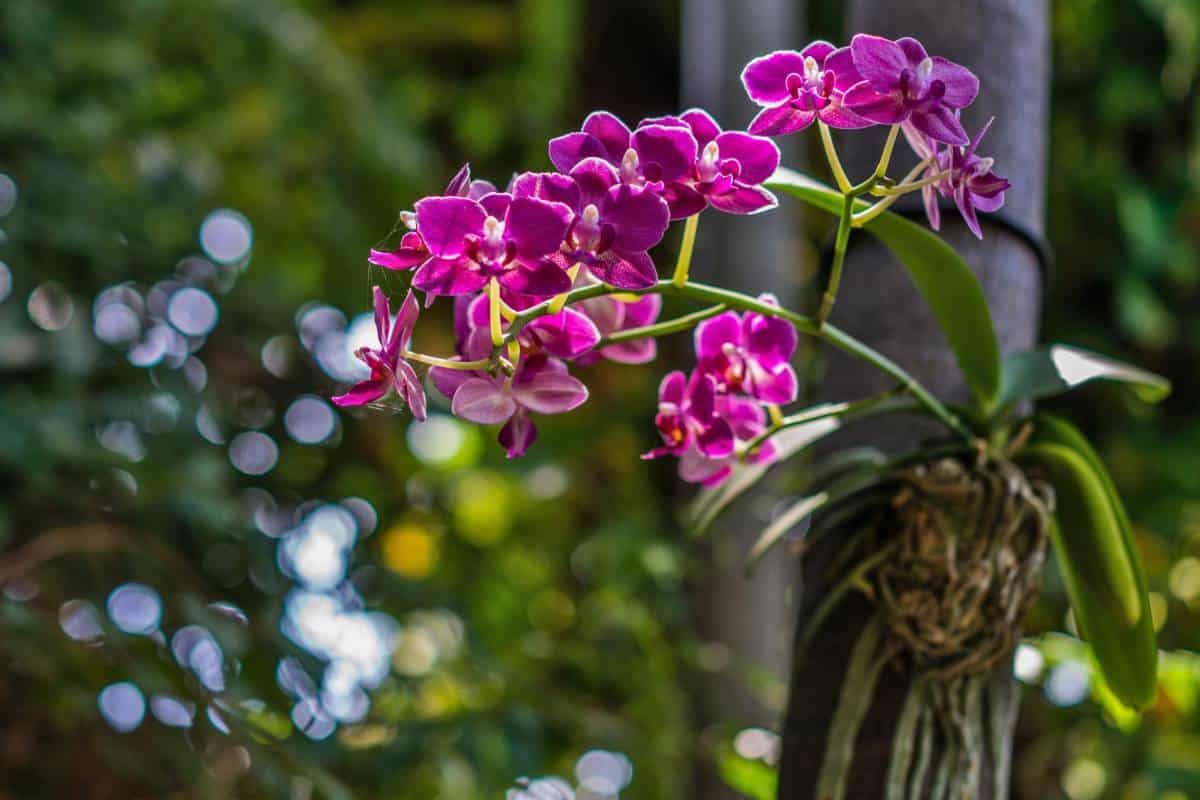
During the growth, fertilize with liquid potted plant fertilizer but water it down (with rainwater) to only half the recommended dose. Orchids aren’t very demanding in terms of nutrients.
During the rest phase, let it be, water only very little, don’t disturb it. Slowly start upping the amount of water it receives when the growing resumes. Be patient, keep it in a well-lit place, near a window. You’ll soon enjoy new blooms again.
by M.-C. D.