Beyond the familiar Phalaenopsis lie orchids with spotted, pansy-like faces, sprays of tiny flowers that seem to hover in mid-air, and roots left dangling bare on a hook. These lesser-known genera bring the same elegance to a room, and each one rewards you once you match it to the light and warmth it asks for.
Just as elegant and graceful, they add their magnetic appeal to your home or at the office. Discover a few interesting species here!
Miltonia,
Six orchids compared: light, water and warmth
Each of these genera asks for something slightly different indoors. Use the table to match an orchid to the room you actually have.
Six orchids compared: light, water and warmth
Orchid
Light
Water and warmth
What sets it apart
Miltonia
Luminous spot, out of direct sun
Immerse in lukewarm water once or twice a week
Scented, with spotted flowers like pansies
Oncidium
Well-lit place
Soak once a week
Crown of small flowers, nicknamed “Tiger orchid”
Cymbidium
Give it space
Cool rooms, 50 to 65°F (10 to 18°C)
Flowers in winter, when other varieties are dormant
Dendrobium
Indoor position
Mild, about 65°F (18°C)
Flowers cascade from the tip of a scape
Vanda
Hangs from a hook or light fixture
Immerse in lukewarm water two or three times a week
Needs no soil, roots dangle in the air
Paphiopedilum
Shade
Easy-going tropical
Usually a single flower per scape
Read on for the details of each genus below.
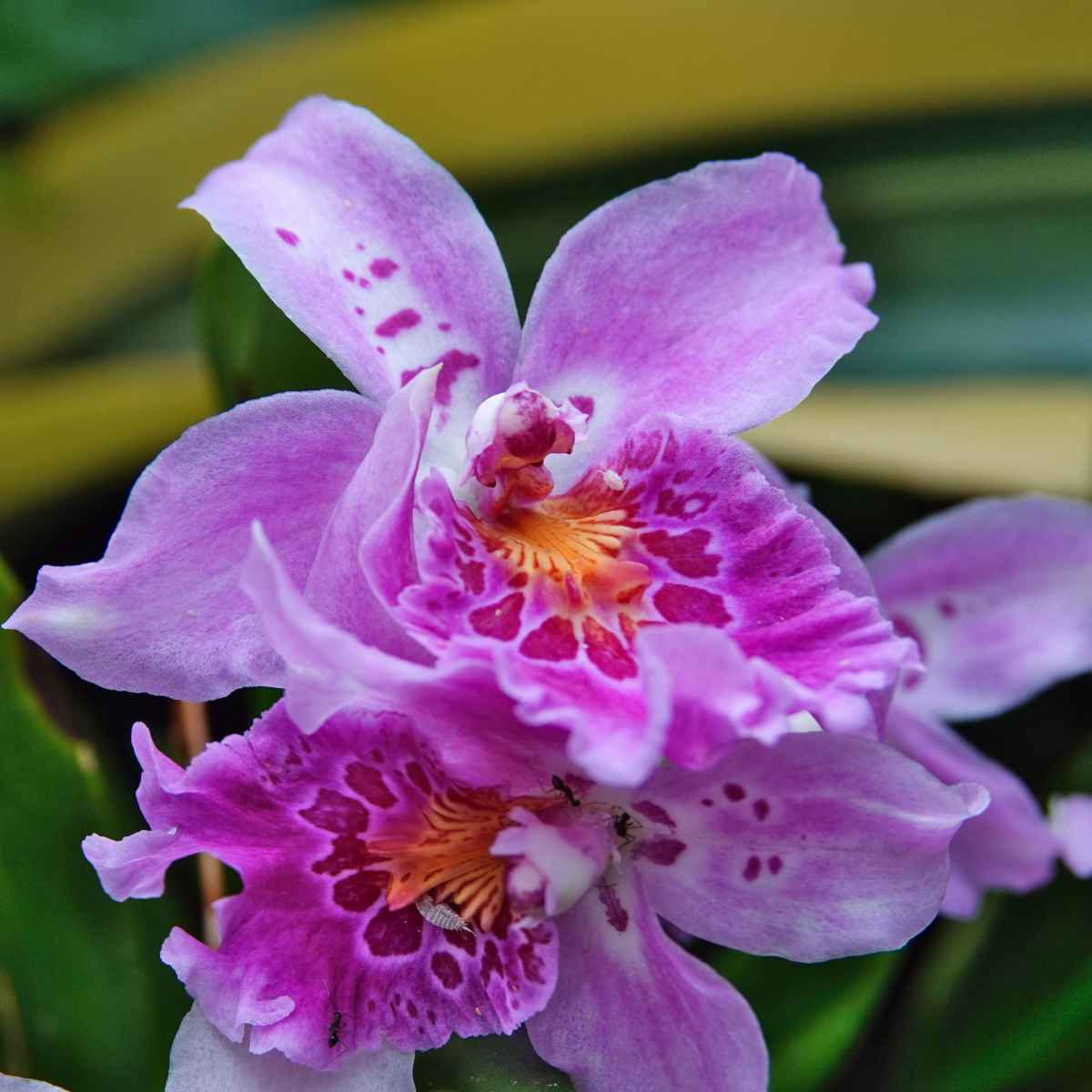
the romantic one
Large spotted flowers, much like garden pansies
One of the very few orchids to release a fragrant perfume, the Miltonia was Princess Diana’s favorite orchid.
Native to South America, its large spotted colorful flowers are somewhat similar to pansies.
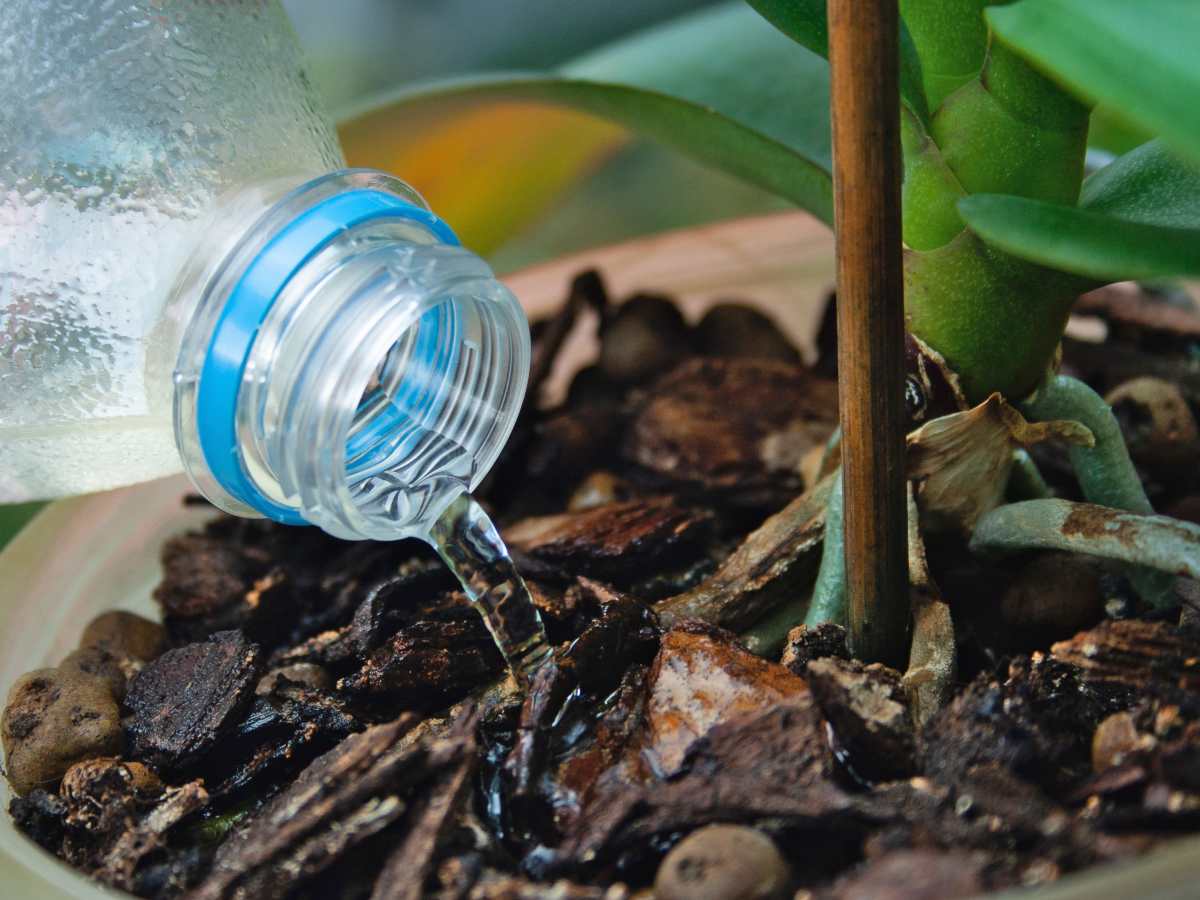
Set it up in a luminous spot, not in direct sun, and immerse it in lukewarm water once or twice a week to keep the soil moist.
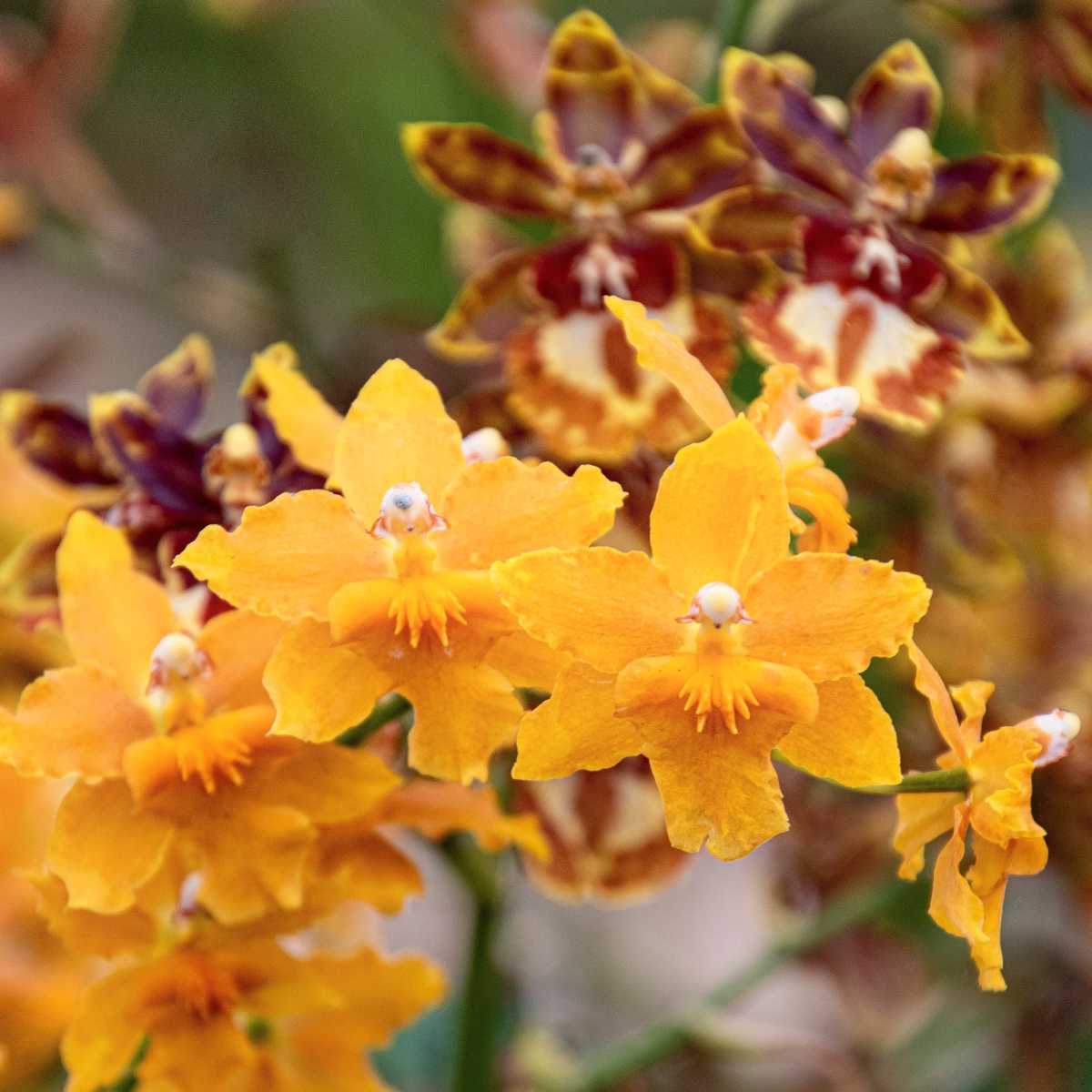
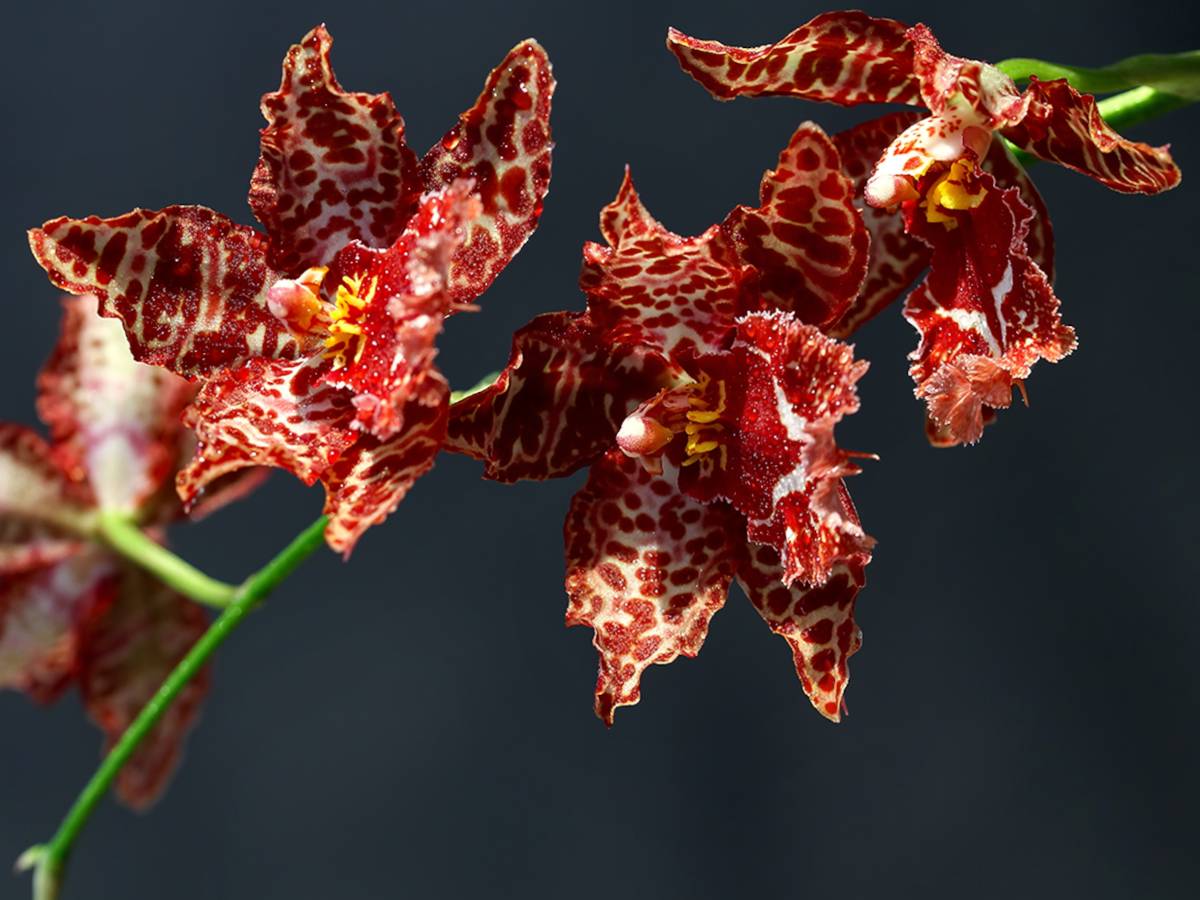
Sparkling Oncidium
Small flowers that seem to hover in air
Usually given as gift that symbolizes sentiments and emotions, Oncidium presents a crown of small flowers that seem to hover in the air.
Its yellow and brown colors made the way for its nickname “Tiger orchid”, but there are also pink varieties out there.
Place it in a well-lit place and soak it once a week.
Wrinkled, shrivelled pseudobulbs show an Oncidium is not taking up enough water, but the cause may be underwatering or roots rotted by overwatering, so inspect the roots before watering more.
Repot when pseudobulbs crowd the pot rim, matching bark grade to root thickness—fine for slender-rooted types, medium or coarse for thick-rooted ones—and leave at least three pseudobulbs in each division.
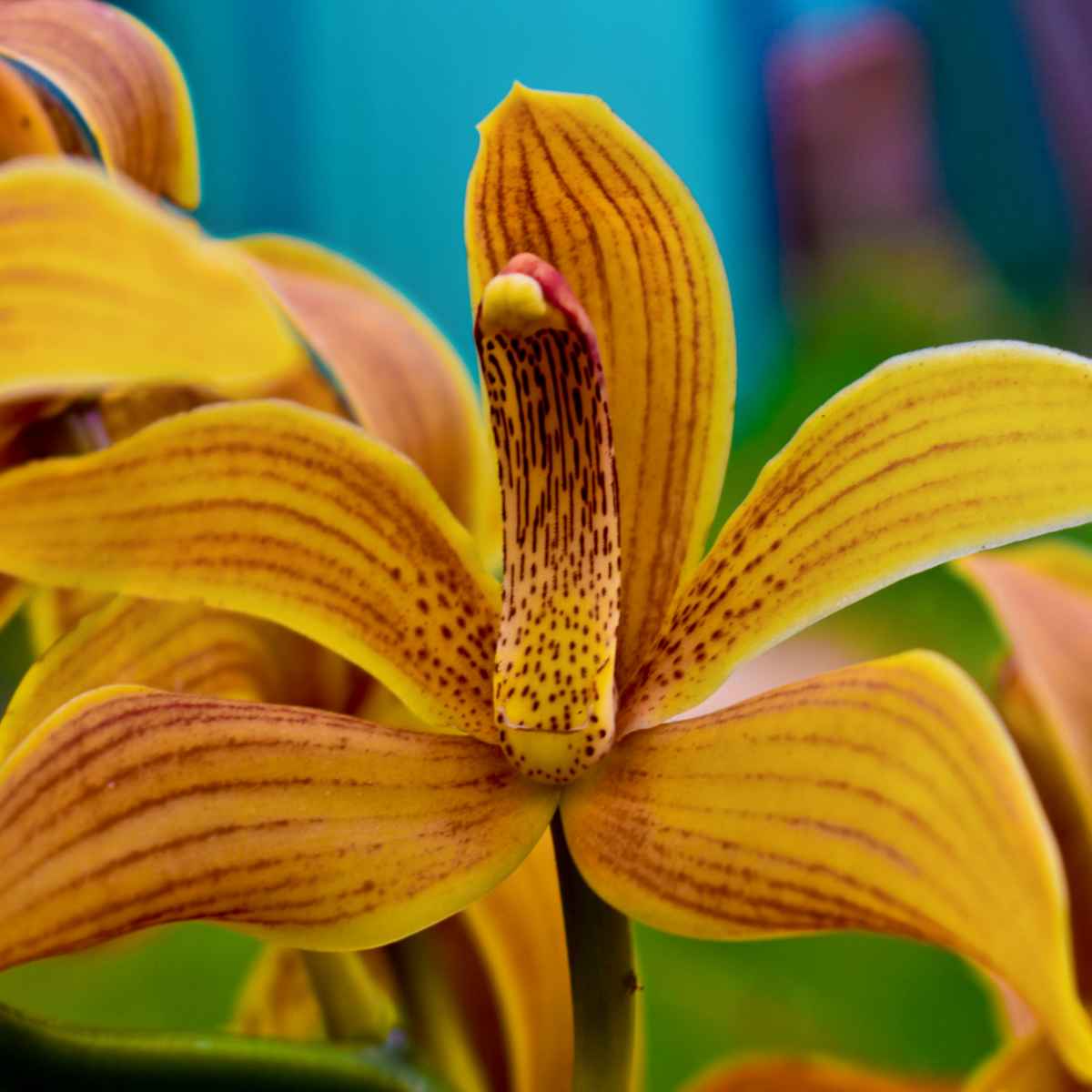
Luxuriant Cymbidium
Dense pointed leaves and stems packed with winter flowers
This is the most exuberant of orchids.
A ground-growing variety growing in the wild in Asia, Cymbidium boasts dense pointed leaves and stems covered with flowers in winter, when other varieties are usually dormant.
Give it space and avoid rooms that are too warm, it loves temperatures that range from 50 to 65°F (10 to 18°C).
Tall gladiolus and delphinium flower spikes become top-heavy and prone to toppling, so gardeners commonly insert supports early, while the stems are still young and flexible enough to tie without snapping.
Terrestrial orchids generally need a heavier, more moisture-retentive medium than epiphytes, so check the species: many prefer loam, leaf-mould or grit-based mixes rather than the coarse bark compost used for epiphytic kinds.
Avoid overpotting: growers commonly advise keeping cymbidiums in a snug container rather than a much larger one, repotting only when the clump becomes genuinely congested or the compost has broken down.
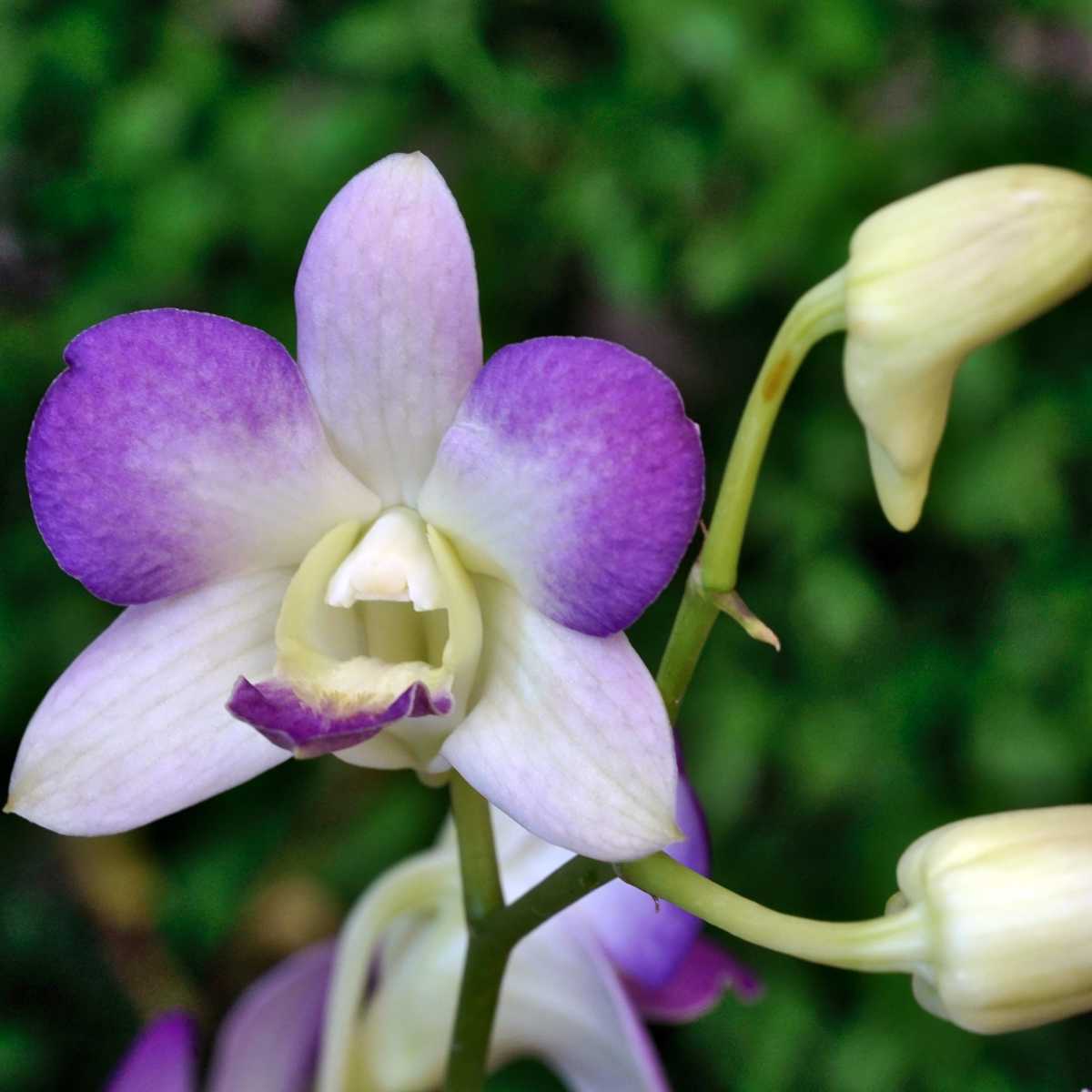
Lavish Dendrobium
Flowers cascade down from the tip of the scape
Flowers cascading down from the tip of a scape, Dendrobium is considered by the Japanese to be the guardian angel of the house that absorbs negative energy.
We appreciate the variety of its colors and its darker labellum (the third petal), making us think that its flowers like to wear lipstick.
This plant also is partial to mild environments with temperatures of about 65°F (18°C).
Leave the bare canes in place once the flowers drop, as Dendrobium stores water and food in them and often reflowers from the same cane.
Cattleya orchids generally need brighter light than Phalaenopsis, so place them near a window where they receive strong indirect light but are shielded from scorching midday sun.
Nobile-type Dendrobium needs cooler nights and much drier compost through its resting period to set flower buds instead of leafy keikis.
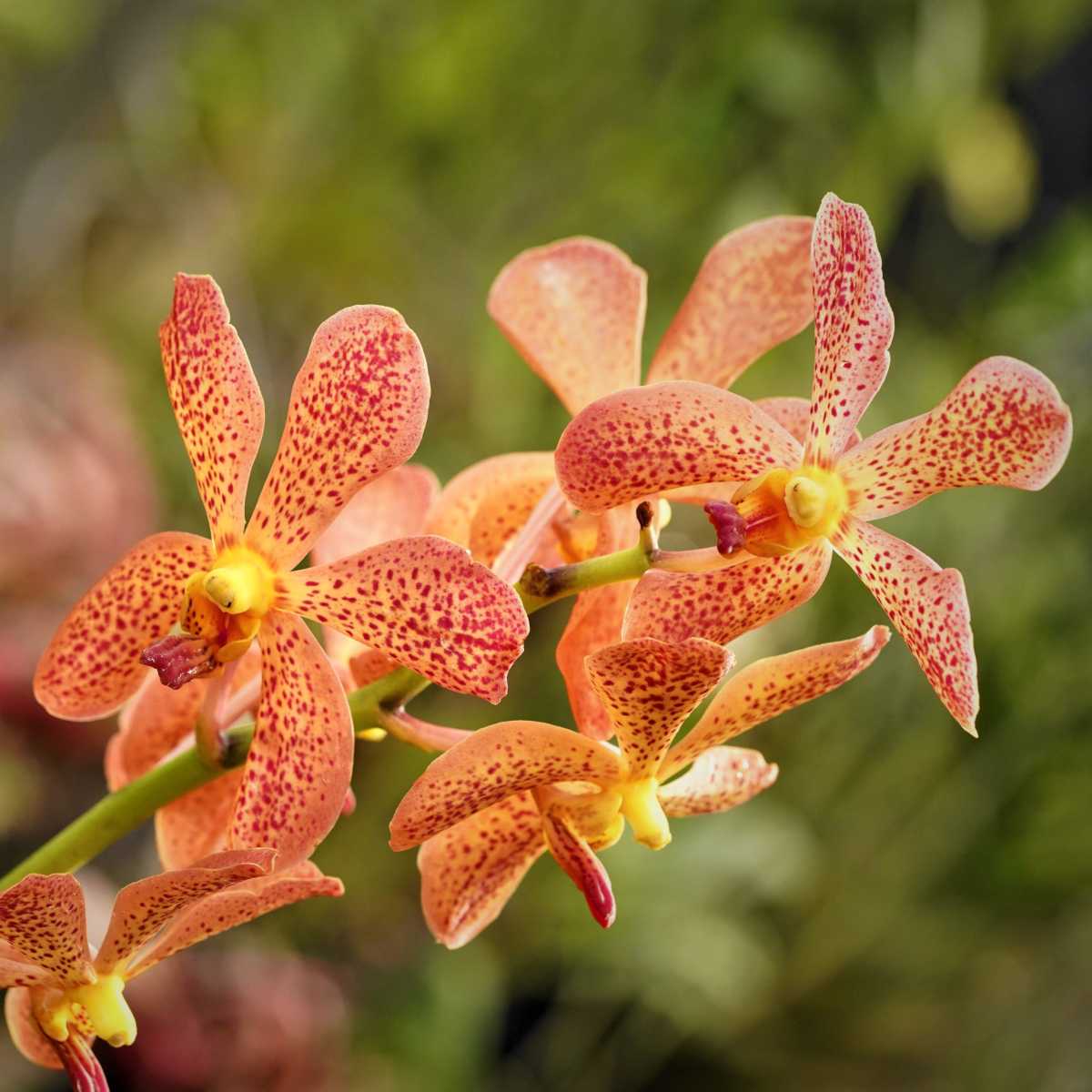
Airborne Vanda
Roots dangle freely in the air, no soil
From India to Sri Lanka, the Vanda orchid grows in trees with its roots dangling in the air or wrapping up around branches.
In the house, it’s the same thing, it doesn’t require soil and simply hangs from a hook, a nail or light fixture…
Remember to immerse it in lukewarm water two or three times a week to give those brilliant colored blooms a drink.
In epiphytic orchids such as Phalaenopsis, the spongy velamen covering aerial roots looks silvery-white when dry and turns bright green once watered, though this indicator does not apply to plant roots generally.
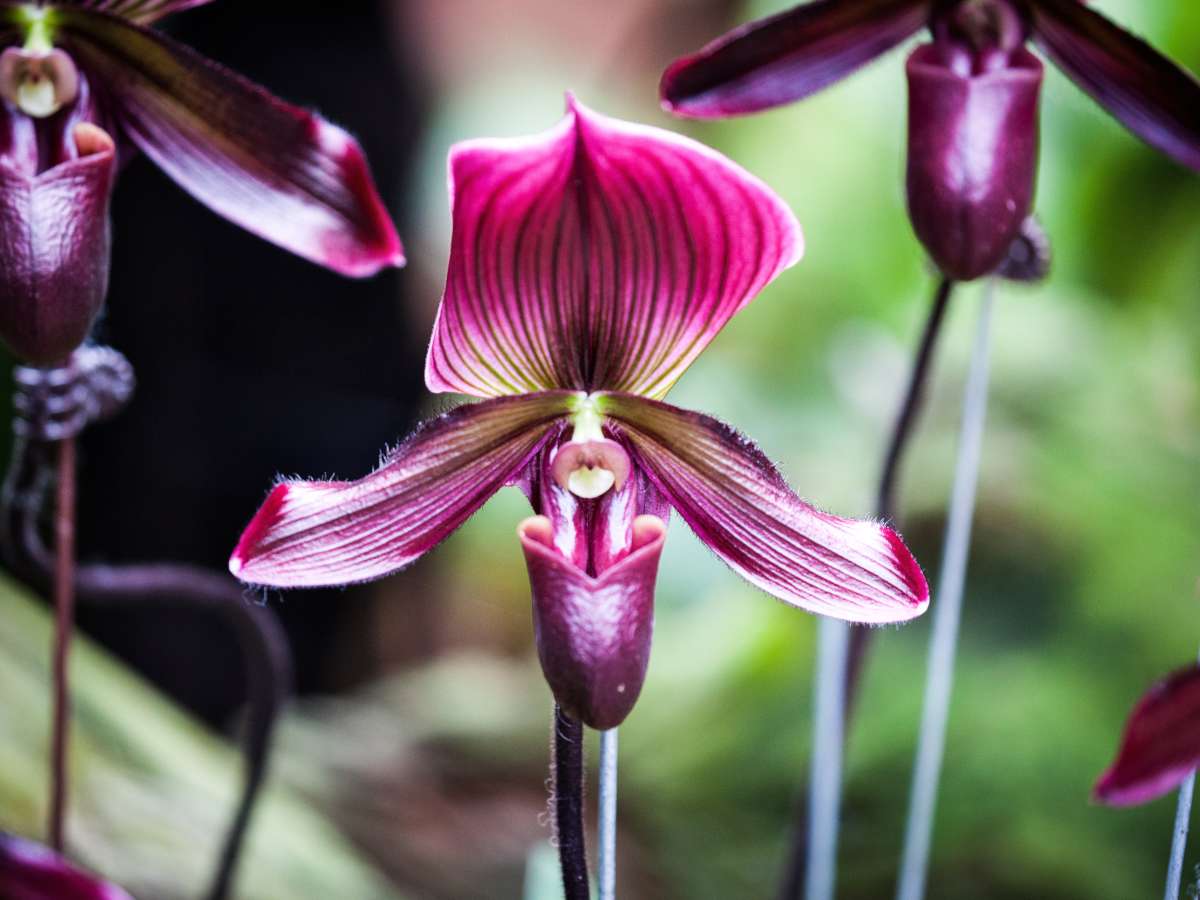
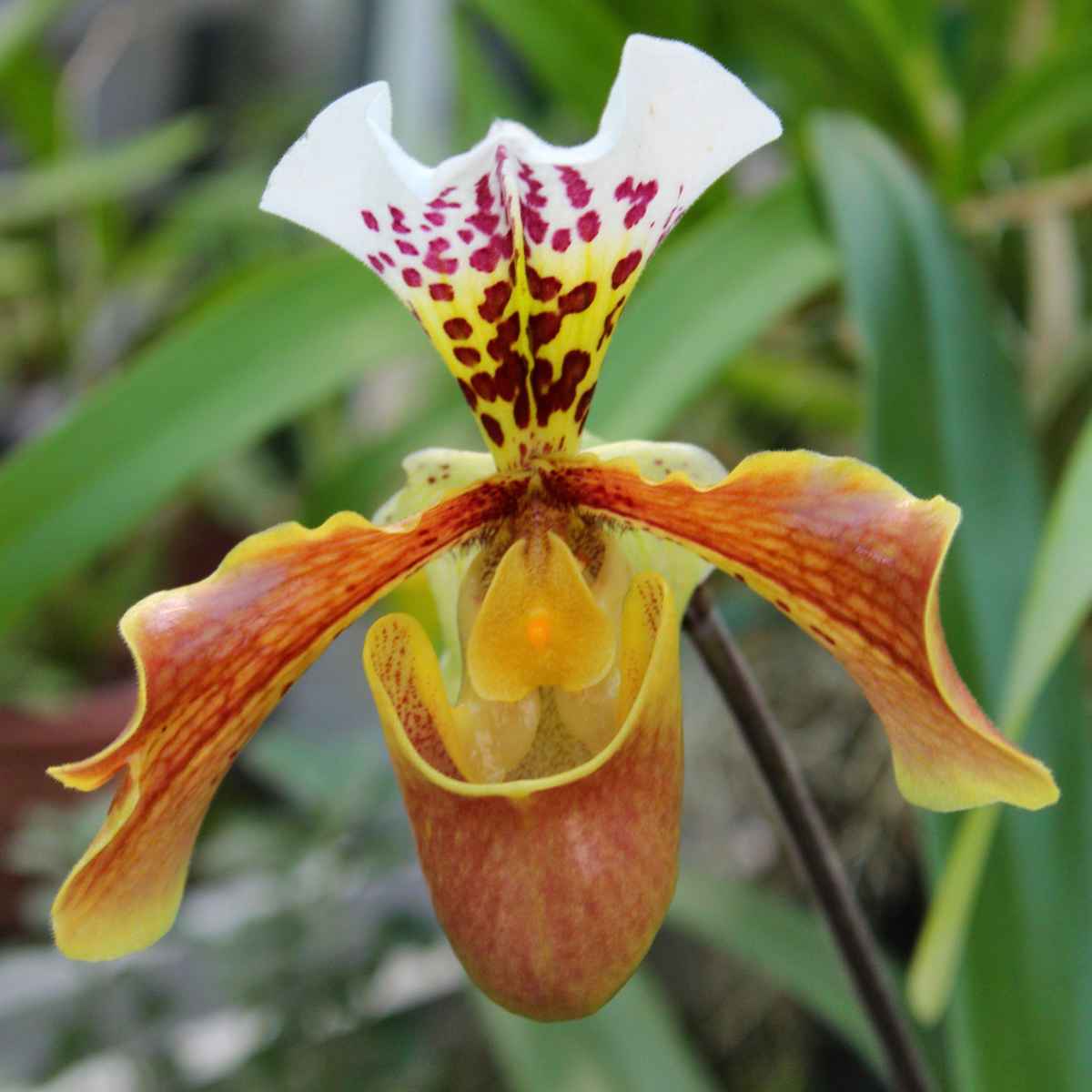
Paphiopedilum, the Solitaire
Usually a single flower to each scape
A tropical beauty, this easy-going orchid generally only carries a single flower per scape.
Unlike other orchids, Paphiopedilum loves shade which makes it a great choice for darker rooms.
Paphiopedilum has no pseudobulbs to fall back on, so never let its compost dry out completely.
Water onto the mix from the side and keep the central rosette dry, because water sitting in the crown of a slipper orchid quickly turns to rot.
Check the foliage before choosing a spot: mottled-leaved Paphiopedilum want steady warmth, while plain green-leaved kinds accept a cooler room.
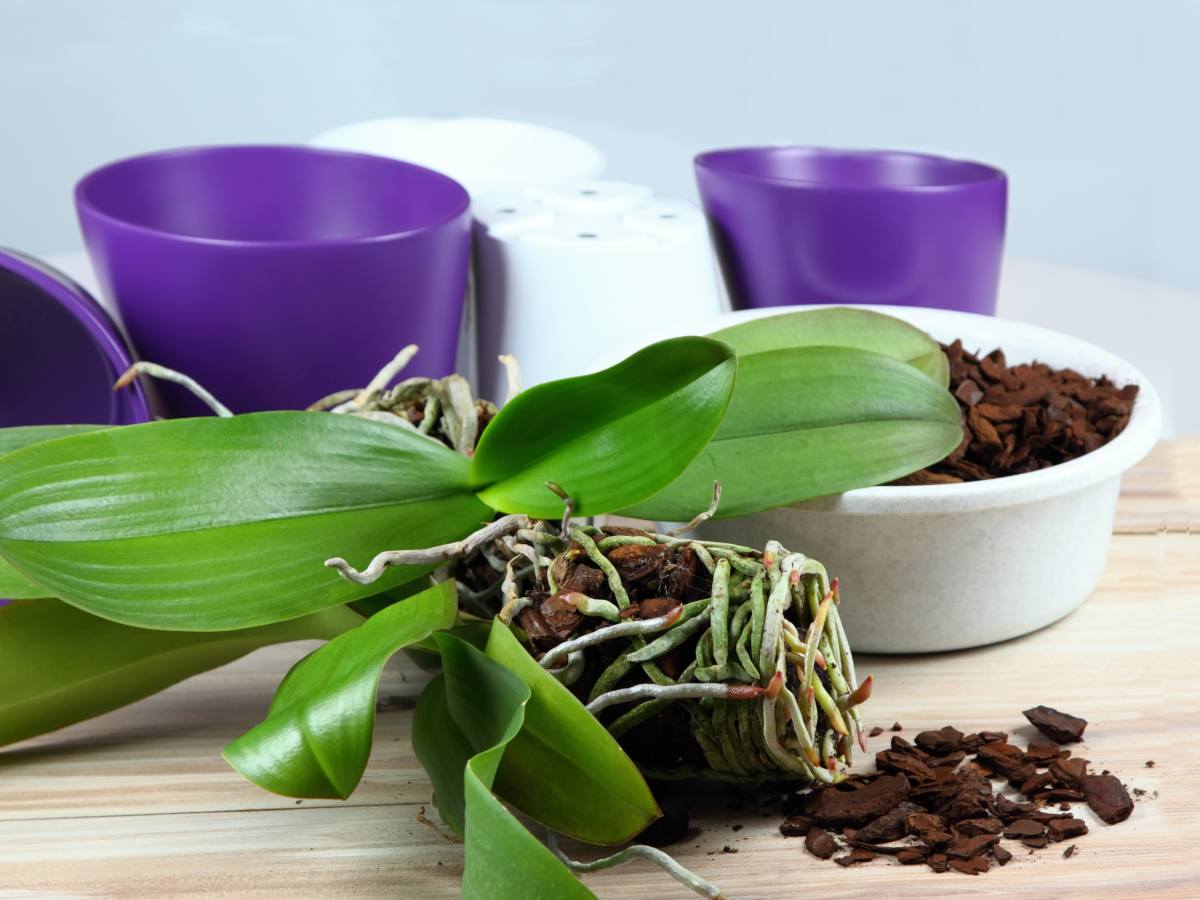
Repot epiphytic orchids such as Phalaenopsis in a fresh bark-based mix once flowering has finished, because their thick fleshy roots need air and rot in compost that has broken down.
Video on how to repot an orchid
Vanda is unusual in that it can be grown bare-root in a slatted or hanging basket with no medium at all, though it also does well potted in a coarse, fast-draining mix.
Repot these orchids into a bark-based mix rather than ordinary potting compost, which holds too much water around the roots of Miltonia, Oncidium and Dendrobium and encourages rot.
For spring-flowering bulbs such as daffodils, gardening guides advise waiting until the leaves have yellowed and died back, not merely until the last flower fades, before lifting and dividing clumps.
Trim away any root that feels mushy, slimy or hollow when pressed between your fingers, and keep the plump, firm ones intact, since healthy roots can naturally be tan or brown.
Images: Pixabay: Simon Bardet, David, Silvia Gamsjäger, Hartono Subagio, Man Mensch, suresh7076, terbe_rezso
🌿 Nature & Garden Newsletter
Gardening tips, recipes & seasonal advice, twice a week.