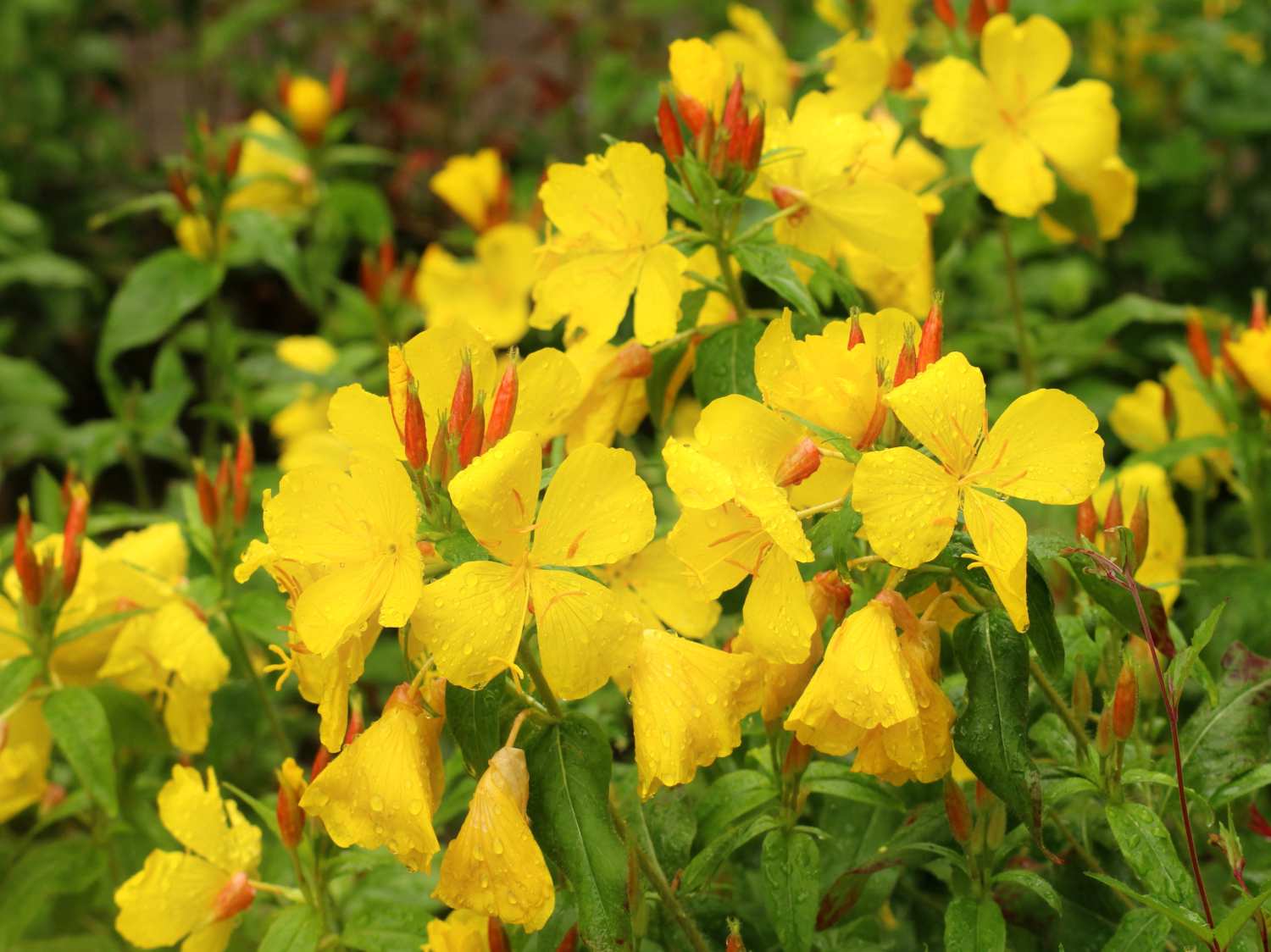
Dazzling blooms open above clumps that range from ankle-height to over three feet, depending on the species. Evening primrose (Oenothera) — no relation to the common primrose — lights up flowerbeds, edges, planters and even wildflower patches: give it sun and a light, well-drained soil, and it flowers with almost no effort.
| Name | Oenothera |
|---|---|
| Common name | Evening primrose |
| Family | Onagraceae |
| Type | Flower, perennial |
| Height | ½ foot to 3 feet 3 inches (15 cm to 1 m) depending on species |
| Exposure | Sunny |
| Soil | Light, well-drained |
| Blooming | Early summer to early autumn |
→ Note: not related to common primrose, despite the name.
No strong preference – either spring or fall works. Go for light soil and sunny placement, but nothing too hot.
You can multiply this beauty by dividing its clump in spring.
Come autumn, after it blooms, trim it down to its shortest.
Beyond the familiar Missouri evening primrose, the genus offers everything from ground-hugging cushions to airy, waist-high clumps. Here are the ones most often found in garden centres and seed catalogues.
| Variety | Height | Flower colour | Flowering season |
|---|---|---|---|
| ‘Whirling Butterflies’ | 24–36 in (60–90 cm) | White, flushed pink in bud | Early summer to mid-autumn |
| ‘Fyrverkeri’ (Fireworks) | 16–20 in (40–50 cm) | Bright yellow, red-tinted buds and stems | Early to late summer |
| ‘Sunset Boulevard’ | 24–32 in (60–80 cm) | Coppery orange-red | Midsummer to early autumn |

This stunner of a perennial flaunts dazzling blooms. Oenothera lights up flowerbeds, edges, and planters alike.
The most common find is Oenothera macrocarpa, which goes by the name “Missouri evening primrose”.
Growing this plant is particularly easy, to the point that it makes for a great addition to the patch of wildflowers you might have set up in your garden.
On hot days, give it water if it looks thirsty.
For those bulkier varieties, make sure to give each plant its personal bubble.