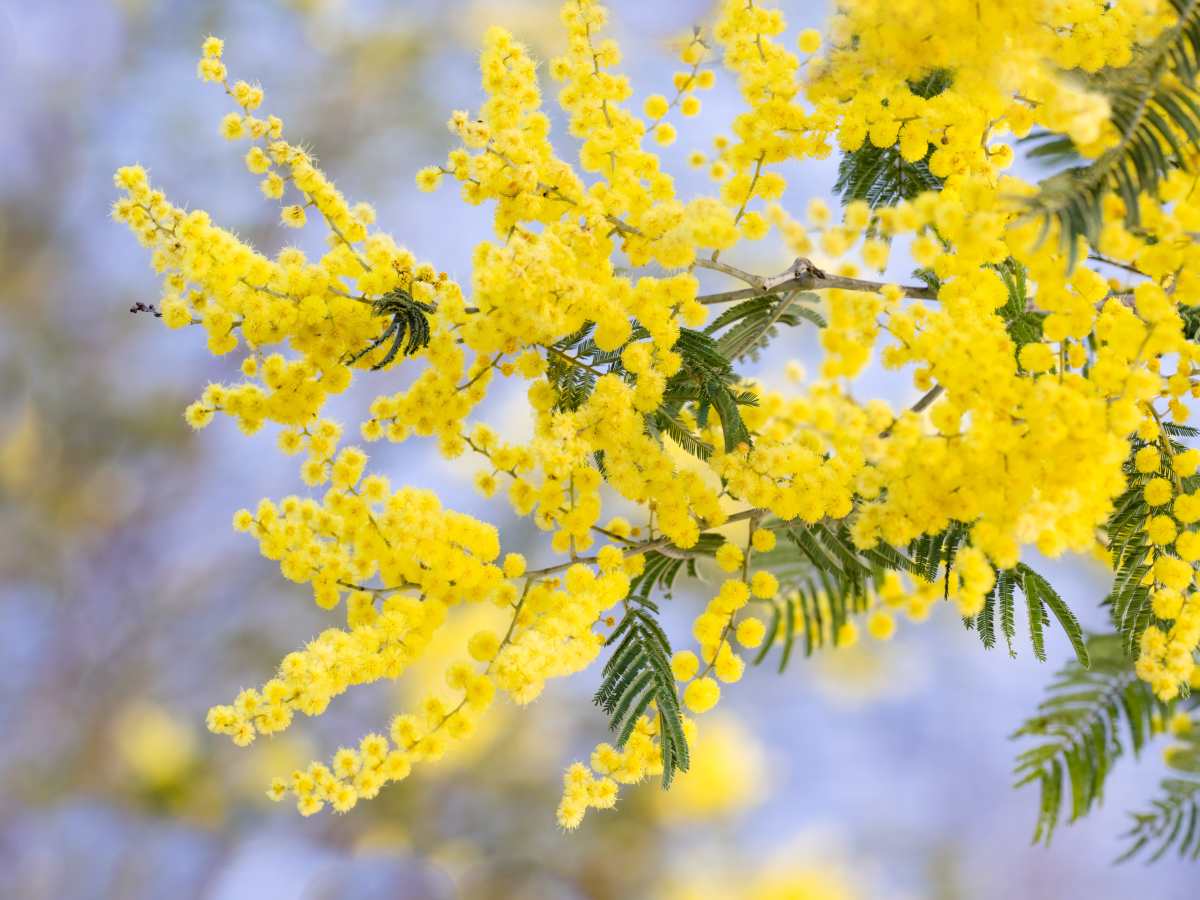
Clouds of yellow blossom smother the branches in winter, and a single shoot can put on five feet in one season. Mimosa (Acacia dealbata) takes hard pruning in its stride, shaped into a bushy shrub or a tall tree — but cut after flowering, not in winter, or you forfeit the blooms.
Mimosa pruning key facts
Goal – size, appearance Season – after the blooming (early spring) Cycle – yearly (every few months for suckers)
With proper pruning, your mimosa tree will grow to the shape you desire.
This is mostly useful if it’s in pots or if you don’t have much space. Indeed, it’s also possible to leave the tree unpruned, it has a beautiful natural shape if given the space.
How to trim a mimosa tree
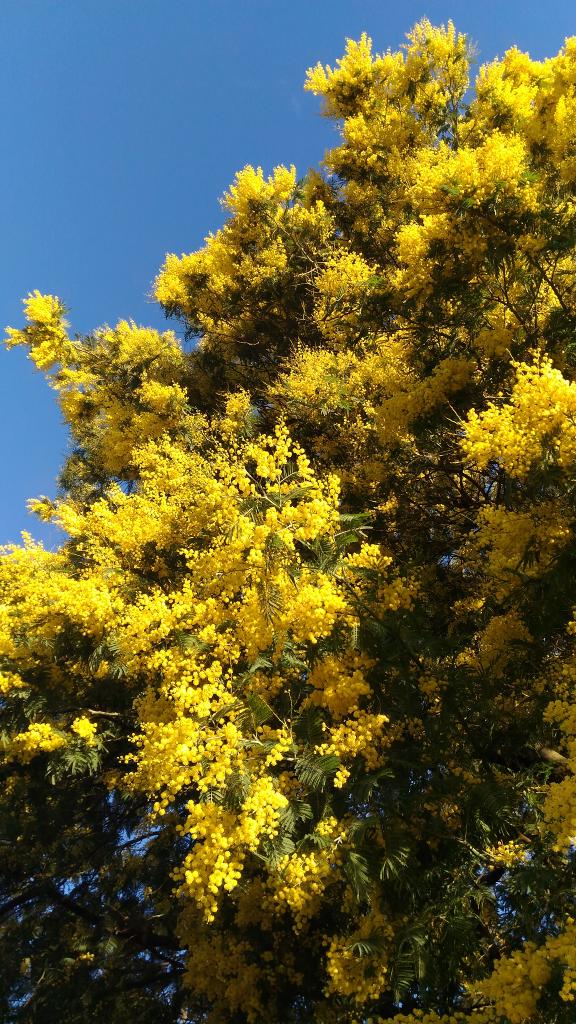
Left to grow, mimosa becomes a tall tree.
Your mimosa tree will happily stay small if you prune it often, and if you let it grow it can turn into a tall tree.
Pruning takes place after the blooming, in spring, because if you cut the tree in winter, you won’t have a single flower.
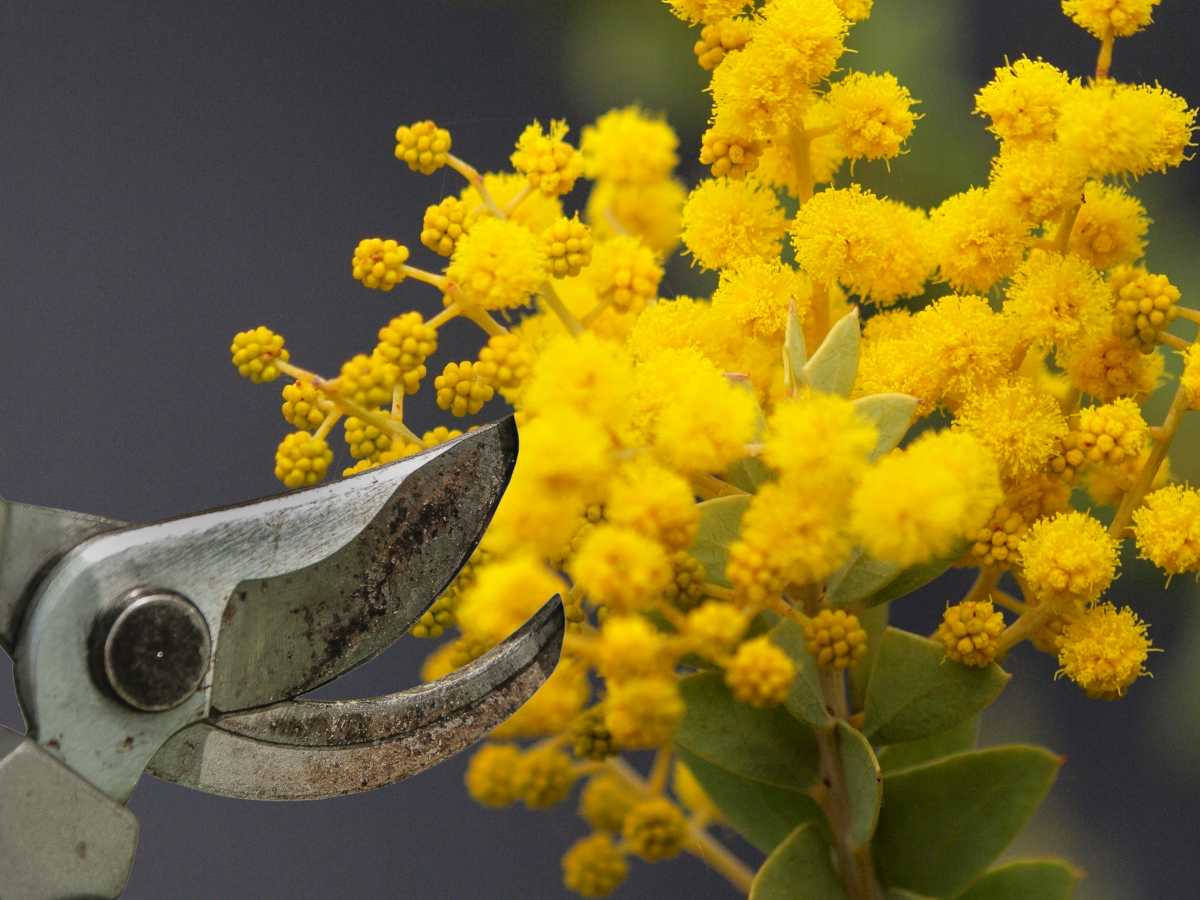
Cut branches that have born flowers back lightly.
As soon as they appear on the trunk, pinch suckers off. These usually appear at ground level, and they’ll weaken the rest of the tree.
If, at the end of winter, you notice branches that are broken and blackened because of freezing, feel free to cut them off because they, too, would weaken the tree.
Good to know: nearly all mimosa varieties respond equally well to all types of pruning.
Suckers
Suckers hint at how the tree survives in case of damage. Even a slab of bark will sprout into a new tree! These shoots will sprout during the growing season, generally on the lower part of the trunk. Snip them off to keep only a single stem, but leave them if you want your tree to look more like a short, lush bush.
Shaping a mimosa tree
This tree grows back very well, even after a hard pruning. Don’t be afraid to try new options out!
If you want a low, bushy shrub:
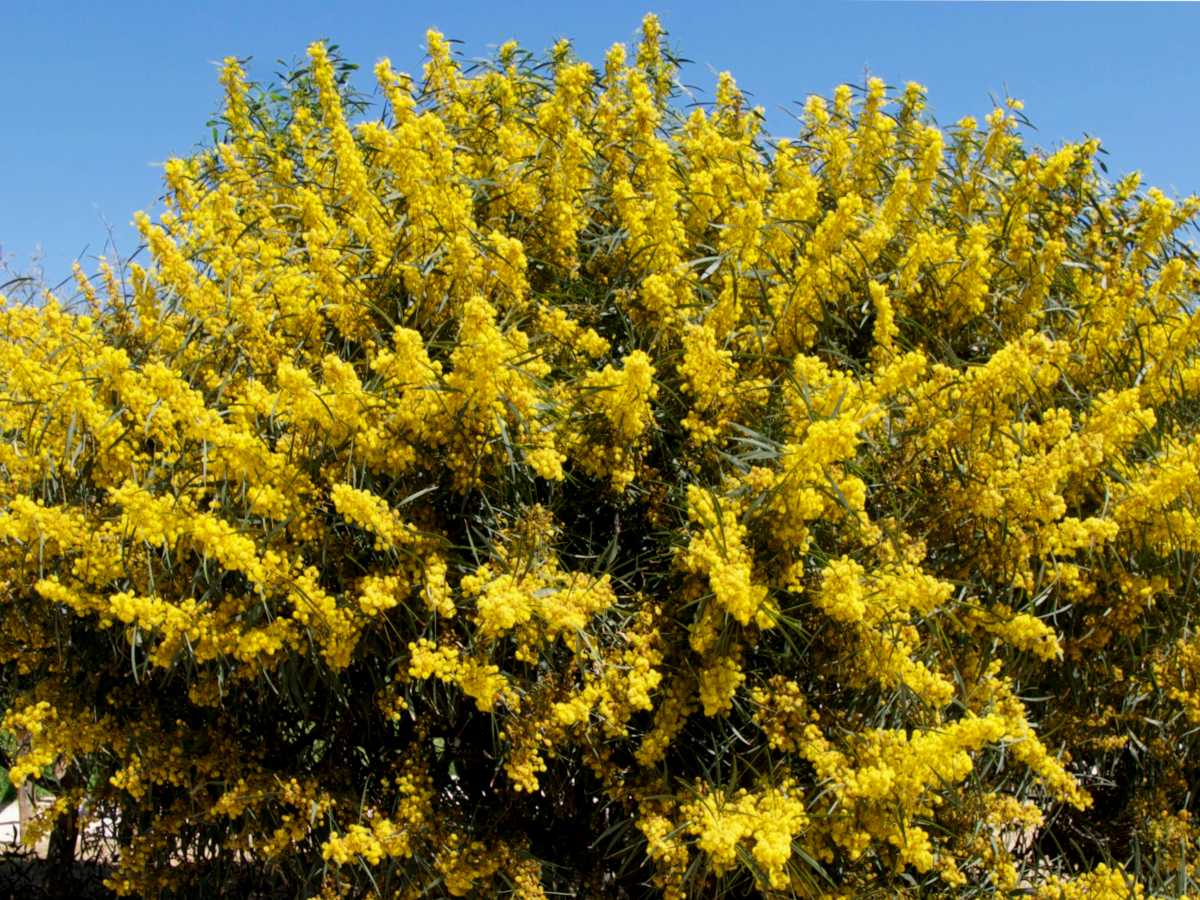
Snipping branches at two feet creates a dense shrub.
snip every branch as soon as it reaches two feet (50 cm).
They will branch out and create a round, dense shrub that will be covered in flowers in winter.
Don’t worry about the timing, this can be done any time.
Also, feel free to cut back drastically if you need to reduce the size of the tree. Mimosa can cope with hard pruning quite well.
If you want a tall, tree-like shape:
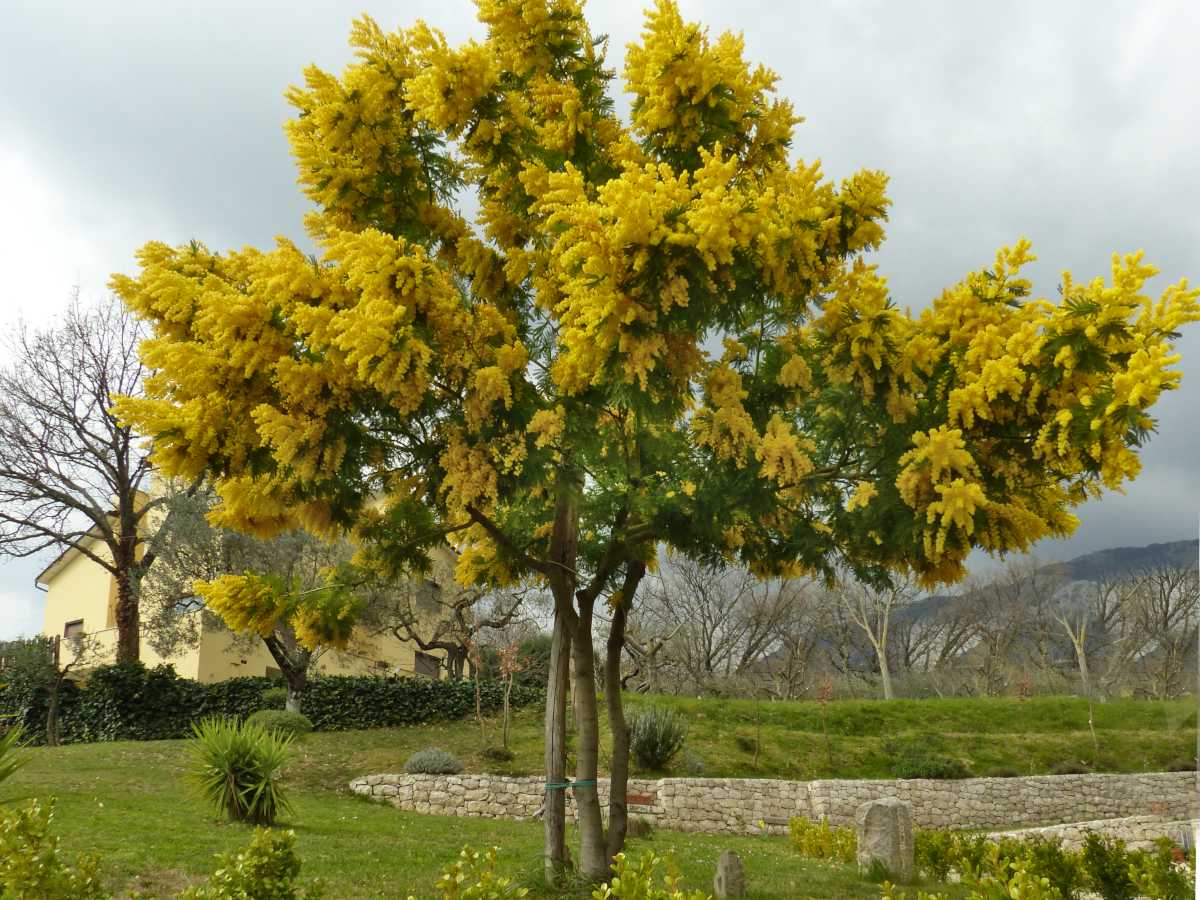
Removing trunk suckers forms a clear trunk and crown.
Let the topmost, leading stem grow freely.
Cut out suckers that grow from the side of the trunk.
Remove suckers up to the height you want your “trunk” to look like.
Above this, branches will start fanning out and grow, forming a tree-like crown.
Mimosa will start back from the roots even if freezing killed the trunk off. Nurture the new sucker depending on how you wish to shape your tree.
Note: Always prune your tree just after a split or y-junction with a smaller branch. An alternative is to prune just after (above) a bud that can take the lead and grow. Otherwise you’ll end up hatracking your tree, which isn’t a good thing.
Pruning a mimosa tree in a pot
In a pot, it’s necessary to prune your mimosa so that it doesn’t grow too large. It’s also important to avoid long, bare stems.
You can choose to prune your tree into a lollipop shape, with a single, straight stem topped by a pom-pom-like growth of dense branches (and therefore flowers). It’s also possible to grow the tree into a more natural shape, with branches splitting out from the stem at various intervals.
The resilience of this tree will let you experiment with success, since it will grow back even from the stump if need be.
Many potted mimosas are grafted onto Acacia retinodes rootstock, so any shoot rising from below the graft union must be rubbed off at once or it will overwhelm the variety above.
After heavy root pruning at repotting, many growers thin some top growth to reduce water demand, though no precise matching ratio is established and others leave the foliage intact to fuel regrowth.
Pinch the tips of new shoots on the pom-pom head to keep it dense.
Which mimosa to grow, and how each responds to the knife
The plants sold as mimosa cover both the winter-flowering wattles (Acacia) and the summer-flowering silk trees (Albizia julibrissin), and they differ in vigour, foliage and the shape they hold best once cut. Use the table to match a variety to the shape you intend to prune it into.
Which mimosa to grow, and how each responds to the knife
Variety
Flowers and season
Foliage
Vigour and habit
Shapes best as
Acacia dealbata ‘Gaulois Astier’
Deep yellow, strongly scented, winter
Silver-green, ferny
Vigorous, upright
Single-trunk tree; watch the graft union
Albizia julibrissin ‘Summer Chocolate’
Pink, summer
Deep bronze-purple
Moderate, vase-shaped
Feature tree pruned for leaf colour
Albizia julibrissin ‘Ombrella’
Rich pink, summer
Green, feathery
Moderate, naturally umbrella-crowned
Parasol crown, little pruning needed
Albizia julibrissin f. rosea
Deep pink, summer
Green, feathery
Moderate, hardier than the type
Small tree for colder gardens
How fast does a mimosa tree grow?
A single shoot can grow up to 5 feet (1.5 meters) in a single season!
From this shoot, in the next season, side branches will fan out.
Mimosa (Albizia julibrissin) grows rapidly and forms notoriously weak, brittle wood prone to storm breakage, so a sheltered site helps, though routine staking of young trees remains debated among horticulturists.
Grafted mimosas are usually worked onto Acacia retinodes, and shoots rising from below the graft union grow just as vigorously, so rub them out before they swamp the variety.
Wounds and gum
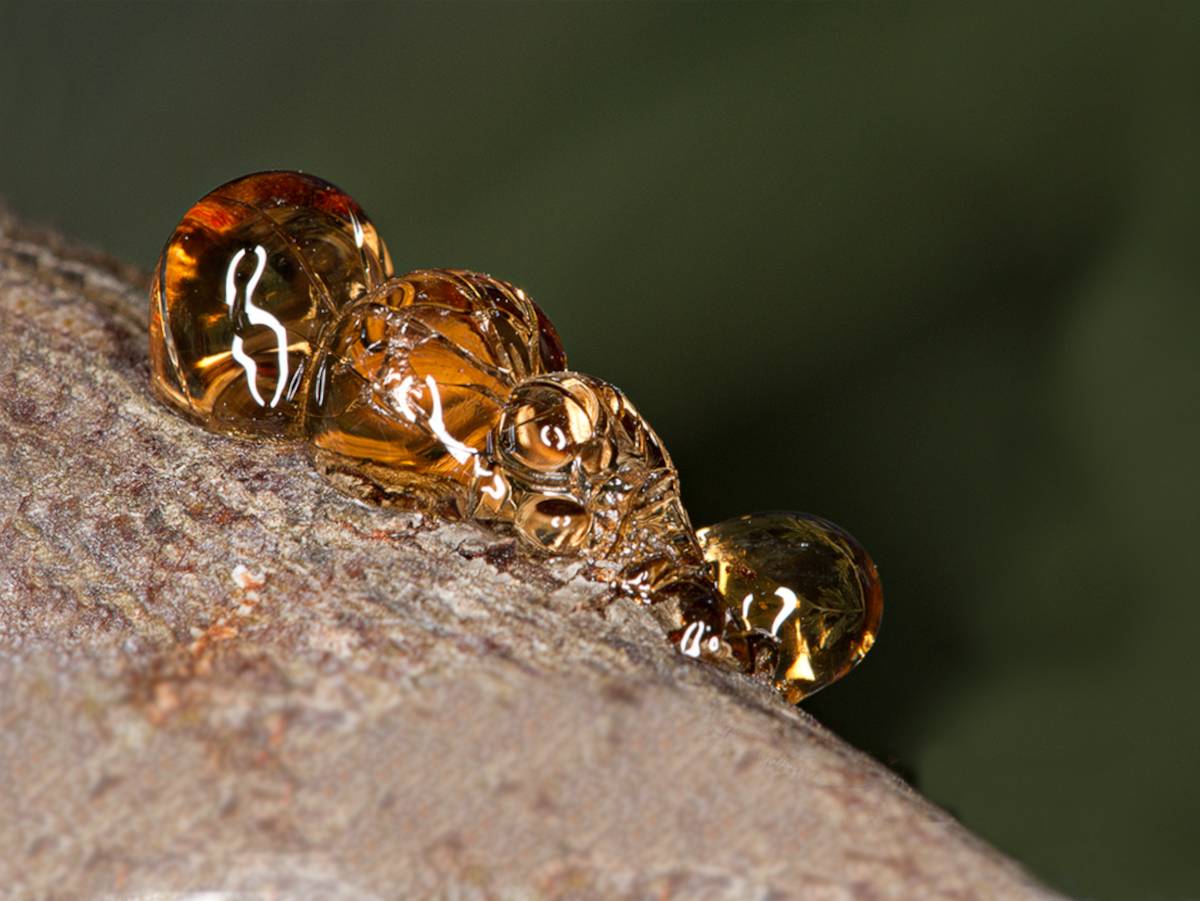
Mimosa seals its own cuts with abundant gum.
Mimosa trees will leach copious amounts of gum to protect wounds.
This means you don’t need to use pruning paste to protects cuts, the tree will protect itself naturally.
Wipe hardened gum off your secateur bladesafter each session, as a gummed-up blade crushes shoots instead of slicing them.
Take out unwanted limbs while they are still thin, because a small wound closes over long before a large one does.
Cut just outside the raised collar at the base of a branch rather than flush against the trunk, so the callus can roll over the wound.
Gum oozing from the trunk or a main limb where you made no cut deserves a closer look, since it can signal borers, canker, or other stress rather than ordinary healing.
Written by Gaspard Lorthiois | Loves helping out, especially when it comes to growing things. Worked in herbal medicine, runs a farm, and dabbles in tech. Master's degree and engineer.