Christmas cactus, perfect for hanging flower arrangements
·
0
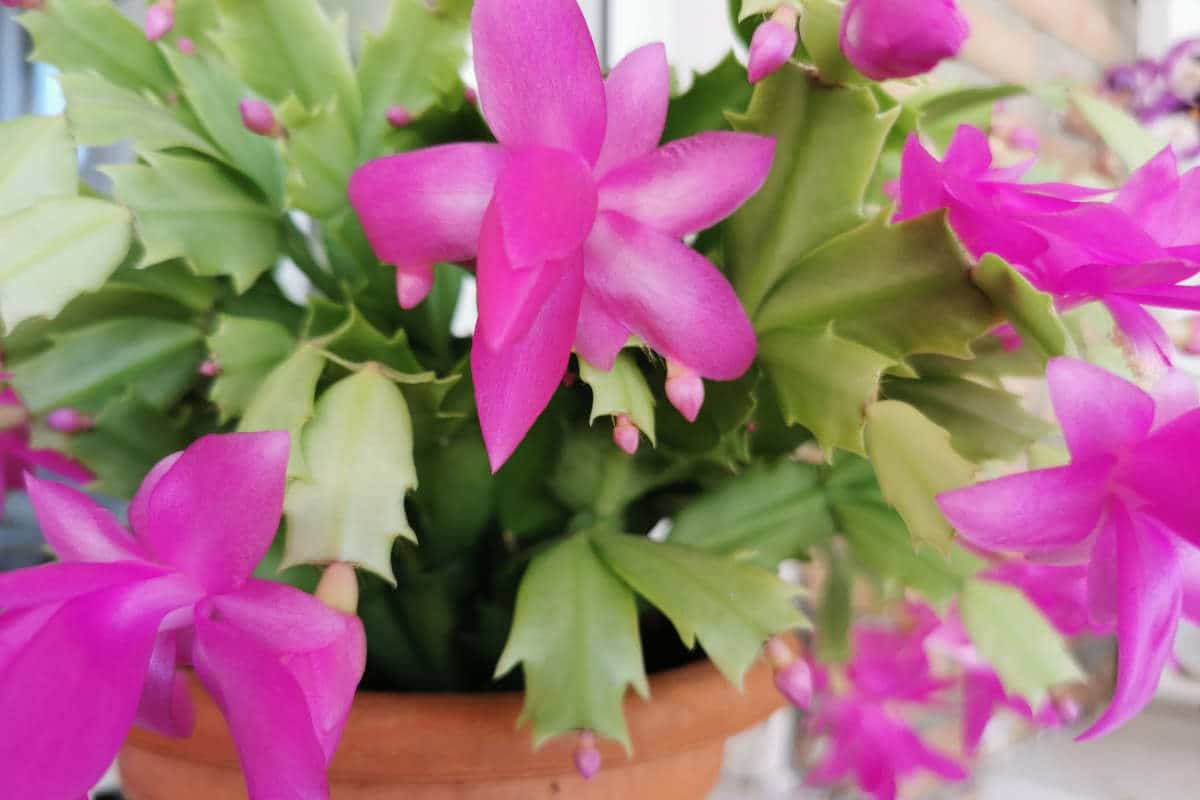
Stems built from jointed evergreen pseudo-leaves trail to 24 inches (60 cm) and open pink, violet, red, orange or white flowers in midwinter, which is what makes the Christmas cactus (Schlumbergera) such a natural choice for a hanging pot. Find it one bright spot out of direct sun and draughts, then leave it alone: six to eight weeks of flower follow.
Christened Schlumbergera in honor of Frederic Schlumberger, a prominent cactus collector of the XIXth century, Christmas cactus is an epiphyte succulent plant that comes to us straight from the tropical forests of Brazil. It boasts long stems that are assembled from evergreen pseudo-leaves that bear pink, violet, red, orange or white flowers in winter. Since they can grow to reach 24 inches (60 cm) long, these flowing stems make the plant ideal for suspended pot arrangements.
Once a week while the plant is flowering
The Christmas cactus is an easy and hardy plant once the proper place for it has been found. It needs a luminous spot, but with neither direct sun nor drafts of wind. The temperature must constantly hover between 60 and 70°F (15 to 20°C), because it doesn’t like heat. Once you’ve found the spot that it seems to like best, keep it there: it doesn’t like being moved around! Water once a week during the blooming season, and remove wilted flowers one at a time to boost appearance of new flower buds. When the plant isn’t bearing flowers, wait until the soil is dry before watering anew. Repot sometime between late winter and mid-spring more or less every third year, in a blend of soil mix, sand and garden soil.
The Christmas cactus year at a glance
The same plant is treated quite differently depending on whether it is in flower, resting or being propagated. Here is what the article recommends for each moment.
The Christmas cactus year at a glance
Moment
What to do
Watering
Blooming season
Remove wilted flowers one at a time to encourage new buds
Once a week
Out of flower
Leave it in the spot it has settled into
Only once the soil is dry
Autumn rest (two months)
Room with natural light only, until flower buds appear
None
late winter to mid-spring, every third year
Repot into soil mix, sand and garden soil
Normal
Outside the blooming season
Take a stem of at least three segments for cuttings
Normal
Read across the year and the plant asks for very little beyond consistency.
How to ensure your Christmas cactus will bloom again
Bright light, but no direct sun and no draughts
Christmas cactus will bloom again if it feels that nights are getting longer. Short daylight hours are a trigger for the blooming.
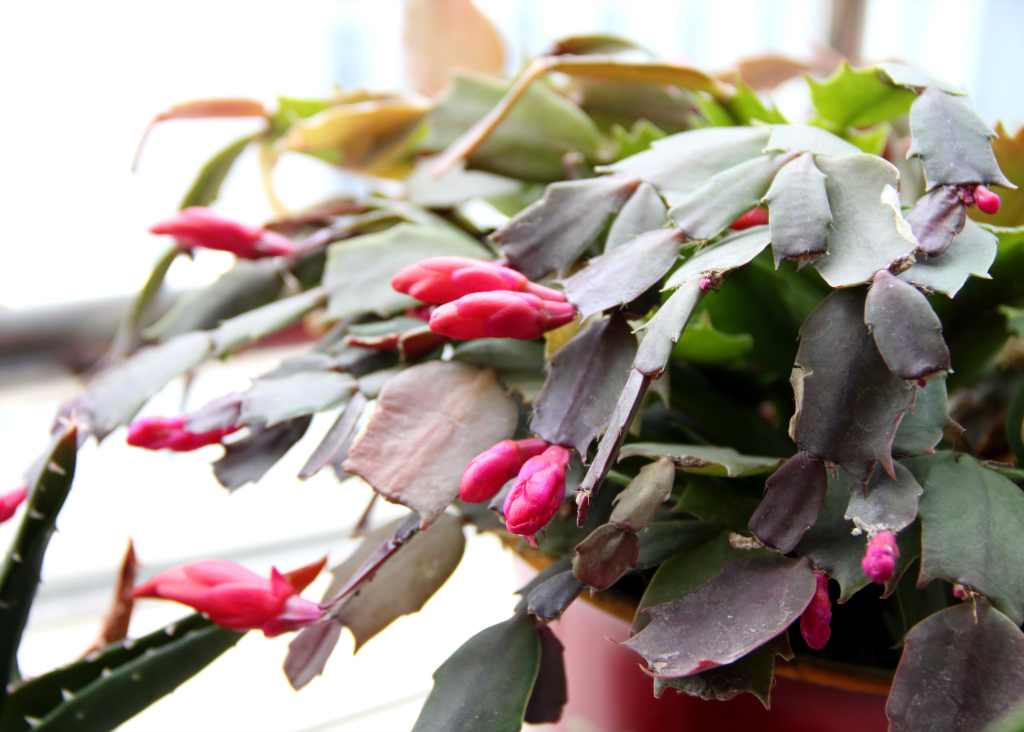
In fall, place it at rest, without watering, in a room that only gets natural light, for two months, until flower buds appear.
Once the flowering has been triggered, you can bring it back to its original spot.
Once buds have formed, avoid moving the pot to a new spot, since Schlumbergera can drop buds when light, temperature, drafts or watering change abruptly — not simply because it was touched.
The dark period must be genuinely unbroken, so a lamp switched on in the evening or a street light through the glass can be enough to stall bud formation.
For Christmas cactus (Schlumbergera), cool nights near 55°F (13°C) combined with long, uninterrupted darkness encourage bud formation, so keep the resting plant away from radiators and other heat sources.
Easy Christmas cactus cuttings
The Christmas cactus is very easy to propagate through cuttings. Outside of the blooming season, collect a sample stem that counts at least three segments, let it dry in the open air for a couple hours for the cut wound to heal, and then plant it in a pot with equal parts soil mix, garden soil and sand.
When taking cuttings from segmented plants such as Christmas cactus (Schlumbergera), twist the stem apart at a natural joint rather than slicing through a segment, a practice widely recommended in gardening guides.
When rooting a cactus pad or succulent cutting, bury only its lowest segment or base, since setting such fleshy cuttings deeper in damp soil often causes them to rot rather than root.
With many soft-stemmed houseplants such as pothos, tradescantia or coleus, rooting three or four cuttings together in one pot usually yields a fuller, more balanced plant than a single stem would.
Written by Gaspard Lorthiois | Loves helping out, especially when it comes to growing things. Worked in herbal medicine, runs a farm, and dabbles in tech. Master's degree and engineer.