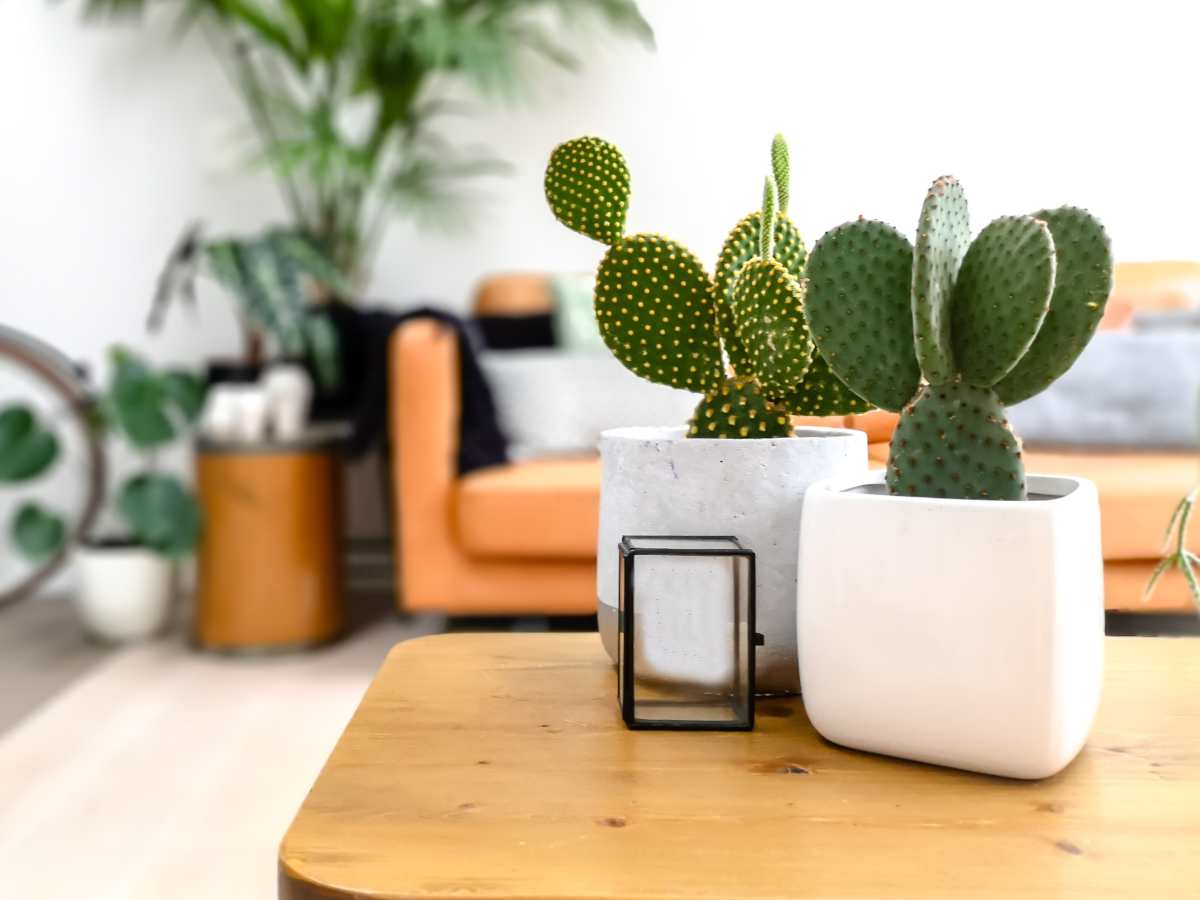
Flat, shiny green paddles shaped like ping-pong rackets, bristling with golden brown spikes, carry yellow flowers streaked with red along their rims. The paddle cactus, also called Mickey Mouse (Opuntia vulgaris), is a succulent grown in a pot for that sculptural habit: give it full sun and a free-draining mix, and the blooming continues all year round.
| Latin name | Opuntia vulgaris Mill. |
|---|---|
| Family | Cactaceae |
| Type | Succulent plant |
| Height | 18 feet (6 m) |
| Indoor use | Pot |
| Exposure | Full sun |
| Soil | Limestone, sand, well-drained |
| Planting | Year-round in containers |
| Flowering | early summer to midsummer |
Since it isn’t hardy at all, the paddle cactus needs to be grown in a container in most temperate climates.
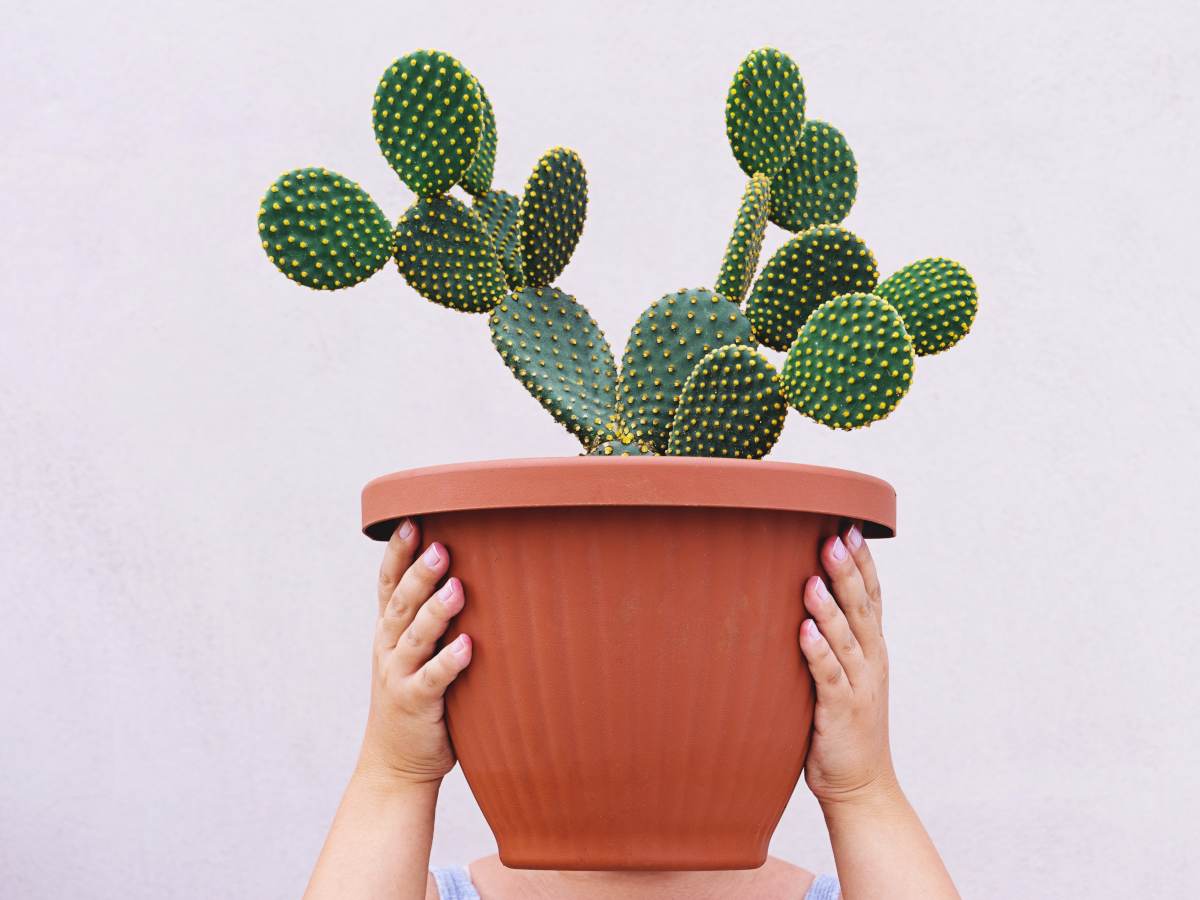
Opuntia Vulgaris Mill. is often propagated through cladode cuttings. It’s a very easy procedure. It’s most successful when performed at the end of spring or at the beginning of summer.
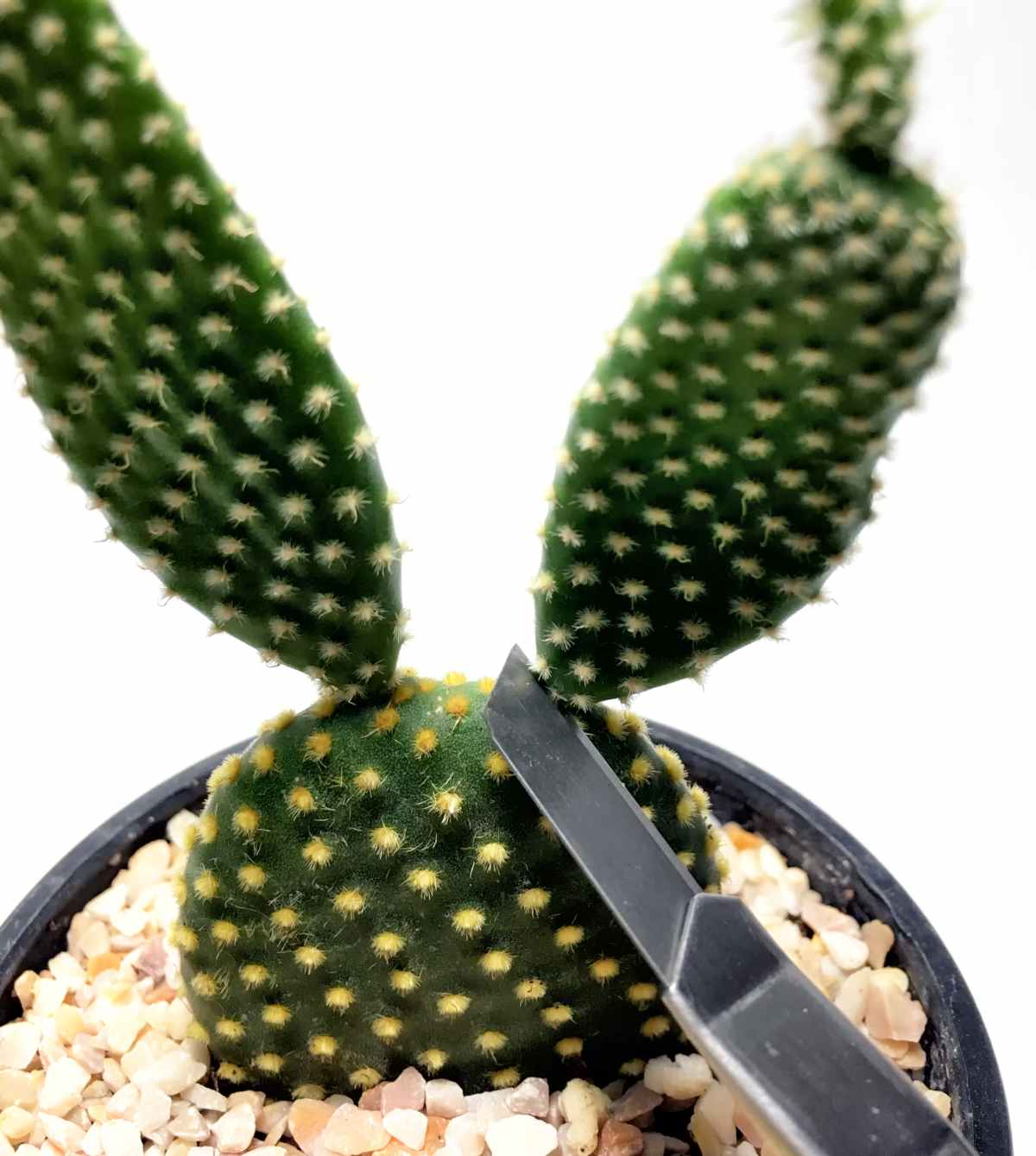
Be careful: Opuntia Vulgaris has lots of spikes. Protect your hands with thick gloves before you start handling the plant.
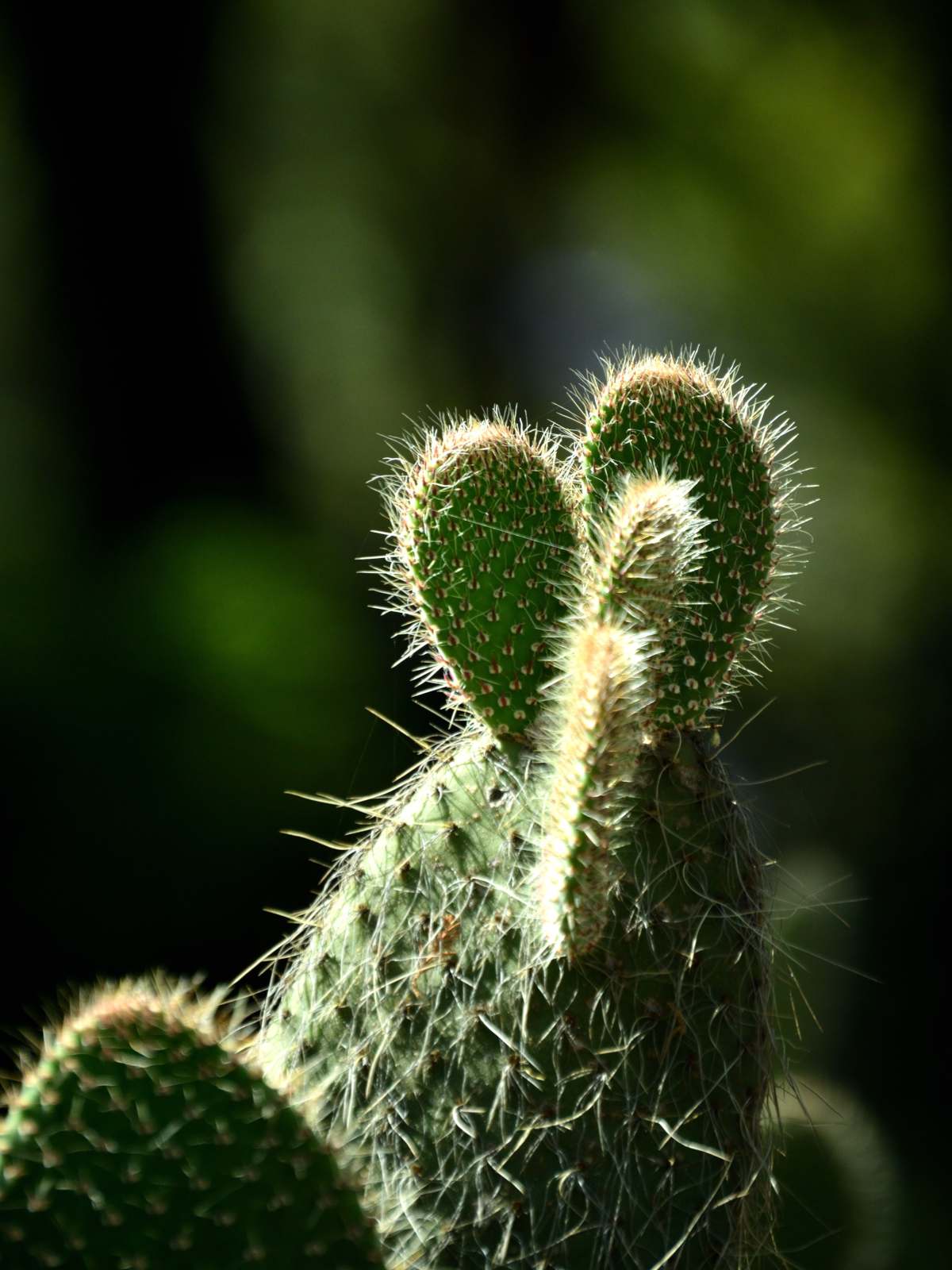
Opuntia Vulgaris is a drought-resistant plant. However, in pots, the substrate tends to dry out really fast. During hot, dry summers, go ahead and drench the pot with abundant water at least 2 or 3 times over the summer. Make sure to empty the saucer underneath the pot every time. Also during summer, give the plant liquid plant fertilizer about once a month: this will support blooming.
In fall, provide a few handfuls of organic manure to your container-grown Opuntia. It’s also the right time to do some pruning: remove any cladodes that are touching the ground, and those that are growing inwards and start creating a tangled mess in the center of the plant.
Bring the pot indoors in a lean-in or a bright greenhouse as soon as the temperatures start dropping. Stop watering altogether in winter. Repot your Opuntia Vulgaris in spring.
A container-grown paddle cactus asks for very different treatment from one season to the next, from summer drenchings to a completely dry winter. Here is what each season calls for.
| Season | Main job | What to do |
|---|---|---|
| Summer | Water and feed | Drench the pot 2 or 3 times over the season, empty the saucer each time, and give liquid fertiliser about once a month |
| Autumn | Feed and prune | A few handfuls of organic manure, then cut out cladodes touching the ground or growing inwards |
| Winter | Shelter and rest | Move the pot into a lean-in or bright greenhouse and stop watering altogether |
| Spring | Repot and propagate | Repot the plant, and take cladode cuttings from late spring into early summer |
Follow this rhythm and the plant will flower along the rim of its paddles.
Opuntia Vulgaris is very vulnerable to excess moisture which leads to the appearance of a type of rust called Phillostica opuntiae and the following strains of mildew: Phytophthora cactorum and Phytophtora omnivera.
As for critters and pests, this species of Opuntia is a favorite host of scale insects. In some parts of the world (around the Mediterranean), it may become infected by a sap-sucker fly called Ceratitis capitata.
Common name: Paddle cactus, Mickey Mouse
Opuntia Vulgaris is a succulent plant that’s part of the Cactaceae family. It’s native to Argentina, Brazil and Uruguay.
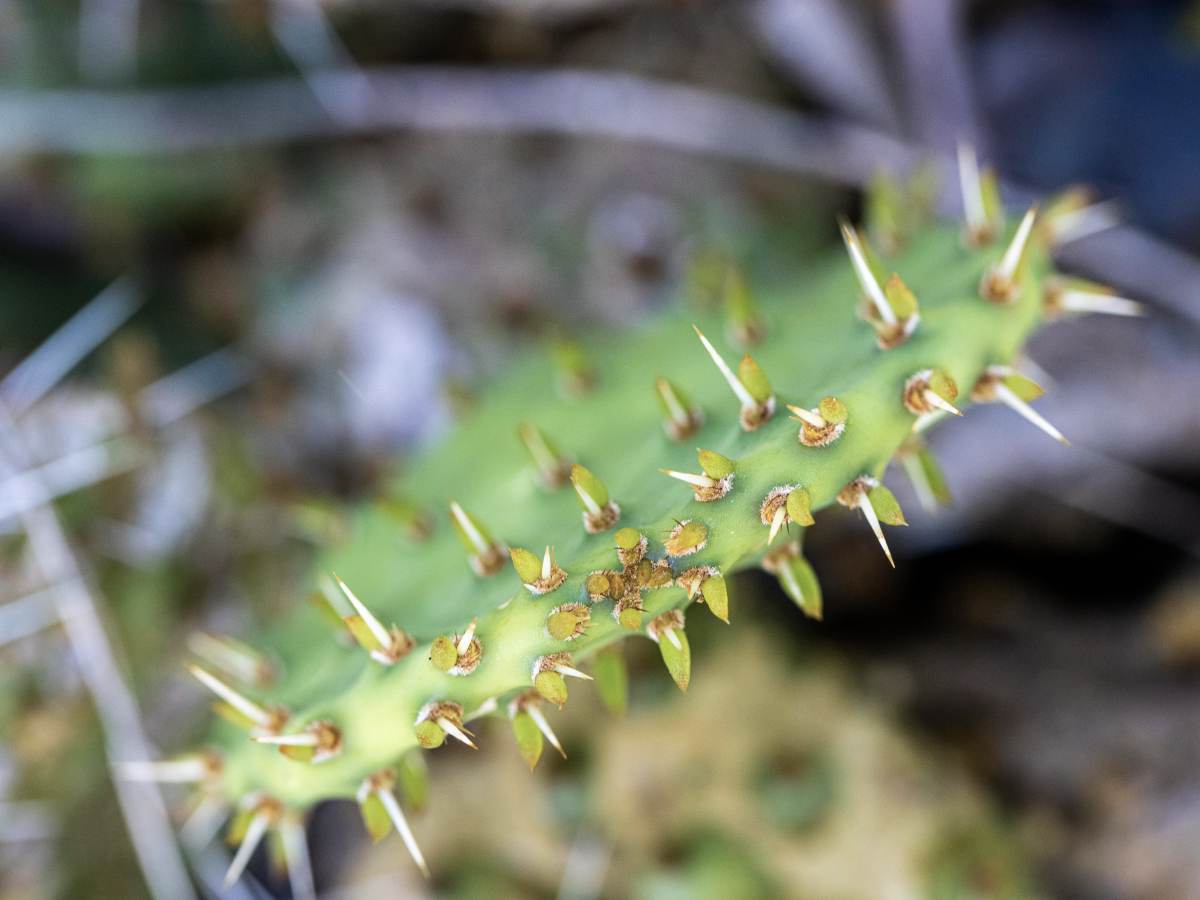
The paddle cactus has a regular tree-like bearing that can get quite bushy. Its width increases as it grows tallerl, like an upside-down pyramid. It can reach 18 feet (6 m) in its native environment. Its evergreen leaves are called s, they’re shaped like ping-pong rackets. They’re flat and a shiny green color, with lots of golden brown spikes.
In spring, the blooming appears along the rim of the paddles. These flowers are a magnificent yellow color with streaks of red. The blooming continues all year round when the plant grows in suitable conditions.
Opuntia Vulgaris Mill. produces oval or pear-shaped fruits that are 2 or 3 inches long (5-6 cm). They have tiny prickly burrs and their flesh can be yellow, green or red. Many tiny black seeds are sprinkled throughout the fruit.