Home » Health » Valerian: traditional uses, how to prepare the root, and cautions
Valerian: traditional uses, how to prepare the root, and cautions
·
0
Valerian is the plant people reach for when the head will not switch off at bedtime. It is the root that is used, dried, and its smell is famously unlovely — earthy, musky, a little like old socks. This page covers what the root is, what herbalism credits it with, how to make an infusion or a tincture, and who should leave it alone.
Valerian at a glance
Item
Detail
Botanical name
Valeriana officinalis
Family
Valerianaceae
Part used
Root and rhizome, dried
Forms of use
Cold or hot infusion, decoction, tincture, capsules of powdered root, bath infusion
Harvest season
Mid-autumn to late autumn, in the plant’s second year
Taste and smell
Bitter, earthy, camphor-like; the smell is pungent and musky
What it is credited with
Herbal medicine uses the dried root for its relaxing and sedative reputation, above all at the end of the day.
It is traditionally used to help wind down nervous states — restlessness, over-excitement, that keyed-up feeling after a long day.
Naturopathy credits it with favouring sleep onset in people whose nights are broken by nervous tension rather than by pain or noise.
In traditional herbalism it was given to calm nervous palpitations — the fluttering chest that goes with anxiety.
Herbalists recommend it for cramping and spasm: tight stomach, period cramps, muscles that will not let go, on account of its long-standing reputation as an antispasmodic.
It has a reputation for not creating habit or craving, which is why it has stayed in the herbal repertoire for centuries.
How to use it
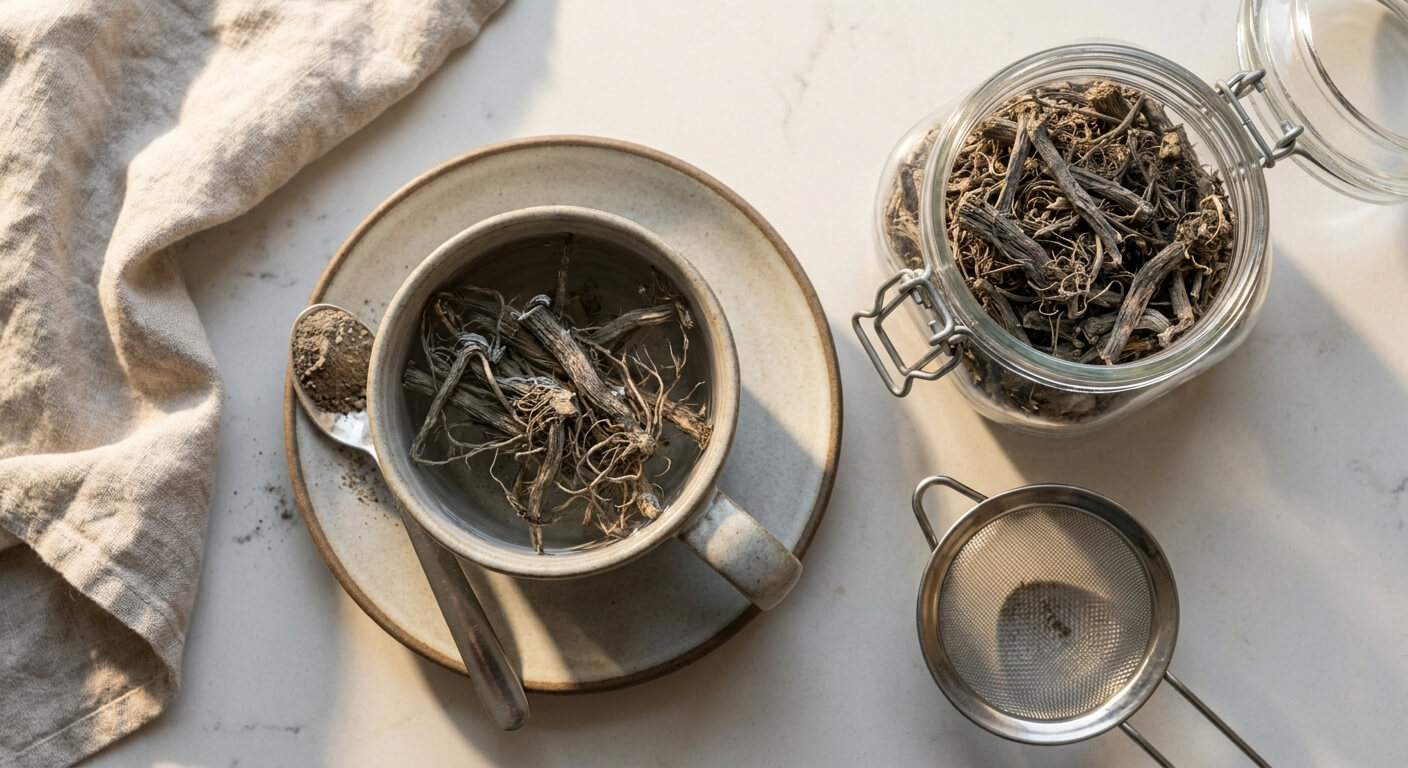
Valerian works better as a cold infusion than a boiling one — heat drives off the aromatics and sharpens the bitterness.
A level teaspoon of dried root, cold-steeped eight to twelve hours
Cold infusion (the classic): a level teaspoon of dried, chopped root in a mug of cold water. Cover, leave on the worktop for 8 to 12 hours — set it up in the morning, strain it in the evening. Warm gently before drinking if you prefer.
Hot infusion: a teaspoon of root per mug of just-off-the-boil water, covered, 10 to 15 minutes. Quicker, stronger-tasting, less fragrant.
Decoction: same quantity, simmered barely 5 minutes in a lidded pan, then left to stand off the heat for 10. Useful when the root is in thick, woody pieces.
Tincture: fill a jar loosely with dried root, cover completely with vodka or another 40% spirit, seal, and keep in the dark for three to four weeks, shaking every few days. Strain into a dropper bottle. A few drops in a little water is the traditional bedtime measure.
Capsules: powdered root in gelcaps is the usual answer for anyone who cannot get past the smell. Follow the maker’s instructions on the pack.
Bath: a generous handful of root steeped in a jug of hot water for 20 minutes, strained, tipped into a warm bath before bed.
Timing: traditional practice is one cup in the evening, half an hour to an hour before bed, taken in short runs of a couple of weeks rather than continuously.
Taste: frankly bitter. Honey, a slice of lemon, or a pinch of dried lemon balm, lime blossom or mint in the same cup makes it far easier to finish.
Forms of valerian root compared
Form
How it is prepared
What it is used for
Cold infusion
1 tsp dried root per mug, cold water, 8–12 hours
The gentlest, most aromatic bedtime cup
Hot infusion
1 tsp per mug, hot water, covered, 10–15 min
Quick evening drink when time is short
Decoction
Simmer 5 min, stand 10 min off the heat
Thick, woody root pieces
Tincture
Root macerated in 40% spirit, 3–4 weeks, dark place
Keeps for years; drops in water at bedtime
Capsules
Powdered dried root, bought ready-made
Avoiding the smell and the bitterness altogether
Bath infusion
A handful steeped in hot water, strained into the bath
Unwinding without drinking anything
Frequently Asked Questions
The one thing to remember: set a teaspoon of dried root to steep in cold water in the morning, strain it and drink it an hour before bed — and do not drive afterwards.
Why does valerian smell so bad?
The smell comes from volatile compounds in the root that develop as it dries, and it is often compared to old socks or stale cheese. A fresh root smells of very little. A strong smell is actually the sign of well-kept root; the odourless stuff is stale.
Cold infusion or hot — which is better?
The cold infusion is the traditional favourite because it keeps more of the aromatics and tastes less harsh. Set it up in the morning in a covered mug of cold water and strain it in the evening. A hot infusion works if you are short of time, but expect a sharper, more bitter cup.
Can I take valerian every night indefinitely?
Traditional practice is short runs of a couple of weeks, then a break, rather than continuous use. Stop and reassess if you get headaches, a heavy head in the morning or stomach upset. Long-running sleep problems are worth discussing with a healthcare professional.
Can I cook with valerian?
Practically nobody does. Valerian appears as tea, decoction, tincture, capsules and essential oil, but its pungent, bitter root has never found a place in everyday recipes. If you want to experiment, keep the quantity tiny and treat it as a bitter aromatic rather than a vegetable.
Which part of the plant do I use?
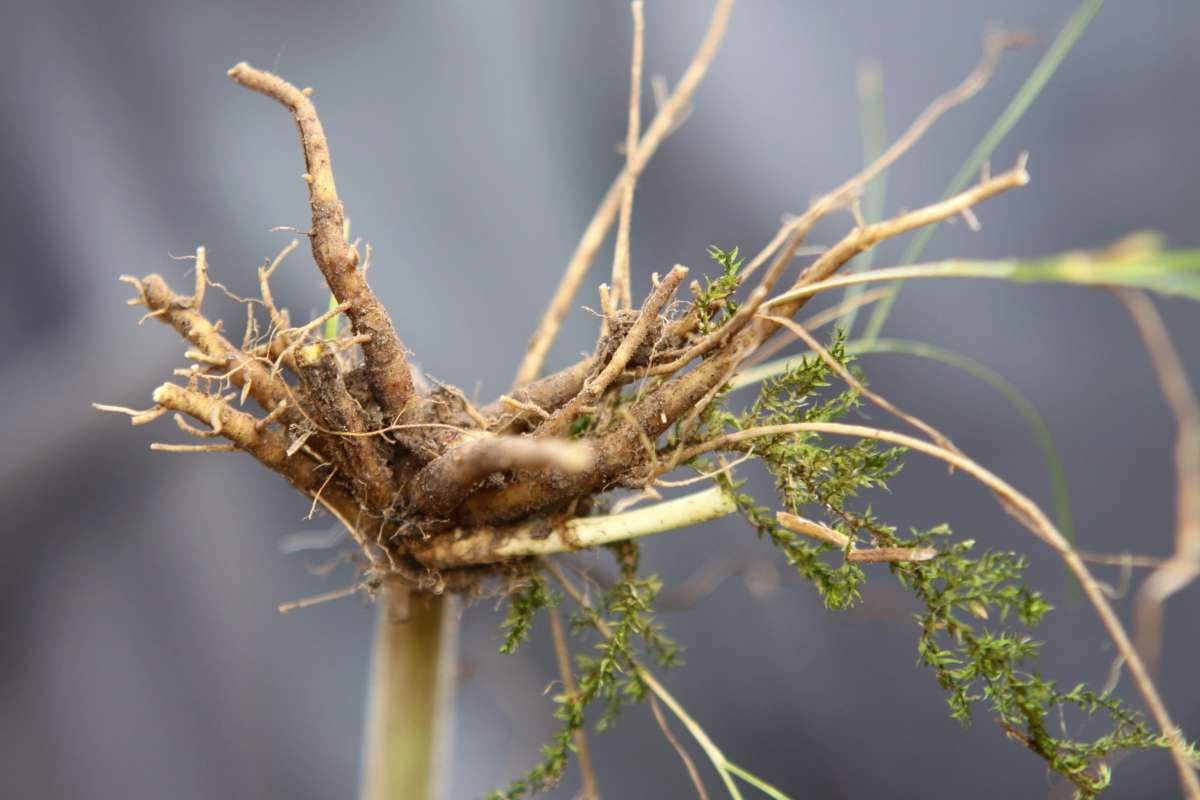
The root and rhizome only, dried. Lift it in mid- to late autumn of the second year, wash it, split thick pieces and dry them slowly in a warm shaded place. Leaves and flowers are not used in herbal practice.
This information is provided for general interest and reflects the traditional use of plants. It is not a substitute for medical advice. If you are on medication, pregnant, or in any doubt, ask a healthcare professional.
Written by Gaspard Lorthiois | Loves helping out, especially when it comes to growing things. Worked in herbal medicine, runs a farm, and dabbles in tech. Master's degree and engineer.