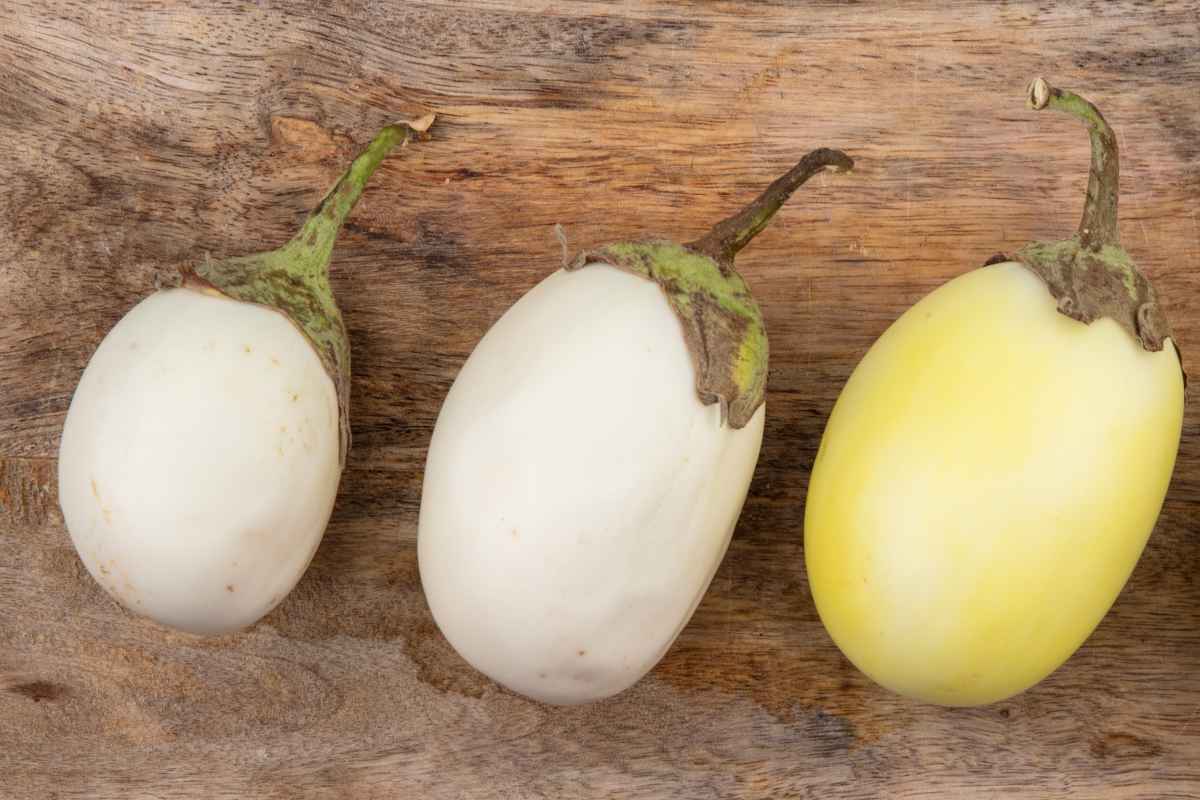
Ivory-white fruits, round as an egg or long and stocky, ripen on plants that reach two or three feet; the flesh is softer and sweeter than that of purple-skinned kinds, and takes well to stuffing, grilling or ratatouille. Give them sun and rich, deep, free-draining soil kept moist but never wet, and harvests run from June to November.
The main difference is of course the white color of its peel, but there are also noticeable differences in flavor. Indeed, white varieties tend to have a much softer and sweeter taste than purple-skinned varieties. As is the case for purple eggplant, white ones have fruits that also come in various shapes and sizes.
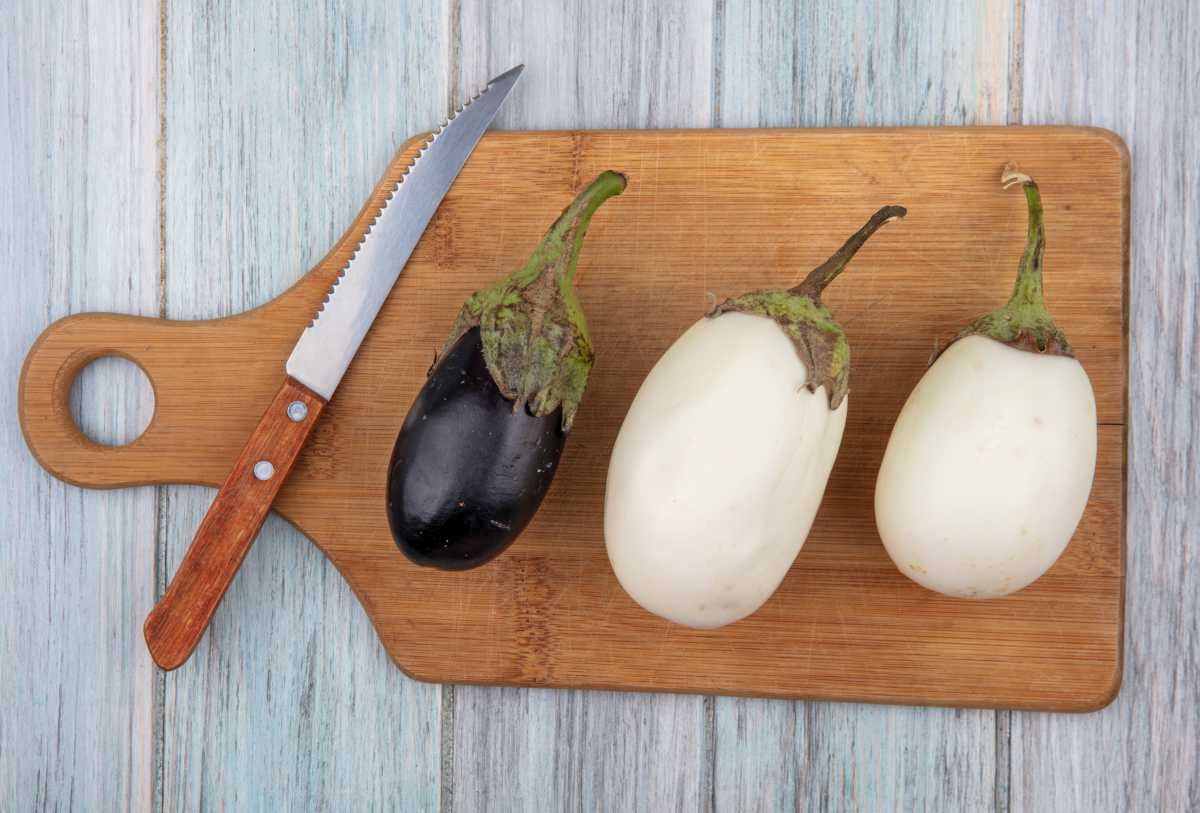
For white-skinned aubergines, colour gives little guide to peak ripeness, though yellowing or dulling warns of over-maturity, so judge readiness mainly by glossy skin and firm flesh that springs back.
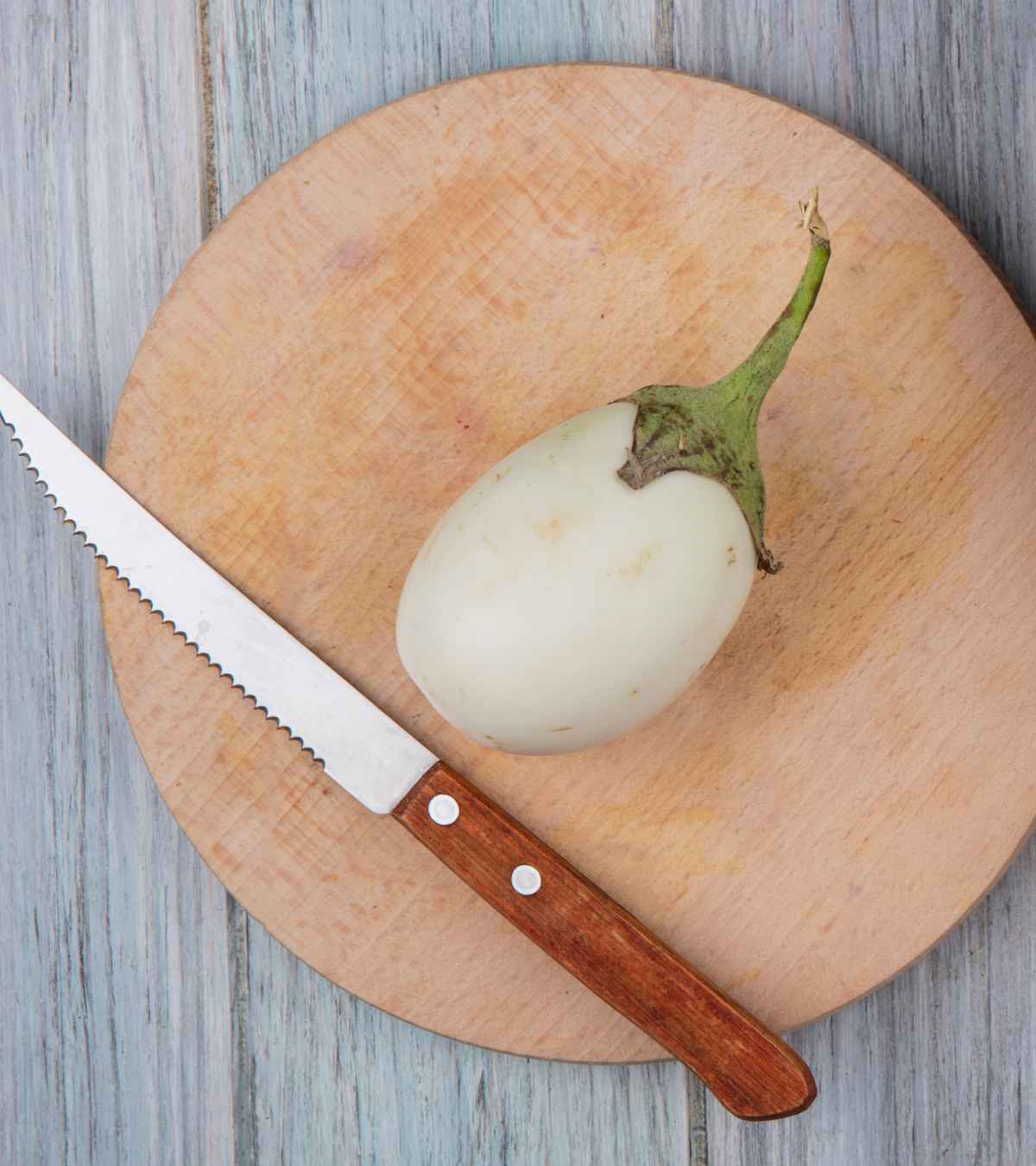
All three are organic, true-to-seed varieties grown the same way, but they differ in fruit shape, flavour and harvest window. Use the table to pick the one that suits your plot, your pot or your recipe.
| Variety | Fruit | Flavour | Harvest | Special feature |
|---|---|---|---|---|
| ‘Blanche Ronde à Oeuf’ | Round, white peel, plant a foot tall (30 cm) | Small, firm fruits with a light flavour | July to November | Ideal for growing in pots |
| ‘Blanche Longue’ | Long, ivory-white, 6 to 7 inches (16 to 18 cm) | Soft flesh with a rich woody taste | June to October | Seed is true, so you can save and resow it |
| ‘Dourga’ | Cream/white, about 8 inches (20 cm), stocky | Soft, delicate flavour with a melting texture | July to October | Resists diseases well |
Whichever you choose, exposure, soil and planting dates stay much the same.
Best is to plant eggplant in the sun, in rich, well-draining deep soil. Growing in pots is also an option, as long as your container is deep enough. Indeed, white eggplant grow to 2 or 3 feet tall (0.60 to 1 m), depending on the variety. Sowing seeds begins under cover in March-April, or in the ground directly towards mid-May, after the last frosts. Also, it may be easier to purchase seedlings ready-grown from your local garden store, as soon as any risk of freezing is over.
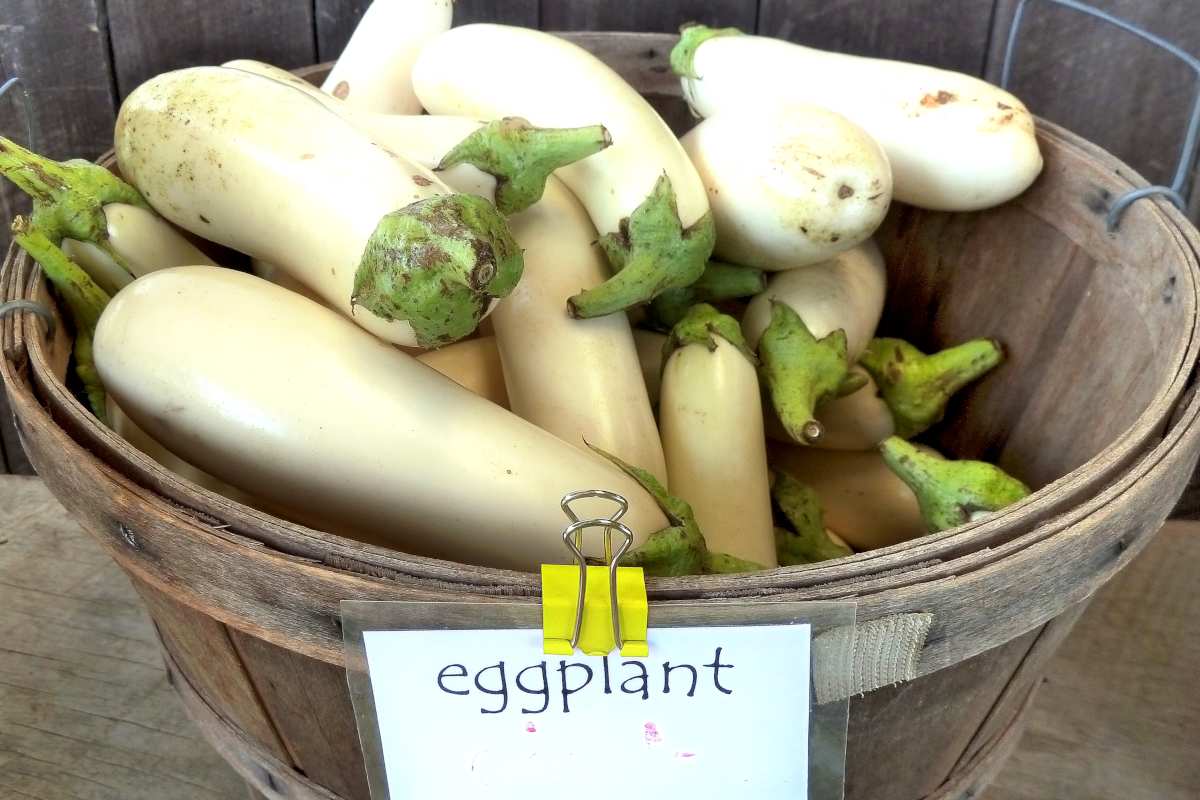
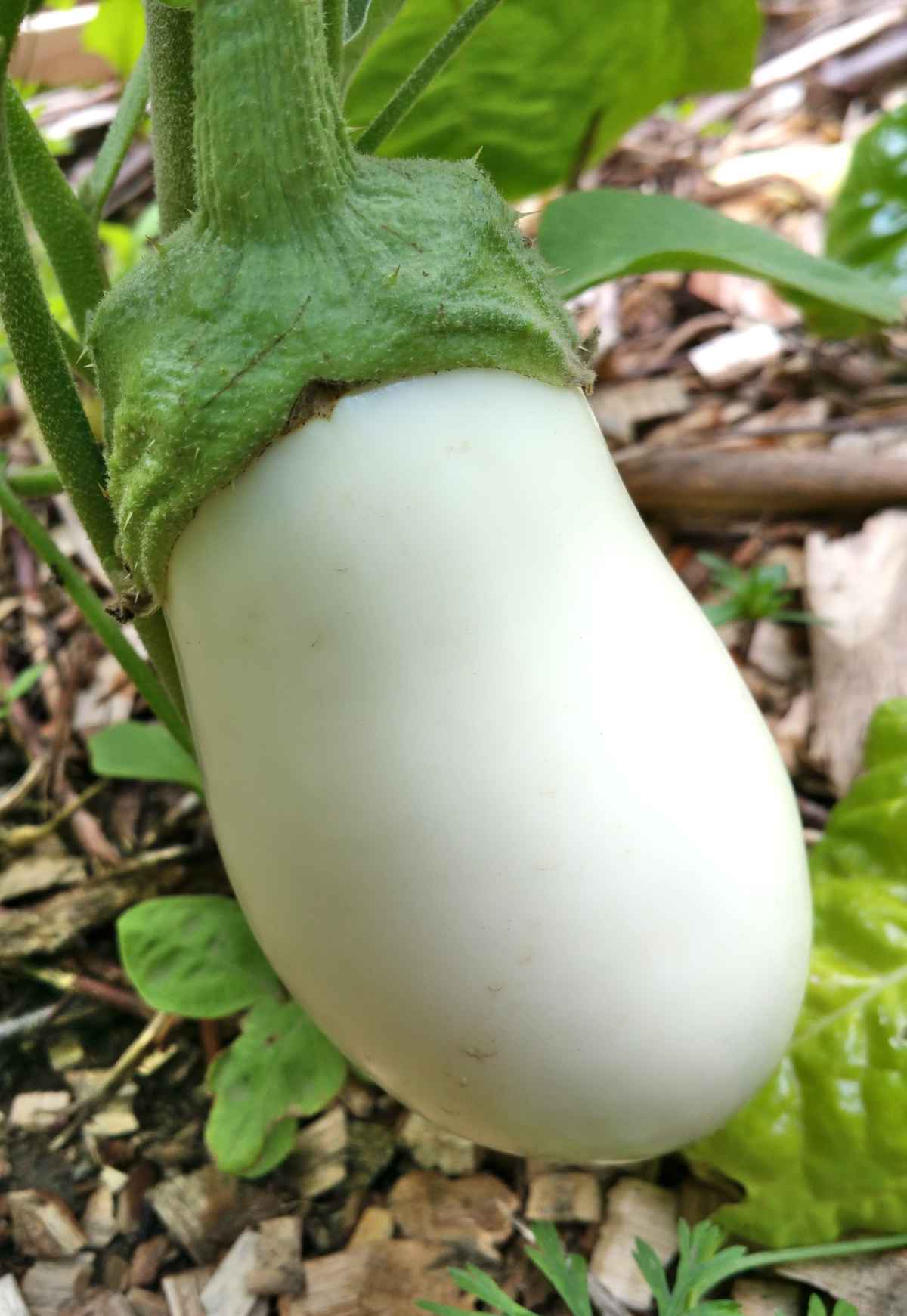
White eggplant have the same needs as their sisters which have purple skin. Remember to run the hoe around the base regularly and to layer a little mulch around it. This will help the soil stay cool for longer. Water regularly, in such as way as to keep the substrate moist but not wet. When growing in containers, always empty any extra water that leaks through to the pot holder at the bottom, eggplant hates sitting in water! Also prune the main stem after the second flower, and retain only the three most vigorous side branches that form after that.
>> To learn more, read: Eggplant: how to grow it best
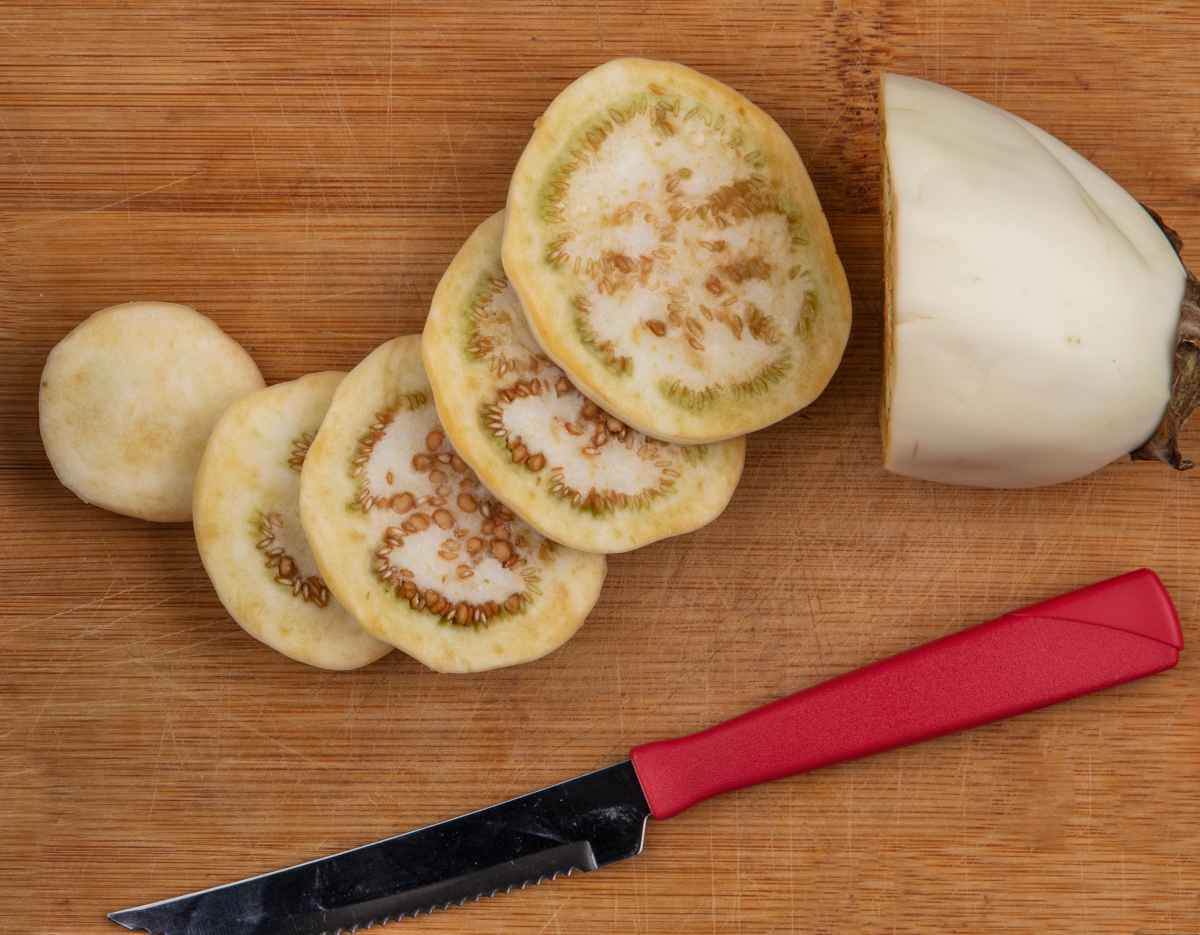
The three varieties listed above are true to seed. No need to go shopping for these at the garden store ever again! You can indeed sow your own seeds. When preparing your eggplants for cooking, don’t throw out the seeds that are in the middle of the fruit. Slice it in half, lengthwise, and scoop the seeds out from the center. Rince in water and remove all the flesh. Dry them with a cloth or paper towel, and let them dry out in a well-ventilated room for three weeks. Once the seeds are dry, transfer them to an envelope and write the date and variety on it.
To learn more, read: