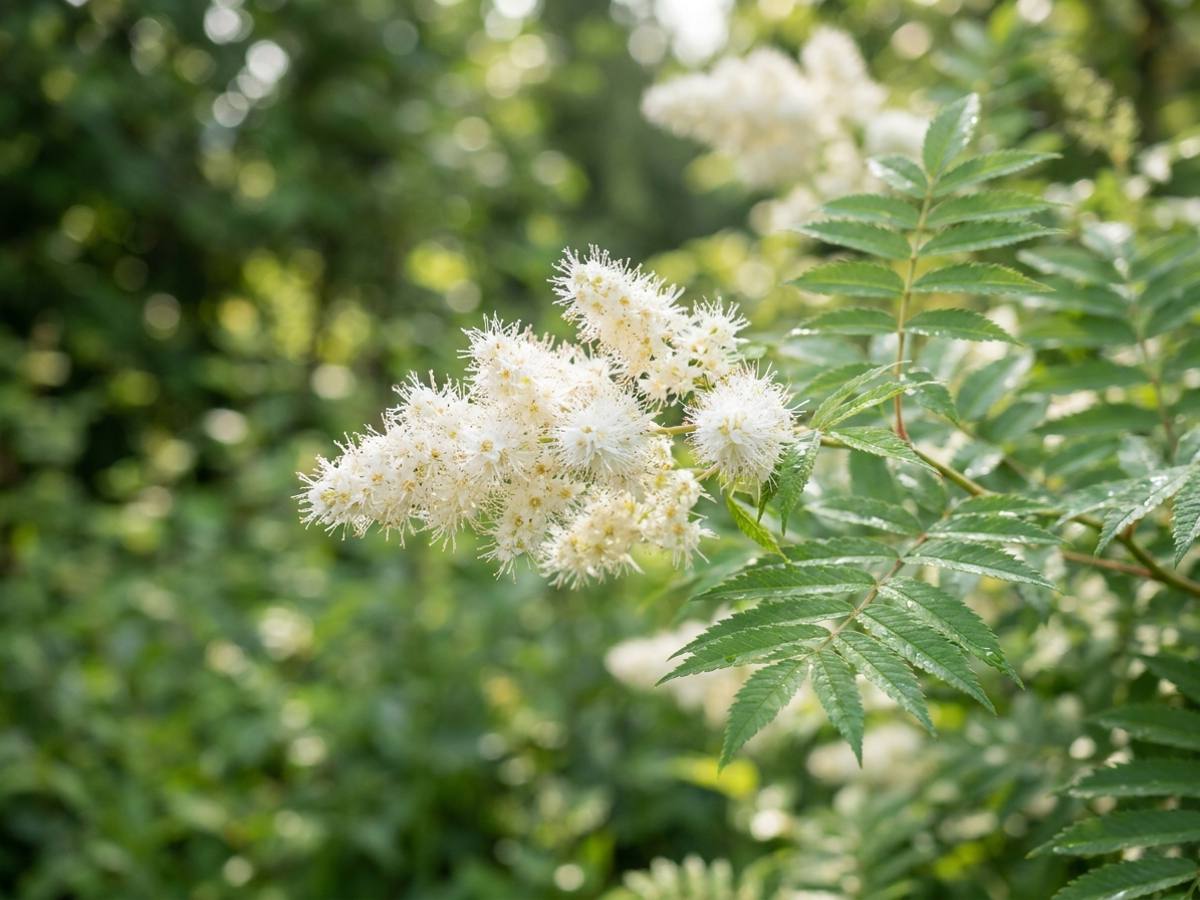
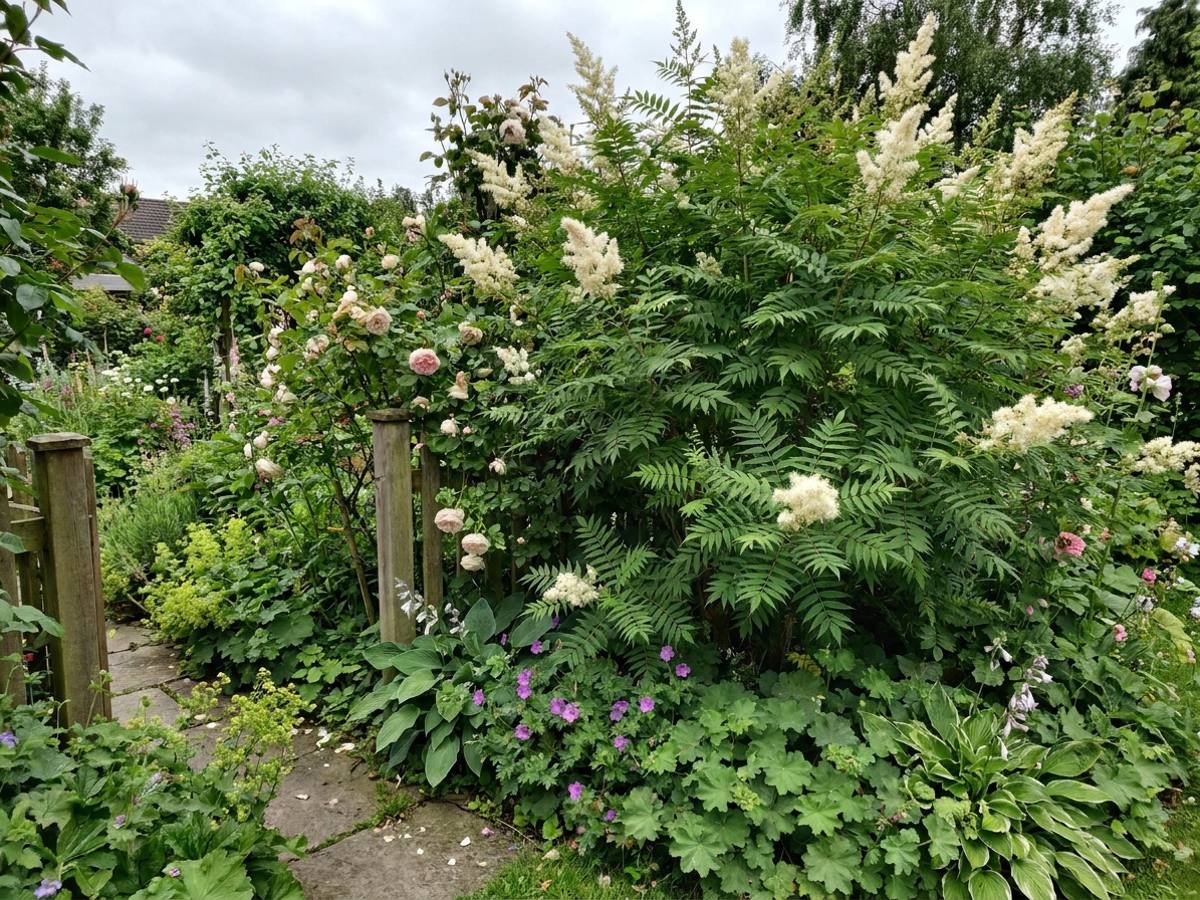
Sorbaria sorbifolia, commonly known as false spiraea or ural false spiraea, is a graceful deciduous shrub prized for its fern-like foliage and delicate creamy-white flower plumes that appear mid-summer. It makes an excellent choice for mixed borders, woodland edges, and informal hedging, where its airy texture softens harder garden lines. This vigorous grower spreads readily via underground rhizomes, making it particularly valuable for quick garden establishment and erosion control.
Growing conditions
Sorbaria sorbifolia thrives in full sun to partial shade, performing best when it receives at least six hours of direct sunlight daily. In deep shade, growth becomes sparse and flowering is reduced; conversely, in very hot climates, afternoon shade helps prevent leaf scorch and stress during drought periods.
This shrub prefers moist, well-drained soil rich in organic matter, though it tolerates a wide pH range from slightly acidic to neutral. Avoid waterlogged clay or compacted ground, as poor drainage promotes root rot. Sandy soils benefit from generous mulch and irrigation during dry spells.
Sorbaria is extremely hardy and suited to temperate and cool-temperate regions across the UK and northern Europe. It performs reliably in USDA zones 3–9 and requires minimal winter protection even in severe climates.
How to plant Sorbaria
Plant Sorbaria sorbifolia in autumn or early spring when the soil is workable and moisture levels are adequate. Autumn planting allows roots to establish before winter dormancy, while spring planting suits gardeners in very cold regions.
Space plants 1.5–2 m apart to accommodate their mature spread and vigorous rhizome extension
Plant with the crown level with the soil surface; avoid burying the crown, which can cause decay
Incorporate 5–10 cm of well-rotted compost or leaf mould into the planting hole to improve soil structure and drainage
Water thoroughly after planting to settle the soil and eliminate air pockets
Divide established plants in autumn or early spring by cutting rhizomes into 10–15 cm sections, each with at least one bud; replant immediately
The species and its cultivars differ mainly in height, foliage and how far they throw their rhizomes. Use the table to match a plant to the space you have before you commit.
Which false spiraea suits your garden?
Variety
Height
Flowers and foliage
Best use
Sorbaria sorbifolia (species)
1.5–3 m
Creamy-white plumes, bright green ferny foliage
Naturalistic planting; hardiest, most resilient
‘Sem’
1–1.5 m
Masses of pale pink-tinged flowers, fine lacy foliage
Smaller gardens and container cultivation
‘Burnatii’
2.5–3 m
Longer, finer leaflets and larger flower panicles
Specimen planting and larger borders
‘Aucuparia’
Upright habit, stouter stems
Bold ferny leaves; slower-spreading
Mixed shrub borders
Whichever you choose, allow for the rhizomes: even the compact forms travel underground.
Care through the seasons
Spring: Cut back all stems to 15–20 cm above ground level in late February or early March to encourage bushy, vigorous new growth and prolific flowering. Apply a 5 cm mulch of compost or shredded bark around the base, keeping it clear of the crown. Feed with a balanced, slow-release fertiliser to support emerging foliage.
Summer: Water deeply during prolonged dry spells, aiming for moist (not soggy) soil at all times. Deadhead spent flower clusters regularly to prolong flowering and prevent excessive seed formation. Monitor for any wayward rhizomes spreading beyond desired boundaries and dig them out promptly to prevent overly aggressive spread.
Autumn: As leaves yellow and drop, cut down tall or sprawling stems to tidy the plant and reduce wind damage. Divide established clumps if desired for propagation. Refresh the mulch layer to protect rhizomes and improve soil fertility over winter.
Winter: Sorbaria is fully dormant and requires no special protection in most UK gardens. In exposed sites with heavy snow, young plants may benefit from a loose straw or evergreen bough shelter to prevent stem breakage.
Best varieties to grow
Several cultivars offer improved or distinctive characteristics for different garden settings.
Sorbaria sorbifolia — The species type, vigorous with bright green ferny foliage and reliable creamy-white plumes; the hardiest and most resilient choice for naturalistic planting.
‘Sem’ — A compact cultivar reaching 1–1.5 m, ideal for smaller gardens and container cultivation; produces masses of pale pink-tinged flowers and fine, lacy foliage.
‘Burnatii’ (syn. Sorbaria arborea ‘Burnatii’) — A taller form growing to 2.5–3 m with longer, finer leaflets and larger flower panicles; suitable for specimen planting and larger borders.
‘Aucuparia’ — A slower-spreading variety with stouter stems and bold ferny leaves; more upright habit makes it excellent for mixed shrub borders.
Pests, diseases and common problems
Powdery mildew: A white, powdery coating appears on leaves in humid, poorly ventilated conditions. Ensure adequate air circulation, avoid overhead watering, and spray affected foliage with a sulphur-based fungicide or bicarbonate of soda solution (1 tablespoon per litre of water) at fortnightly intervals.
Leaf spot (fungal): Brown or reddish spots develop on foliage, particularly in wet seasons. Remove affected leaves and improve air flow by thinning crowded stems; treat with a copper fungicide if the problem persists.
Excessive spread: Sorbaria spreads vigorously via underground rhizomes, which can overtake neighbouring plants. Contain spread by installing a physical barrier (30 cm deep) of rigid plastic or metal, or by regular removal of wayward rhizomes; never rely on cutting alone to control spread, as shoots regenerate from rhizome fragments.
Poor flowering: Insufficient sunlight, overcrowding, or excessive nitrogen fertiliser promotes foliage at the expense of flowers. Prune hard in spring, thin older stems, reduce nitrogen feeding, and ensure at least six hours of direct daily sun.
Root rot in waterlogged soil: Yellowing foliage and soft, blackened stems indicate waterlogging. Improve drainage immediately by incorporating sand and compost into the soil, raising the planting level if necessary, or relocating the plant to a better-drained site.