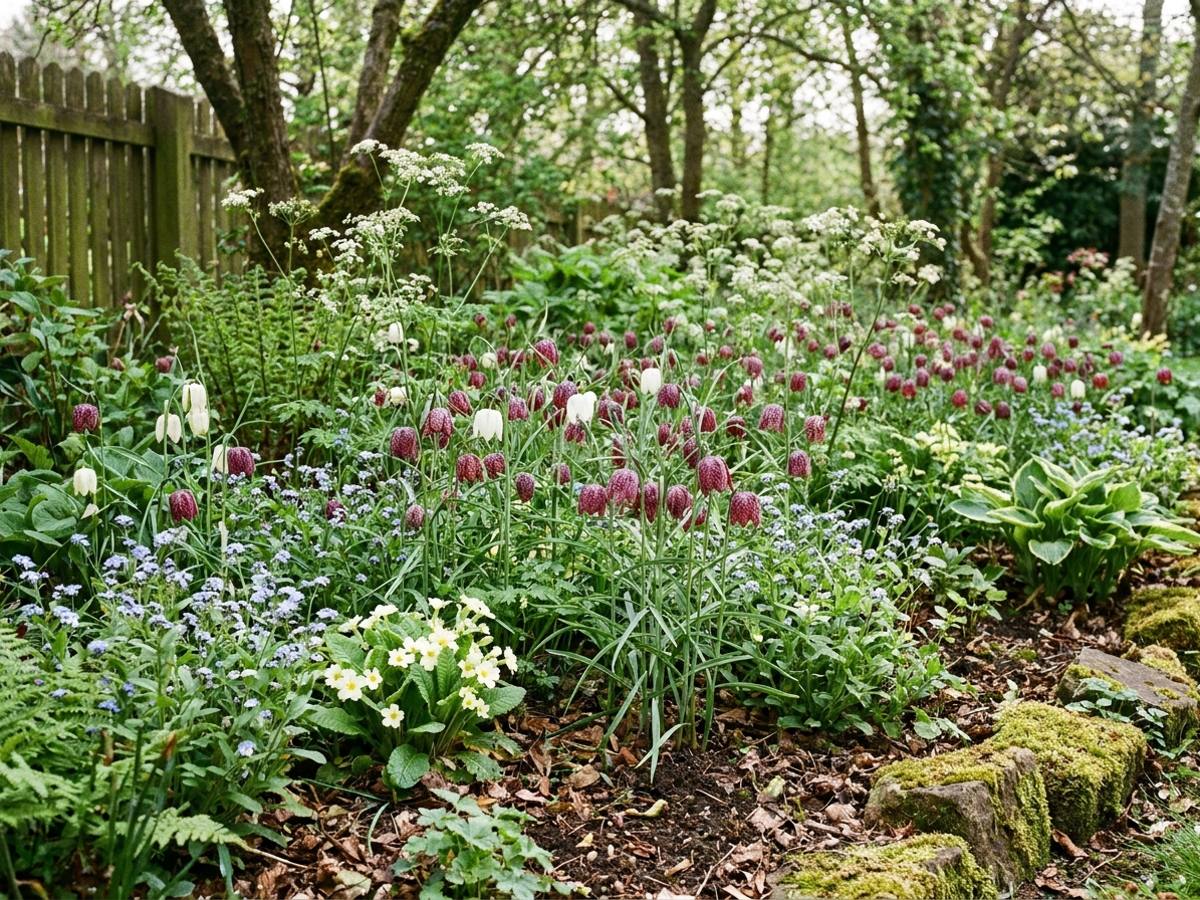
Fritillaria meleagris, commonly known as the Snake’s Head Fritillary, is a delicate spring-flowering bulb prized for its distinctive chequered bell-shaped blooms in rich purples, maroons and whites. These charming flowers, which nod gracefully on slender stems, are perfect for naturalising in meadows, borders and damp grassland. The plant’s exotic appearance belies its hardy nature and undemanding care requirements, making it a favourite among both novice and experienced gardeners.
Growing conditions
Snake’s Head Fritillaries thrive in open positions receiving full sun or dappled afternoon shade. In warmer regions, light shade helps protect blooms from scorching during hot springs. Morning sun and cool afternoon conditions create the ideal balance for extended flowering.
These bulbs prefer moist, fertile loam with good drainage—waterlogged soil in summer causes rot, whilst dry conditions stress the plants. They tolerate slightly acidic to neutral soil (pH 6.0–7.0) but perform equally well on chalk. Incorporate well-rotted compost or leaf mould before planting to improve soil structure and moisture retention.
Fritillaria meleagris is fully hardy throughout Britain and much of northern Europe, surviving winter temperatures well below −15 °C. In warmer regions (southern England, Mediterranean zones), they sometimes fail to thrive if summers remain too warm and dry; cool, wet springs suit them best.
How to plant Fritillaria
Plant bulbs in autumn (September to November), ideally whilst soil remains warm enough for roots to establish before winter dormancy. Early planting encourages stronger root systems and more reliable flowering the following spring.
Space bulbs 10–15 cm apart in groups of 10–20 for visual impact in borders or naturalised drifts
Plant at a depth of 8–10 cm (measured from the base of the bulb to soil level), slightly deeper than most spring bulbs
Prepare planting areas by forking in 5–8 cm of compost or leaf mould to improve drainage and fertility
Water gently after planting to settle soil, then mulch lightly with compost to suppress weeds
Divide established clumps in June after flowering dies back; replant offsets immediately at the same depth
Nodding chequered bells naturalise well in borders and damp grassland
The fritillary year: what to do, and when
Snake’s Head Fritillaries ask for very little, but what little they ask is strictly seasonal. This table sets out the one job that matters in each part of the year, and why skipping it costs you flowers.
The fritillary year: what to do, and when
Season
Main job
Why it matters
Early to late autumn
Plant bulbs 8–10 cm deep, 10–15 cm apart
Roots establish before winter dormancy, giving reliable flowering
Early autumn
Apply a thin mulch of leaf mould or aged compost
Insulates dormant bulbs and improves the soil over time
Midwinter
Leave bulbs to take their cold spell; pre-chill only where winters are mild
Cold (vernalisation) is what makes them flower reliably
Early spring
Feed with a balanced fertiliser or tomato food
Supports the coming flush of flowers
Late spring to early summer
Leave stems and foliage intact until they yellow
Sustains the bulb for next year’s display
Midsummer
Reduce watering once foliage has died back
Dry dormancy prevents bulb rot
Get the autumn planting and the summer rest right and the rest of the year largely looks after itself.
Care through the seasons
Spring: Fritillarias emerge in March and flower by mid-April in most regions. Feed with balanced general fertiliser (10:10:10) or tomato food in early March to support flowering. Allow stems and foliage to remain intact after blooming until they yellow naturally in late May or June—this sustains the bulb for next year.
Summer: Once foliage has completely died back (usually by late June), reduce watering to prevent bulb rot during dormancy. In very hot, dry summers, a light fortnightly spray keeps soil minimally moist but avoids waterlogging. Deadhead spent flower heads promptly to direct energy into bulb development rather than seed production.
Autumn: In September, lightly fork over planting areas to aerate soil without disturbing dormant bulbs. Apply a thin mulch (2–3 cm) of leaf mould or aged compost around bulbs to insulate them and improve soil over time. Avoid fresh manure, which encourages soft growth and fungal issues.
Winter: Bulbs require a period of cold (vernalisation) to flower reliably; harsh winters present no problem. In areas with mild winters (southern Britain, zone 8+), pre-chill bulbs in the refrigerator for 4–6 weeks before planting if soil temperatures remain above 15 °C.
Best varieties to grow
Several selected cultivars offer colour variations and improved vigour compared to wild-collected stock.
Fritillaria meleagris ‘Chequered Lace’ — Delicate purple and white chequered blooms; vigorous and reliable for naturalising (AGM).
Fritillaria meleagris ‘Alba’ — Pure white bells with subtle green markings; rarer and slightly less vigorous but strikingly pure.
Fritillaria meleagris ‘Artemis’ — Deep purple blooms with bold dark chequering; strong stems and excellent garden presence.
Fritillaria meleagris ‘Poseidon’ — Rich plum-purple with dark maroon markings; tall growing to 50 cm and excellent in cutting gardens.
Pests, diseases and common problems
Bulb rot (Fusarium/Phytophthora): Soft, mushy bulbs in spring indicate fungal rot, usually from summer waterlogging or poor drainage. Improve drainage immediately, avoid overwatering once foliage dies back, and discard affected bulbs; replant in fresh soil the following autumn.
Narcissus flies: Yellowing foliage and hollowed-out bulbs are signs of bulb fly larvae tunnelling inside. Remove and destroy affected bulbs; grow bulbs in containers with mesh bases in affected gardens, or apply neem oil spray to surrounding soil in early June before flies lay eggs.
Slugs and snails: Holes in emerging shoots and chewed foliage appear in wet springs. Remove by hand at dusk, scatter gritty barriers (crushed shell or diatomaceous earth) around plants, or lay beer traps in problem areas.
Poor flowering (blind bulbs): Plants produce only leaves and no flowers if bulbs were planted too shallowly, starved of nutrients, or grown in insufficient light. Deepen planting depth next season, feed in early spring, and ensure at least 4–6 hours of direct sun daily.
Failure to establish: Bulbs disappear entirely if soil remains saturated all year or if late-spring frosts repeatedly damage emerging shoots in frost pockets. Improve drainage by raising beds 15 cm or adding sand and grit to compacted clay; move to south-facing slopes to avoid frost hollows.