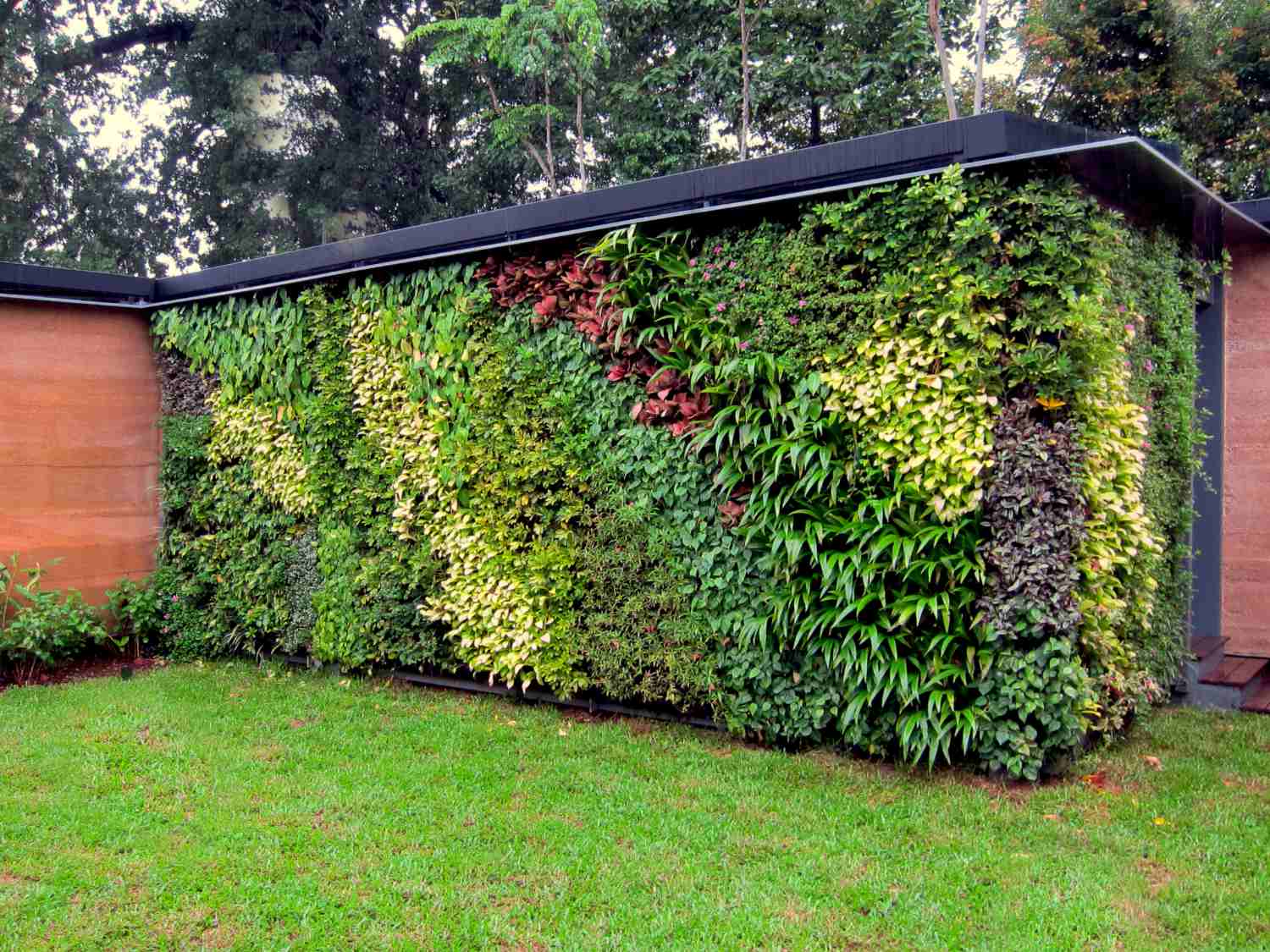
Plants rooted in a sheet of damp felt, or stacked up a tower of boxes, turn a bare brick wall into a panel of living green, indoors or out. Plant walls are elegant, insulating and pollution-cleansing, and they maximise growth on almost no floorspace; the choice comes down to budget, from a home-made felt-and-tank panel to full hydroponics.
Care to set one up yourself?
You’ve got a range of options.
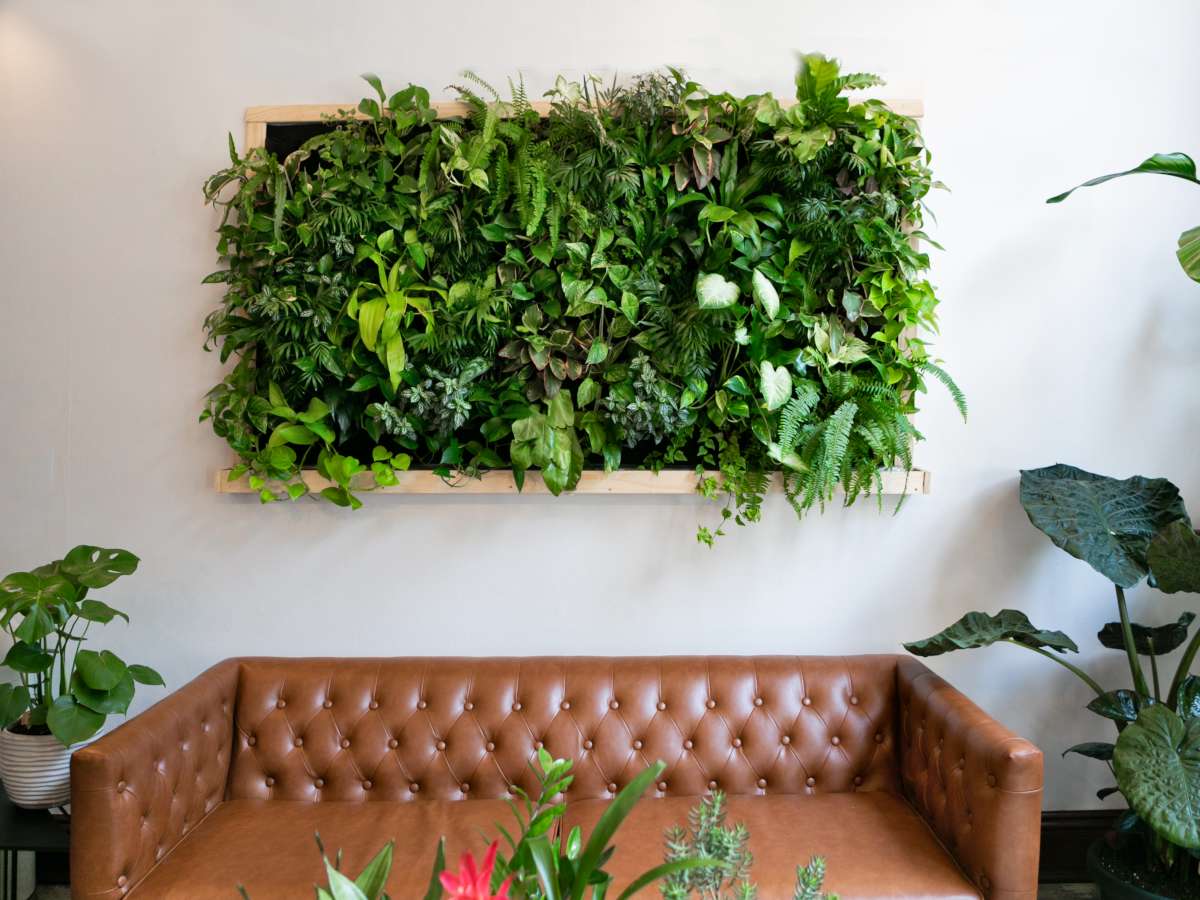
Spectacular happenings by Patrick Blanc, the man who “vegetalized” a great many public buildings, hotels, restaurants (the Pershing Hall courtyard, the Quai Branly Museum…) have given us also the itch to try setting up our own plant wall, too. These make it possible to maximize plant growth while using up very little floorspace, which is perfect to bring life to a balcony, deck, terrace or small garden.
Plant walls now come in shapes and sizes to match every whim… and every budget, too. The most expensive technique is the one that Patrick Blanc uses: hydroponic growing. Plants are “planted” in a special cloth that is irrigated with a nutrient-rich solution that runs in a closed circuit. This is all attached to panels that are then set up on the wall, indoors or outdoors.
From full hydroponics to a frame you hang in the living room, the systems described below differ in how the roots are fed, where they can go and what they suit best. Use the table to narrow the field before reading on.
| Technique | How it works | Indoors or outdoors | Best for |
|---|---|---|---|
| Hydroponic panels (Patrick Blanc) | Plants rooted in a special cloth irrigated with a nutrient-rich solution running in a closed circuit | Both, on panels fixed to the wall | Spectacular displays; the most expensive technique |
| Felt-and-steel kit (Citeflor) | Steel structure with absorbing felt woven in; the felt tip rests in a water tank and stays moist | Both | Ready to plant from 200 €/$, pre-planted from 350 €/$, or copied at home by DIY-experts |
| Multi-level boxes and towers (Vertiss) | Assembling plastic towers and garden boxes, some of them on wheels | Mainly outdoors | Decorating a wall or sectioning out the garden |
| Hanging textile pouches | Fabric pouches hung up, each holding a plant | Both | Herbs and spices |
| Plant frames (Vertilignes) | Picture-style frames that encase live plants | Indoors | A quick touch of green on living-room walls |
Whichever you pick, the principle stays the same: growing upwards instead of outwards.

For us home dwellers, manufacturers have now developed structures that make it easy to set up and compose our very own plant wall along a brick wall, on a terrace, in a courtyard, garden or house.
Some (Citeflor) have a steel structure with an absorbing felt woven in. This is where the plants grow their roots, and the felt stays moist because its tip rests in a tank with water.
This concept is quite easy to reproduce for the DIY-experts out there.
Of course, it’s also possible to purchase it ready to plant (200 €/$ and more) or even pre-planted (350 €/$ or more).
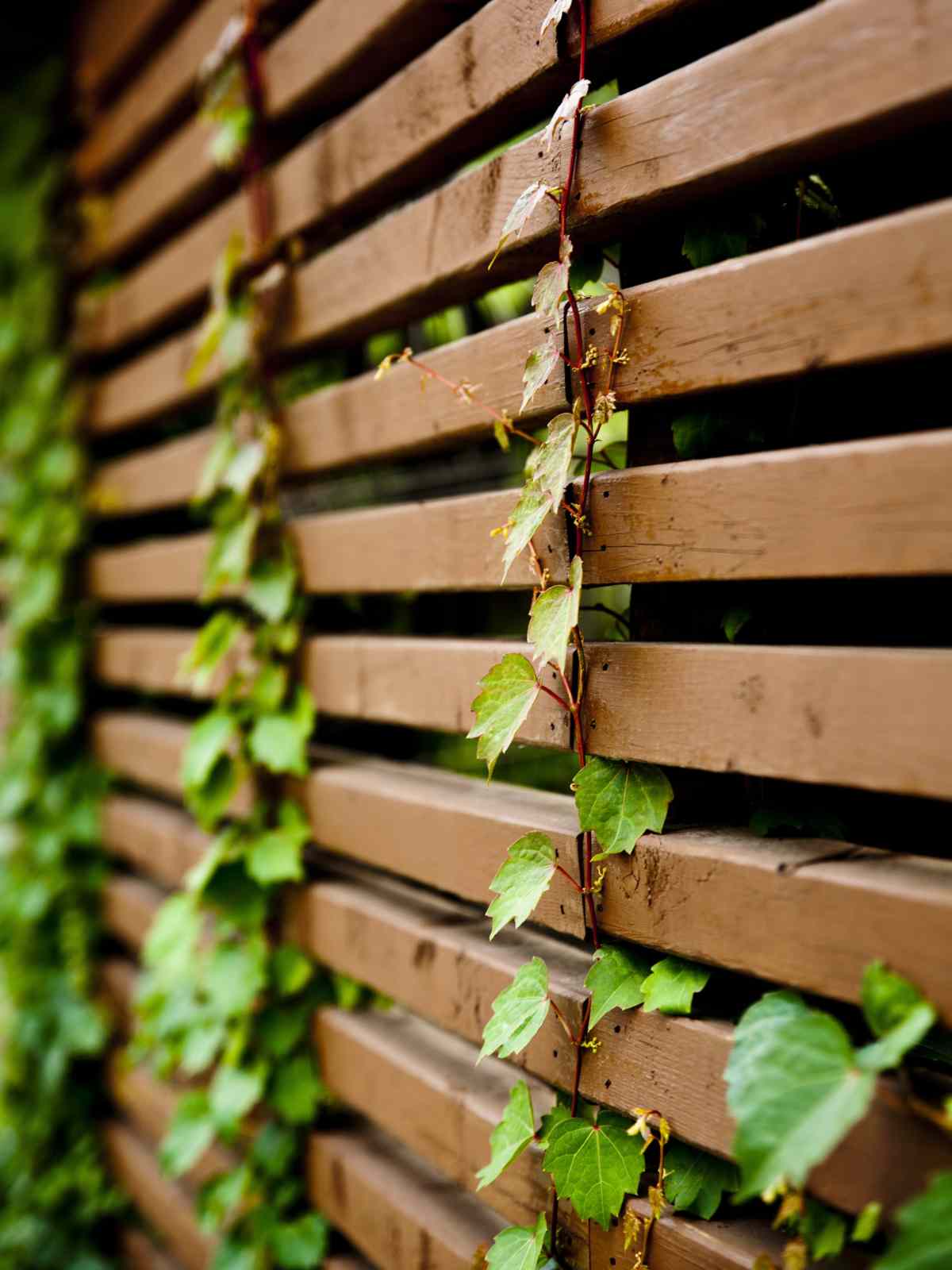
Of course, garden furniture has caught up on the trend and now all sorts of multiple-level garden boxes or plastic assembling towers are now available. Some of them are on wheels (Vertiss) and all you need to do is plant them to decorate a wall or section out your garden.
Another option: textile pouches that can be hung to contain plants (great idea for herbs and spices). These can also be found in horticulture stores.
Lastly, plant frames (Vertilignes) are actually frames that encase live plants. These make it real easy to add a touch of green to the walls of your living room.
Laure Hamann