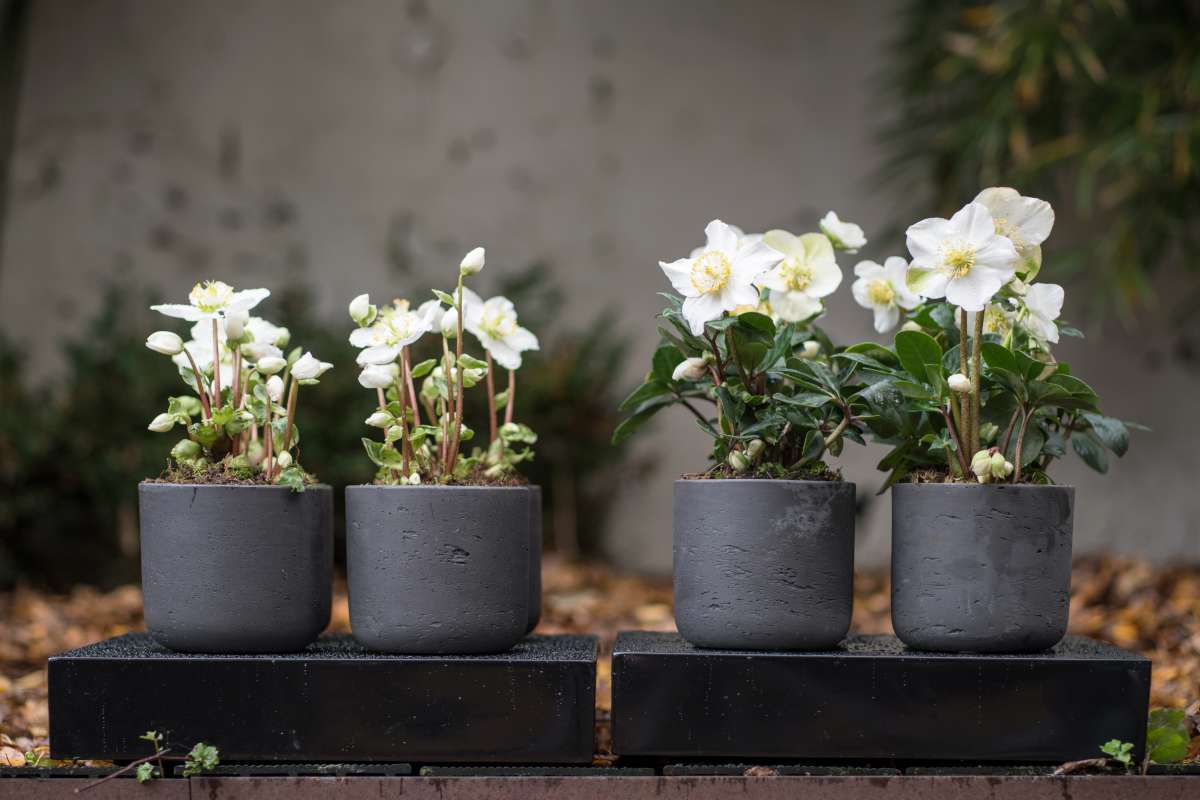
Large white flowers open in the depths of winter, and what look like petals are really sepals that persist and turn green for months. Grown in a pot at least 60cm deep — hellebore hates being moved and its roots run straight down — the Christmas rose (Helleborus niger) will flower on a balcony for years.
Indeed, hellebore is ideally suited for this purpose: it is very easy to grow all year long in a large container. Great to decorate your terrace or balcony!
However, there are a few rules to follow to make sure they last for years.
Hellebore is undemanding once it is settled, but a container changes three things: root depth, moisture and nutrients. Here is what each part of the job comes down to.
| What to get right | What to provide | Why it matters |
|---|---|---|
| Pot depth | At least 60cm (2 ft) deep | Roots run straight down in search of cool soil |
| Pot width | Three to four times the nursery pot | Room to spread, since the plant resents being moved |
| Substrate | Garden soil mixed with soil mix, on the acidic side | Rich, cool and well-drained is what hellebore needs |
| Position | Outdoors, part sun to part shade, sheltered from wind | Hardy to -15°C and happy under snow, so pots stay out |
| Watering | Regular, keeping the root clump cool | Neither dried out nor drowned at every watering |
| Feeding | Fertiliser regularly, organic matter every spring | Nutrients wash out faster from a container |
| Division | In early autumn, in the fourth year, without unpotting | Half is lifted out, the gap backfilled with fresh mix |
Get the pot right at the start and the rest is little more than watering and an annual top-up of organic matter.
Any hellebore will settle into a deep pot, but a few named sorts are compact enough and hold their flowers outward, where you can actually see them from a balcony or doorstep. Use the table below to match colour, size and flowering time to your container.
| Variety | Flower colour | Flowering period | Foliage interest |
|---|---|---|---|
| ‘Double Ellen Pink’ | Double pink | Late winter to spring | Plain dark green |
| ‘Walberton’s Rosemary’ | Clear pink, outward-facing | Late winter to spring | Grey-green |
| ‘Potter’s Wheel’ | Large pure white | Midwinter | Leathery dark green |
| ‘Ivory Prince’ | Cream flushed pink | Late winter | Marbled silver-grey |
| HGC ‘Jacob’ | White, outward-facing | Early winter onwards | Deep green, neat clump |
Succeed in growing hellebore in a pot
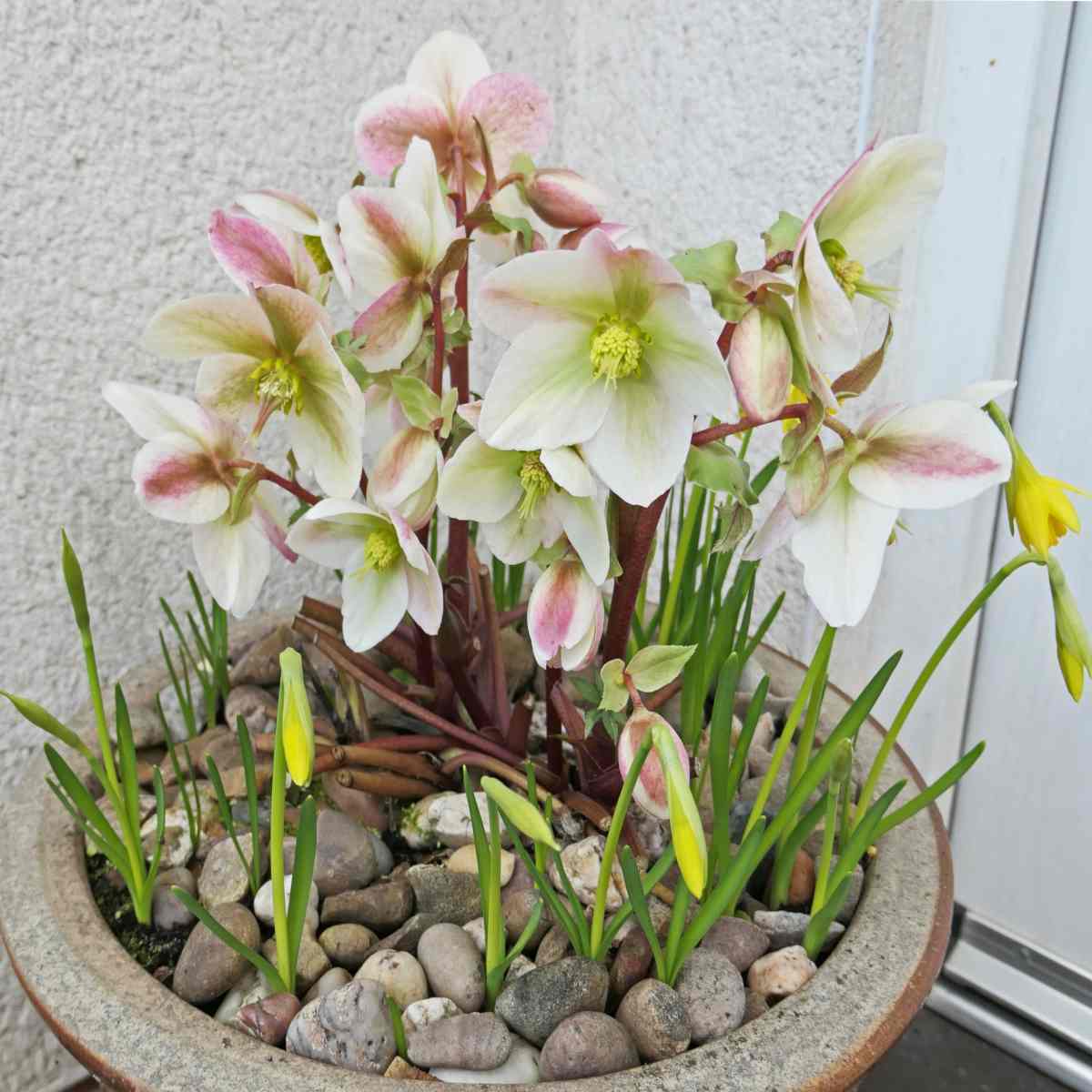
All hellebores, generally, cope very well with growing in pots. Some species and varieties are tried-and-true for growing in containers, among which you’ll find the following:
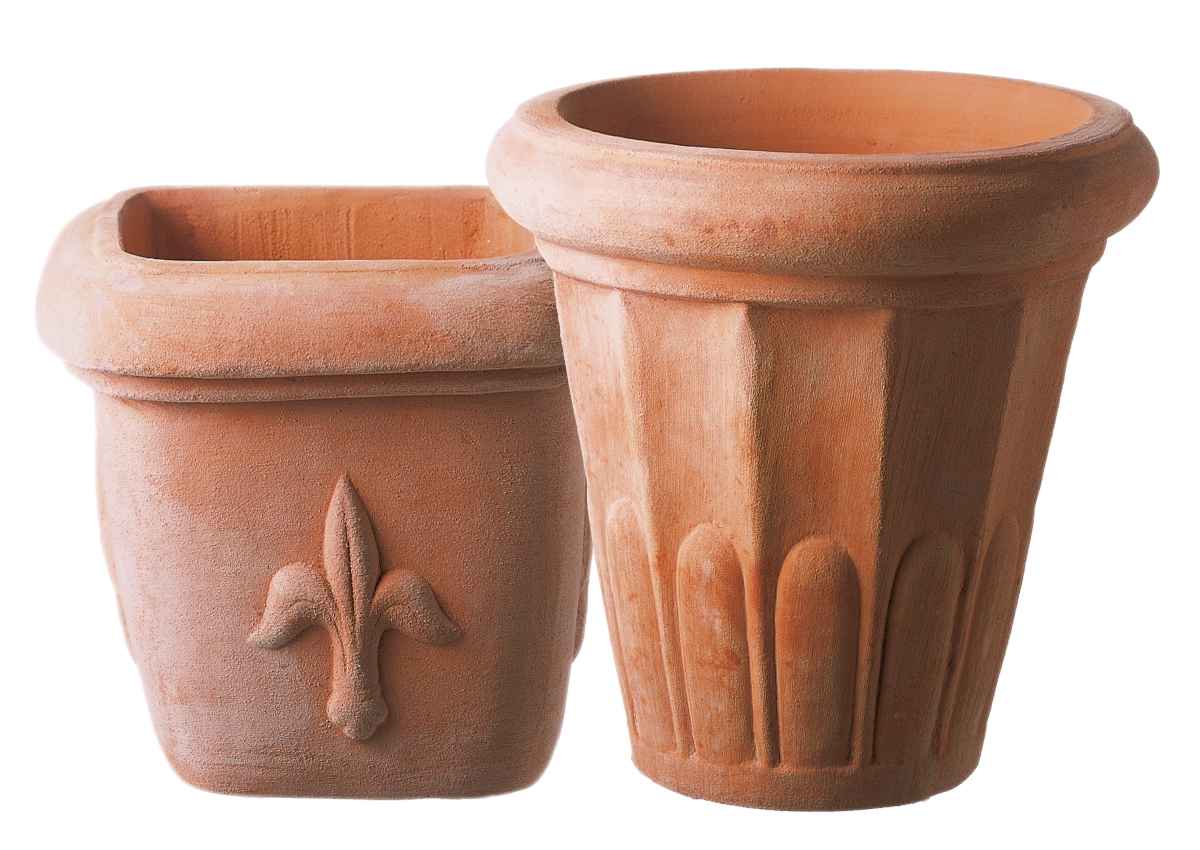
Choosing the pot, for this plant, is the most crucial aspect. Indeed, hellebore hates being moved around from one pot to the next. This is due to their complex and deep-running rhizome root system. Roots usually inch their way straight down, and in the ground they easily make it to 2 feet deep (60cm). They reach to that depth to find cool soil, which is what the plant needs to survive.
As a conclusion, best is to go for a pot that’s 2 feet deep (60cm) at least. For the width of the pot, select one that’ 3 to 4 times wider across than the nursery pot you bought them in (assuming you bought yours in a garden store).
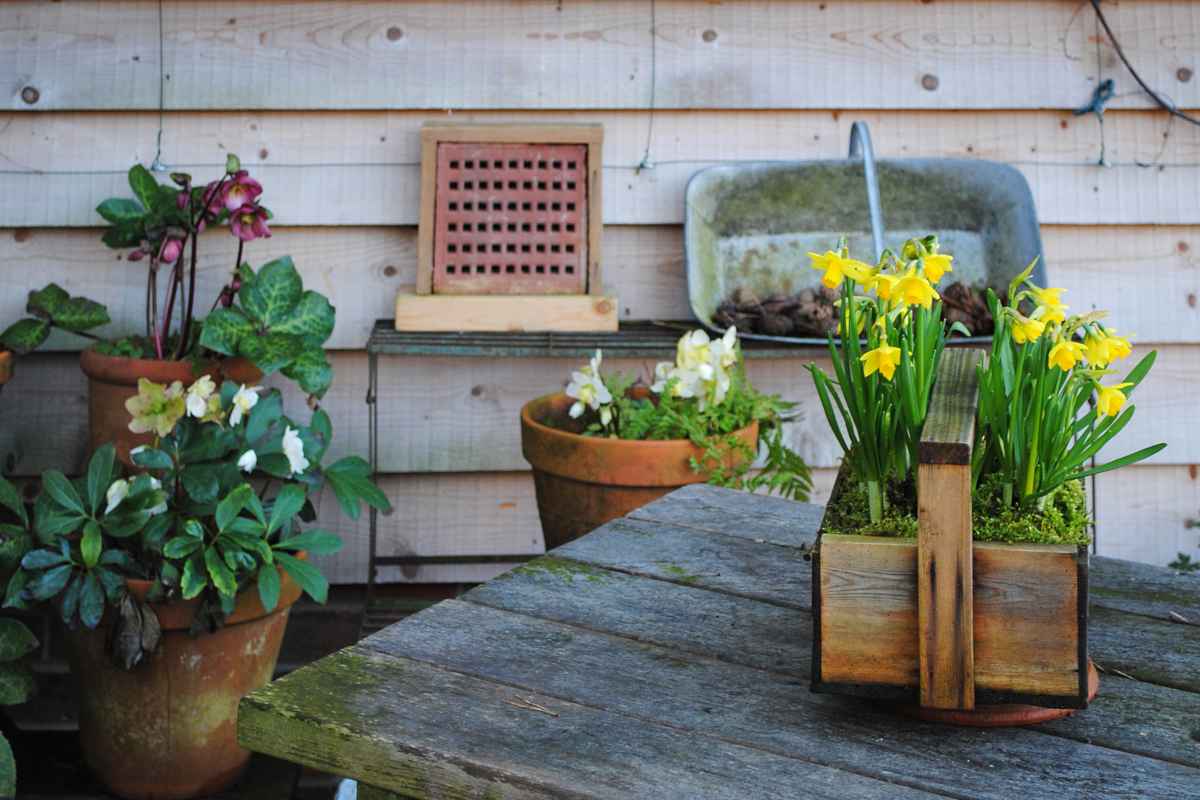
In pots, as is the case in the ground, hellebore requires rich, cool and well-drained soil.
This plant also likes soil that tends to be acidic. Use any leftover peat from your heath plants. Consider pairing your hellebore with heather and other such plants.
Select a mix of garden soil and soil mix upon planting.
Adding fertilizer will be necessary on a regular basis, since nutrients tend to wash out faster when the substrate is in pots.
Note that hellebore, even when growing in a garden box, thrive most when they grow outdoors.
We’ve shared earlier that hellebore hates being transplanted. Best avoid transferring the plant from one pot to another once it has already spread its roots out. Water regularly to ensure that the root clump stays cool all the time. And even though you should avoid having the substrate dry out, also make sure to not drown your plant in water every time you water.
Lastly, the substrate needs to stay rich. Add organic matter every spring. Following these rules will give your potted hellebore the best possible environment, and your plant will thrive without any problems for at least four years. When the plant turns 4 years old, divide it:
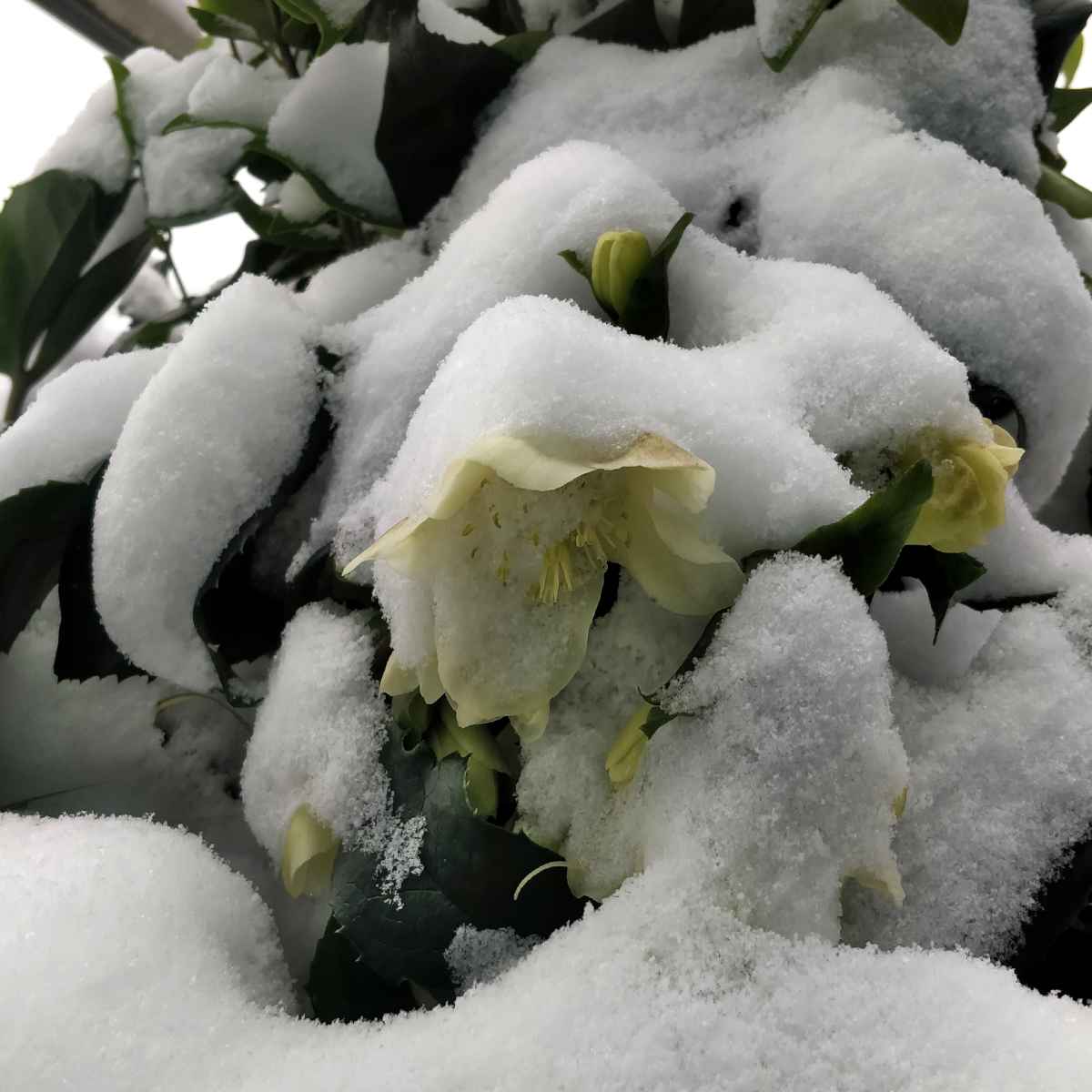
This way, you’ll replenish nutrients in the substrate. Though hellebore should cope quite well with such a division, it’s best to water once a week for a month to make sure roots recover and start spreading again.
Even though it’s very hardy, you’ll do good to protect your hellebore in pots from cold winds and frost if it lasts a long time.
To learn more, read: