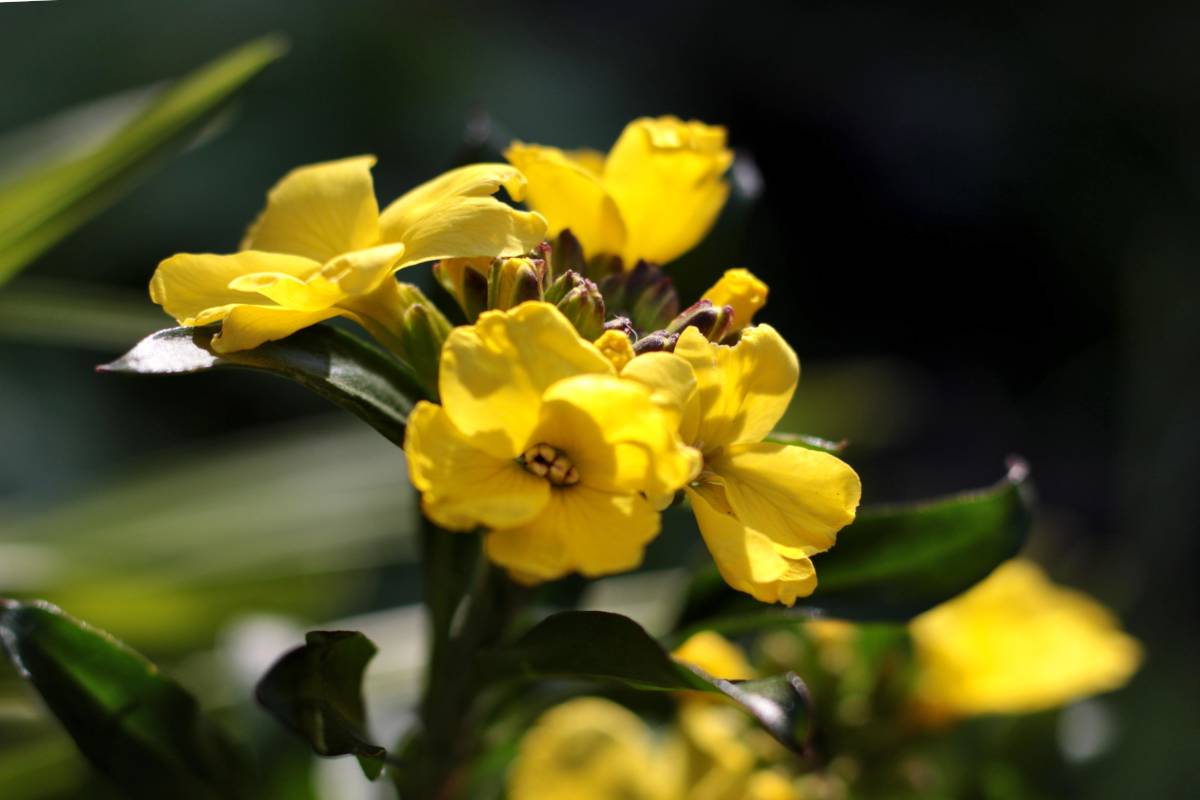
This special variety of wallflower, Ravenelle, is a little flower with an endearing scent that is a must-have in perennial flower beds for its colors as much as for its unique shape.
| Name | Cheiranthus cheirii |
|---|---|
| Family | Brassicaceae |
| Type | perennial grown as a biennial |
| Height | 8 to 16 inches (20 to 40 cm) |
| Exposure | full sun |
| Soil | ordinary, well drained |
| Flowering | mid-spring to mid-autumn depending on the variety |
Wallflower adapts to the most difficult growing spots, and decorates them in a transcending manner.
What you’ve got here is a plant that will actually thrive where usually none of the other plants can grow.
When purchased in small pots, it is a good idea to plant in spring or in fall. Settling it down near a passing place is interesting since it releases a delightful fragrance.
Regarding any wallflower seeds you may want to sow, simply sow in a nursery starting from the month of early spring and transfer to the ground during late spring.

But you can also sow directly in the ground, especially ravenelle wallflower, once any risk of frost has subsided, from late spring to midsummer.
Ravenelle wallflower can be bought as a young plant or raised from seed, and the timing changes completely from one route to the other. Here is what each method asks of you.
| Method | When | What to do | Spacing |
|---|---|---|---|
| Planting bought pots | Spring or autumn | Choose a very sunny spot, ideally near a passing place for the scent | — |
| Sowing in a nursery | From early spring | Sow under cover, then move the young plants outdoors | — |
| Sowing direct in the ground | late spring to midsummer | Broadcast seed on soil loosened with a spade, water until seedlings appear | Thin to 12 inches (30 cm) |
Whichever route you take, water regularly while the plants settle in, then only when the soil dries out.
Wallflowers are sold either as single-colour strains or as mixes, and the height varies enough to matter when you place them. Here are the varieties most often found on seed racks and in garden centres.
| Variety | Flower colour | Best use |
|---|---|---|
| ‘Harpur Crewe’ | Double bright yellow | Old walls, scented spots |
| ‘Fire King’ | Bright orange-red | Bold bedding blocks |
| ‘Tom Thumb Mixed’ | Mixed shades | Pots, edging, crevices |
| ‘Blood Red’ | Deep crimson red | Borders, cutting |
| ‘Cloth of Gold’ | Golden yellow | Borders, wall tops |
| ‘Vulcan’ | Velvety dark red | Tubs, front borders |
Pruning and caring for wallflower
No specific pruning is required, but, to boost flower-bearing, remove wilted flowers often.
If you notice a few caterpillars feasting on leaves, check if they might be cabbage caterpillars. If you’ve got cabbages in your vegetable patch, better remove them quickly!
Very aesthetic and bearing incredible amounts of flowers, this perennial is literally called flower of the wall.

Indeed, it settles right in any old stone wall, where it re-sows its seeds in nooks and crannies year after year.
It also does great, however, in flower beds and garden boxes with its beautiful, short-lived but abundant blooming.
The flower definitely releases a fragrance that is similar to that of cloves, quite interestingly so.
Cut off flowers that have finished blooming, this will trigger appearance of more flowers.