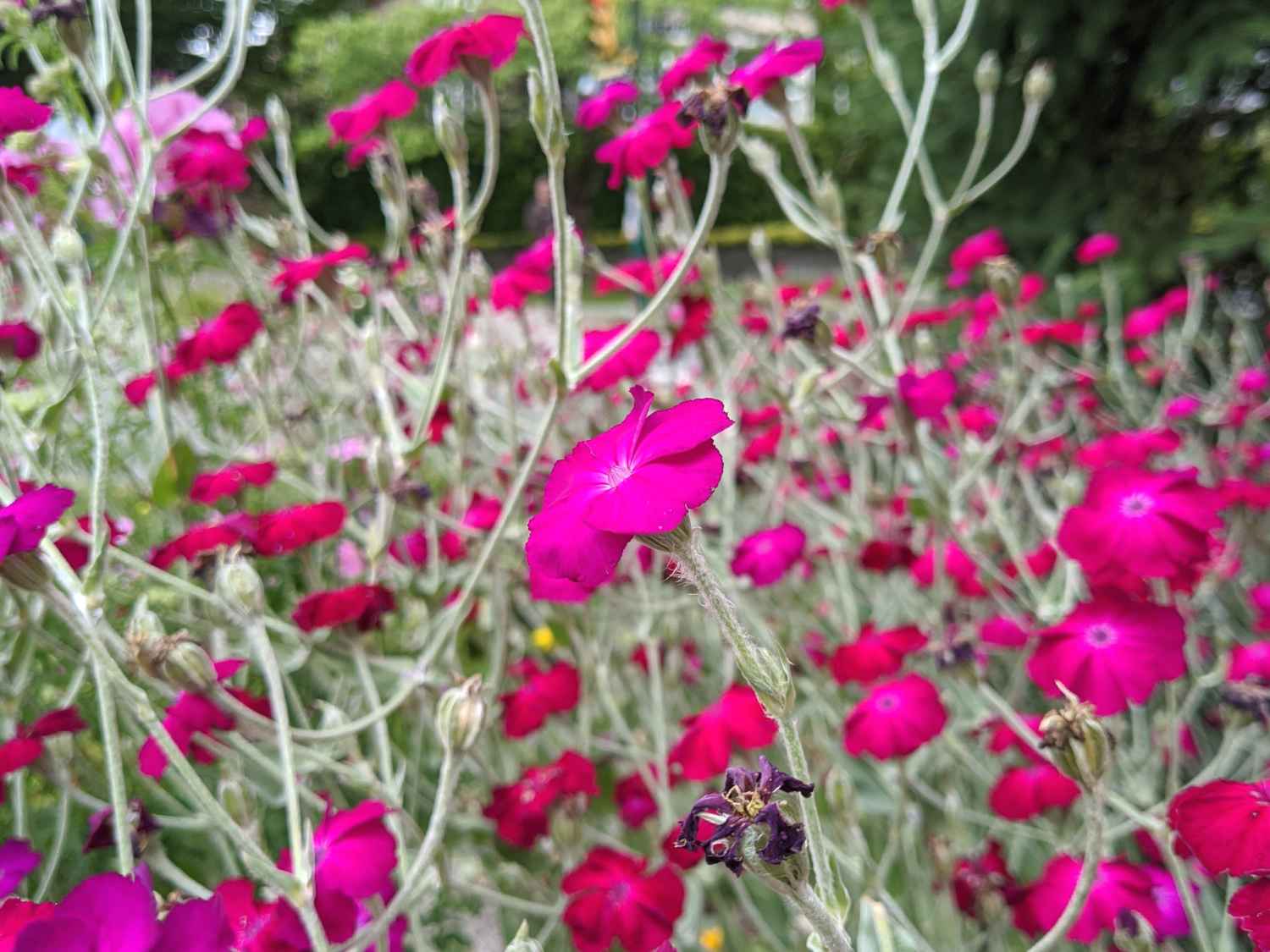
Crimson-red flowers held on branching stems above velvety grey leaves give rose campion (Lychnis coronaria) a contrast few perennials match, and it earns its place in flowerbeds, border plantings, rock gardens and even pots. Give it a sunny spot and well-drained soil and this tough, near-indestructible clump will flower abundantly for you.
| Latin name | Lychnis coronaria |
|---|---|
| Common name | Rose campion |
| Family | Caryophyllaceae |
| Type | Perennial |
| Shape | Clump-forming |
| Height | 18 to 28 inches (45 to 70 cm) |
| Planting density | 4 to 6 plants per 10 square feet (per m²) |
| Exposure | Sunny |
| Soil | Any type, but well-drained |
| Blooming | midsummer→late summer |
Rose campion stands as a hardy perennial, adapting resiliently to various climates. Its crimson-red flowers stand in stark contrast against its velvety gray leaves, making it a unique and valuable addition to your flower beds.

Exceptionally durable and low-maintenance, you can plant rose campion almost anywhere. It can cope with nearly any pH range, and doesn’t care much for the type of soil (clayish, loamy, etc).
Also excellent for growing in pots, thought it will grow slightly shorter.
But if you want it to truly thrive, give it a nice sunny spot and well-drained soil.
On heavy clay, plant rose campion on a slight mound or work grit into the hole, since this hardy perennial is prone to rotting when winter wet sits around its crown.

Rose campion doesn’t ask for much when it comes to care.
However, two actions stand out:
For propagating rose campion, you’ve got two choices. If patience defines you, seeding is great because it can give you as many plants as you with. But a faster method is division, though it can only give you from 2 to 6 plants depending on the size of the clump.
Here are your options:

The other option to get more rose campion plants is to divide the perennial into several plants.
Here’s how to proceed:
Smart tip: If you live where summers tend to be on the drier side, avoid dividing in the spring. Your plant might not have enough time to regrow roots before facing potential drought.
Rose campion can be increased in three ways, and the choice comes down to how many plants you want and how long you are willing to wait.
| Method | When | Plants obtained | Best for |
|---|---|---|---|
| Self-seeding | Left to nature | Random, uncontrolled | A hands-off, wilder look |
| Sowing collected seed | mid-spring, in potting soil and sand | As many as you wish | Patient gardeners; plants ready to transfer by fall |
| Division | Fall (avoid spring where summers are dry) | 2 to 6 per clump | Quick results from an established clump |
Whichever route you take, deadheading keeps self-sowing in check.
Garden rose campion boasts a resilience that stands up well against diseases. As for pests, snails and slugs might nibble on leaves. Thankfully, it’s not a big problem for this plant.
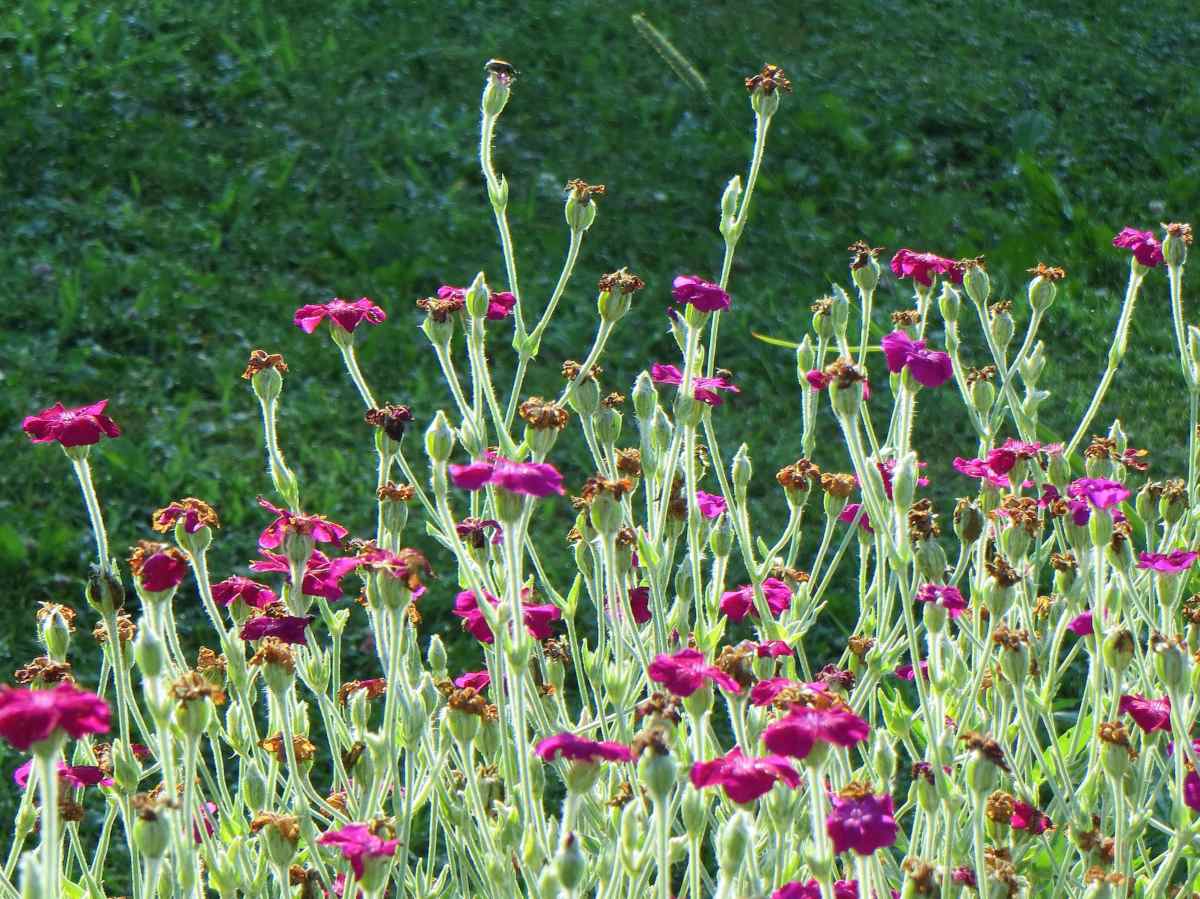
Rose campion serves as a decorative, abundantly flowering plant – especially when you keep those faded flowers trimmed. Its hearty nature allows for diverse use:
Pair rose campion in a flowerbed with Veronica spicata ‘Erika’ or ‘Incana’, Stachys byzantina, or even Nepeta x faassenii. You’ll unveil a gorgeous palette of grays dotted with shades of crimson, violet, and pink.