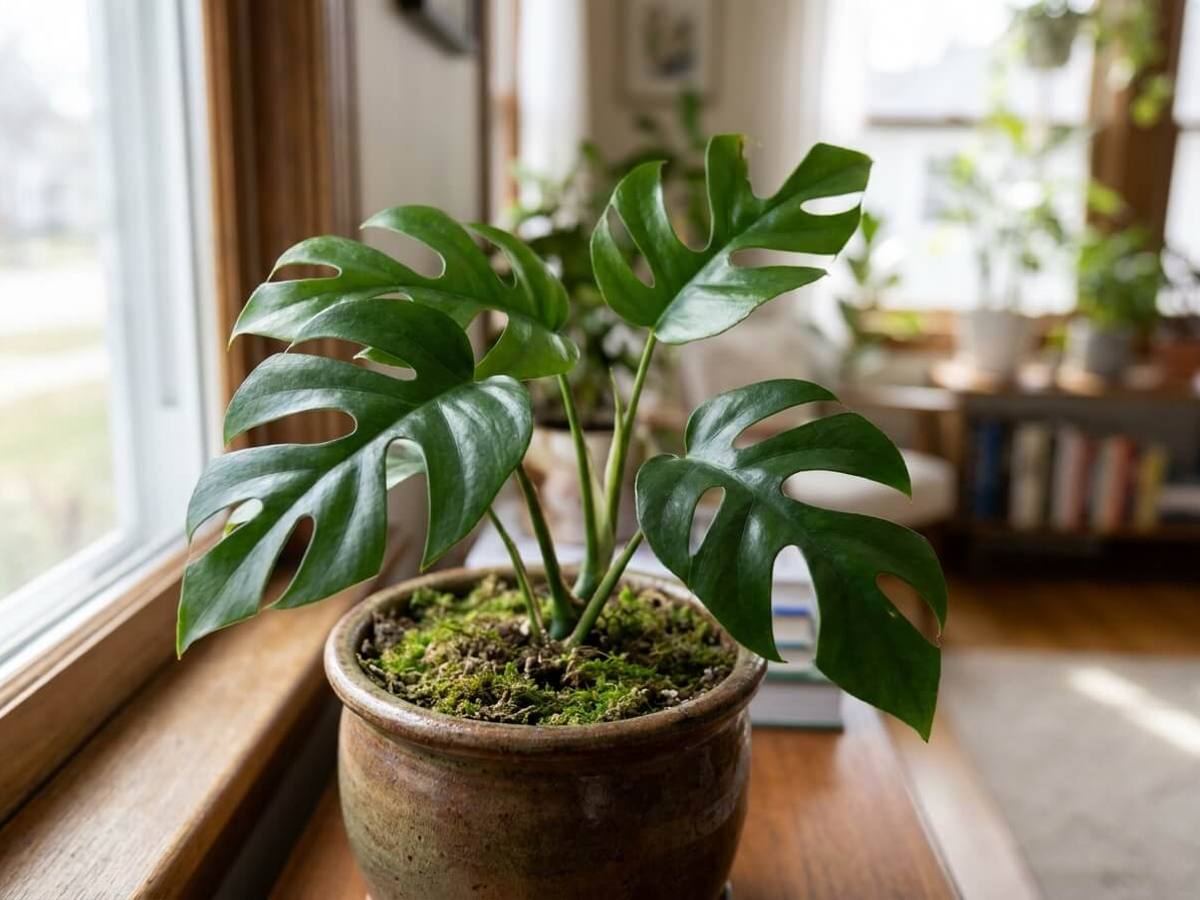
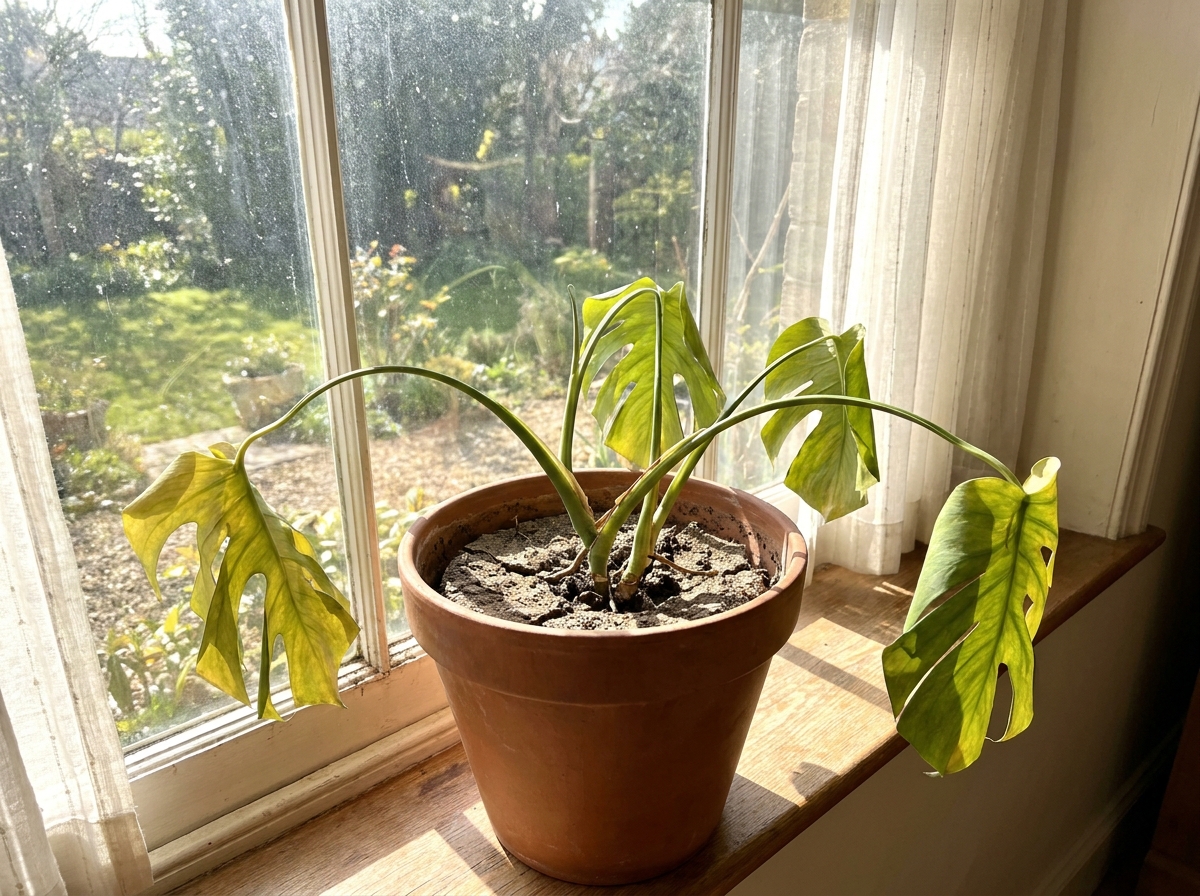
Rhaphidophora tetrasperma is a fast, elegant climbing aroid whose deeply cut, fenestrated leaves look like a Swiss cheese plant seen through the wrong end of a telescope. It earns its keep as a vertical accent on a moss pole in a bright corner, or trailing from a high shelf where the stems can cascade. Despite the nicknames, it is neither a Monstera nor a Philodendron — it is a genus apart, with a distinctly tidier, smaller-scale habit.
Growing conditions
Give this plant the brightest position you can short of direct midday sun. An east-facing window, or a metre or so back from a south- or west-facing one, suits it perfectly. In poor light the internodes stretch, leaves shrink and fenestrations simply never appear.
The roots are those of a forest climber: they want air as much as moisture. Use a loose mix of peat-free compost with roughly one-third orchid bark, perlite or coir chips added, aiming for a slightly acidic pH of 5.5–6.5. Dense, water-retentive potting compost used alone is the single commonest cause of failure.
Treat it as strictly tender. Growth stalls below about 15 °C and cold damage follows below 12 °C, so it can only be grown outdoors year-round in genuinely frost-free, humid climates — elsewhere it is a houseplant that may summer on a sheltered, shaded patio.
How to plant Rhaphidophora
Pot up or repot in spring or early summer, when rising light levels and warmth let the roots re-establish quickly. Avoid disturbing the rootball between late autumn and late winter.
Spacing: One plant per pot, or three rooted cuttings spaced evenly around a 20–25 cm pot for a fuller column of growth.
Depth: Set the crown at the same level it sat before, with aerial roots at the base just resting on the surface — burying the stem invites rot.
Soil preparation: Mix two parts peat-free compost, one part orchid bark and one part perlite, plus a handful of horticultural charcoal.
Support first: Sink a moss pole or coir pole into the pot before backfilling, so you do not sever roots later; tie stems in loosely with soft twine.
Watering in: Water thoroughly until it runs from the drainage holes, then allow the top 3–4 cm to dry before watering again.
Propagation: Take stem cuttings with at least one node and its aerial root; root in water or damp sphagnum at 20–25 °C and pot on within four to six weeks.
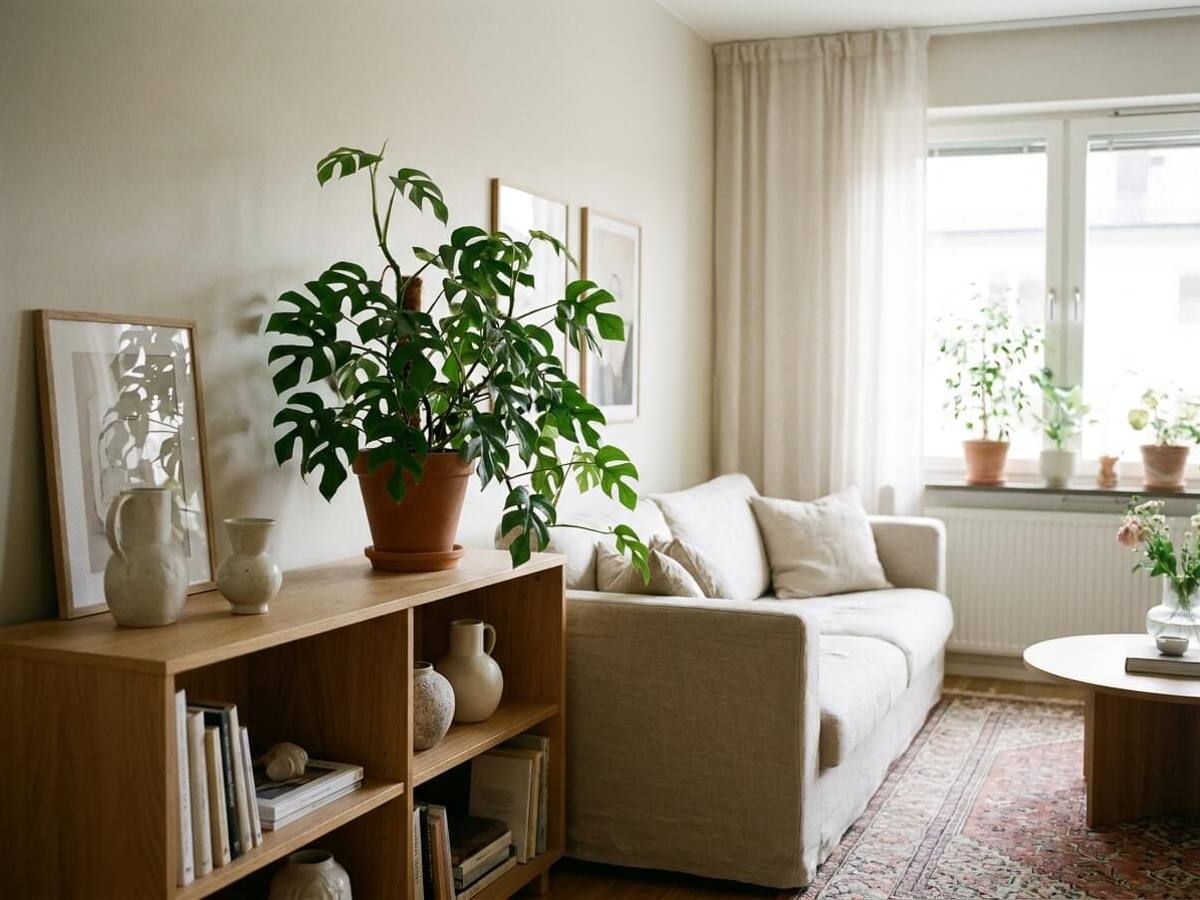
Rhaphidophora tetrasperma displayed as a houseplant in a home interior
Care through the seasons
Spring: Growth resumes sharply as days lengthen. Begin feeding with a balanced liquid houseplant feed at half strength every second watering, and repot if roots are circling the pot. This is the ideal moment to take cuttings and to retie leading stems to their support.
Summer: Expect the fastest growth of the year — a healthy plant can add a new leaf every ten to fourteen days. Water when the top few centimetres feel dry, mist or group plants to lift humidity above 50 per cent, and keep the moss pole damp to encourage aerial roots to grip. Shade from scorching afternoon glass.
Autumn: Taper feeding off from early autumn and reduce watering as light fades. Prune any leggy or bare stems back to a healthy node; the trimmings root readily. Wipe leaves clean so they make the most of weaker light.
Winter: Growth largely pauses below 18 °C, so water sparingly and never leave the pot standing in water. Keep it well away from radiators, cold glass and draughty doorways.
Best varieties to grow
There are no RHS-registered cultivars, but several variegated selections circulate in the trade — most are unstable chimeras, so buy with your eyes open.
Rhaphidophora tetrasperma (standard green form) — the most vigorous and reliable, with glossy mid-green leaves and the cleanest fenestration.
R. tetrasperma ‘Variegata’ (white or ‘albo’ form) — irregular white sectors and marbling; slower, scorch-prone and liable to revert or throw all-white shoots.
R. tetrasperma ‘Aurea’ — buttery yellow variegation that holds its colour better than white forms in bright indirect light.
R. tetrasperma ‘Mint’ — soft pale-green speckling rather than pure white, generally more stable and far more tolerant of average room light.
Pests, diseases and common problems
Spider mite: Fine webbing in the leaf axils and a dull, stippled bronzing of the foliage, worst in dry winter air. Raise humidity, rinse the plant under a tepid shower and treat weekly with insecticidal soap or neem until clear.
Root rot: Yellowing lower leaves, a sour-smelling compost and mushy brown roots, caused by dense soil or overwatering. Unpot, cut away all soft roots, repot into a chunky, airy mix and water far less until new growth appears.
Thrips and mealybug: Silvery scarring, distorted new leaves, or white cottony tufts at the nodes. Isolate the plant, dab mealybug colonies with a cotton bud dipped in dilute surgical spirit and spray repeatedly with neem at seven-day intervals.