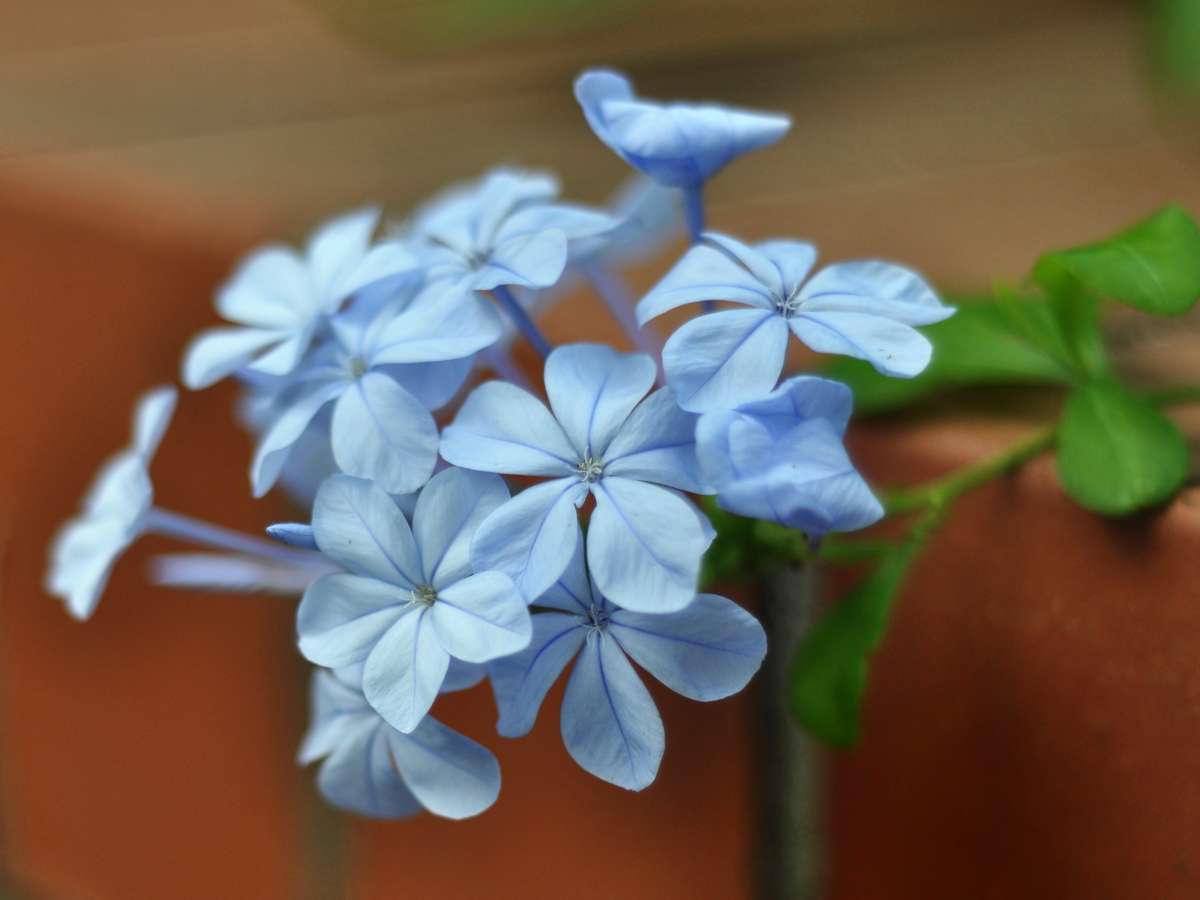
Light blue flower clusters with stamens that barely reach the rim of the petals, white sports born of a nursery mutation, slender red clusters on a climbing vine: cape leadwort (Plumbago auriculata) dresses walls, borders and containers. Match the variety to the spot, ‘Imperial Blue’ for the border, Escapade in a 4 to 8-inch pot, and flowers follow.
Plumbago auriculata is the type species for the Plumbaginaceae genus, but other species have different hues to share.
Here they are grouped by color.
→ Good to know: Plumbago is easy to propagate, especially through cuttings.
The varieties described below differ in flower colour, in the way they grow and in how easy they are to track down. Use this table to see at a glance which plumbago suits your wall, border or container.
| Variety or species | Flower colour | Habit or best use | Notes |
|---|---|---|---|
| ‘Imperial Blue’ | Light blue | Classic garden plumbago | Stamens barely reach the rim of the petals |
| ‘Crystal Waters’ | Blue | Collector’s plant | Hard to find outside conservatories |
| Escapade series | White and blue | Pots and containers, 4 to 8 inches (10 to 20 cm) across | No longer under plant patent, so free to propagate |
| ‘Monott’ | Blue | Tight-flowered garden plumbago | Sold under the trademark name “Royal Cape” |
| ‘Monite’ | Pure white | White-themed gardens and walls | A mutation of ‘Monott’, sold as “White Cape” |
| Plumbago zelanica | Bright white, pointed petals | Ground cover | A different species altogether |
| Plumbago indica | Red | Vine, with slender flower clusters | Rare species, native to South-East Asia |
Blue remains the natural colour of the genus, with white and red the exceptions worth hunting down.
Beautiful BLUE Plumbago
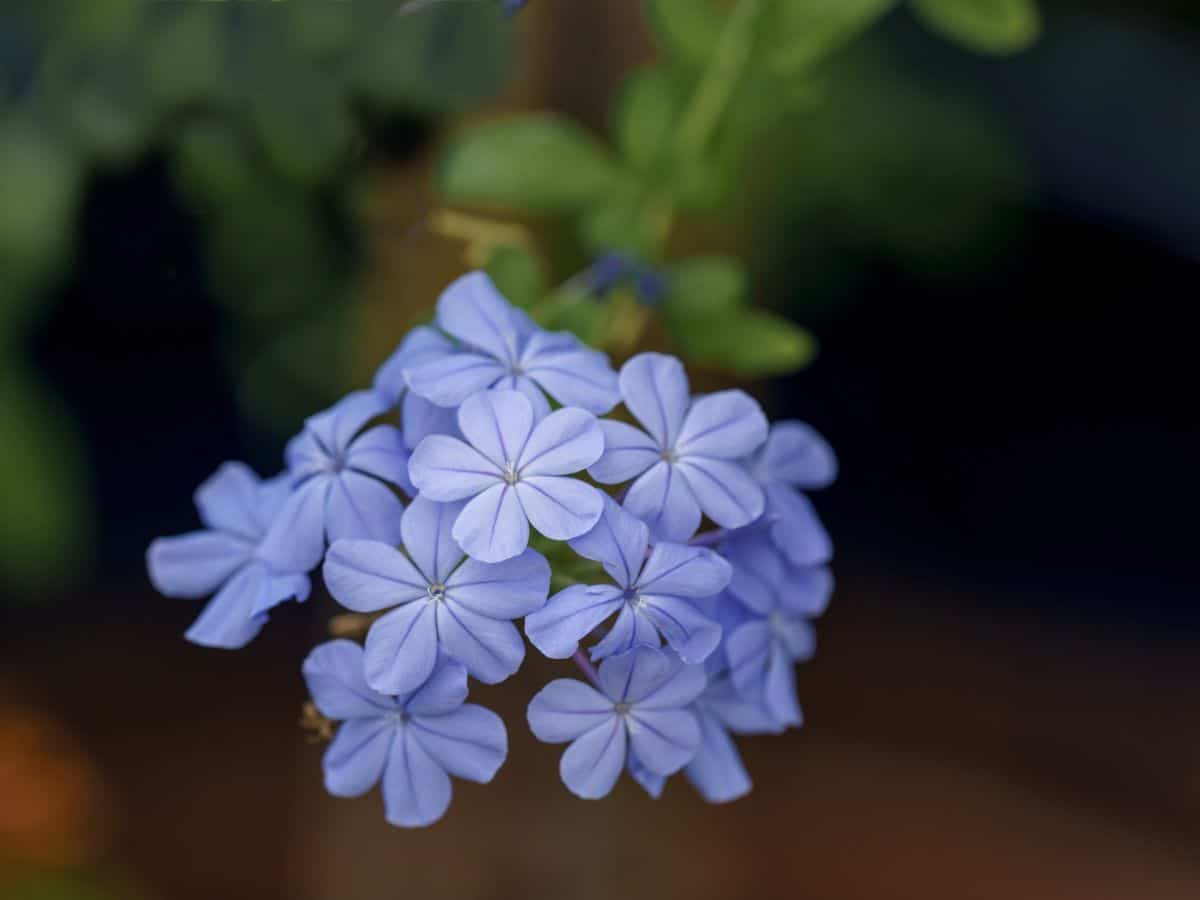
Most plumbago are shades of blue, the plant’s natural color. It attracts desired pollinators best.
Shown above, the beautiful ‘Imperial blue’ variety has a light blue color. Stamens are shorter and barely reach the rim of the flower petals.
Harder to find, this variety now only appears in conservatories across the United Kingdom. It’s sometimes possible to visit and ask the keeper for a cutting of this rare plumbago.
Plumbago ‘Escapade’ was developed as a range of plumbago flowers that grows very well in pots and containers. There are two colors: white and blue.
PanAmericanSeed Company developed these varieties two decades ago, and they are no longer protected by any form of plant patent. This means you can propagate them at will!
Ideal pot size is anywhere between 4 and 8 inches across (10 to 20 cm).
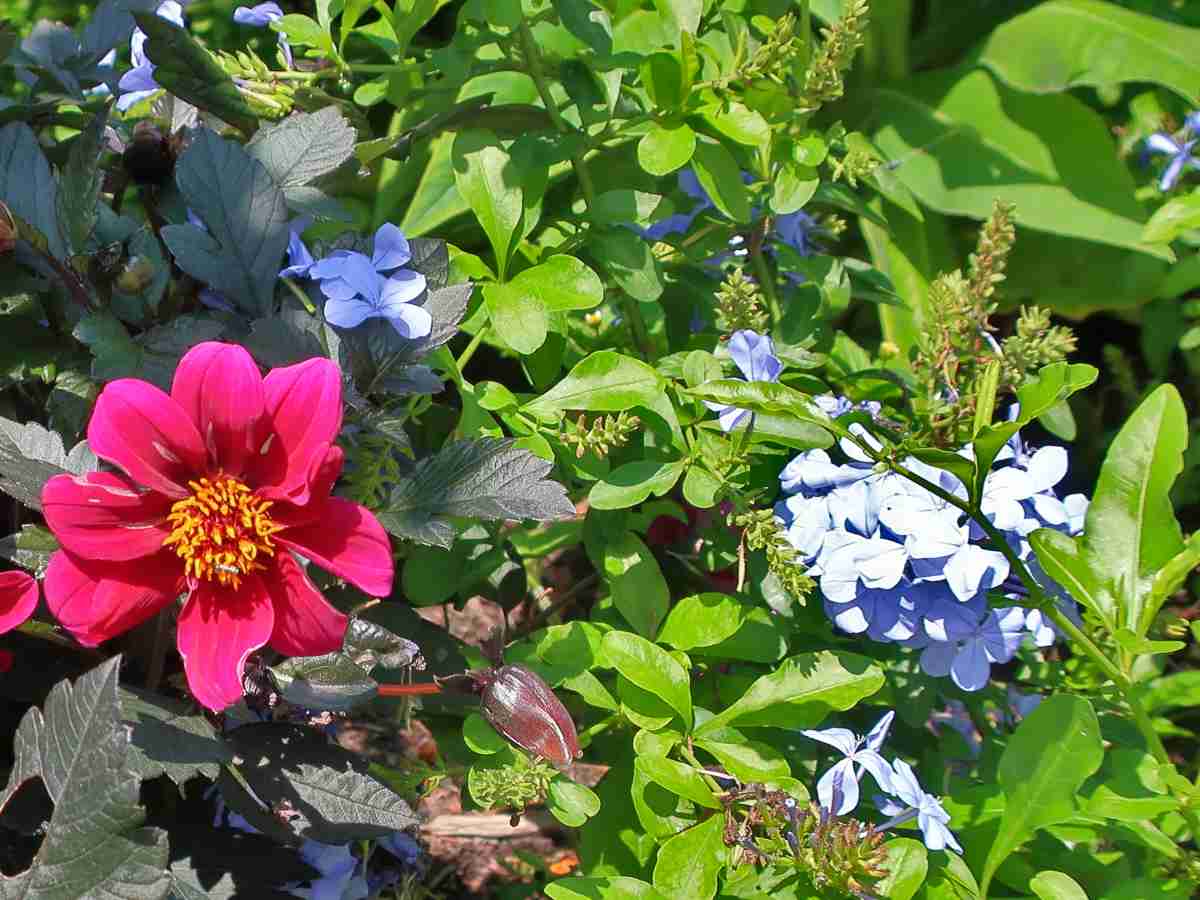
This plant currently goes by the trademark name “Royal Cape”.
This is a reference to its common name, “Cape Leadwort”.
In the picture above/left, it’s paired with another striking flower variety: Dark Angel’s Dracula dahlia.
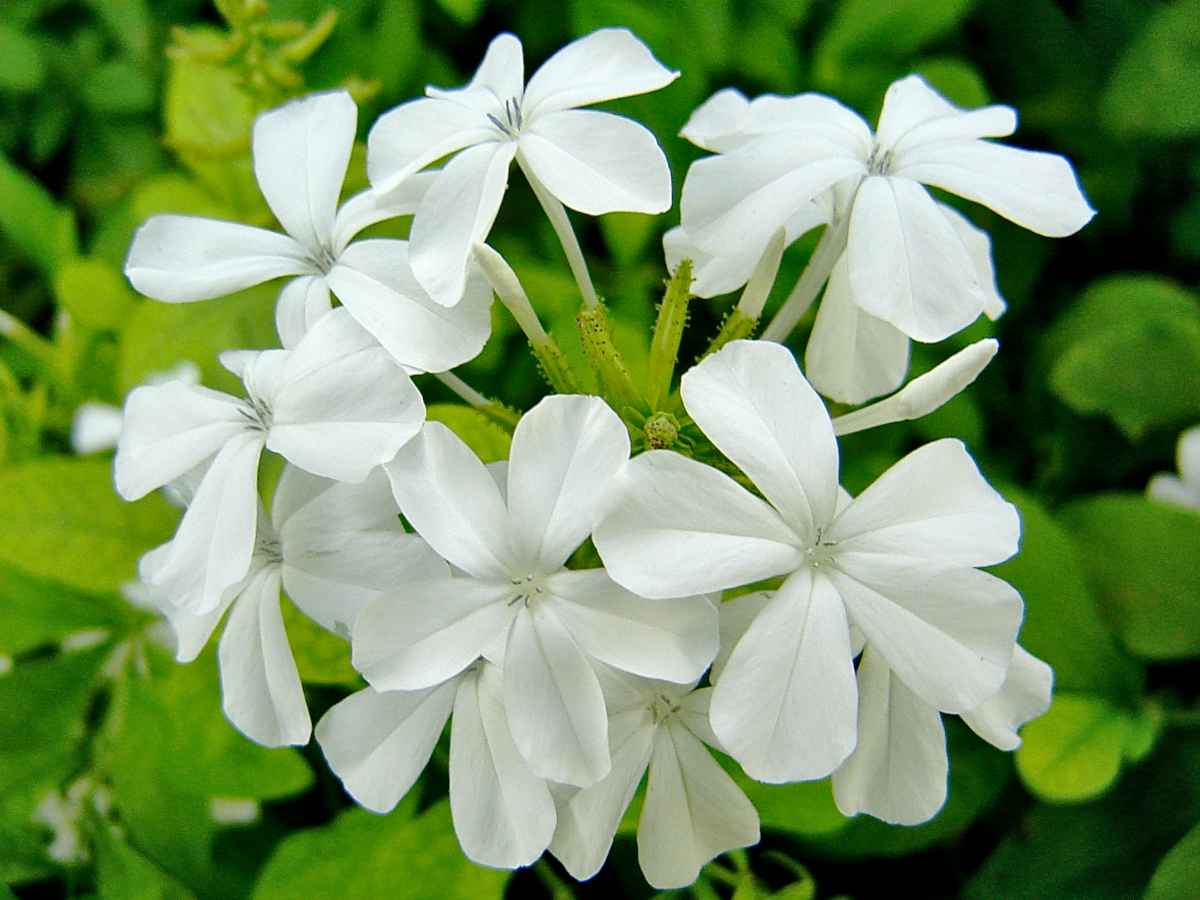
There are less white varieties, since natural colors for plumbago are in the blue range.
There are still a few options to grow, perfect to dress a wall in a white-flowered garden.
The Monite plumbago is a sport of the ‘Monott‘. One day, one of the plants grown in the production nursery had a random mutation that had an interesting side-effect: flowers weren’t blue but pure white!
The nursery owners propagated the plumbago stem and the mutation was preserved. Today, it’s sold under the name “White Cape”, but ‘Monite’ is the botanical name for this variety.
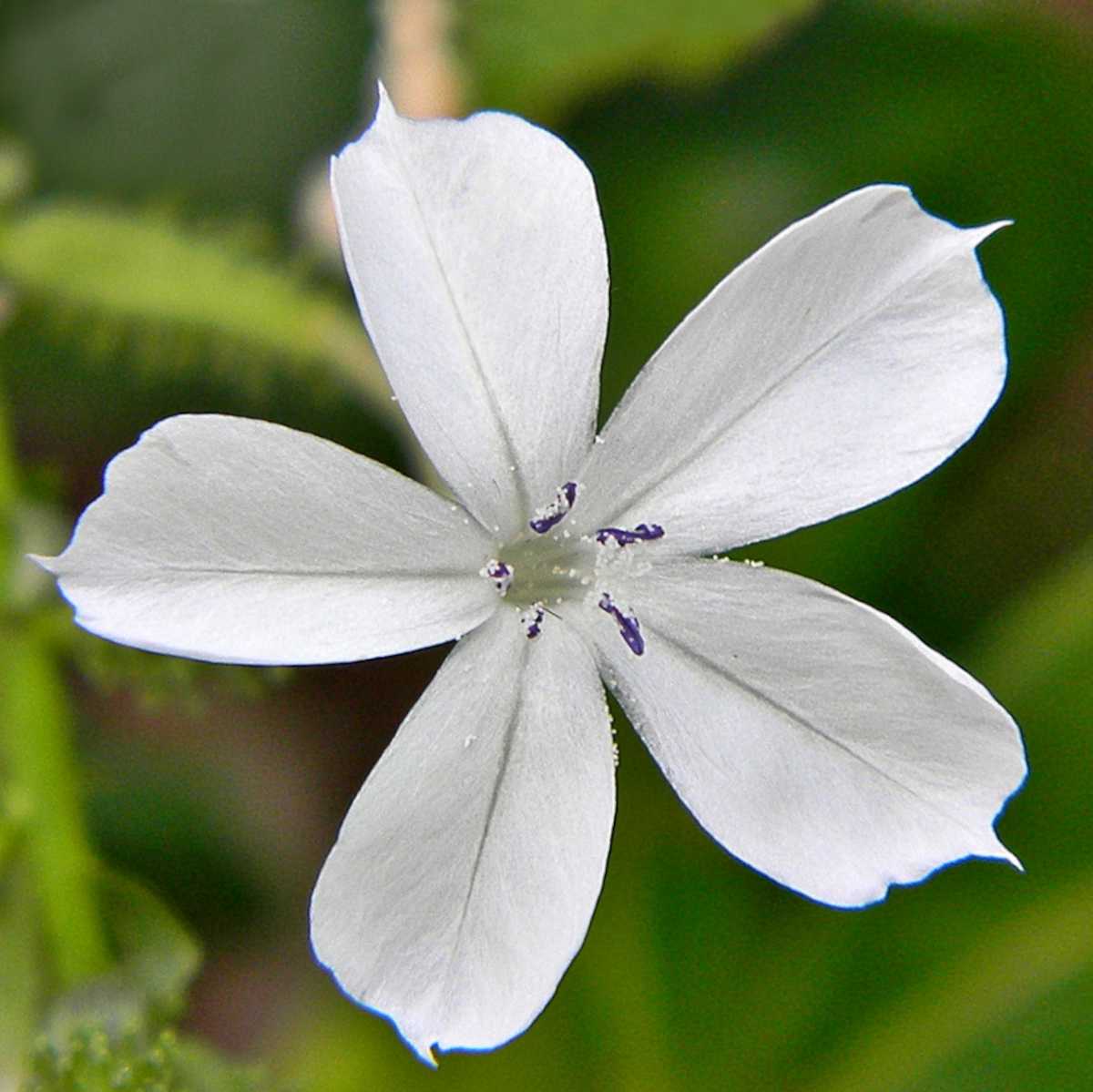
This is a different species of plumbago altogether.
Its bright white and petals have a pointed tip.
It typically grows as a ground cover flower.
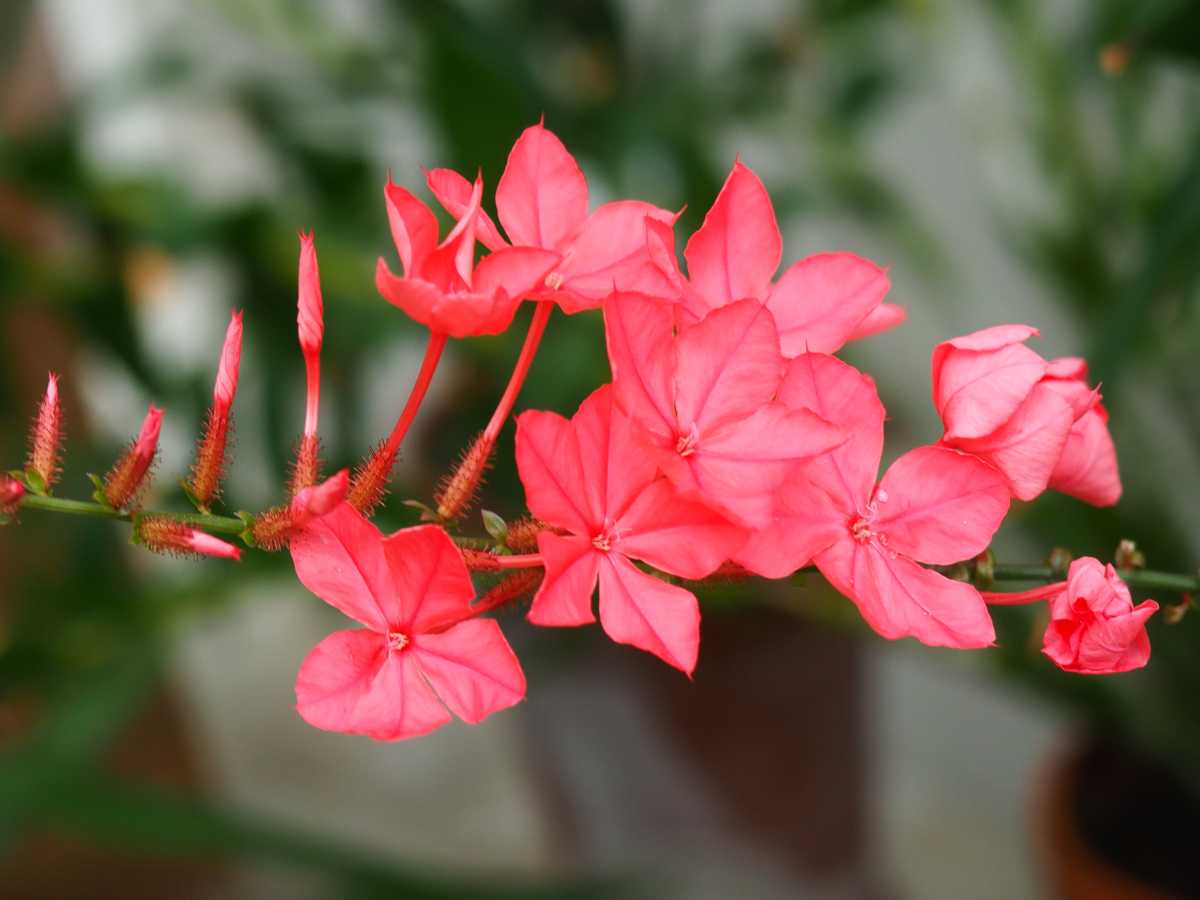
Another rare species, Plumbago indica, bears red flowers.
It is native to South-East Asia.
It also grows as a vine, and flowers form beautiful, slender clusters of red flowers.