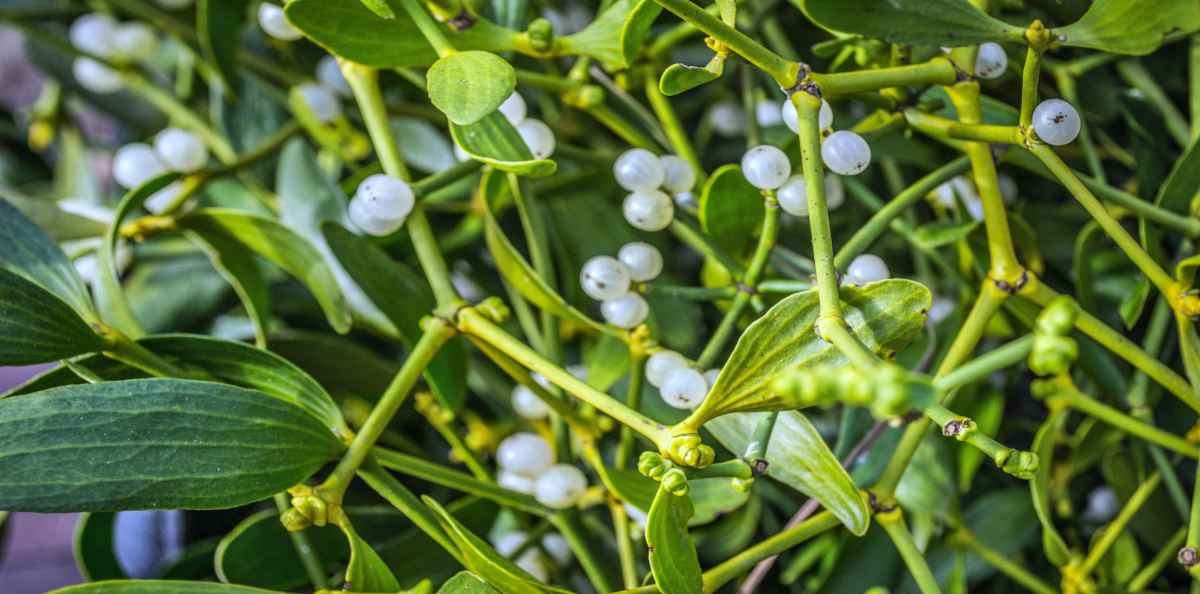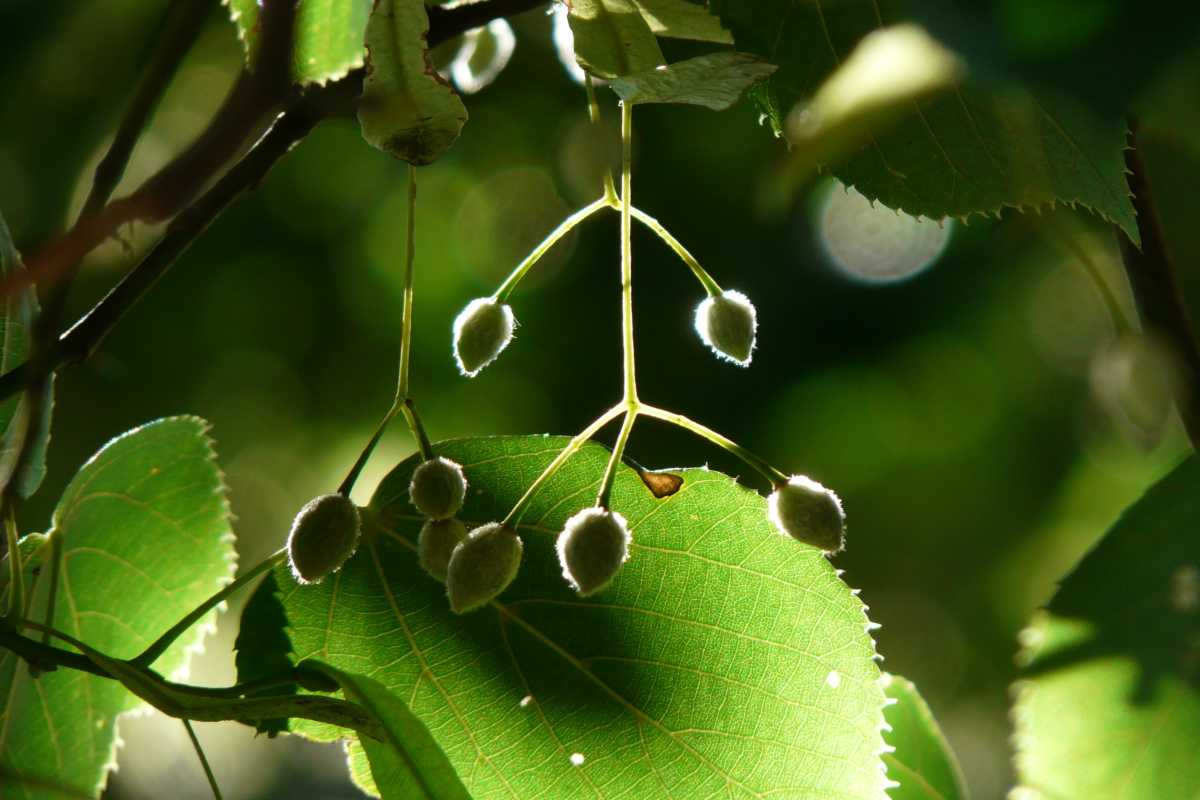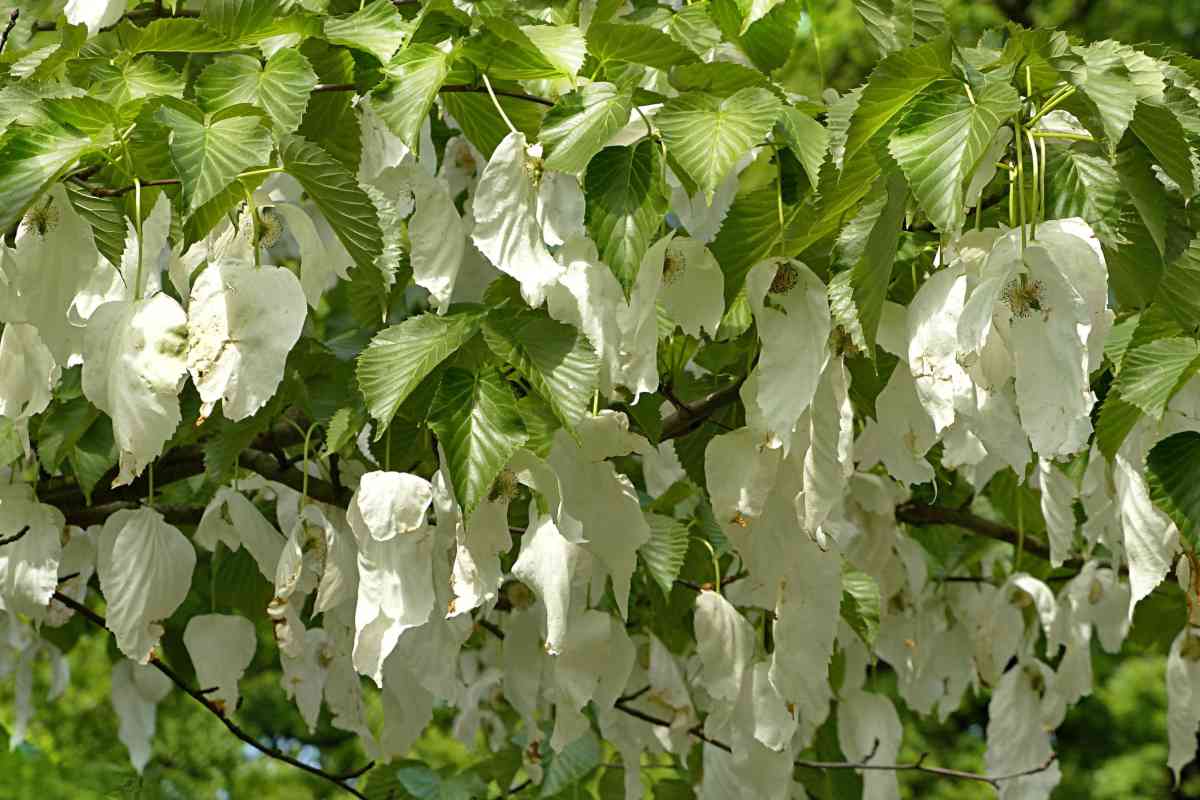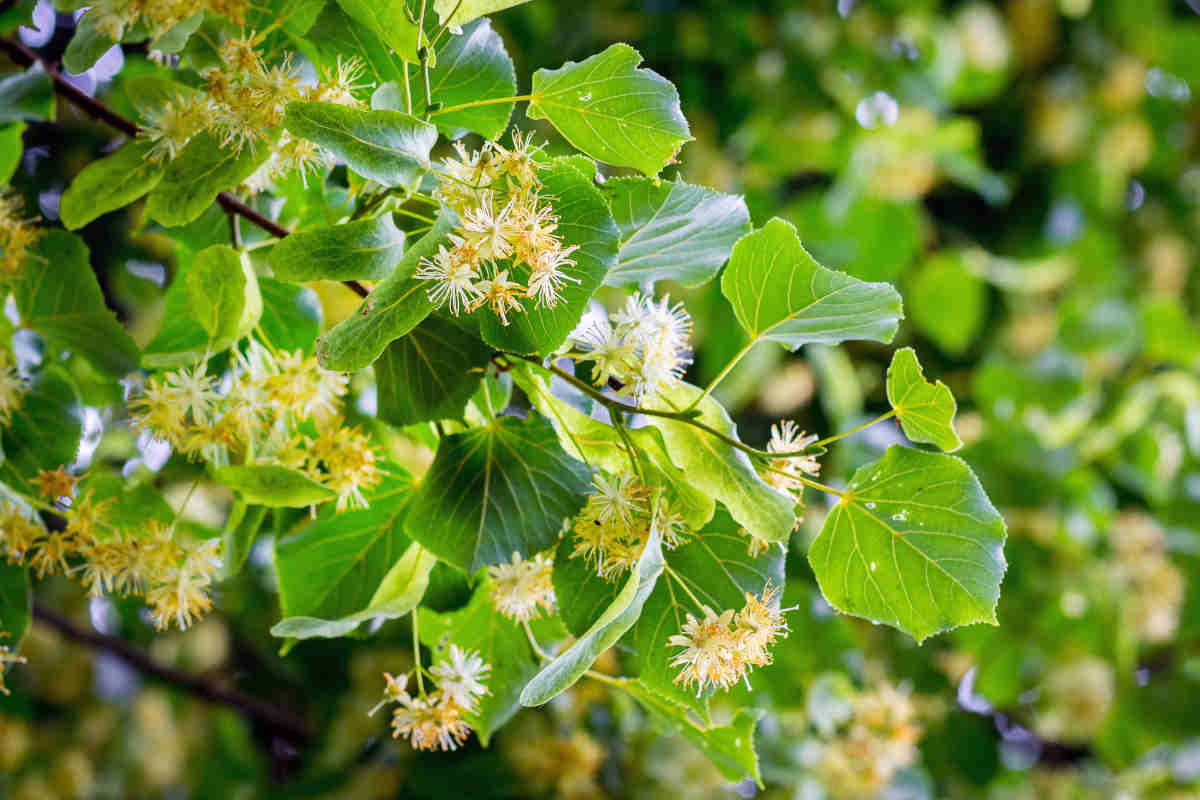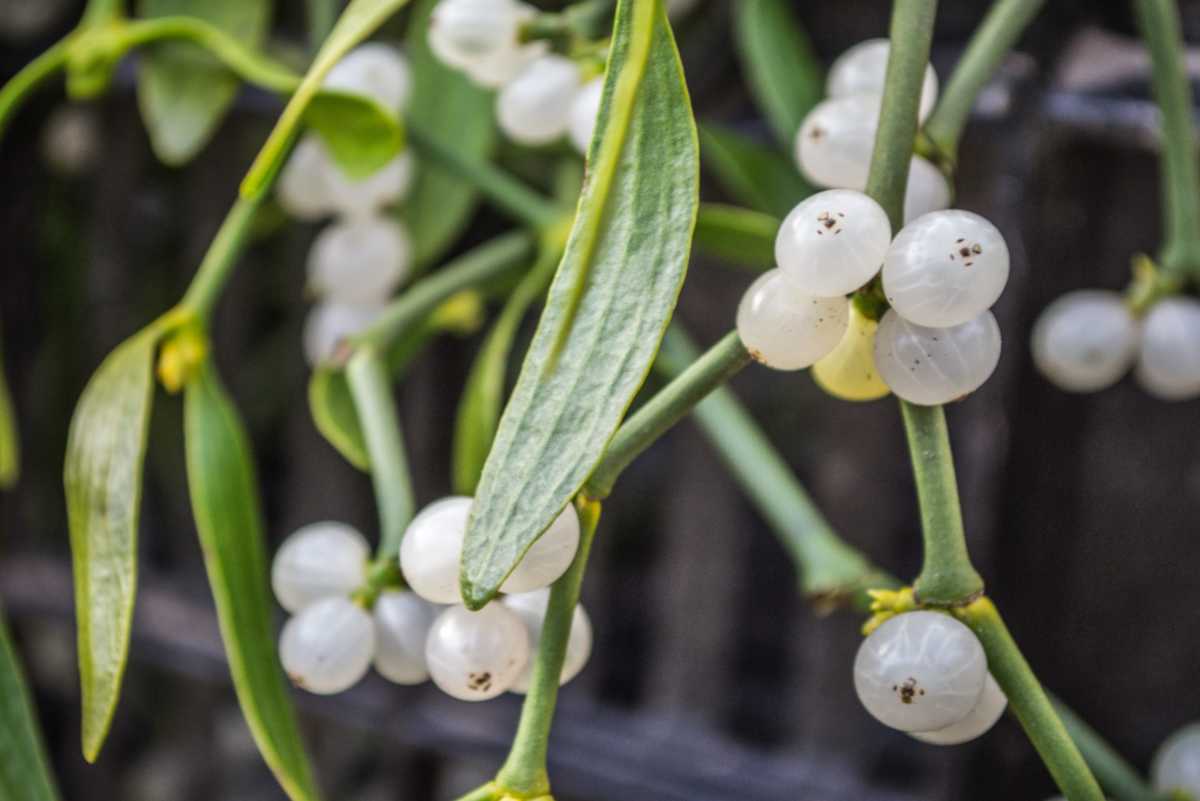
Mistletoe, or Viscum album, is a plant classified as a parasite for many species of trees.
Key mistletoe information
Name – Viscum album
Family – Viscaceae
Type – parasite plant
Foliage – evergreen
Flowering – March-April
It stands out in fall and winter, sitting like a ball high up in trees that have lost their leaves.
Mistletoe is a plant that doesn’t have any roots, which lives in trees, and, as it grows, takes on the shape of a sphere.
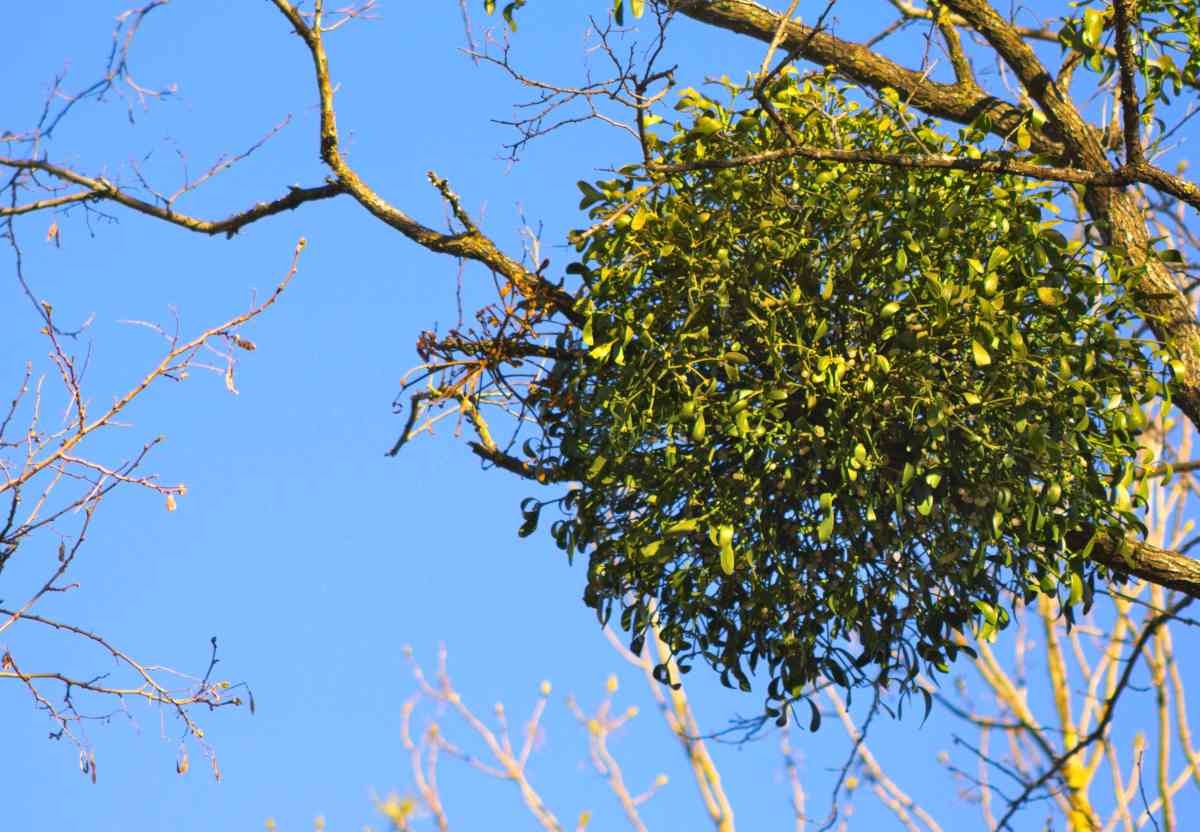 A parasite plant, mistletoe appears on many trees in our areas: hawthorn, black locust tree, willow, apple tree, lime tree and especially the poplar tree.
It can also be seen on the following, albeit less frequently: pear tree, maple, hazel, hornbeam, chestnut and cherry tree.
Note that mistletoe has preferences as to species that differ depending on the area.
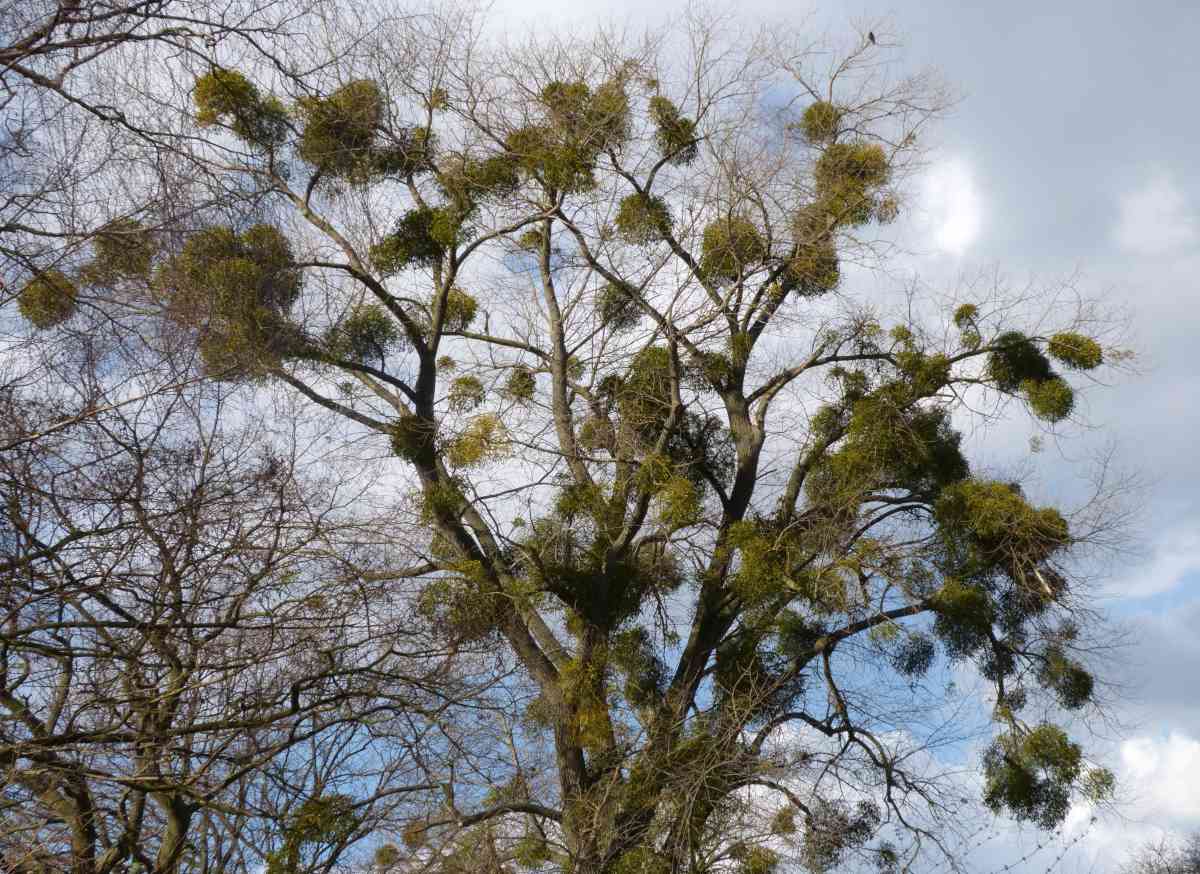 Mistletoe is considered a parasite for trees. The notion of nuisance must be watered down a bit, because this winter-bearing berry plant remains an amazing source of food for the birds in winter.
Actually, mistletoe extracts its water and nutrients directly from the host tree since it can’t collect them from its own roots.
An overloaded tree tends to waste away rather fast, which is the reason why it’s often recommended to get rid of mistletoe.
To avoid propagation and excessive weakening of your host tree, the best thing to do is to eliminate the mistletoe from the tree as soon as you spot it.
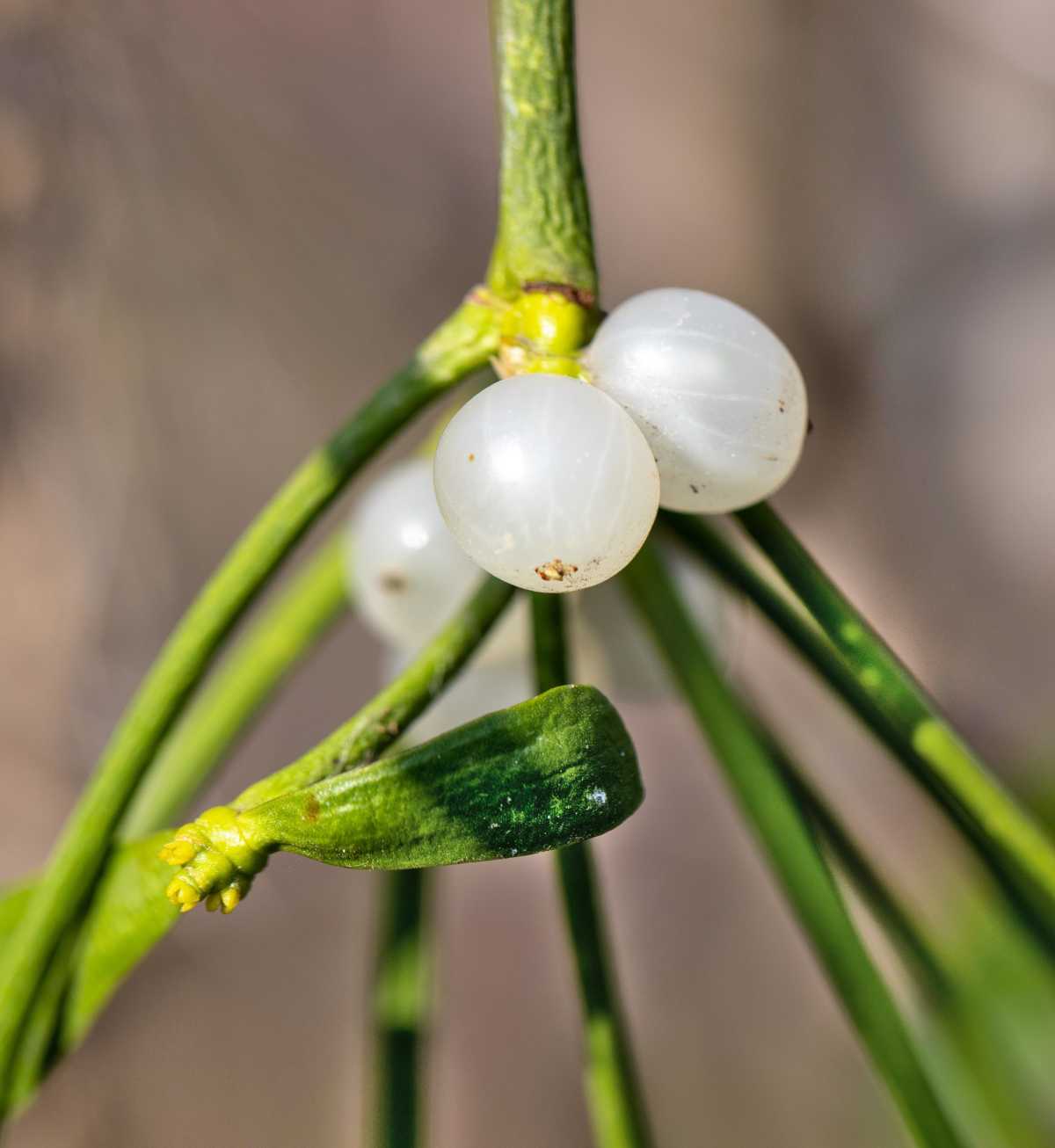 Traditionally, kissing under a sprig of mistletoe during Christmas and New Year’s was said to grant a long and prosperous life. December is also the season when locating and harvesting mistletoe is easiest.
Druids and ancient Celts held the plant to be sacred. They used it for centuries to heal certain diseases, restore fertility and guard against bewitching. Druids would harvest mistletoe twigs with a golden sickle at specific times of the year, like New Year’s.
Mistletoe is a poisonous plant that is strictly forbidden to ingest, both the leaves and the white berries.
Ingesting mistletoe can lead to serious heart and digestive disorders.
When handling mistletoe, use gloves to protect your hands.