Home » Health » Lime flower (basswood): traditional uses, infusions and everyday preparations
Lime flower (basswood): traditional uses, infusions and everyday preparations
·
0
The lime tree — basswood, linden, Tilia — drops a wave of honey-scented blossom over parks and streets in early summer, and those flowers are the most widely drunk herbal tea in Europe. This page is for anyone who wants to pick, dry and use them properly: which part to take, how strong to make the infusion, when to drink it, and who should be careful.
Infusion, decoction (sapwood or skin lotion), bath infusion, fresh in salads, honey
Harvest season
Flowers: late spring to early summer, just as they open; young leaves: mid-spring
Taste
Honeyed and floral, faintly sweet, slightly mucilaginous; bitter if over-steeped
What it is credited with
Evening calm. Herbalists have long recommended lime flower infusion as a gentle evening drink for restlessness, nervous tension and difficulty settling to sleep.
Easy digestion. Naturopathy credits the flowers with supporting slow, heavy digestion after a late meal, which is one reason the tea is drunk after dinner rather than before.
Winter chills. In traditional European herbalism, a hot lime flower infusion was the classic household drink when someone came down with a chill, taken to encourage sweating and to make a stuffy head and aching limbs more bearable.
Soothing the skin. Traditional cosmetic practice uses a cooled flower decoction as a toner for dry, tight, itchy skin.
Sapwood as a drainage plant. French herbal tradition holds lime sapwood (aubier de tilleul) in high regard as a drainage remedy, associated with liver and kidney function and used in short cures.
A calming bath. Tradition has it that a bath scented with lime flowers takes the edge off an over-excited child at bedtime, and does the same for adults worn out by nervous fatigue.
Lime tree honey. Strong, slightly bitter, and the honey most often suggested by herbalists for people who describe themselves as nervy or poor sleepers.
How to use it
The evening infusion (the main one)
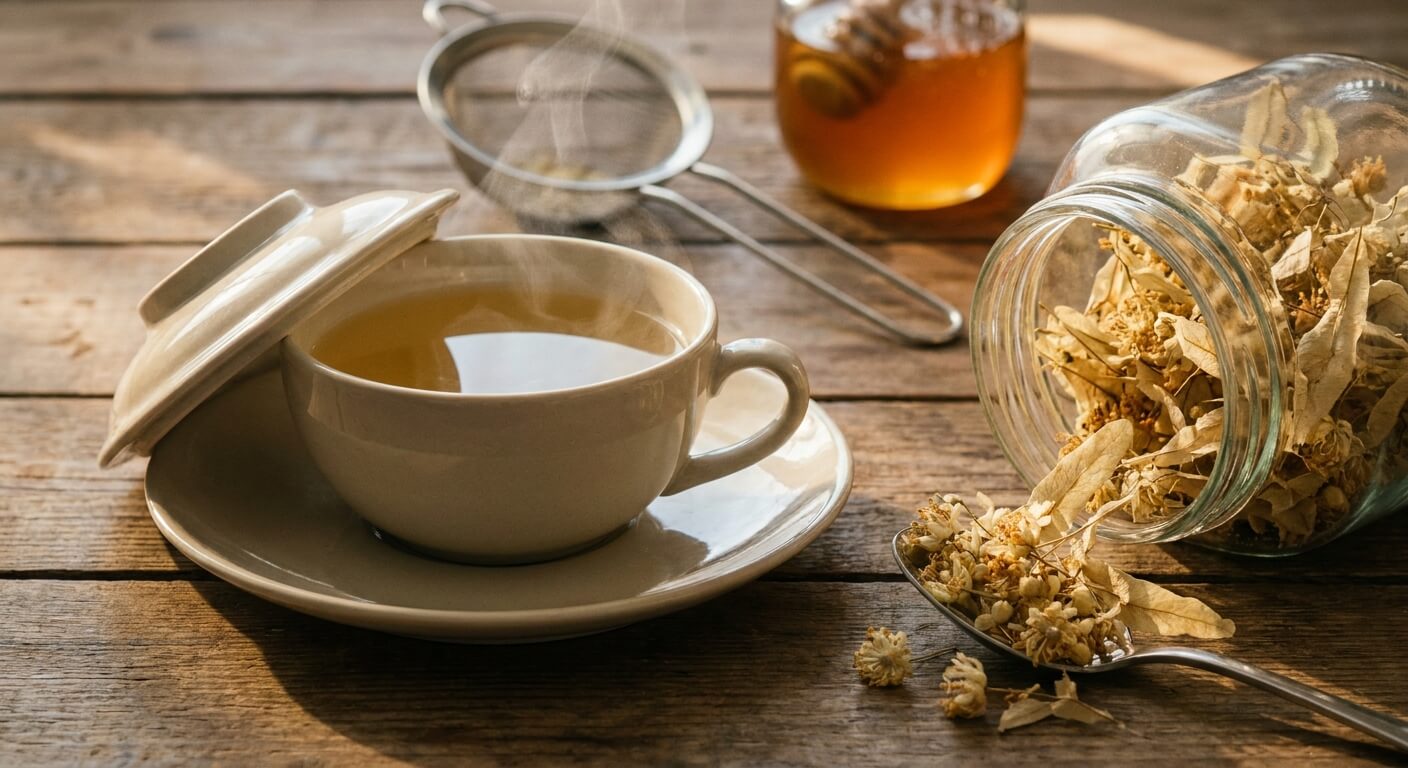
Use about a generous teaspoon of dried flowers — roughly 1/5 oz (5 g) — per cup.
Pour water that has just come off the boil over the flowers.
Cover and steep 5 to 10 minutes. Cover matters: the aroma leaves with the steam.
Strain. Do not push past 10 minutes or it turns bitter and grassy.
Drink one cup after the evening meal, or half an hour before bed. Two to three cups a day is the usual traditional ceiling, and it is drunk in stretches of a week or two rather than endlessly.
A spoonful of lime tree honey suits it perfectly, since both come from the same flower.
The hot infusion for a winter chill
Make it stronger — a heaped teaspoon per cup — and drink it as hot as you comfortably can.
Tradition pairs it with elderflower, and asks that you then get under a blanket.
Keep water going alongside it; sweating dries you out.
Skin lotion (decoction)
Boil 1 ½ oz (50 g) dried flowers in 1 quart (1 litre) of water for 5 minutes, then leave to cool covered.
Strain well through muslin and dab on with cotton wool, morning and evening.
Keep it in the fridge and use within three days — there is no preservative in it.
Bedtime bath
Steep two big handfuls of dried flowers in a litre of boiling water for 20 minutes.
Strain and tip the liquid into a warm (not hot) bath, just before bedtime.
Sapwood decoction
Sapwood is woody and needs simmering, not steeping: a small handful of shavings per litre, brought to the boil and reduced gently for 15 to 20 minutes.
Drunk across the day, traditionally as a short cure of a week or two at a change of season.
Buy it prepared as shavings; stripping sapwood yourself damages the tree.
In the kitchen
Young spring leaves are mild and tender — shred them into mixed salads.
Fresh flowers scatter well over fruit salad, or infuse into cream for a dessert.
Dried flowers blend happily with chamomile, lemon balm or verbena.
Which preparation for which purpose
Form
How it is made
Traditionally used for
Flower infusion
5 g per cup, steeped covered 5–10 min
Evening calm, settling a heavy meal
Hot strong infusion
Heaped teaspoon per cup, drunk very hot
Winter chills, encouraging sweating
Flower decoction
50 g in 1 litre, boiled 5 min, cooled
Skin lotion for dry, itchy skin
Bath infusion
Two handfuls in 1 litre, 20 min, added to bath
Bedtime unwinding, nervous fatigue
Sapwood decoction
Shavings simmered 15–20 min per litre
Short seasonal drainage cures
Lime tree honey
Single-flower honey, bought
Sweetening the infusion; nervy sleepers
If you want a tree of your own to pick from, it likes deep, cool, even moist soil, thick or chalky, with unscorching sun and moving air. See how to grow lime tree or basswood.
A teaspoon of dried flowers per cup, steeped covered ten minutes
Frequently Asked Questions
The one thing to remember: a teaspoon of well-dried flowers per cup, steeped covered for no more than ten minutes, drunk after the evening meal.
Which part of the lime tree do I actually pick?
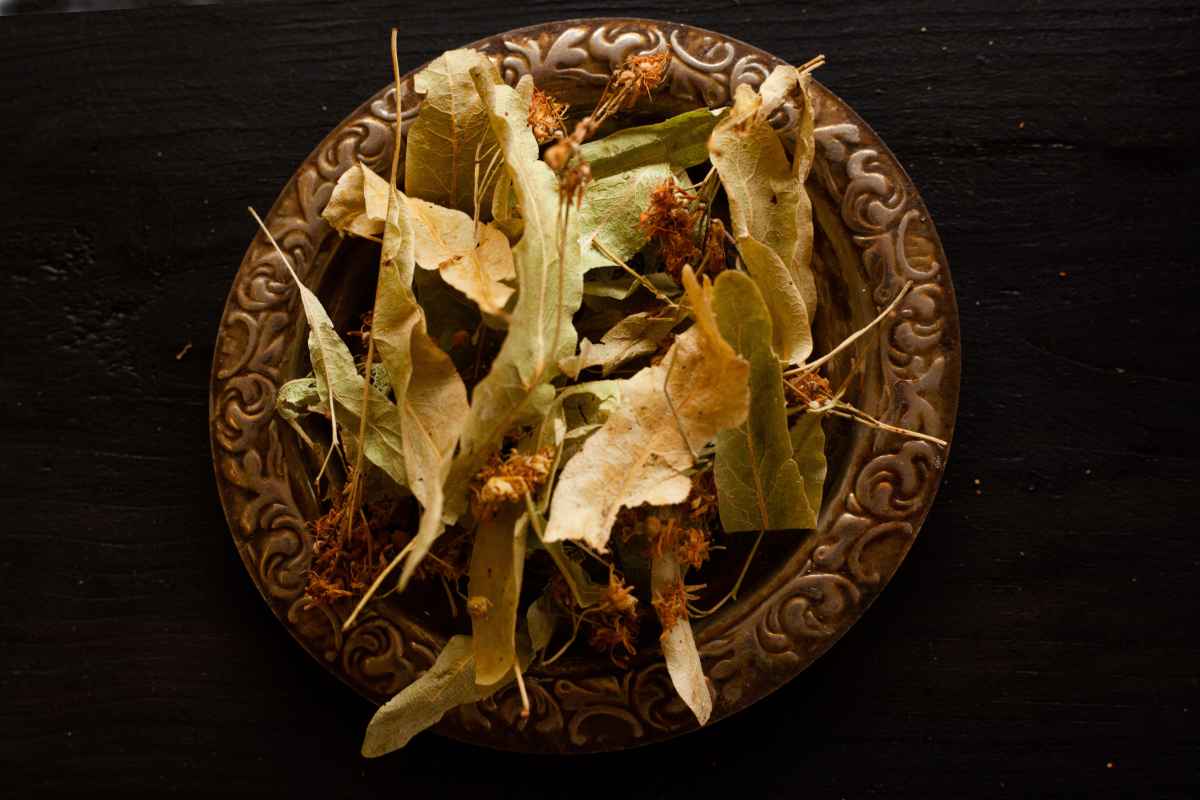
The flower clusters together with the pale, papery bract attached to them, picked as the first blossoms open in late spring to early summer. Young mid-spring leaves are edible in salads. The sapwood is a separate remedy and is best bought as ready-cut shavings rather than stripped from a living tree.
Why does my lime flower tea taste bitter?
Almost always over-steeping, or flowers that are more than a year old. Ten minutes is the limit, and the pot should stay covered so the aroma does not escape with the steam. Flowers that smell dusty rather than honeyed will never make a good cup.
Can I drink it every evening?
Herbal tradition treats lime flower as a plant for stretches of a week or two, not a permanent habit, with two to three cups a day as the usual ceiling. If you are relying on it night after night to sleep, that is a conversation for a health professional rather than a stronger teapot.
Is lime flower safe for my children at bedtime?
The scented bath is the traditional route for excitable children and is the gentler option. For drinking, keep it weak and occasional, leave it out entirely for babies, and check with your doctor, pharmacist or health visitor for young children.
What is lime sapwood used for and how do I prepare it?
French herbal tradition holds it as a drainage plant, associated with liver and kidney function and taken as a short seasonal cure. Being woody, it must be simmered rather than steeped: a small handful of shavings per litre, boiled gently for 15 to 20 minutes and drunk across the day. Clear it with your doctor first if you take any regular medication.
This information is provided for general interest and reflects the traditional use of plants. It is not a substitute for medical advice. If you are on medication, pregnant, or in any doubt, ask a healthcare professional.
Written by Gaspard Lorthiois | Loves helping out, especially when it comes to growing things. Worked in herbal medicine, runs a farm, and dabbles in tech. Master's degree and engineer.