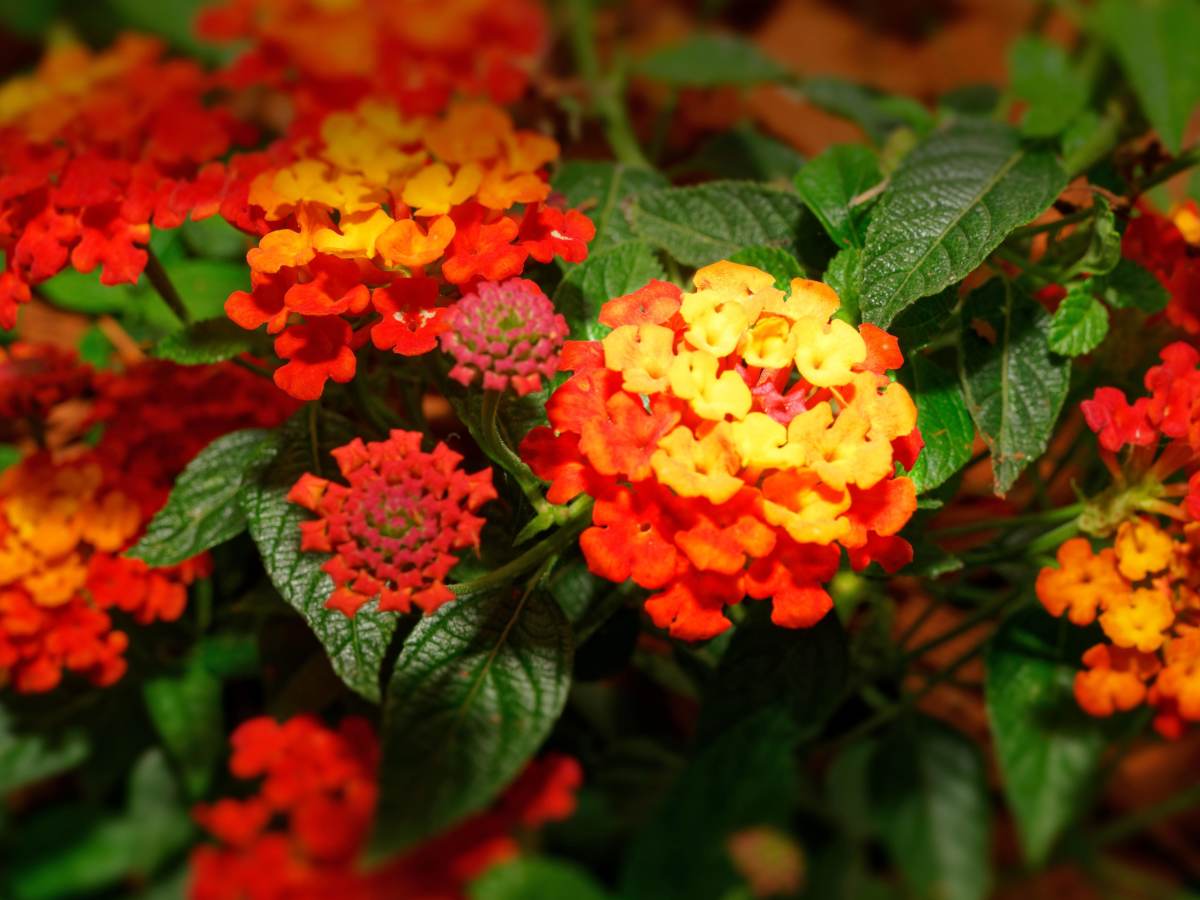
Each lantana head is a posy of tiny flowers that open in one colour and shift to another as they age, so a single cluster can carry yellow, orange and pink at once. Abundant from spring to fall, it suits flower beds and garden boxes alike — give it full sun and shelter from frost, which it will not survive.
| Name | Lantana |
|---|---|
| Family | Verbenaceae |
| Type | perennial |
| Height | 20 to 60 inches (50-50 cm) |
| Exposure | full sun |
| Soil | ordinary |
| Foliage | deciduous |
| Flowering | end spring → end fall |
Take advantage of its abundant blooming from spring to fall coupled with relatively easy care.
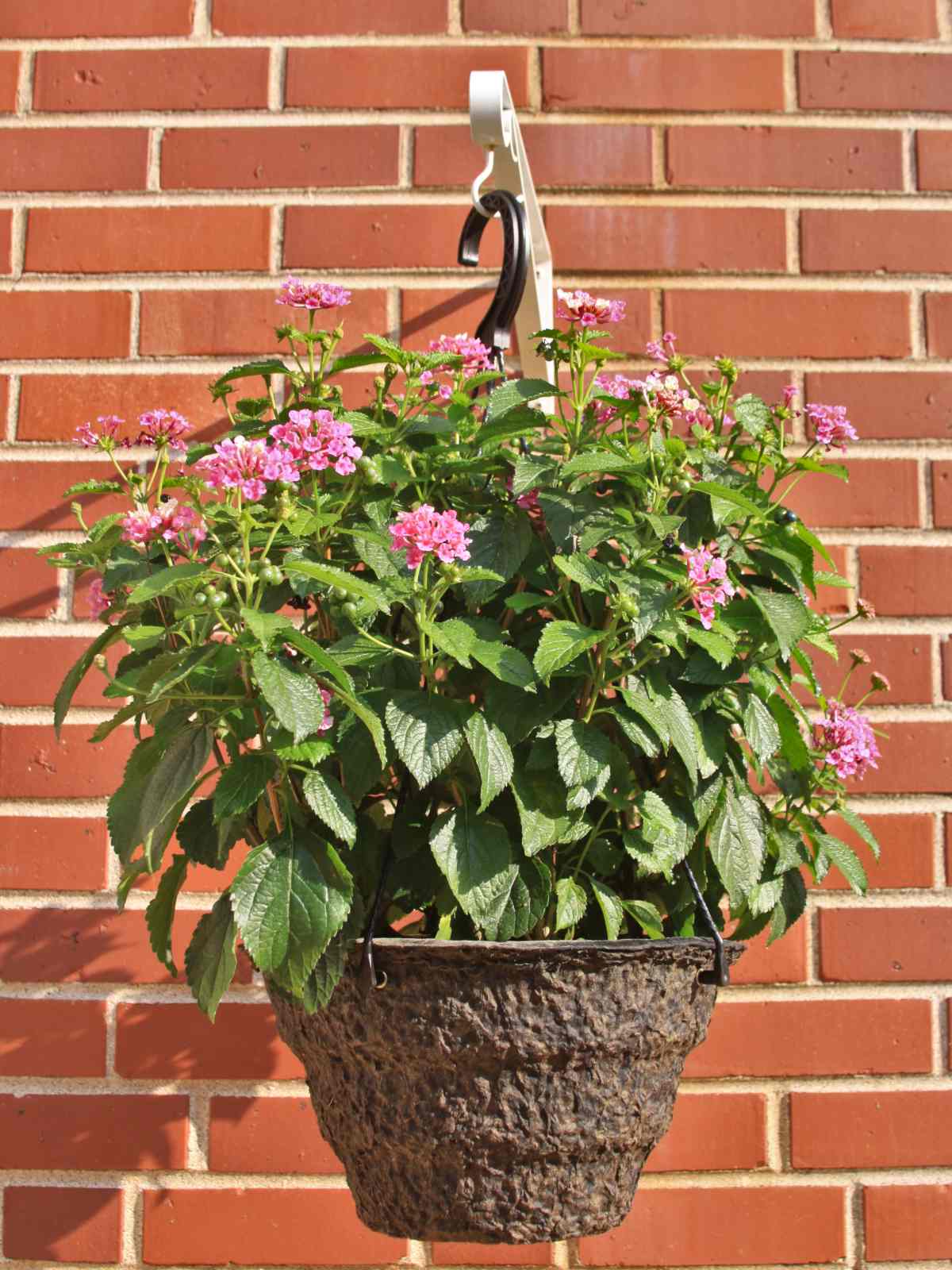
It is a good idea to plant lantana right at the start of spring when they’re purchased in nursery pots.
If the area you live in is prone to frost, best plant your lantana in a pot so that you can bring it indoors over winter: this plant is vulnerable to freezing.
When sowing from seed, best sow under shelter in March, transplant once to nursery pots during the month of April, and set in place in May.
Preparing lantana cuttings is the best way to propagate this plant.
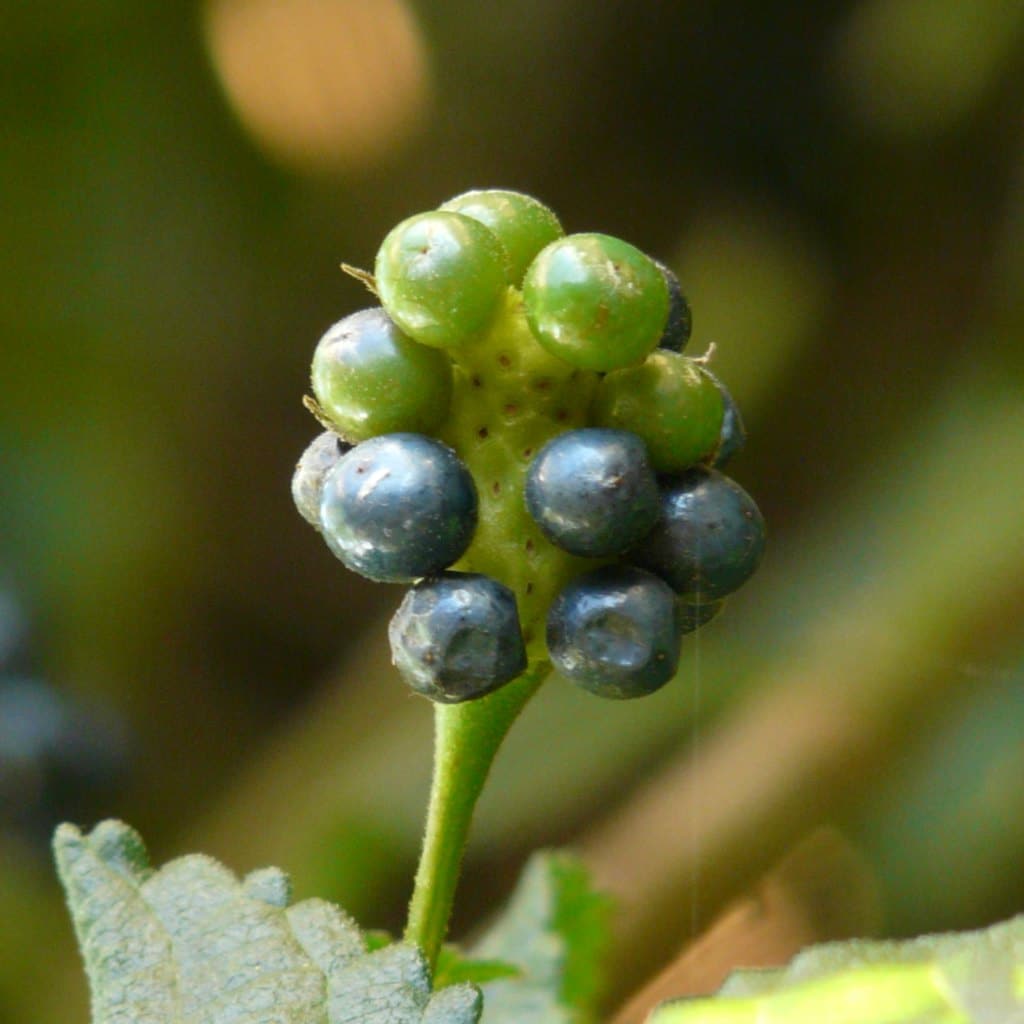
Of course, the (edible!) berries self-sow and sprout quite readily.
Lantana can either be left to grow to its natural shape, or you can direct the growth of a young plant by forming its stem.
The pruning is performed in winter. It must be very short: cut each lantana branch back to 1 or 2 buds.
In summer, remove wilted flowers regularly so as to boost flower-bearing.
Take note that lantana can only survive as a perennial in areas where the winter is mild.
In colder places, it must be considered an annual for which you’ll have to do the following:
Lantana asks for very little, but each task has its moment. Here is when to do what, from the first spring planting to winter storage.
| Task | When | What to do |
|---|---|---|
| Planting nursery-pot plants | Start of spring | Set out bought plants, enriching garden soil with soil mix |
| Sowing seed | March to May | Sow under shelter in March, pot on in April, plant out in May |
| Taking cuttings | Spring, once growth resumes | Collect young stems 3 to 4 inches long and strip the lower leaves |
| Removing wilted flowers | Summer | Deadhead regularly to keep new flowers coming |
| Pruning | Winter | Cut each branch back very short, to 1 or 2 buds |
| Frost protection | Over winter | Bring pots indoors, or lift the stump and store it dry, cool and frost-free |
Keep to this rhythm and the same plant will flower from late spring right through to the end of fall.
Named lantanas differ mainly in flower colour, final size and whether they mound or trail. The table below sets out the forms most often found on garden centre benches and in seed and plant catalogues.
| Variety | Flower colour | Habit and use |
|---|---|---|
| Luscious Citrus Blend | Orange, yellow and red mix | Vigorous mound, large containers |
| ‘Dallas Red’ | Red ageing from orange-yellow | Upright bush, hot colour scheme |
| ‘New Gold’ | Clear golden yellow | Spreading mound, edging and beds |
| ‘Miss Huff’ | Orange, pink and yellow blend | Large shrubby mound, back of border |
| ‘Radiation’ | Orange-red over yellow | Rounded shrub, sunny border |
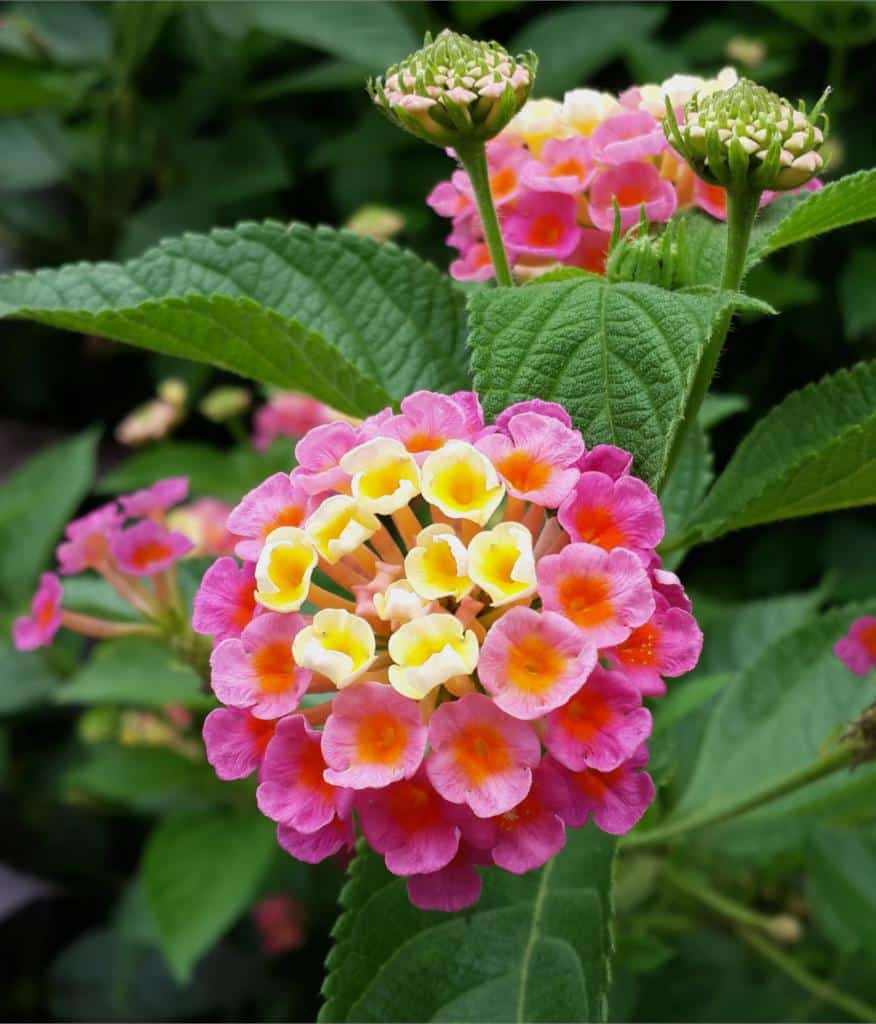
This very beautiful perennial, considered by some to already be a sub-shrub, produces beautiful flowers in mixed yellow and pink colors.
It grows along the entire equator, across all continents and countries.
It also is used for medicinal purposes and dried leaves are also used for tea.
Pink varieties produce many more fruits. You’ll gleefully discover that ripe Lantana berries are edible, but beware because when still unripe they contain toxins, so wait until they’re deep black-blue before nibbling on them!
Lantana is perfect for planting in flower beds, and will also do very well in garden boxes.
Flower clusters on lantana are actually a cluster of smaller individual flowers. Each one starts out in one color and gradually switches to another. For example, on many lantana shrubs, they start out yellow and then turn orange or pink.
The trigger for this is fertilization. Instead of wilting away like most flowers, on lantana they stay put and change hue.
This helps the plant attract pollinating insects from farther out since it gives the impression of more numerous flowers.
When they get closer, insects are naturally drawn to the younger flowers, so they aren’t completely duped by this scheme and still get something out of it!
Lantana cuttings are easy to perform in summer, so go ahead and multiply your plants for free!