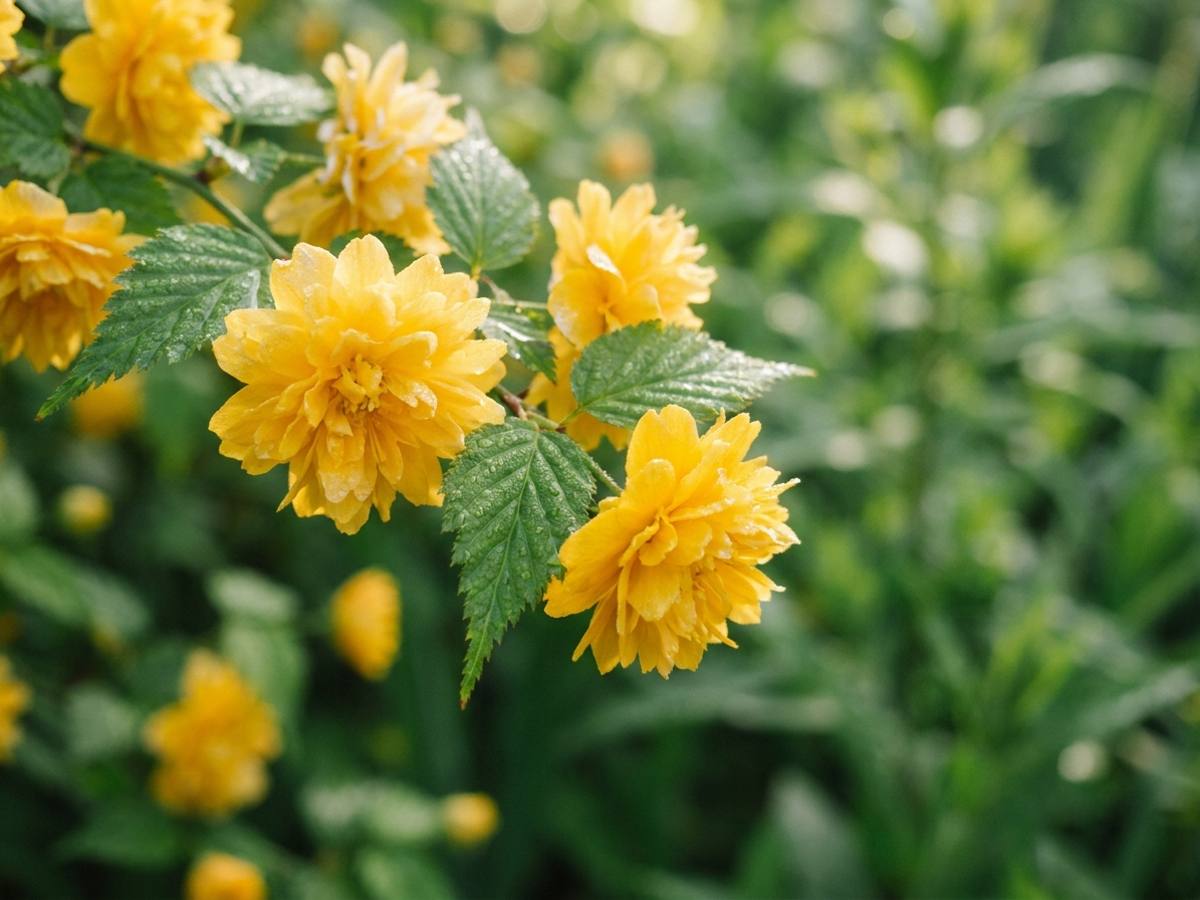
Bright as a burst of spring sunshine, Kerria japonica is a tough deciduous shrub that studs its slender green stems with buttercup-yellow flowers just as the garden wakes up. It thrives in the sort of dry, dappled shade where few other flowering shrubs succeed, making it invaluable for north-facing borders and awkward corners. Its arching, cane-like shoots stay a fresh olive-green all winter, giving structure long after the leaves have gone.
| Latin name | Kerria japonica |
|---|---|
| Common name(s) | Japanese kerria, Japanese rose, bachelor’s buttons, Jew’s mantle |
| Family | Rosaceae |
| Type | Deciduous suckering shrub |
| Height | 1.5–3 m |
| Spread | 1.5–3 m, wider in time by suckering |
| Flowering | Mid-spring to late spring, with an occasional light repeat in late summer |
| Hardiness | Fully hardy to −20 °C / USDA zones 4–9 |
| Sun | Full sun to partial shade; tolerates fairly deep shade |
| Soil | Any reasonably well-drained soil, including clay and chalk |
Kerria is refreshingly unfussy about light. It flowers most generously in full sun or light dappled shade, but will still bloom respectably in a shady, north- or east-facing border where many shrubs sulk. In very hot climates, afternoon shade keeps the flowers from bleaching and the foliage from scorching.
Almost any soil suits it, from heavy clay to thin chalk, provided it is not permanently waterlogged. A moderately fertile, moisture-retentive but free-draining loam gives the best growth, and the plant is happy across a broad pH range from mildly acidic to alkaline. Overly rich soil simply encourages lush, floppy stems and more suckers.
This is one of the hardiest spring-flowering shrubs available, unbothered by hard frosts down to around −20 °C. In exposed, windy sites the long canes can whip about and snap, so give it the shelter of a wall or hedge where gales are frequent.
Kerria will grow in places that defeat most flowering shrubs, but the site you give it decides how freely it flowers and how well the canes behave. Use the table to match your position to a realistic expectation before you dig the hole.
| Situation | Flowering and growth | What to do |
|---|---|---|
| Full sun or light dappled shade | Flowers most generously | The ideal position; no special measures needed |
| Shady north- or east-facing border | Still blooms respectably where many shrubs sulk | Well worth using for awkward, shaded borders |
| Dry shade under trees | Fewer flowers, looser and taller growth | Water through the first two summers to establish it |
| Very hot climate | Flowers bleach and foliage scorches in full exposure | Give afternoon shade |
| Exposed, windy site | Long canes whip about and snap | Plant in the shelter of a wall or hedge |
Whichever position you choose, the soil matters far less than the light and shelter, since almost anything but permanent waterlogging will do.
Plant bare-root or container-grown specimens from autumn to early spring while the shrub is dormant, so roots settle in before the growing season. Container plants can go in at almost any time, provided you water diligently through the first summer.
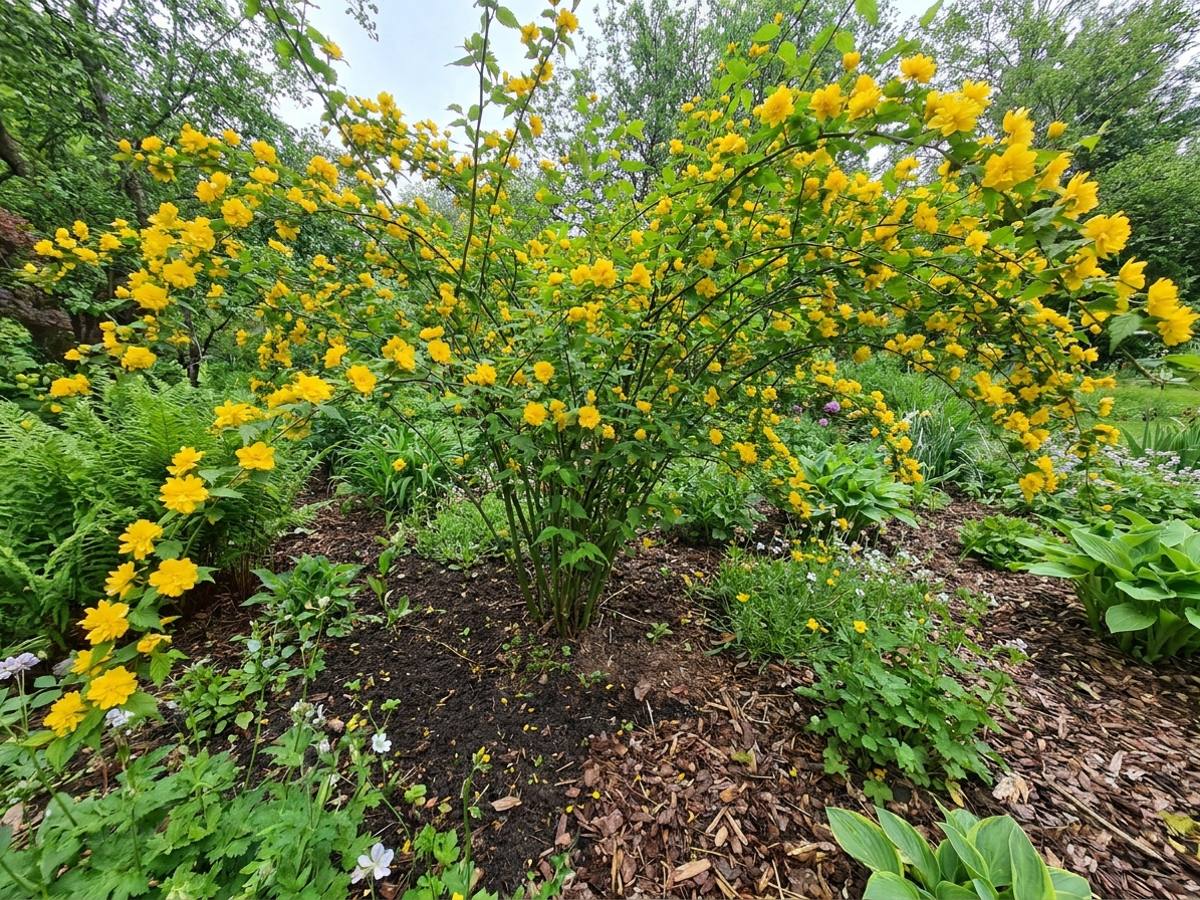
Spring: Flowers appear on wood made the previous year, so resist any urge to prune before blooming. Once the last flowers fade in late May, cut flowered stems back to a strong low shoot or to ground level, removing up to a third of the oldest canes. A light dressing of general-purpose fertiliser or a compost mulch after pruning fuels the new flowering wood.
Summer: Established plants are notably drought-tolerant, but water new plants weekly in dry spells for their first two seasons. Keep an eye on suckers appearing away from the clump and slice them off with a spade while they are young. Remove any stems that flop into paths or over neighbouring plants.
Autumn: The foliage turns a soft butter-yellow before falling — enjoy it rather than tidying it away too soon. This is the ideal moment to lift and replant suckers, dig out unwanted spread, or move a badly sited shrub. Top up the mulch, but do not cut the shrub back, as you would be removing next spring’s flower buds.
Winter: No protection is needed anywhere in the British Isles or comparable climates. The bare green stems are attractive in low winter light, so leave them intact until after flowering.
A handful of reliable cultivars cover everything from pompom doubles to neat variegated forms.