Figs do not ripen after picking. That single, non-negotiable fact changes everything.
Once a fig leaves the branch, whatever it is at that moment is precisely what you get — no sweetening, no softening, no second chance. The tree does, however, tell you exactly when to pick.
You simply must know what to look for, because colour alone will mislead you time and again. It is a total giveaway that way lies disaster.
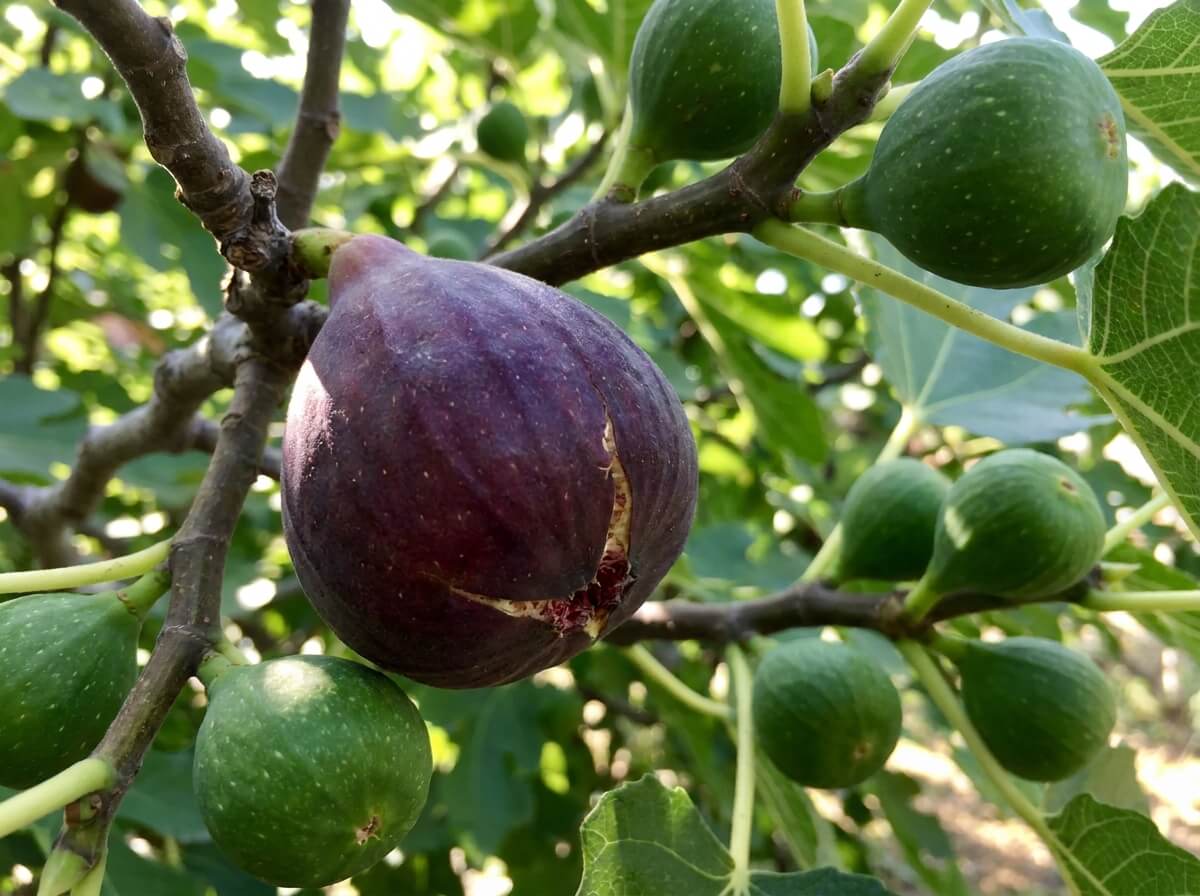
Most gardeners watch for the skin to darken and then reach for the fruit. A common mistake. Do not fall for it. Colour varies so wildly between varieties that it is almost useless as a solo indicator. A Brown Turkey fig turns purple-brown. But a White Adriatic stays yellow-green even when fully ripe. A Black Mission darkens weeks before it is actually ready, often misleading you completely. So, relying on colour means you will pick early, every single time. And that is not quite right.
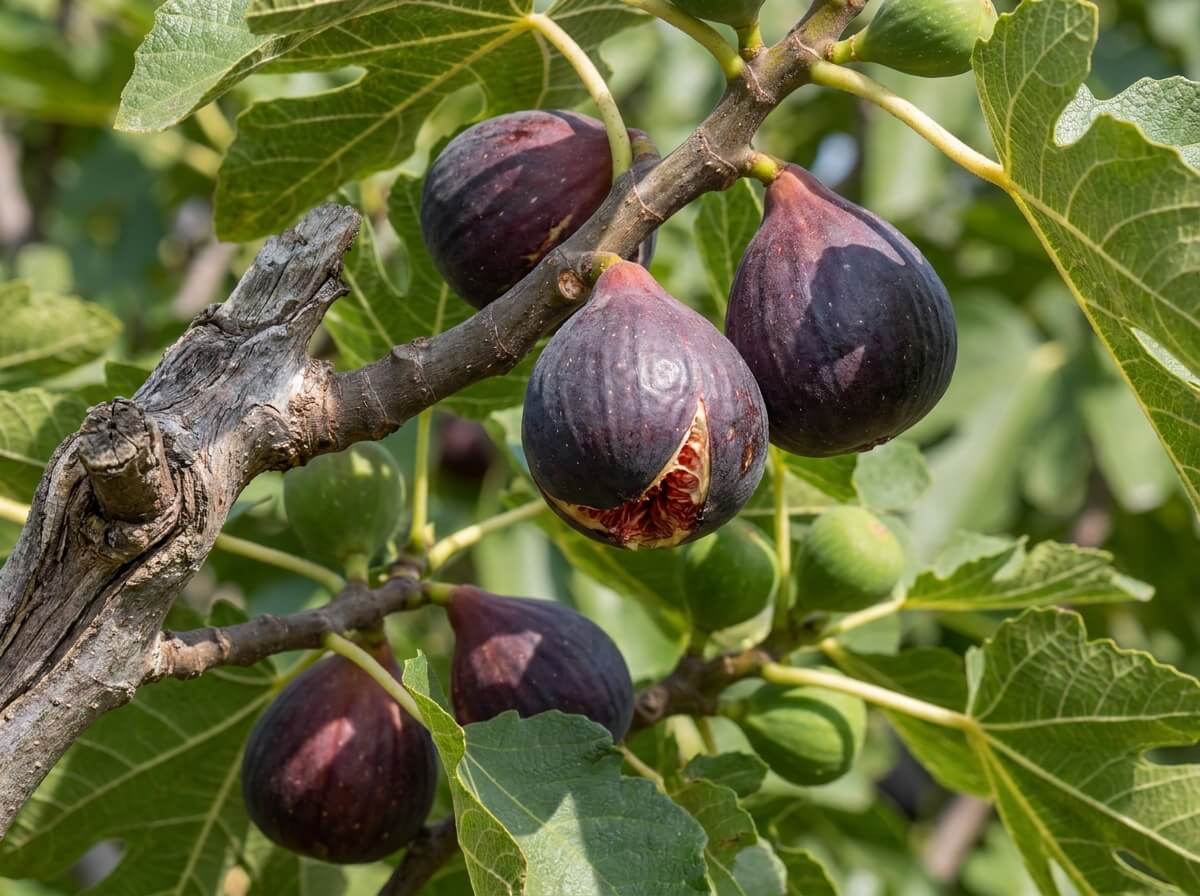
The crucial tell is the droop. A ripe fig hangs at close to a 90° angle from the branch — heavy, loose, practically falling into your hand. An unripe fig sits upright or angled slightly outward, stiff at the neck, stubbornly defying gravity. So, if it is pointing skyward, do not even think about picking it for another week at least.
And then there is the neck. The short stem just below the fruit will soften and wrinkle before the skin properly changes colour. It happens reliably, a tiny detail announcing greatness.
Run a finger along it. If it feels taut, that fig is simply not ready. Period.
A fig picked even 3 days too soon tastes of almost nothing. It is a complete waste of effort. The flesh is pale, dry, and faintly bitter near the skin, offering absolutely no joy.
The texture is rubbery rather than yielding. You get none of the honey, none of the jammy depth that delivers a truly splendid fig experience.
Worse, the milky white latex that flows from the stem of an unripe fig contains ficin, a rather potent irritant. This can make lips, skin, and throats feel rather nasty, particularly in children. UC Davis Cooperative Extension notes that handling large quantities of unripe figs with bare hands can cause contact dermatitis in sensitive individuals. It is a bit dodgy, really.
Left on the tree too long, figs split, ferment, and attract every wasp within 50 metres, creating a veritable insect banquet. The thing is, the window between perfect and overripe is razor-thin; sometimes as little as 48 hours in proper scorching weather. Miss it, and the crop is largely a write-off.
Do all three before wrenching any fig from the branch. One sign alone is not enough; relying on less is a fool’s errand.
When you pluck the fruit, tug straight downward with a gentle twist. A properly ripe fig releases cleanly, often with a single precious drop of milky sap.
If you have to yank, that fig is simply not ready. Yes, it is fiddly.
But do it anyway. The difference between a fig picked properly and one picked wrong is, quite frankly, night and day. Get it sorted.
Pick in the morning, before the proper heat of the day truly takes hold. Figs left in afternoon sun for hours after ripening will quickly begin to ferment on the branch, turning mushy and attracting pests. The RHS recommends checking trees every 1 to 2 days once the main crop starts shooting up. And that is precisely because the ripening window is so vanishingly brief.
The thing is, a fig tree in full production actually does wonders for your understanding, revealing more than you might at first expect.
Southern Hemisphere gardeners: your main fig harvest falls in late December through February. But fret not. These same signs are absolutely bang on for you too. Bookmark this guide; get your summer crop sorted.
Smart tip: Check your fig tree every two days once fruits start to swell — ripening accelerates properly fast in warm weather.
No. Figs absolutely do not continue to ripen once removed from the tree.
What you pick is what you get; waiting for all three signs is therefore non-negotiable before harvesting.
Splitting usually means the fig is at or just past peak ripeness, often triggered by heavy watering or rain after a dry spell. Pull them off immediately — they will not hold another day.
Softness alone is not enough. If the neck was still firm and the fruit was not drooping, it was picked early despite feeling soft. A truly ripe fig is soft and drooping and has a distinctly sweet smell from the eye.
Fresh ripe figs last 2 to 3 days at room temperature and up to 5 days refrigerated. Eat them fast, or freeze them whole for up to 6 months.