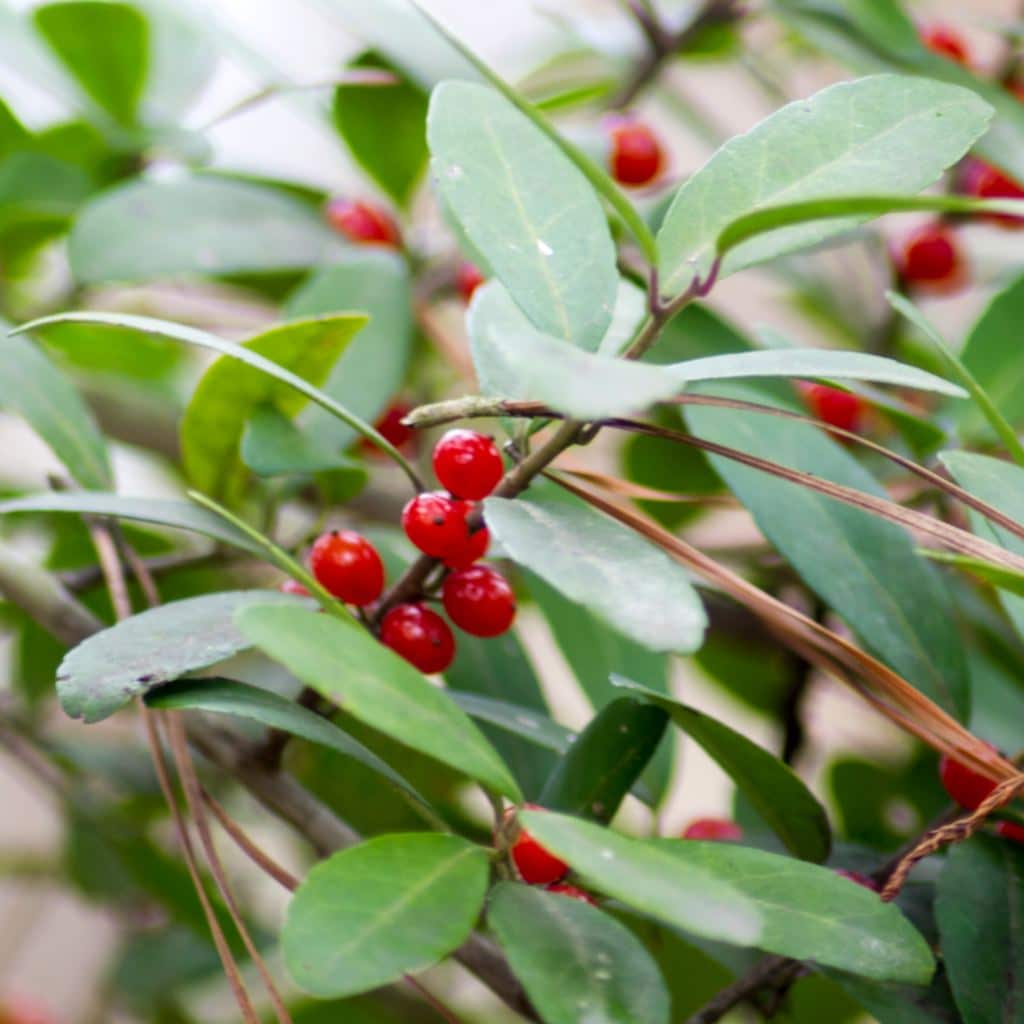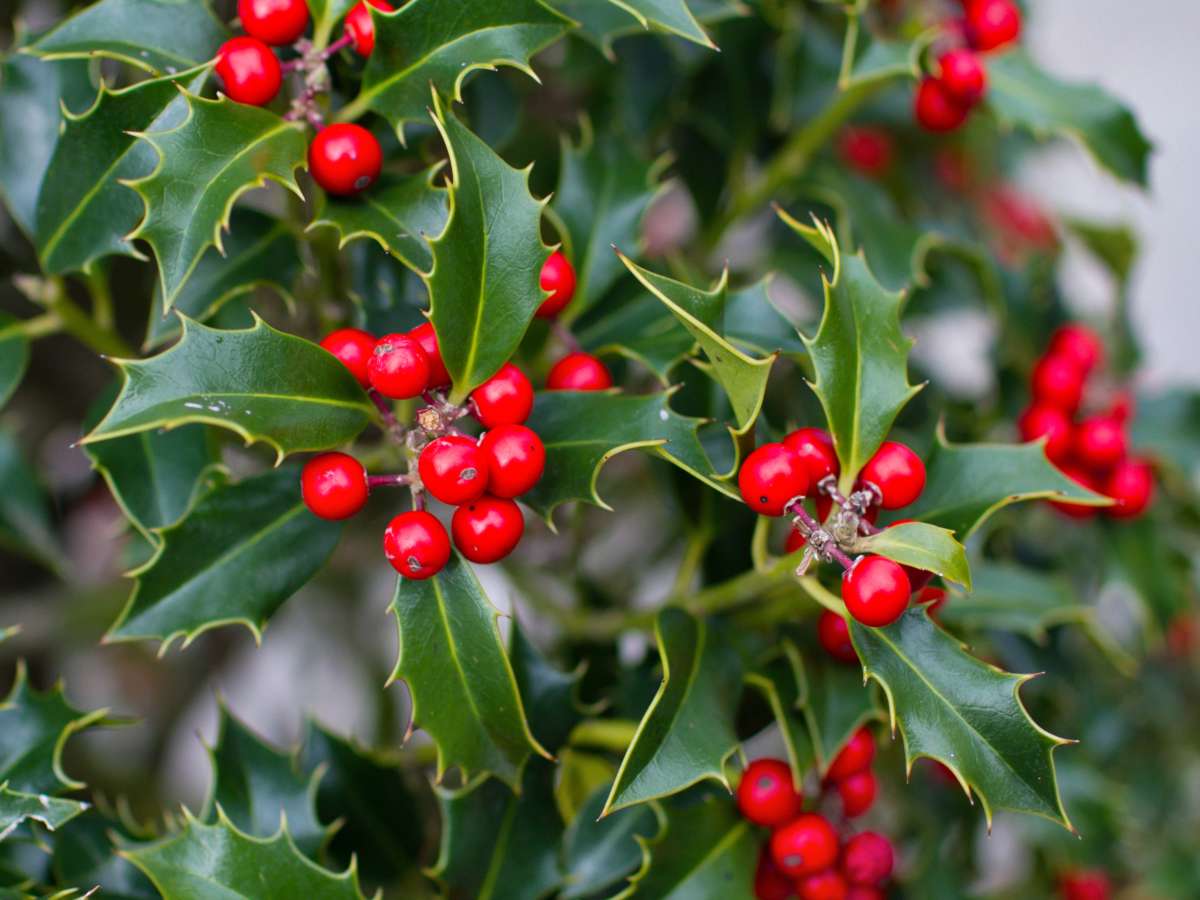
Prickly, pointed evergreen leaves and bright red berries make holly (Ilex) one of the most ornamental of shrubs, with foliage leathery enough to twist into wreaths without breaking. Only female plants carry those berries, so set a male nearby and the display will last right through the coldest months.
Summary of holly facts
Name – Ilex
Family – Aquifoliaceae
Type – shrub
Height – 6 ½ to 16 feet (2 to 5 meters)
Exposure – full sun, part sun
Soil – ordinary
Foliage: evergreen – Flowering: end of spring – Fruit formation: fall → winter
Holly is famous across the globe for its prickly, pointed leaves and bright red berries.
If holly is found across the planet, it means that it can adapt to all climate types. It can tolerate any type of soil and can survive most natural disasters.

It is preferable to plant it in fall in order to support root development, but you can plant it until spring, checking that upcoming days are non-freezing days.
Good to know: Gloves will solve the problem of prickly leaves!
If you are planting in spring, plan for regular watering over the 1st year after planting.
If you’ve only got full sun to plant your holly in, pick cultivars with mottled leaves.
For holly, no pruning is needed, particularly so because holly growth is rather slow.
Nonetheless, you can shape it to your heart’s desire without any problem.
Very famous for its pointed leaves, holly is ornamental and a beautiful decoration.
The berries it produces have different colors depending on the variety, they appear in fall and stay on the tree all winter long. Birds and magpies will enjoy them a lot.
These special berries are what make holly a very ornamental shrub during winter.
The red berries are born by female specimens, and they need to have a male specimen nearby for pollination.
Note that holly berries are poisonous for man.
Holly is a shrub, and can even be considered a tree, but its growth is rather slow.
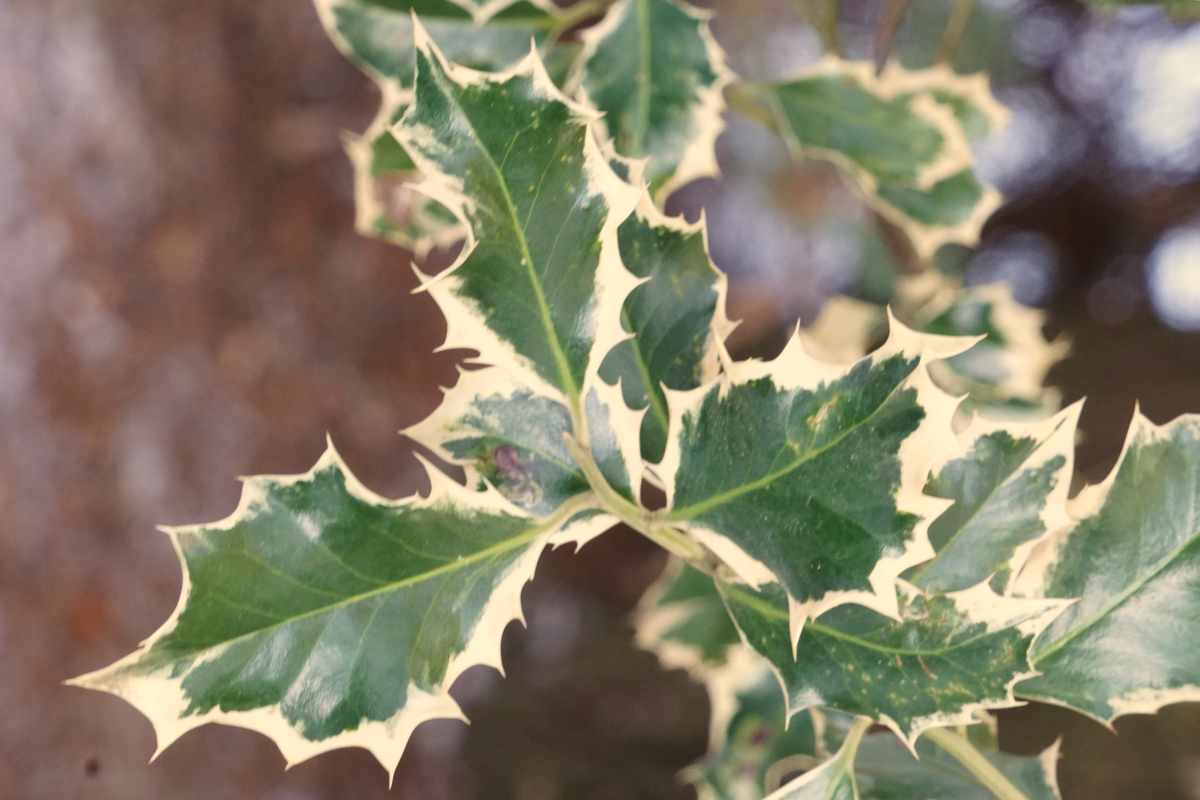
Ilex aquifolium – This is common holly, found most everywhere. There are various sub-varieties with different leaf and berry colors, from yellow to red and orange.
Ilex altaclerensis – This is a very hardy holly variety, without many thorns. It grows quickly. Its leaves are rimmed with yellow.
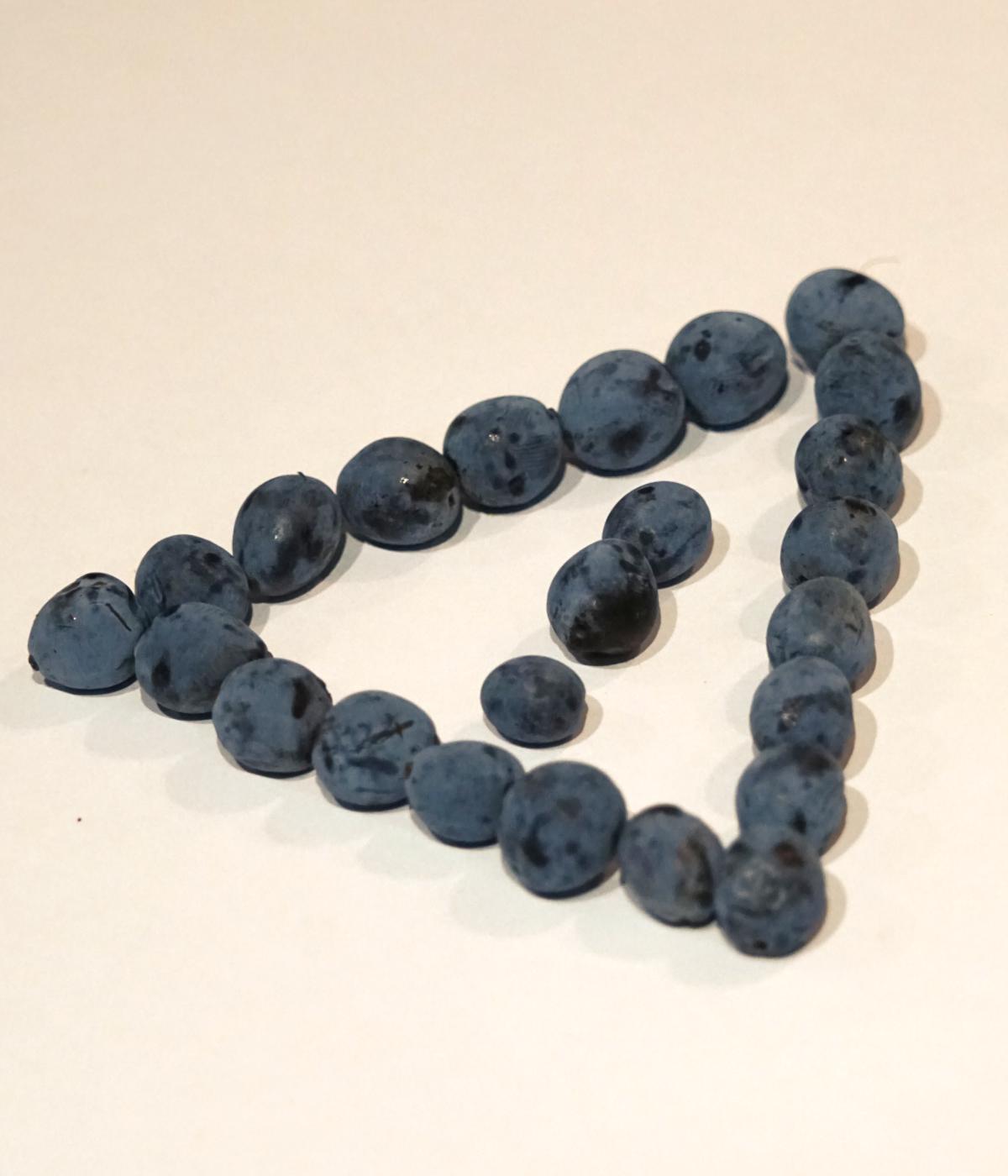
Ilex crenata – This holly has no thorns. It produces black berries and is perfect to set up an evergreen hedge.
Ilex latifolia – The berries from this variety are a deep red and its leaves stand out thanks to their great size and shine.
The hollies described here differ mainly in how prickly they are and in the colour of their berries. Use this table to match a species to the effect you are after.
| Species | Spines | Berries | Why choose it |
|---|---|---|---|
| Ilex aquifolium | Prickly | Yellow to red and orange, depending on sub-variety | The common holly, found almost everywhere |
| Ilex altaclerensis | Few thorns | Not noted | Very hardy and quick-growing, leaves rimmed with yellow |
| Ilex crenata | None | Black | Perfect for an evergreen hedge |
| Ilex latifolia | Not noted | Deep red | Large, shiny leaves that stand out |
Whichever you pick, remember that only female plants carry the berries.
Beyond the four species above, garden centres mostly sell named cultivars, and these differ enormously in prickliness, leaf colour and eventual size. The table below sets out the ones you are most likely to find, with the sex of the plant since only females carry berries.
| Variety | Foliage | Sex and berries | Best use |
|---|---|---|---|
| ‘Golden King’ | Green with broad gold edge | Female, red | Bright colour, few spines |
| ‘Ferox Argentea’ | Spiny surface, cream edge | Male, no berries | Pollinator and intruder-proof barrier |
| ‘J.C. van Tol’ | Glossy green, almost spineless | Female, self-fertile, red | Berries without a male partner |
| ‘Camelliifolia’ | Large, shiny, spineless | Female, red | Elegant screen or small tree |
| ‘Argentea Marginata’ | Green with cream margin | Female, red | Variegated specimen tree for sun |
| ‘Golden Gem’ | Tiny golden-yellow, no spines | Female, sparse black | Low edging and containers |
| ‘Convexa’ | Small, rounded, no spines | Female, black | Clipped hedge or box substitute |
Deck the halls with balls of holly! Its evergreen leaves make it an excellent addition to Christmas ornaments!
The leathery, shiny leaves are beautiful, and don’t break when twisted and handled to prepare decorative ornaments.
Holly is also a sign of good luck when it is hung to the door to form a wreath during the end-of-year rejoicing.
That is why holly slowly became an international Christmas ornament.
Cut holly and other evergreen boughs dry out quickly in heated rooms, shedding berries and curling leaves, so stand stems in water and keep wreaths away from radiators and other heat sources.
To have fruits, you’ll need to plant 2 specimens, one male one and one female one.