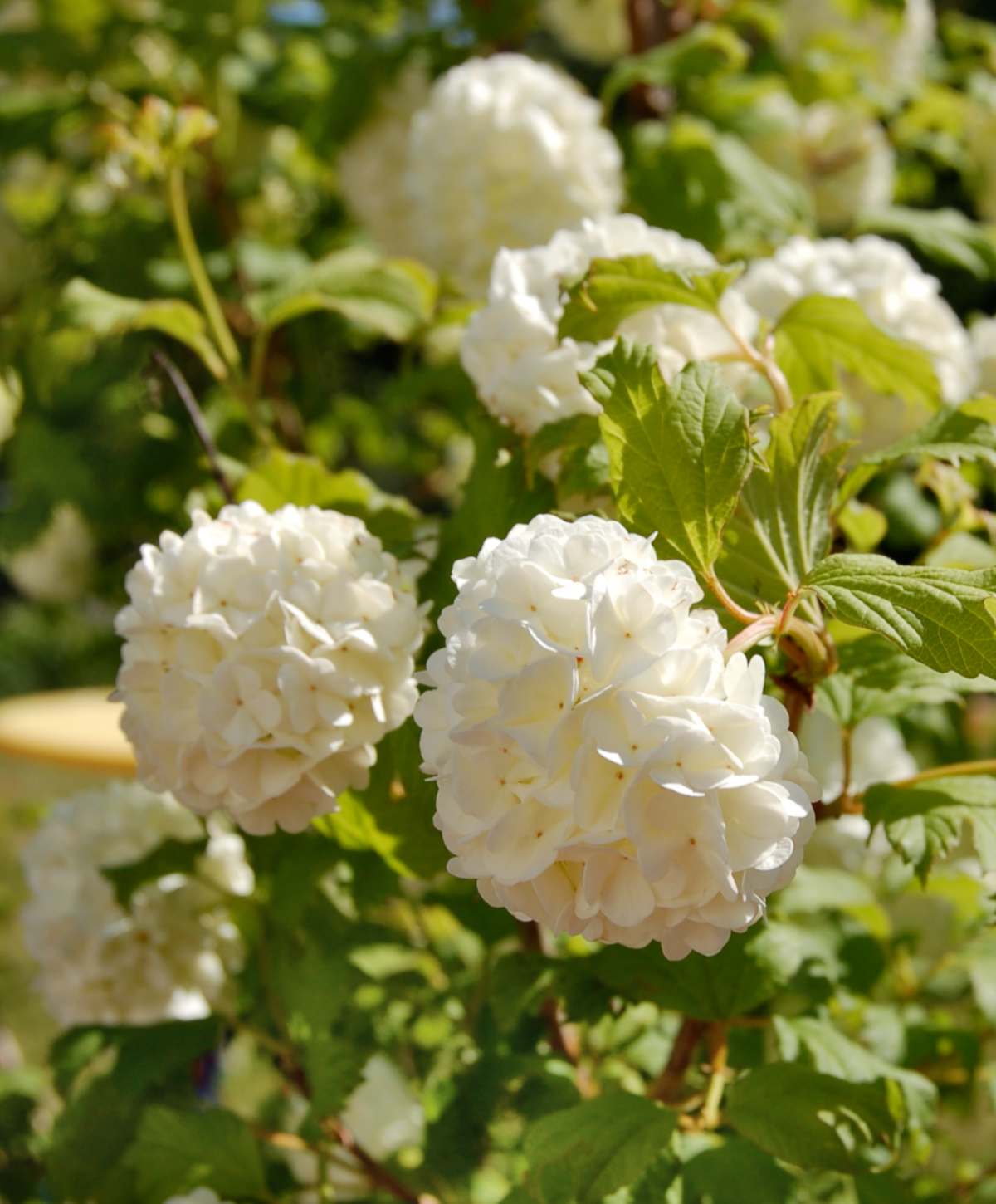
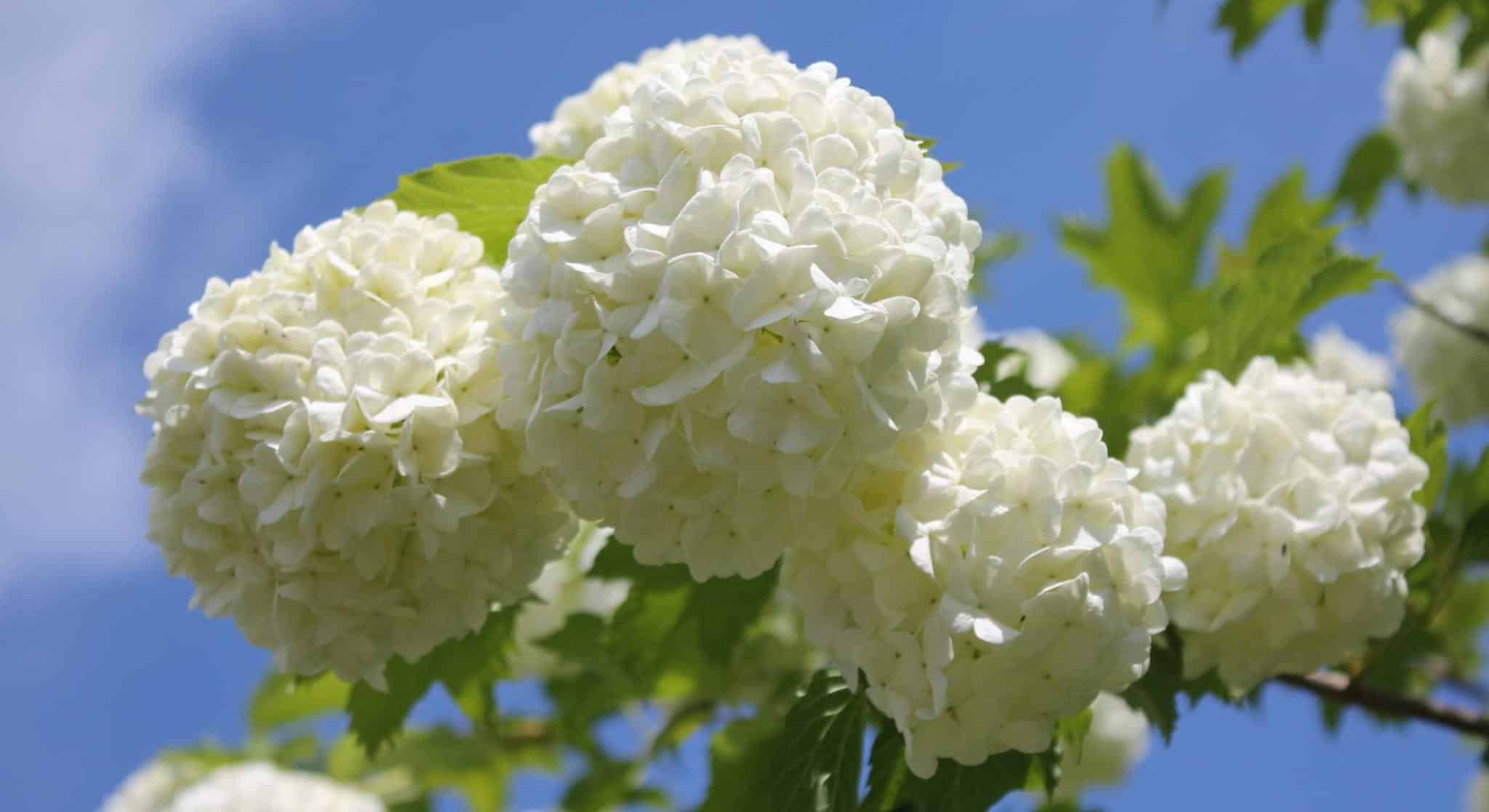
The flowerheads that open in spring have earned it a second name, snowball bush, and the foliage puts on a show of its own in autumn. Guelder-rose (Viburnum opulus) is a deciduous shrub whose one real requirement is well-drained soil — with a watering in long dry spells, it settles in and flowers for years.
| Name | Viburnum opulus |
|---|---|
| Family | Caprifoliaceae (honeysuckle family) |
| Type | Shrub |
| Height | 6 ½ to 16 feet (2 to 5 meters) |
| Exposure | Full sun or part sun |
| Soil | Ordinary, well drained |
| Foliage | Deciduous |
| Flowering | mid-spring to early summer |
Proper planting, caring for it and pruning contribute a lot to the proper growth of your guelder-rose and to its blooming and spring as well.
Preferably in fall or spring for specimens purchased in pots or in containers.
For the first few years after planting, feel free to water now and then to ensure proper settling in and guarantee the growth of the shrub.
To multiply your guelder-rose, wait for the end of summer and prepare cuttings from semi-hardened wood, or simply with layering.
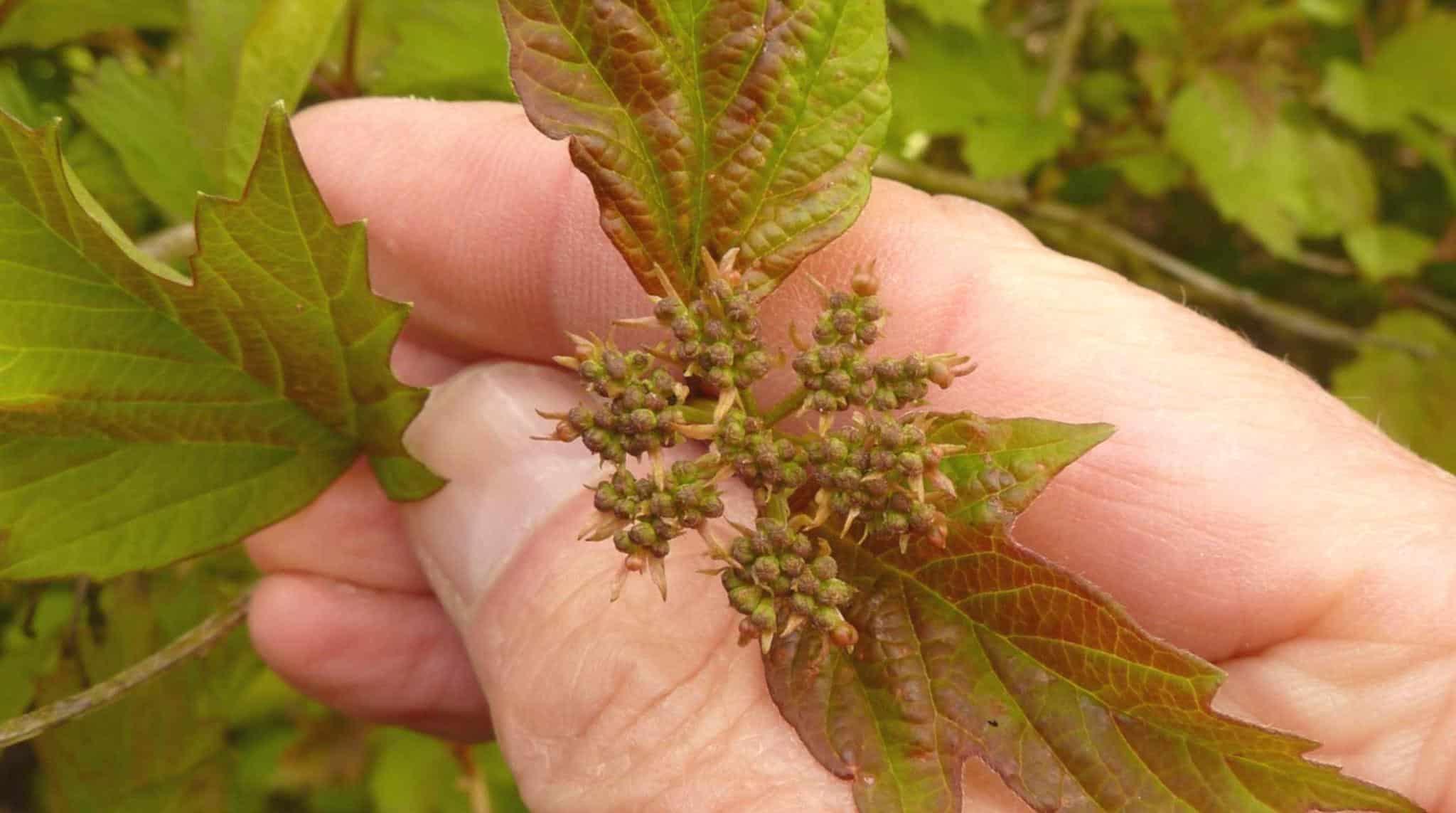
It isn’t really necessary to prune it except if it grows too large.
Wait for the blooming of the guelder-rose to end if you wish to reduce or reshape the shrub.
Note that blooming only occurs on growth from the previous year.
Like most Viburnum, it’s best by far to spread hard pruning over two-three years. Three years is best since it will ensure survival.
A guelder-rose that has grown too large is best cut back over three seasons rather than all at once. Each year takes on one group of branches, always in early summer, once flowering is over.
| Year | When | Branches to cut | Also do |
|---|---|---|---|
| Year 1 | Early summer, right after the blooming | About one in three large branches, cut back to the trunk | Remove dead wood and shorten the other branches by a third |
| Year 2 | Same season, the following year | Half of the long branches that remain | Thin the shoots on the trunk, keeping those growing outwards; tip any shoot already a foot long |
| Year 3 | Early summer again | The last group of long branches | The main trunk may be shortened, provided growth has started lower down beneath the cut |
Spreading the work over three years is what ensures the shrub survives the operation.
Beyond the wild species, a handful of named guelder-roses are sold in garden centres and catalogues, and they differ mainly in whether they carry snowball flowers or fertile lacecaps, in berry colour and in size. The table below sets out the ones you are most likely to meet.
| Variety | Berries | Foliage interest | Size band |
|---|---|---|---|
| ‘Roseum’ | None — flowers are all sterile florets, so it never sets berries | Wine-red in autumn | Tall |
| ‘Xanthocarpum’ | Golden-yellow, translucent | Pale green leaves, yellow in autumn | Medium |
| ‘Park Harvest’ | Red | Yellow-gold foliage through summer | Medium |
| ‘Notcutt’s Variety’ | Large, bright red, long-lasting | Strong red autumn colour | Tall |
| var. americanum ‘Bailey Compact’ | Sparse | Brilliant red autumn colour | Compact, low hedging |
| ‘Nanum’ | Rarely sets fruit | Reddish autumn tints | Dwarf, edging and low hedging |
| ‘Compactum’ | Heavy crop, glossy red | Red autumn tints | Medium, bushy and dense |
| ‘Aureum’ | Red | Golden-yellow young leaves; scorches in hard sun | Medium |
| var. americanum ‘Wentworth’ | Abundant red, used for preserves | Red to purple in autumn | Tall |
| var. americanum ‘Hahs’ | Reliable, heavy red crop | Red autumn colour | Medium |
| var. americanum ‘Alfredo’ | Few | Fresh green leaves, red in autumn | Compact, dense |
| var. americanum ‘Redwing’ | Red | Red-flushed new growth, red autumn | Tall |
Guelder-rose, traditionally called Snowball bush, is beautiful shrub which has a blooming as magnificent in spring as its foliage is in fall.
As part of a hedge, as a standalone or in shrub beds, its growing and maintenance is simple.
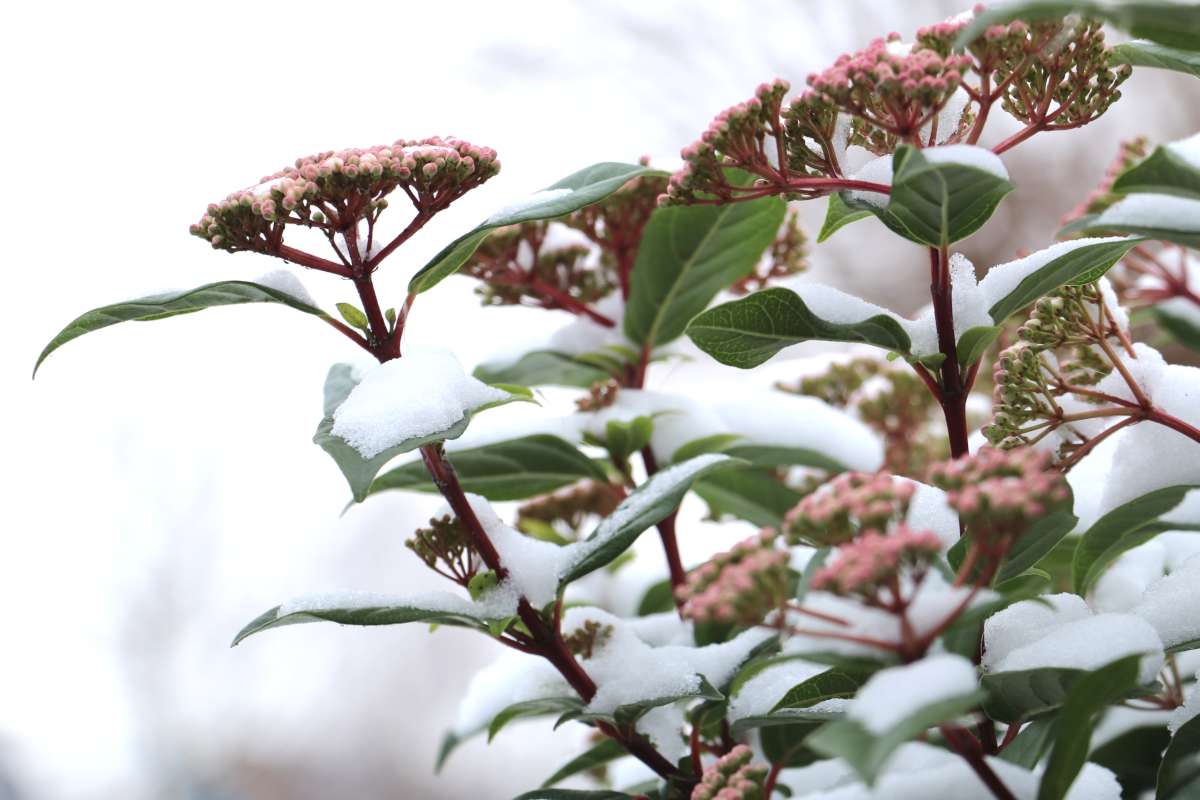
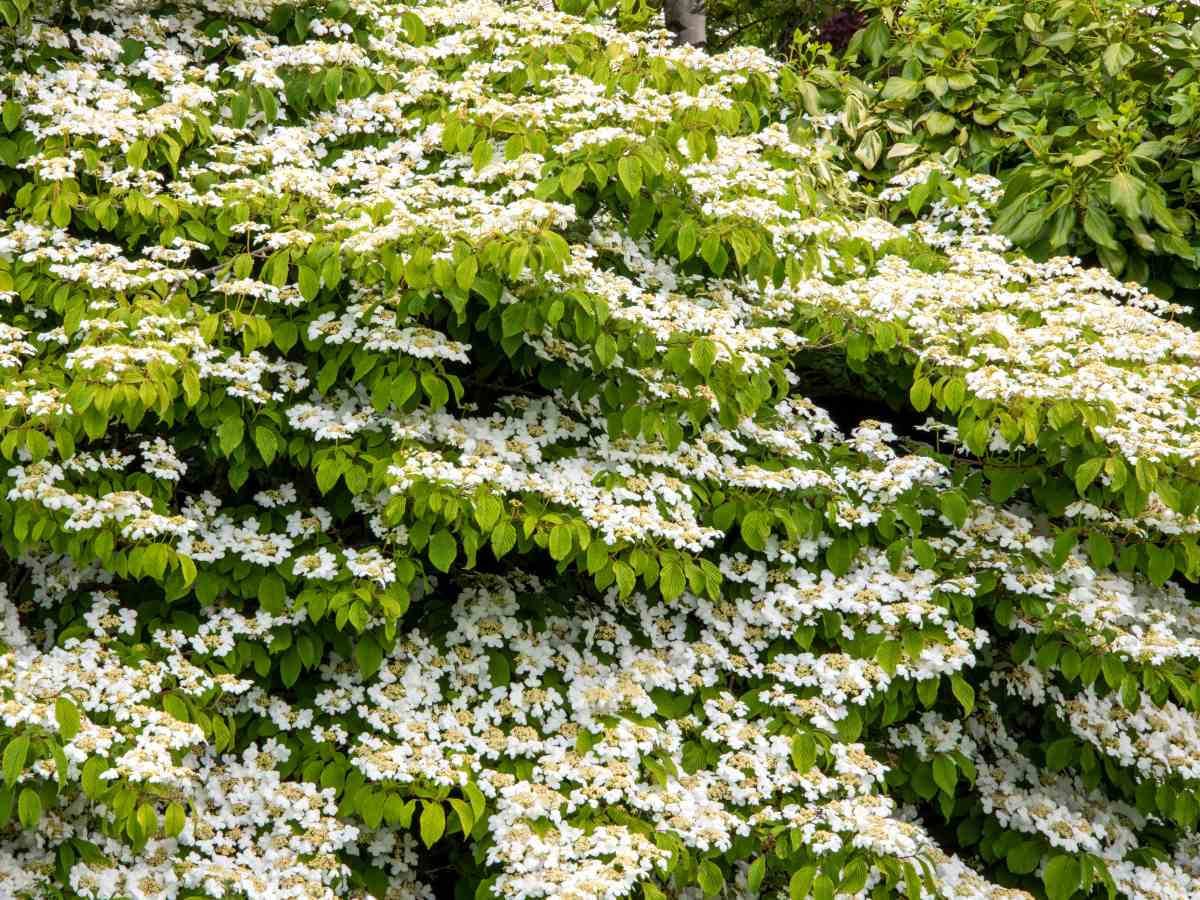
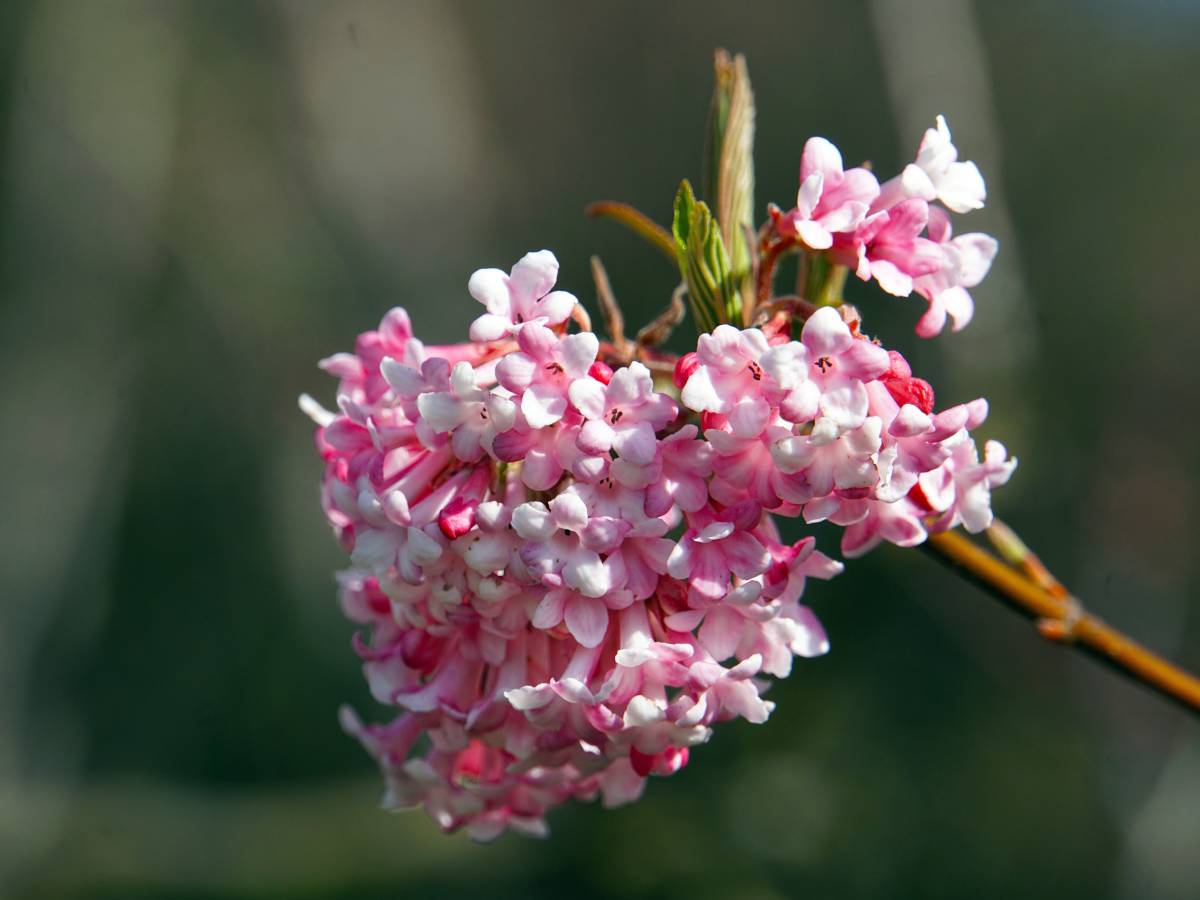
Also part of the Viburnum family is laurestine or Viburnum tinus which is often found in our gardens, and also ‘Watanabe’ doublefile Japanese snowball which has a blooming that lasts for a very long time, from late spring to mid-autumn.
Read also on shrubs:
Avoid locations that are too exposed to harsh sun.
Credits for images shared to Nature & Garden (all edits by Gaspard Lorthiois):
Guelder-rose hedge by Robert Nyman under © CC BY 2.0
Guelder-rose blooming on the way by Mike Finn under © CC BY 2.0
Shooting for the sky by Tuike under Pixabay license