Epipremnum pinnatum: expert care guide for vigorous vines
0
With its glossy, deeply cut leaves that climb rather than trail, Epipremnum pinnatum is the architectural cousin of the familiar pothos and one of the most rewarding aroids for a bright indoor corner or a frost-free veranda. Mature plants produce pinnate, feather-like foliage split almost to the midrib, giving rise to its common name, the dragon-tail plant. Given a moss pole and warmth, it transforms from a modest trailing houseplant into a dramatic living column.
Growing conditions
Bright, filtered light produces the largest and most deeply divided leaves. An east-facing window, or a spot one to two metres back from a south- or west-facing one, suits it perfectly. Deep shade is tolerated but results in small, entire leaves and long, bare internodes.
Roots need air as much as water. Use an open mix of bark chips, perlite, coarse coir and a little worm compost, which drains freely whilst holding moisture around the fine roots. A slightly acidic pH of 5.5–6.5 keeps nutrients available and prevents the leaf yellowing seen in overly alkaline composts.
Outdoors, this is a plant for frost-free subtropical and tropical gardens only, where it will scramble happily up a palm or wall. Elsewhere treat it as a conservatory or houseplant, and move containers under cover well before night temperatures fall below 12 °C.
How to plant Epipremnum
Plant or repot in spring or early summer, when rising light levels and warmth drive rapid root growth and recovery is quickest. Avoid repotting between November and February, when cold, damp compost invites rot.
Set three to five rooted cuttings around the edge of a 15–20 cm pot for a full, bushy plant from the outset.
Plant so the crown and the base of each node sits level with the compost surface — burying stems deeply encourages stem rot.
Insert a moss pole or slab of tree fern before planting, so you do not sever roots later; keep it damp to trigger aerial root attachment.
Water in thoroughly until it runs from the drainage holes, then allow the top 3–5 cm to dry before watering again.
Propagate from stem cuttings with at least one node and one aerial root; root in water or damp sphagnum at 22–25 °C, with roots appearing in two to four weeks.
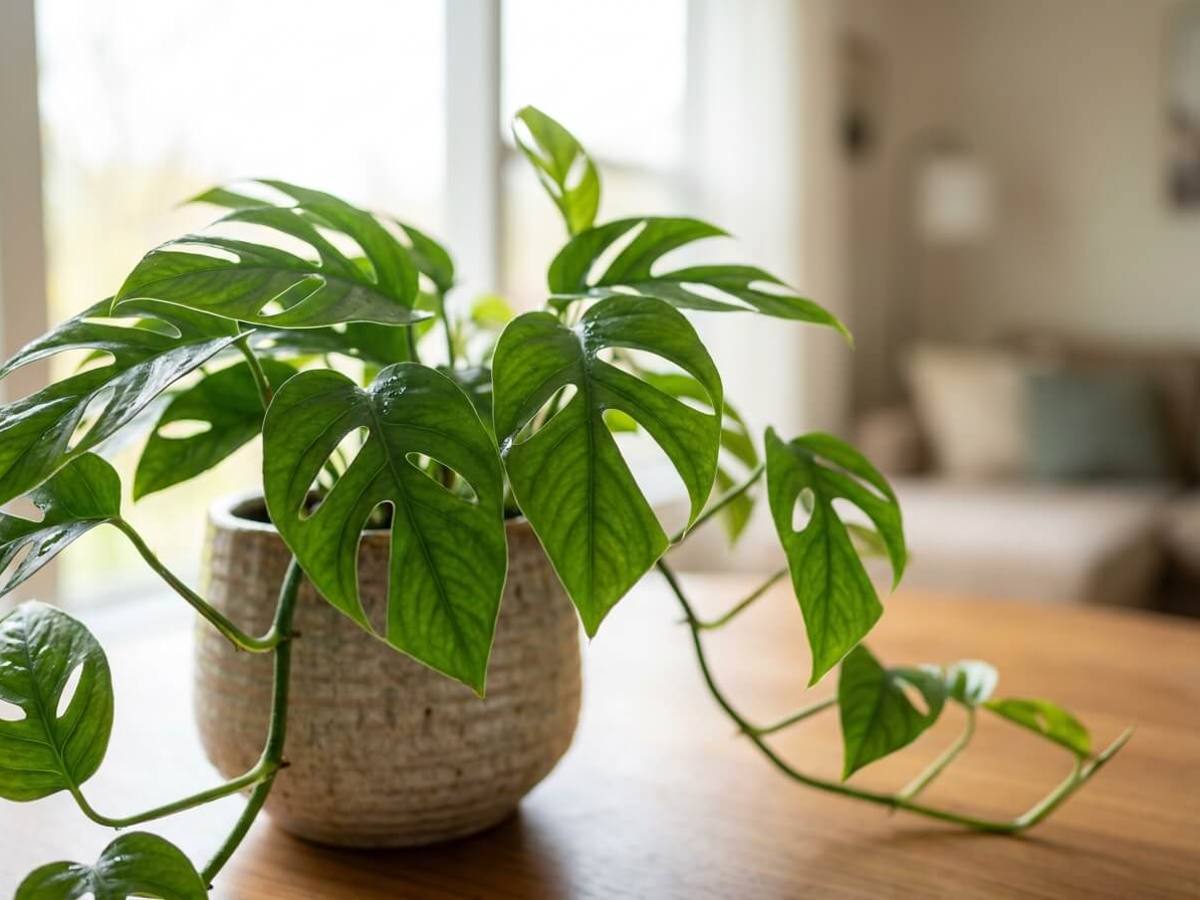
Epipremnum pinnatum displayed as a houseplant in a home interior
Care through the seasons
Spring: Begin feeding as new shoots appear, using a balanced liquid fertiliser at half strength every two to three weeks. This is the ideal moment to repot, refresh the top 5 cm of compost and tie new growth to its support. Prune any thin, leggy winter growth back to a healthy node to encourage branching.
Summer: Growth is fastest now — expect 10–20 cm of new stem each month in good conditions. Water when the top few centimetres feel dry, mist the moss pole regularly, and wipe dust from the leaves to maintain photosynthesis. Shade from fierce midday sun through glass, which scorches the foliage to papery brown patches.
Autumn: Taper feeding off from early September and stop entirely by late October. Take any cuttings before mid-autumn so they root while temperatures are still warm. Reduce watering as light levels drop, and move plants closer to a window to compensate for shorter days.
Winter: Growth slows or stops below about 15 °C; keep the compost barely moist and never let the plant sit in cold, saturated soil. Shield it from draughts and from the dry air directly above radiators.
Best varieties to grow
A handful of selections are widely available, differing mainly in leaf colour, size and the speed at which they develop their characteristic splits.
‘Cebu Blue’ — narrow, silvery blue-green leaves with a metallic sheen; given height and light it eventually produces magnificent pinnate adult foliage.
‘Baltic Blue’ — a vigorous selection that fenestrates far earlier and more readily than ‘Cebu Blue’, with deeper blue-green colouring.
‘Skeleton Key’ — distinctive lobed, keyhole-shaped leaves on a compact, slower-growing plant, ideal where space is limited.
‘Albo-Variegata’ — bold white marbling and sectoral stripes; needs brighter light than the green forms and occasional pruning to stop all-green or all-white shoots dominating.
Pests, diseases and common problems
Spider mite: Fine stippling, bronzing and gossamer webbing on leaf undersides, worst in dry winter air. Raise humidity, rinse the foliage under a tepid shower and treat weekly with an organic soap or neem-based spray until clear.
Mealybug and scale: White cottony clusters in leaf axils or brown limpet-like bumps along stems, accompanied by sticky honeydew. Dab with a cotton bud dipped in surgical spirit, then follow with insecticidal soap every seven days for a month.
Root rot: Yellowing lower leaves, blackened mushy stem bases and a sour smell from the compost, almost always caused by overwatering in cool conditions. Unpot, cut away all soft roots, repot into fresh gritty aroid mix and water sparingly until recovery is visible.
🌿 Nature & Garden Newsletter
Gardening tips, recipes & seasonal advice, twice a week.