Bare-root or container? Early autumn is the critical moment to decide, and our side-by-side trial of apple, pear, and plum trees reveals which establishes faster through winter. Container trees showed unexpected vulnerabilities, whilst bare-root specimens outperformed predictions. If you’re planting fruit trees this autumn, these results could transform your orchard’s success rate.
As early autumn arrives and soil temperatures begin their slow descent towards dormancy, fruit tree planting season swings into action. Nurseries stock both bare-root and container-grown trees, and gardeners face a familiar choice without clear answers. The decision matters because establishment during the cold months determines whether your tree thrives or merely survives spring.
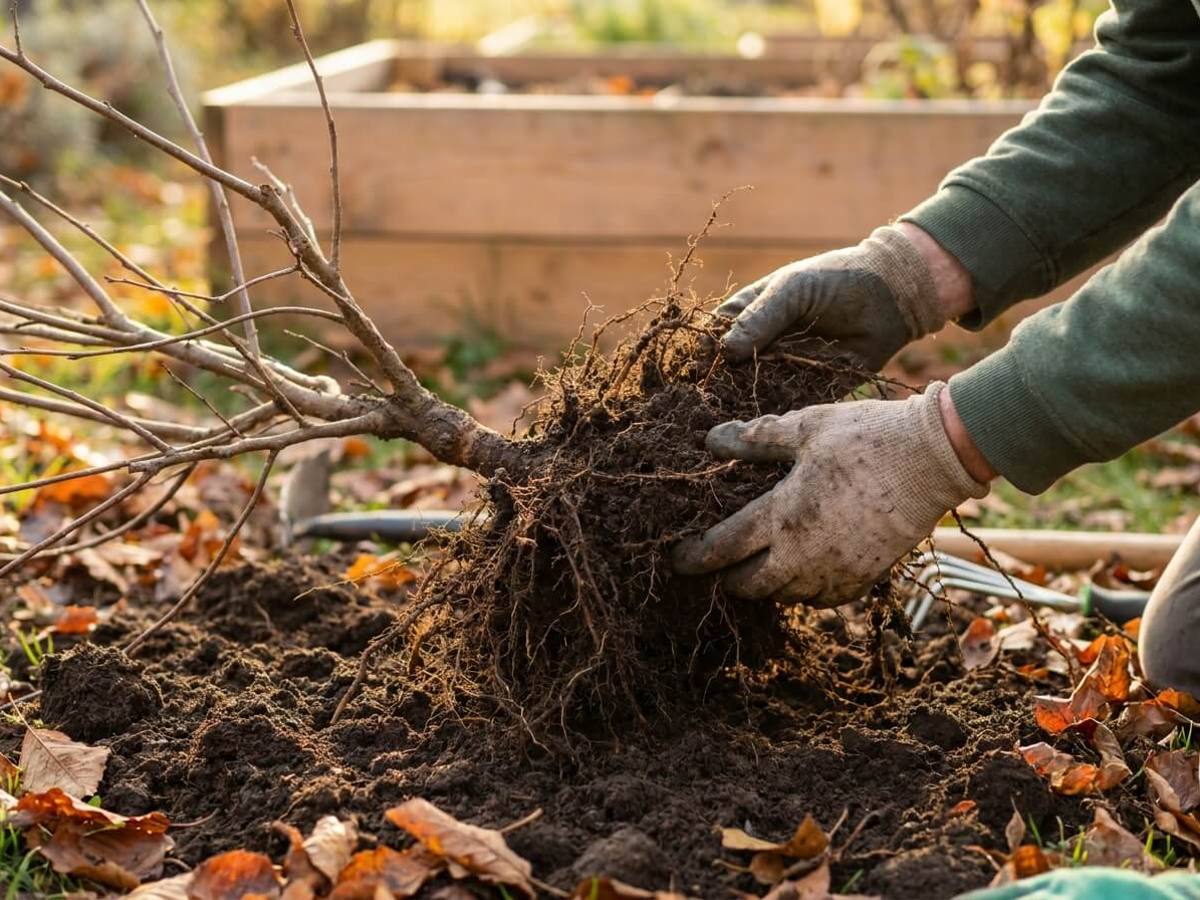
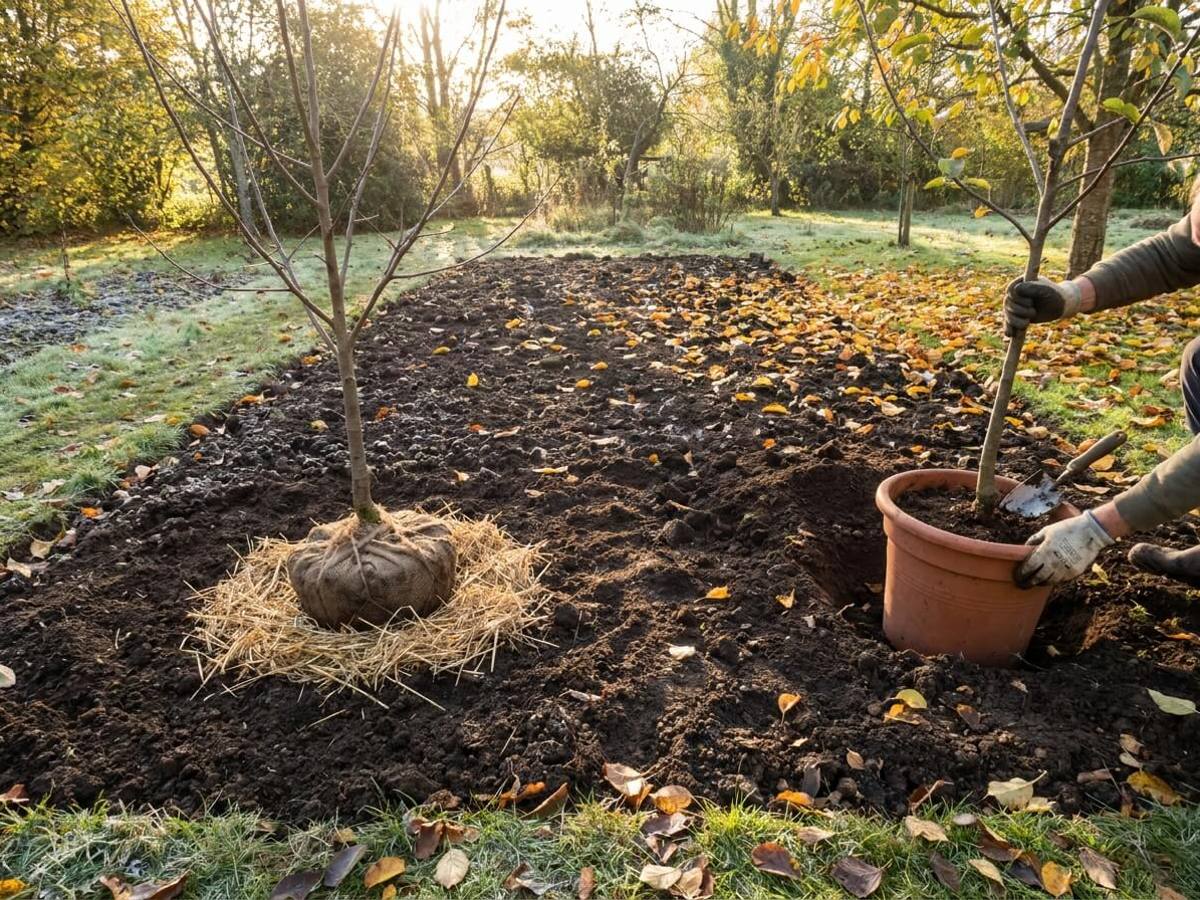
Bare-root trees arrive with roots exposed to air, dormant and ready for immediate soil contact. Container trees carry their growing medium and established root balls, but they face a transition shock that bare-root specimens avoid. Our trial planted matched specimens of ‘Braeburn’ apple, ‘Conference’ pear, and ‘Victoria’ plum in identical soil conditions, monitoring root growth through winter and tracking spring emergence.
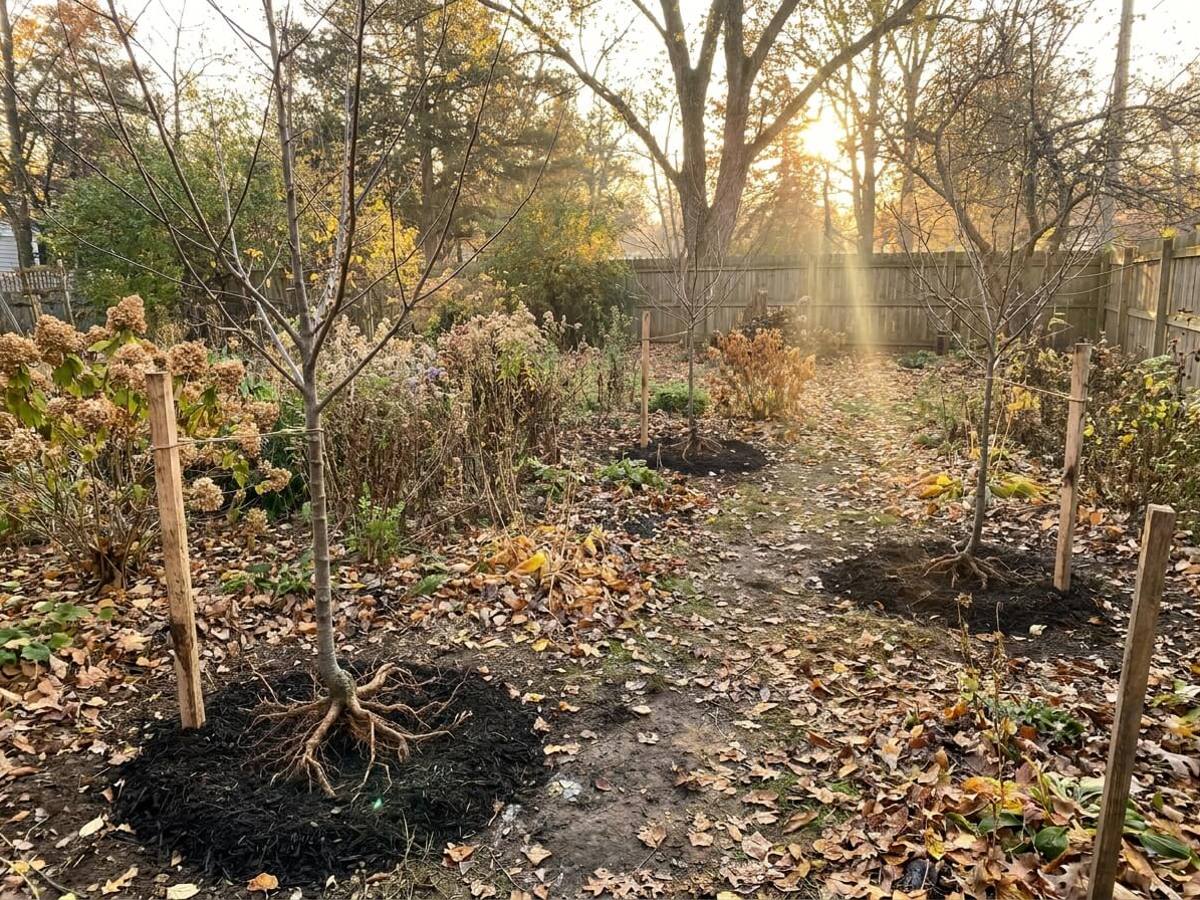
The results surprised us. Bare-root trees established roots within four weeks of planting, whilst container trees remained largely static until soil temperatures rose above 10 degrees Celsius. Container specimens showed higher winter dieback rates, particularly where wet soil combined with cold air. By late spring, bare-root trees displayed noticeably stronger shoot growth and leaf vigour.
The trial compared matched apple, pear and plum trees planted in identical soil. The table below sets out how the two forms differed in rooting, survival and handling.
| What you are comparing | Bare-root trees | Container trees |
|---|---|---|
| Speed of rooting | Roots established within four weeks of planting | Largely static until soil rose above 10°C |
| Winter losses | Lower dieback | Higher dieback, worst where wet soil met cold air |
| Growth the following spring | Noticeably stronger shoot growth and leaf vigour | Weaker by comparison |
| Waterlogging risk | Rarely affected, roots extend into surrounding soil at once | Confined root systems vulnerable to rot in wet spells |
| Planting technique | Plant within one week of delivery, roots spread wide and backfilled firmly | Score pot-bound roots to prevent spiral rooting |
| Best planting time | Most reliable from mid-autumn onwards | Early autumn only once it cools; better in spring and early summer |
On the evidence of the trial, the planting season matters as much as the form of tree you buy.
Success depends on matching technique to tree type:
Watch for waterlogging in container trees during wet spells, as their root systems remain confined and vulnerable to rot. Bare-root trees rarely suffer this problem because roots extend into surrounding soil immediately. By late spring, compare shoot emergence and leaf colour between your trees, noting which displays stronger growth and earlier bud break. This data guides your future planting decisions and helps explain any losses when they occur.