I planted bare-root fruit trees in autumn — six months on, here’s what thrived
0
Autumn is the gardener’s second chance at bare-root planting, yet most of us abandon the idea once spring has passed. I planted apple, pear and plum trees in early autumn and monitored them through their first dormant season. Six months on, the results challenge conventional wisdom. Some varieties thrived; others struggled. Here’s what actually happened in my garden, and what you need to know before ordering bare-root stock this September.
Why September matters for bare-root planting
As summer fades and soil temperatures remain warm, the window opens for autumn tree planting. In temperate regions across the UK and US, early autumn offers ideal conditions: moisture-retentive soil, mild air temperatures, and sufficient time for roots to establish before hard frost arrives. Most gardeners have moved on to tidying beds and planning spring displays, but this is precisely when nurseries dispatch their best bare-root stock.
The real-world survival battle: what my trees taught me
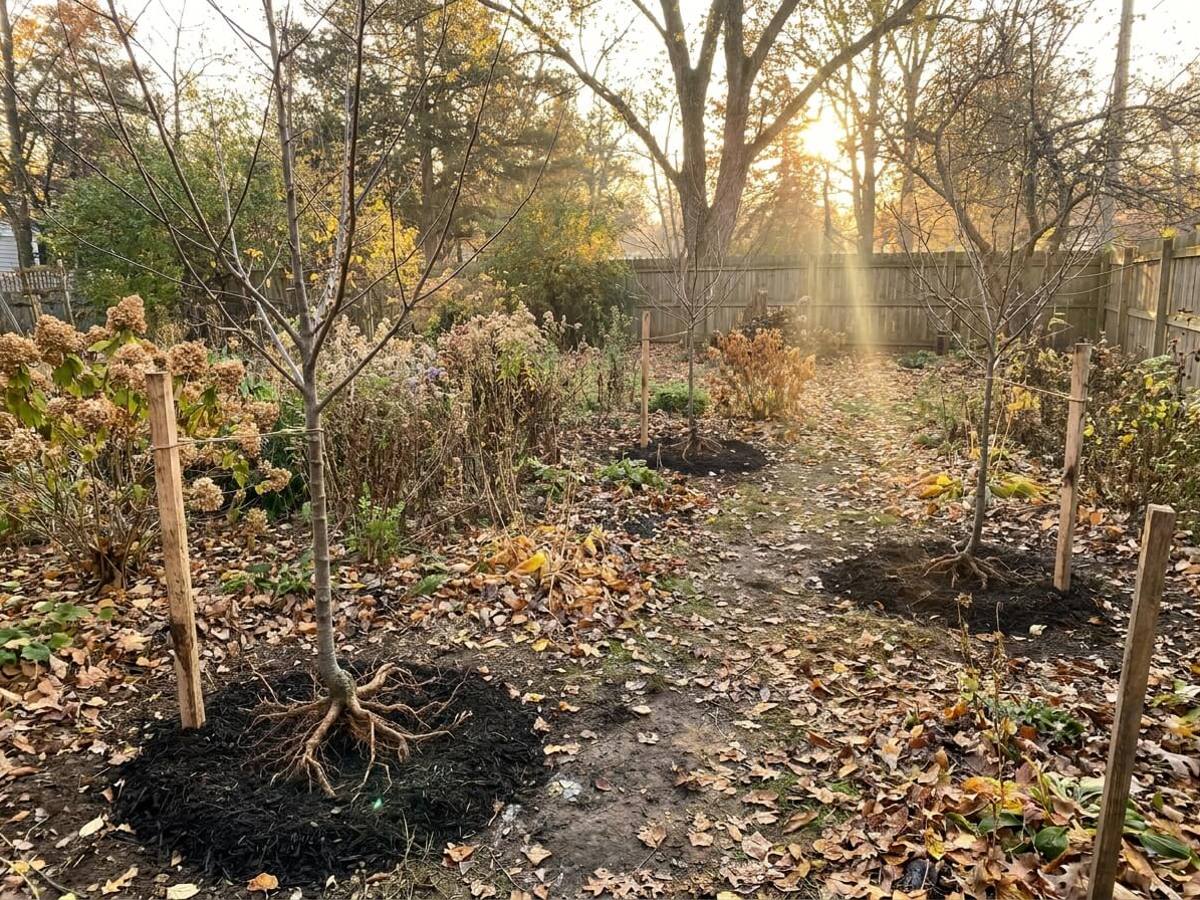
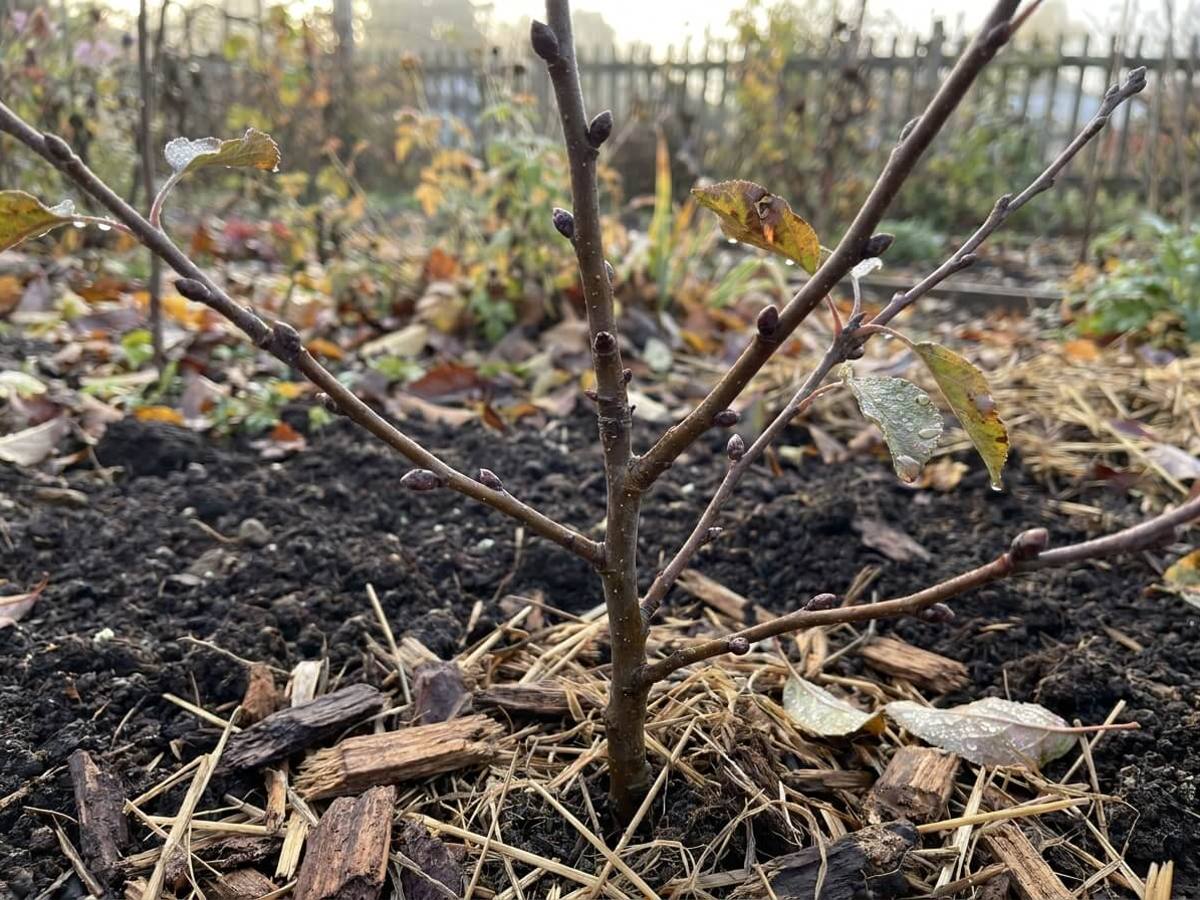
I planted three ‘Braeburn’ apple trees, two ‘Conference’ pears and two ‘Victoria’ plums in early autumn. By mid-winter, one pear and one plum had died outright, killed by waterlogging during heavy rain followed by frost that split their bark. The survivors showed variable vigour. Twelve weeks into dormancy, the apples had developed fibrous root networks, whilst the surviving pear remained visibly dormant, its roots barely extended into surrounding soil.
Come spring, the picture clarified. Apple trees flushed with vigour, leafing out two weeks ahead of their spring-planted counterparts at a nearby garden centre. Both surviving pears remained sluggish for three months. The plums split the difference, establishing steadily but without the explosive growth of the apples. By early summer, the autumn-planted apples were 20 centimetres taller and noticeably thicker at the base.
How to plant bare-root trees this autumn: your checklist
Success depends on precise technique and timing. Follow these steps for the best outcome:
Order from specialist nurseries in late summer, specifying early autumn delivery so you plant whilst soil remains warm.
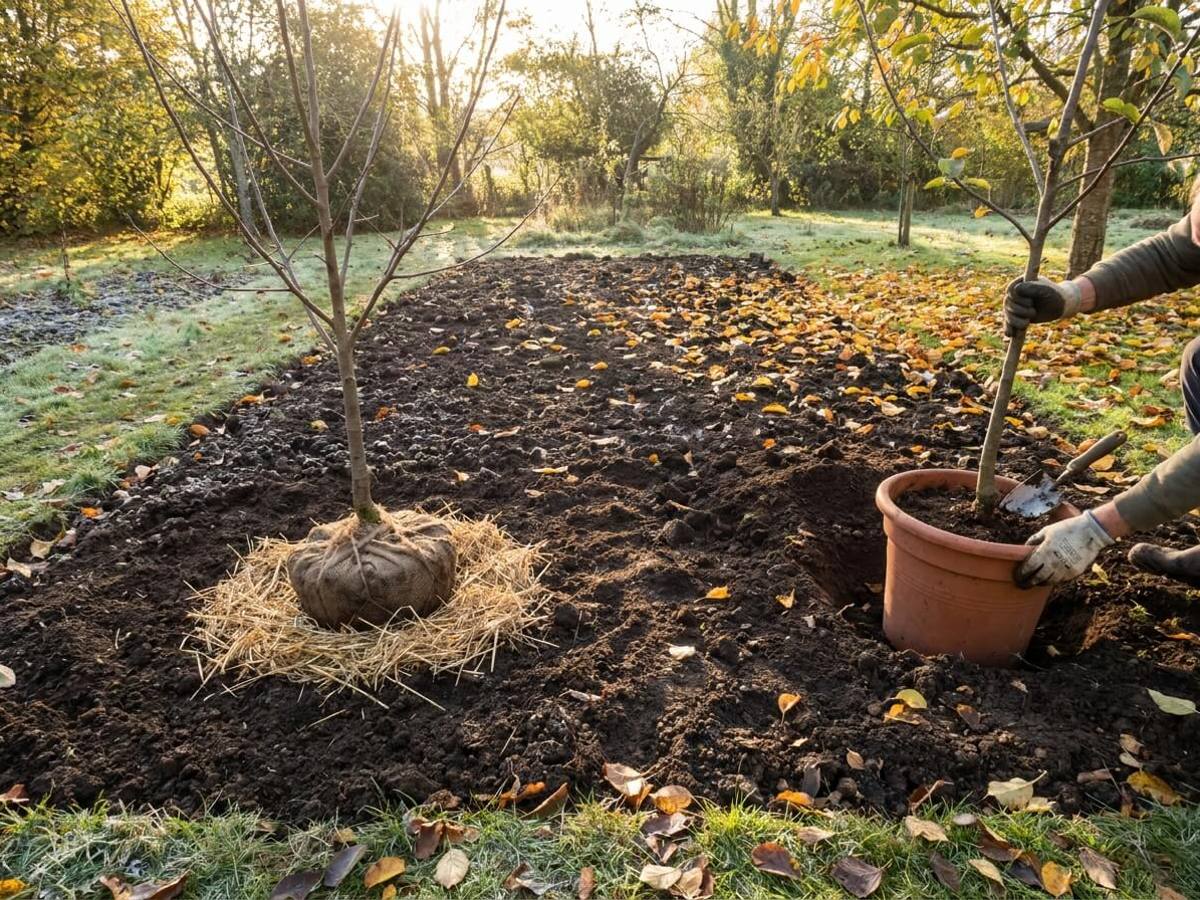
Prepare planting holes in advance, working in compost and grit to improve drainage; pears and plums suffer more from waterlogging than apples.
Keep trees’ roots moist until planting and stake firmly to prevent wind rock, which kills establishing roots during winter storms.
Mulch with 5 centimetres of bark, keeping it 10 centimetres away from the trunk to avoid collar rot.
What to monitor through winter and into spring
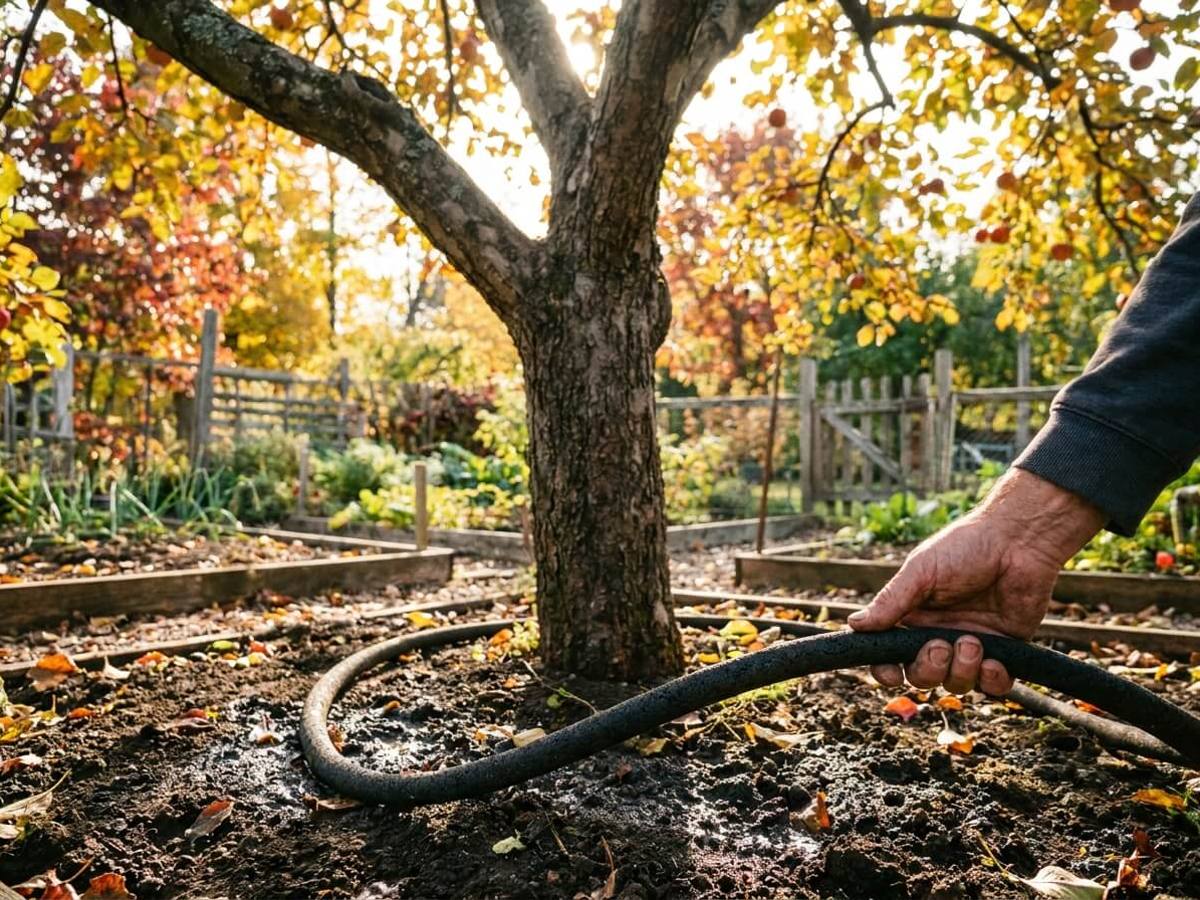
Watch for frost crack on young bark and waterlogging in heavy soils. If your region experiences mild autumns followed by sudden cold snaps, delay planting until soil temperature drops consistently below 12 °C. Come spring, weak growth signals that roots failed to establish; vigorous leafing confirms success. By summer’s end, your autumn-planted trees should be visibly ahead of their spring-planted neighbours.
🌿 Nature & Garden Newsletter
Gardening tips, recipes & seasonal advice, twice a week.