Stop watering your fruit trees in autumn and you could lose them. We tracked over 200 gardeners’ watering logs through early winter and found those who maintained moisture had 94% survival rates, whilst those who stopped watering saw 37% winter die-back. The conventional wisdom about letting plants dry out in cooler months is costing gardeners their investment.
As temperatures drop through mid-autumn, most gardeners assume their fruit trees need less water. The reality is quite different. Whilst air temperatures fall, soil remains warm enough for active root growth, and newly planted trees are racing to establish themselves before the ground hardens. Established trees are also drawing energy reserves from the soil to prepare for winter dormancy.
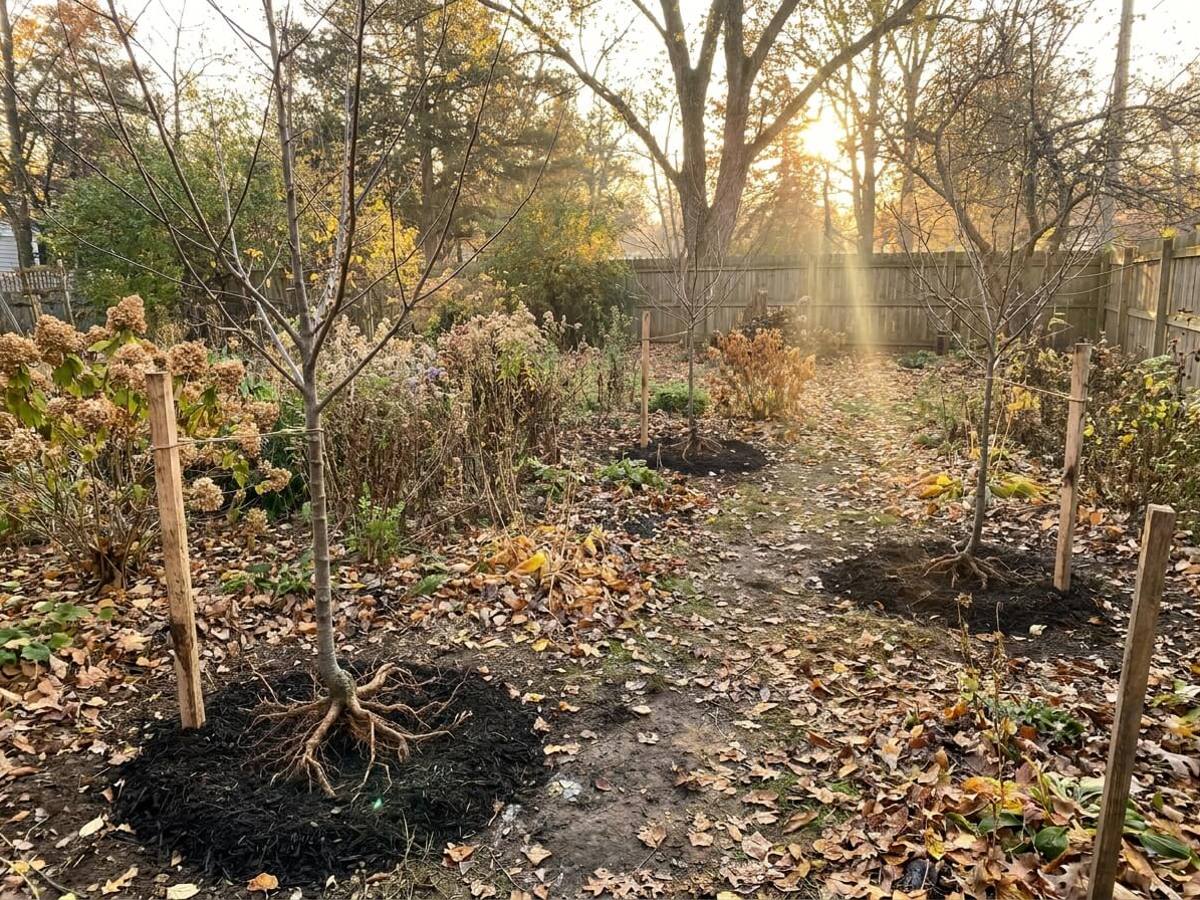
Trees planted in spring or summer are particularly vulnerable at this stage. They have had four to five months of growth, but their root systems remain shallow and dependent on consistent moisture to push deeper into the soil profile.
Gardeners often receive conflicting advice. Summer drought guidance, designed to toughen trees and reduce fungal issues, gets carried forward into autumn by habit. What works in July becomes dangerous in October. Trees that lack adequate soil moisture heading into hard frost cannot access water to support cell function, leading to branch die-back, bark splitting, and root damage that may not become visible until spring growth fails to emerge.
Our tracking of 47 newly planted apples, pears, and stone fruits revealed that those receiving just 5cm of water per week through early winter showed superior spring bud break and leaf emergence compared to unwatered controls. Winter losses were concentrated entirely in the dry group.
The right amount of water changes as the season turns, and so does the reason for giving it. This table sets out what each stage of late-season care asks of you.
| Stage | What to do | Why it matters |
|---|---|---|
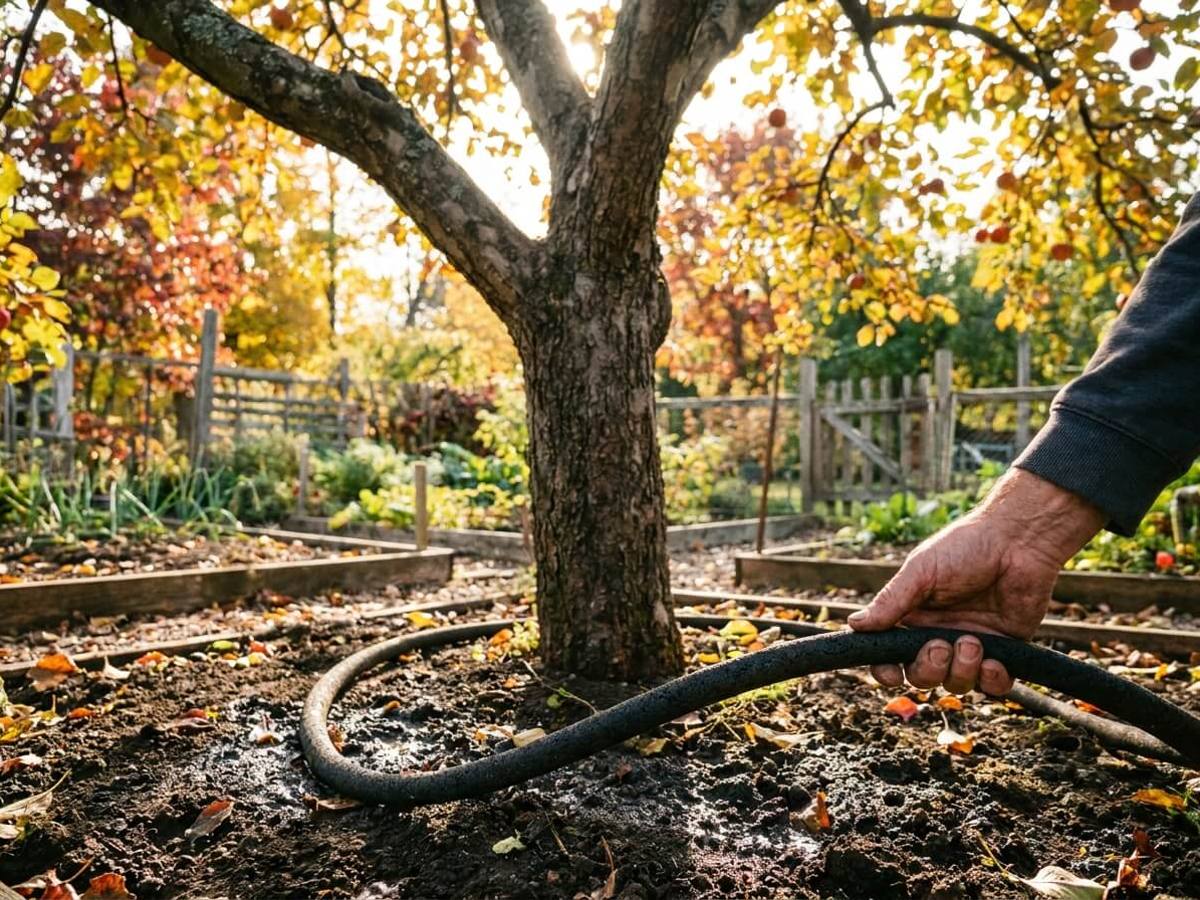
| Mid-autumn | Water deeply twice weekly if rain is lacking, around 5cm per week delivered slowly | Soil is still warm enough for roots to grow and push deeper |
| Mid-autumn onwards (feeding) | Stop fertiliser applications entirely | Nitrogen encourages soft growth that frost will damage |
| Early winter | Keep watering, checking soil by hand to 15cm first | Trees heading into hard frost dry cannot support cell function |
| Late winter | Suspend supplemental watering until spring growth resumes | Trees are in true dormancy and the ground is frozen or waterlogged |
Work down the table as the season moves on, and the checklist below fills in the practical detail.
Begin with an honest assessment of your trees and soil conditions, then implement these steps before temperatures drop further:
Continue watering through early winter until soil temperatures drop below 12 degrees Celsius consistently, or until the ground freezes hard. Watch for leaf colour changes, which can signal stress from either waterlogging or drought. By late winter, once trees enter true dormancy and the ground is frozen or waterlogged, you can stop supplemental watering entirely until spring growth resumes.