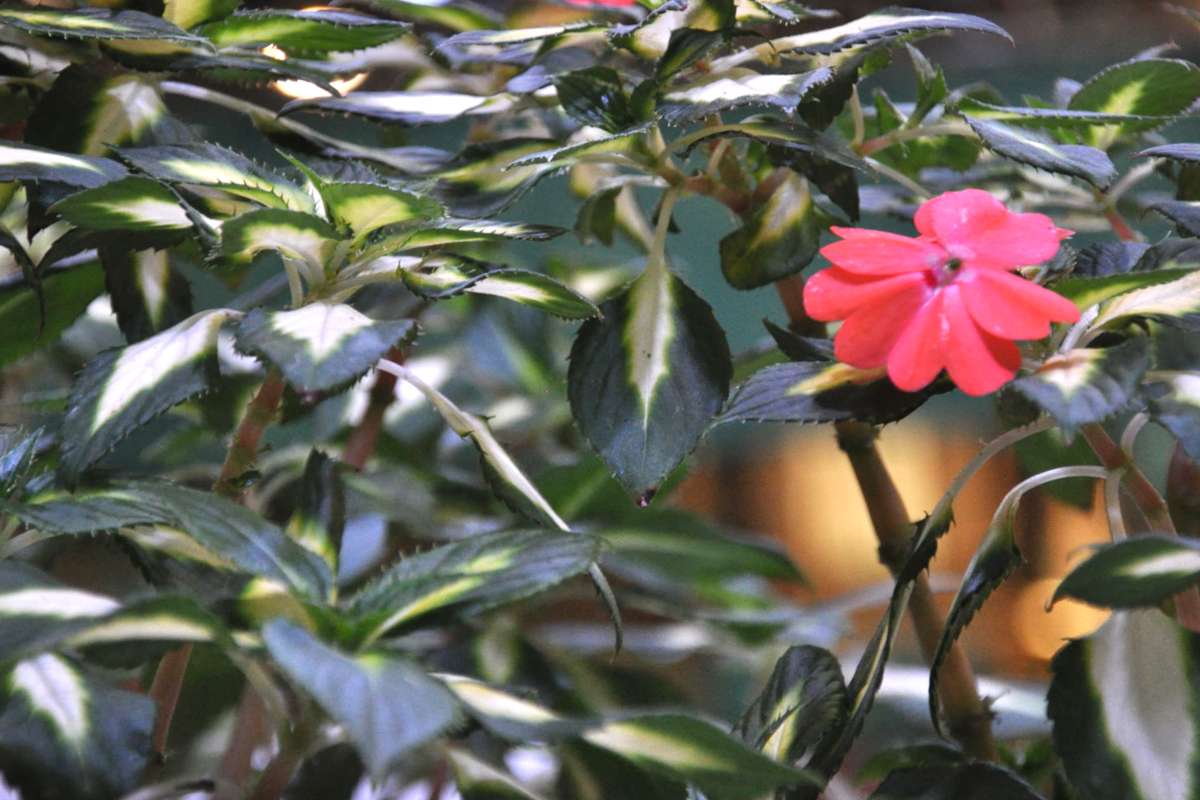
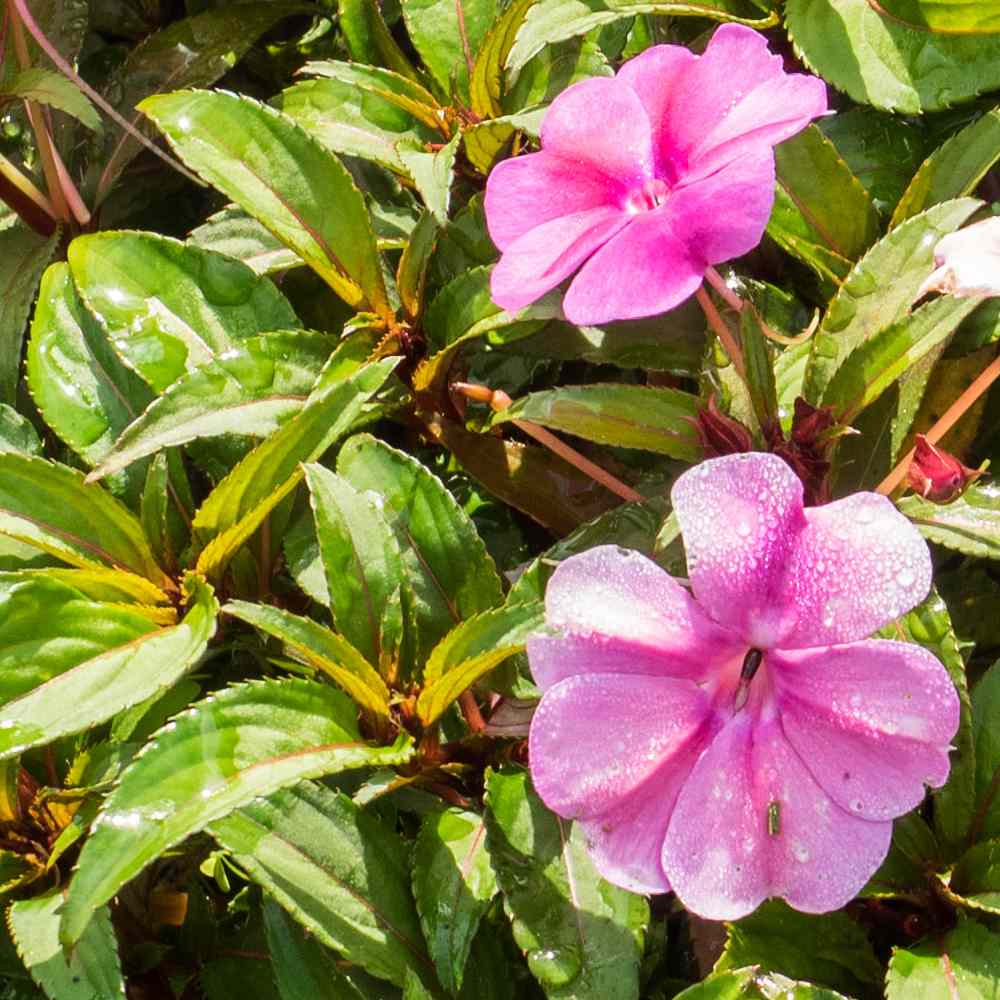
Bursting with colour in shady corners, garden balsam (Impatiens balsamina) flowers from late spring to mid-autumn in beds, boxes and pots. Set 8 to 10 plants to the square yard in humus-rich soil and they knit into amazing ground cover; they fear the cold, though, so expect a single generous season.
| Name | Impatiens balsamina |
|---|---|
| Family | Balsaminaceae |
| Type | Annual |
| Height | 8 to 32 inches (20 to 80 cm) |
| Exposure | Part sun and shade |
| Soil | Ordinary |
| Flowering | late spring to mid-autumn |
Caring for it is effortless and the blooming stays abundant even if diseases might slow the growth and blooming a bit.
The planting of balsam purchased in nursery pots is performed in spring.
Mix your earth with flower plant soil mix and water generously to make the flower-bearing abundant.
Sowing balsam
For impatiens purchased as seeds, you can sow directly in the plot from mid-spring onwards but be careful in case of frost spells to protect your seedlings.
If you want to plant impatiens in the sun, select sunpatiens.
Balsam care is child’s play and no pruning is actually required.

Nonetheless, in pots or garden boxes, you can amplify the aesthetic appeal and stimulate budding of new flowers if you remove wilted flowers regularly.
Don’t be surprised if your Impatiens don’t grow back from one year to the next because they fear the cold. They’ll survive winter only where winters are mild.
Although generally not so vulnerable to diseases and parasites, occasionally you’ll notice an invasion of red spider mites and aphids on your Impatiens balsamina.
Red spider mites thrive in hot, dry air, so keeping potted balsam’s compost evenly moist and raising humidity around it may help, though brief misting alone lifts humidity only momentarily.
Balsam is rarely troubled, but a handful of pests and the cold can spoil the display. Use the signs below to work out what is happening and what to do about it.
| Problem | What you see | What to do |
|---|---|---|
| Red spider mites | Occasional invasion on the foliage of Impatiens balsamina | Follow the method for fending off red spider mites |
| Aphids | Colonies appearing on stems and leaves | Treat as soon as noticed to fight aphids off |
| Slugs | Holes appearing on the leaves | Act fast, because slugs love balsam |
| Cold | Plants fail to grow back the following year | Grow in pots and bring them indoors for the coldest months |
Only mild-winter gardens see balsam last beyond a single season outdoors.
Garden balsam is almost always bought as seed, and the named strains differ mainly in flower form, colour and how tall the plants finish. Use the table below to match a variety to a border, a window box or a shady pot.
| Variety | Flower colour | Flower form | Height band | Best use |
|---|---|---|---|---|
| Camellia Flowered White | Pure white | Fully double | Medium | Lightening deep shade |
| Camellia Flowered Rose | Rose pink | Fully double | Medium | Borders and large pots |
| Peppermint Stick | Red and white flecked | Double | Medium | Novelty colour in pots |
| Camellia Flowered Mixed | Mixed shades | Fully double, camellia-like | Medium | Beds and shady borders |
| Tom Thumb Mixed | Mixed shades | Double, freely borne | Dwarf | Edging, pots, window boxes |
| Topknot Mixed | Mixed shades | Double, held above the leaves | Dwarf to medium | Pots where flowers must show |
| Camellia Flowered Scarlet | Scarlet red | Fully double | Medium | Bold single-colour blocks |
| Camellia Flowered Salmon | Salmon pink | Fully double | Medium | Pastel bedding schemes |
Being very ornamental thanks to their bursting colors, these annuals bloom remarkably in flower beds and garden boxes. Care is elementary and growth is quick.
Don’t be surprised if your impatiens don’t grow back from one year to the next because they fear the cold. They’ll survive winter only where winters are mild.
But you can try growing them potted to bring them inside your home during the coldest months.
If holes appear on the leaves, be on the lookout for slugs because they love balsam and you must act fast.
During the blooming, feel free to water regularly but not too much to keep just the right moisture level.
Garden balsam is among the cute spring and summer blooming flowers.
You can thus decorate your flower beds, garden boxes and pots for many a month in a row.