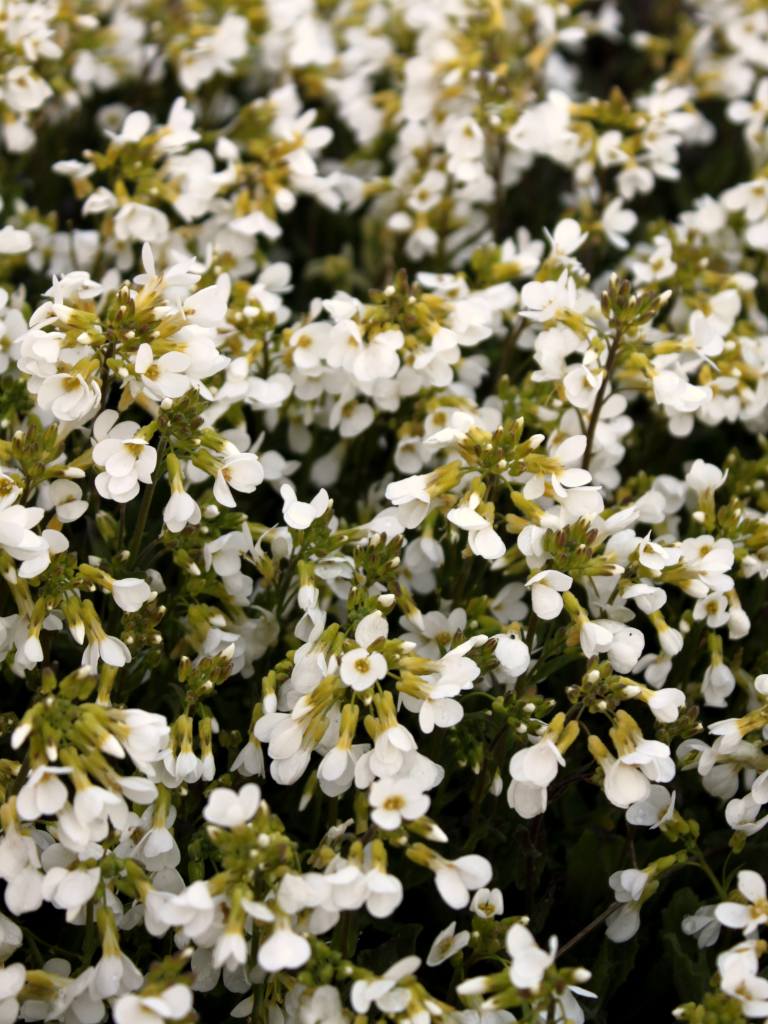
Delicate white flowers open over a long spell in spring, low enough to carpet a rockery or edge a bed: this is alpine rock-cress (Arabis alpina). Easy to grow, it asks chiefly for light, well-drained soil — sandy ground suits it perfectly — and rewards that with a spring-long sheet of bloom.
| Name | Arabis alpina |
|---|---|
| Family | Brassicaceaa or Cruciferae |
| Type | perennial |
| Height | 12 inches (30 cm) |
| Exposure | full sun |
| Soil | light, well-drained |
| Foliage | evergreen |
| Flowering | mid-spring to early summer |
Caring for it is easy and the ornamental properties of this plant make it perfect as ground cover, for rock ground or along edges.
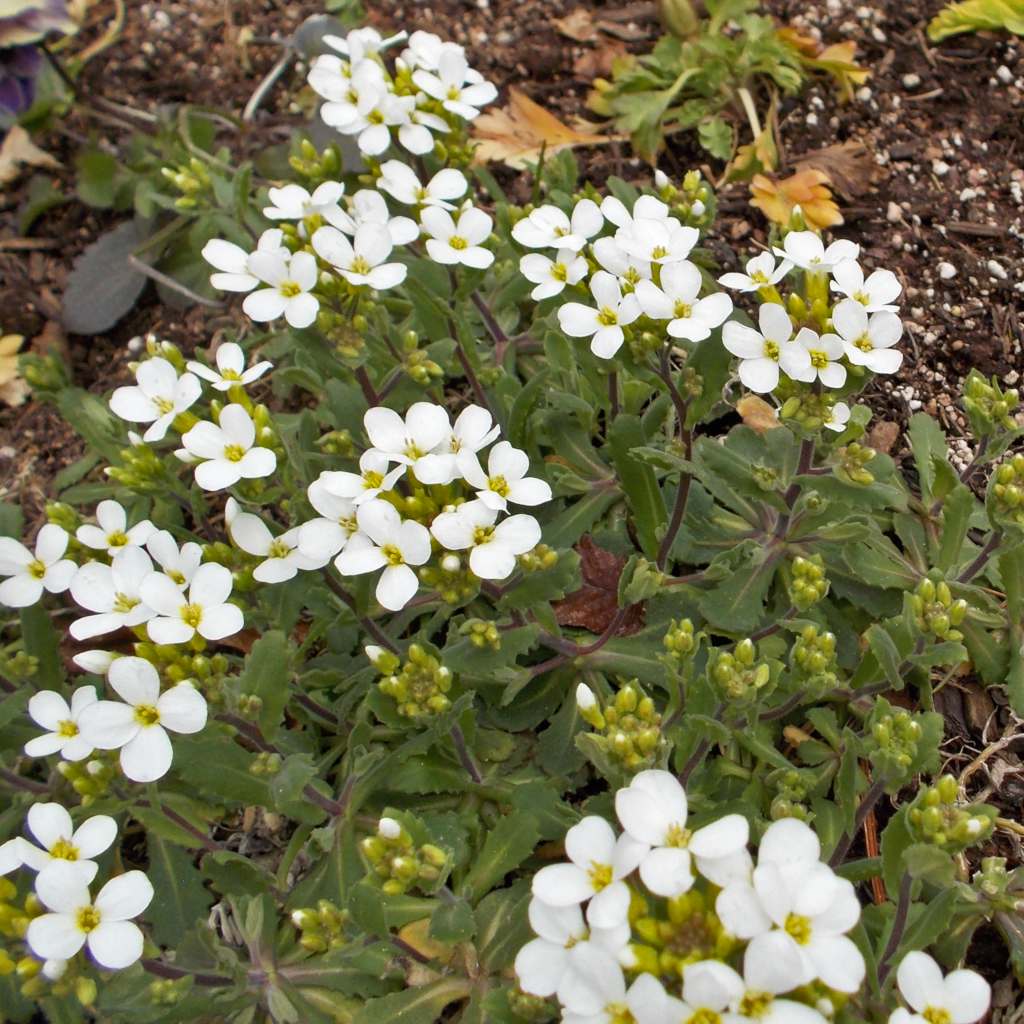
Arabis loves well drained soil types and grows very well in sandy soil.
It likes very sunny spots but tolerates light shade.
Planting arabis is best either in spring or fall.
Remember to water regularly at the beginning if you’re planting in spring and even more so in summer.
The sowing of Arabis is best performed in spring.
Sow in a sheltered place while avoiding direct sun.
Arabis makes for very easy growing and care. Simply checking back its growth from time to time is generally enough to avoid it spreading too far.
Remove wilted flowers regularly if you wish but this step isn’t really necessary.
Since the foliage is evergreen, it isn’t very useful to cut it back after the blooming.
As regards pests, you might encounter that nightmare of vegetable patch growers, the cabbage caterpillar. However, on your arabis, it won’t do much else than munch on leaves.
Garden arabis is sold under a handful of reliable names, most of them white but a few pink. Choose on flower colour, height and where you mean to use the plant.
| Variety | Flower colour | Height | Best for |
|---|---|---|---|
| ‘Variegata’ | White | 6 in (15 cm) | Year-round foliage interest |
| Arabis procurrens ‘Variegata’ | White | 4 in (10 cm) | Ground cover, tolerates light shade |
| ‘Snowcap’ | Pure white | 6 in (15 cm) | Edging and rockery carpets |
| ‘Compinkie’ | Deep pink | 6 in (15 cm) | Rock gardens and gravel |
The name “Arabis” was coined by the botanist Carl Von Linne. He saw the match between the desert sand of Arabia and the sand in which this plant thrived so well.
This plant will be particularly appealing along the edges of a flower bed, in a garden box, and also in rocky ground and atop a dirt mound.
It receives the gleeful visits of our friends the bees and is advantageously paired with bellflower and Aubretia.
Just like Iberis, it is sometimes called “silver basket” for its abundant white blooming.
Alpine rock-cress doesn’t need any watering in summer… this scores points for saving water and for our planet, too!
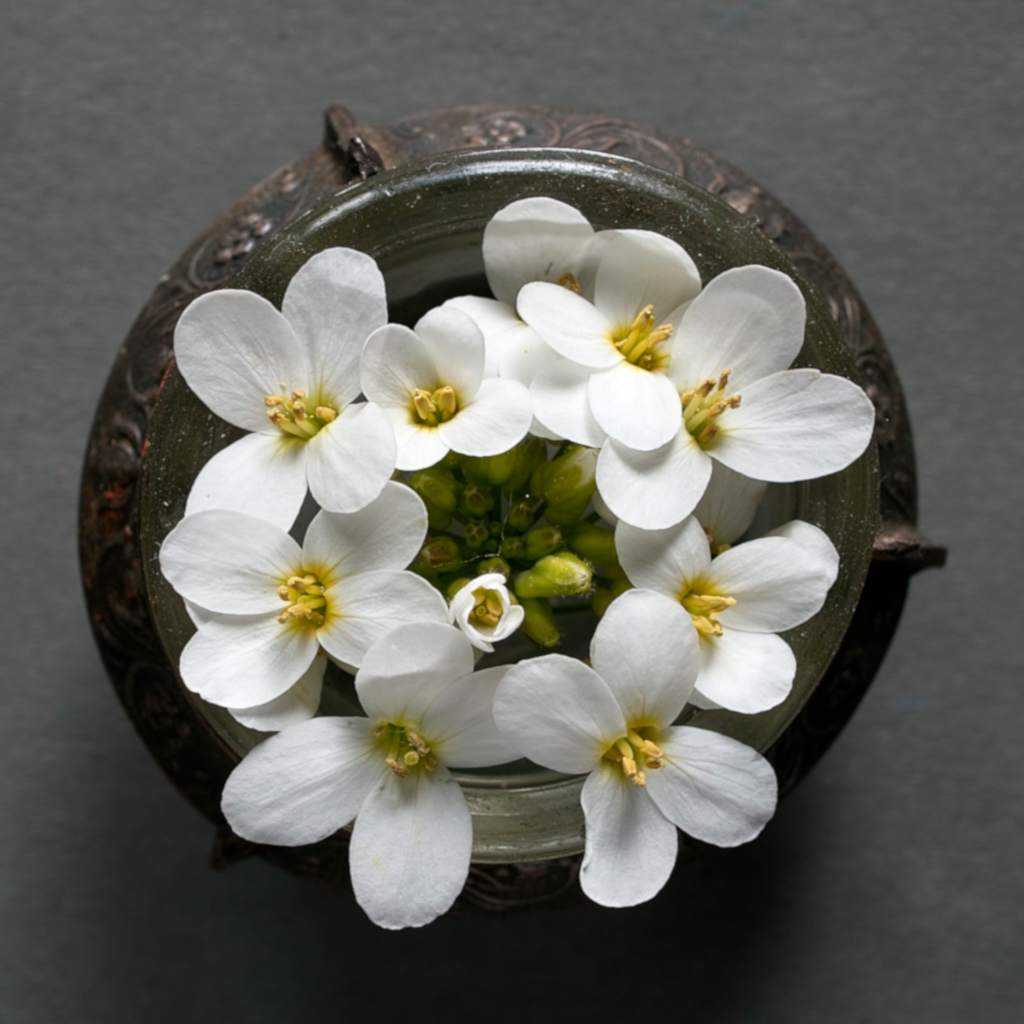
If you pick a cluster of flowers and rest it in a glass of water, it will hold for up to a week.
Credits for images shared to Nature & Garden (all edits by Gaspard Lorthiois):
Large arabis shrub by Col & Tasha Ford & de Vere ★ under © CC BY 2.0
Young arabis clump by Andrey Zharkikh ★ under © CC BY 2.0
Arabis cut flower vase by Carl F. Bagge ★ under © CC BY 2.0