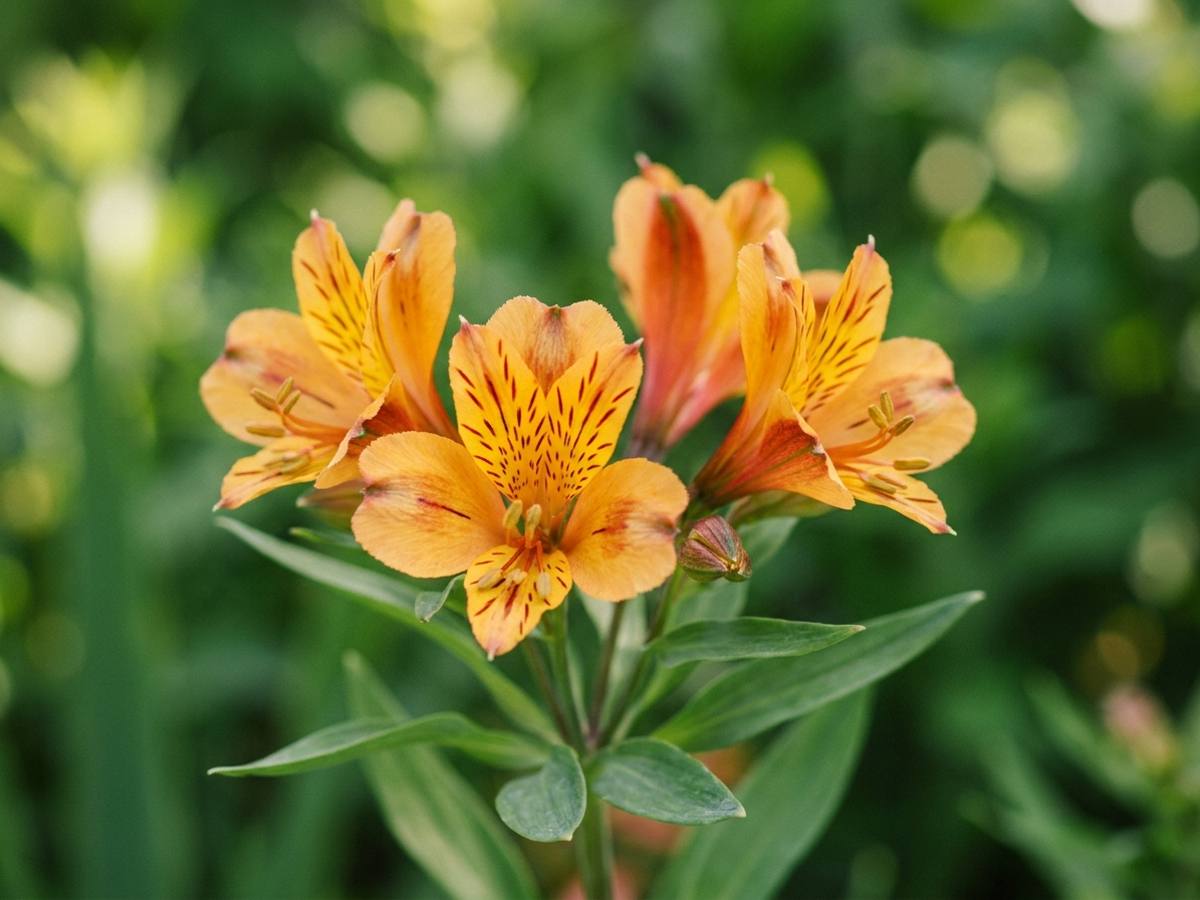
Alstroemeria aurea is the toughest and most exuberant of the Peruvian lilies, throwing up thickets of upright leafy stems topped with clusters of tangerine-orange trumpets streaked with chocolate freckles. It is a superb border filler and one of the finest cut flowers you can grow at home, lasting a fortnight or more in a vase. Unlike the compact bedding hybrids sold in garden centres, this Chilean species spreads steadily by fleshy underground tubers, so give it room to romp.
Give Alstroemeria aurea at least six hours of direct sun a day for the strongest stems and heaviest flowering. It copes well with light dappled shade beneath high-canopy trees, though stems become lax and bloom count falls in anything deeper. A sheltered spot with some protection from strong wind saves you staking.
Deep, fertile soil enriched with well-rotted organic matter suits it best, ideally a sandy or medium loam that never becomes waterlogged. It tolerates a broad pH range from mildly acidic to slightly alkaline, roughly pH 6.0 to 7.5, and grows happily over chalk provided the soil is not thin and parched. Heavy, sticky clay is the one real enemy — improve it with grit and compost, or plant on a raised ridge.
This species comes from the cool temperate south of Chile and Argentina, so it is far hardier than most alstroemerias and survives outdoors year-round across most of Britain, Ireland and northern Europe. In colder inland gardens a thick winter mulch is worthwhile; in mild maritime areas it may stay semi-evergreen.
Plant pot-grown plants in late spring, from May onwards, once the soil has warmed and all frost risk has passed. Autumn planting is possible in mild districts but young tubers are vulnerable to a cold, wet first winter.
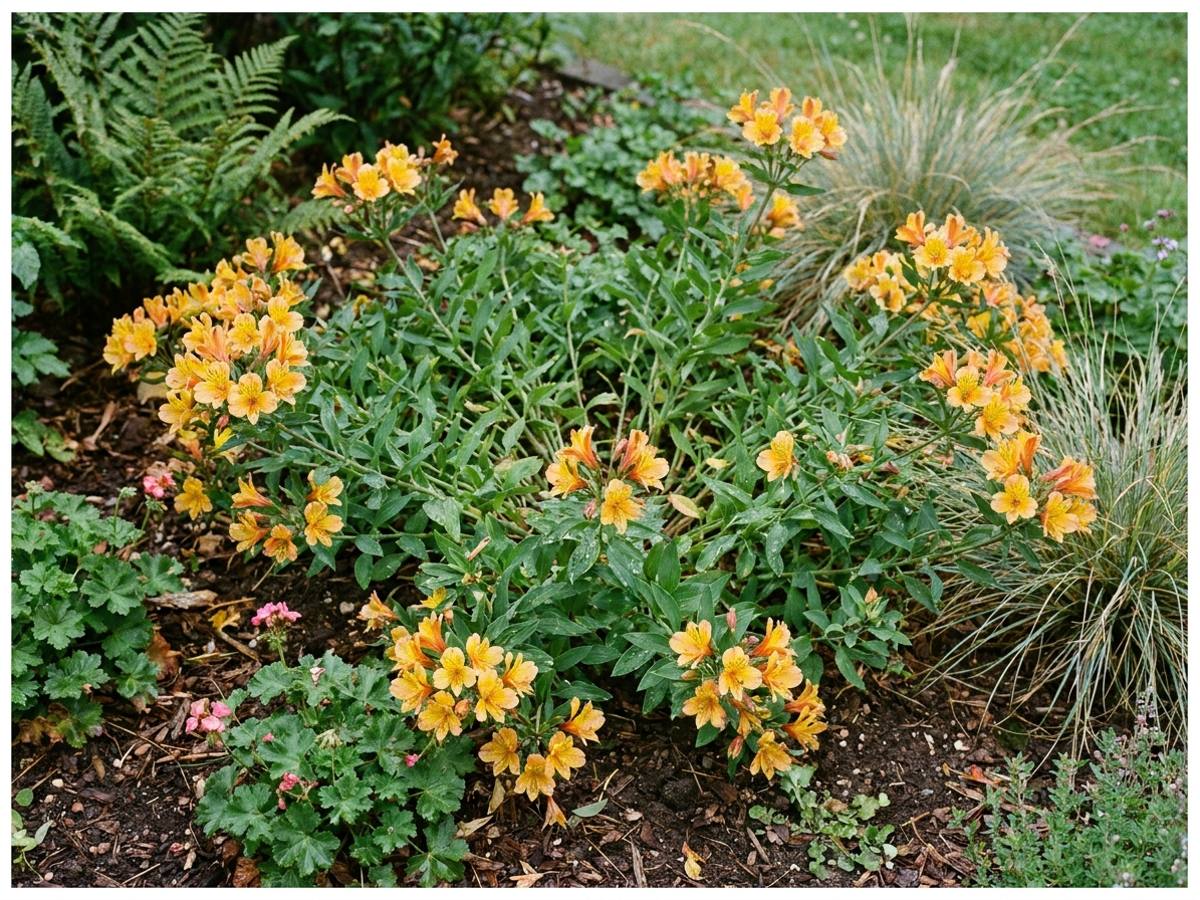
The whole job list for this plant fits into a handful of moments. Use the table to see what matters when, from planting out to putting the winter mulch on.
| Season | What to do | What to watch for |
|---|---|---|
| Late spring | Plant pot-grown plants once the soil has warmed and frost risk has passed, 45–60 cm apart and 10–15 cm deep | Autumn planting only in mild districts, as young tubers dislike a cold, wet first winter |
| Early to mid-spring | Feed as growth begins, mulch with compost, insert grow-through hoops or pea sticks while stems are short; divide clumps | Soft emerging shoots grazed to stumps by slugs and snails overnight |
| Early to late summer | Water generously in dry spells, especially in the first two years; harvest stems with a sharp twist rather than cutting | Remove seed pods promptly, as self-sown seedlings appear readily |
| Mid to late autumn | Cut or pull stems to ground level, reduce over-large clumps with a spade, mulch 7–10 cm over the crown | Foliage yellows after the first frosts |
| Early winter to late winter | Leave the mulch in place until mid-spring on wet soils or in cold gardens | The plant is dormant below ground and disappears entirely, so mark its position |
Get the planting depth and the winter mulch right and the rest of the year asks very little of you.
The whole job list for this plant fits into a handful of moments. Use the table to see what matters when, from planting out to putting the winter mulch on.
Get the planting depth and the winter mulch right and the rest of the year asks very little of you.
Spring: New shoots emerge from mid-April, later than you expect, so mark the position to avoid forking through the tubers. Apply a general balanced feed or a potassium-rich rose fertiliser as growth begins, then mulch with compost. Insert supports early — grow-through hoops or twiggy pea sticks — while stems are still short.
Summer: Water generously during dry spells, particularly in the first two years; established clumps are surprisingly drought-tolerant thanks to their fleshy tubers. Harvest flowering stems by grasping them low down and pulling with a sharp twist rather than cutting — this triggers a fresh flush of shoots from the base. Remove any seed pods promptly, as self-sown seedlings appear readily.
Autumn: Foliage yellows after the first frosts; cut or pull stems back to ground level and compost them. This is a good moment to reduce the size of an over-enthusiastic clump by slicing away outer sections with a spade. Finish with a 7–10 cm mulch of bark, leaf mould or straw over the crown.
Winter: The plant is completely dormant below ground and disappears entirely. In gardens colder than about −12 °C, or on wet soils, keep the winter mulch in place until mid-spring.
Selections of the species and its close hybrids offer a wider colour range whilst keeping that valuable hardiness.