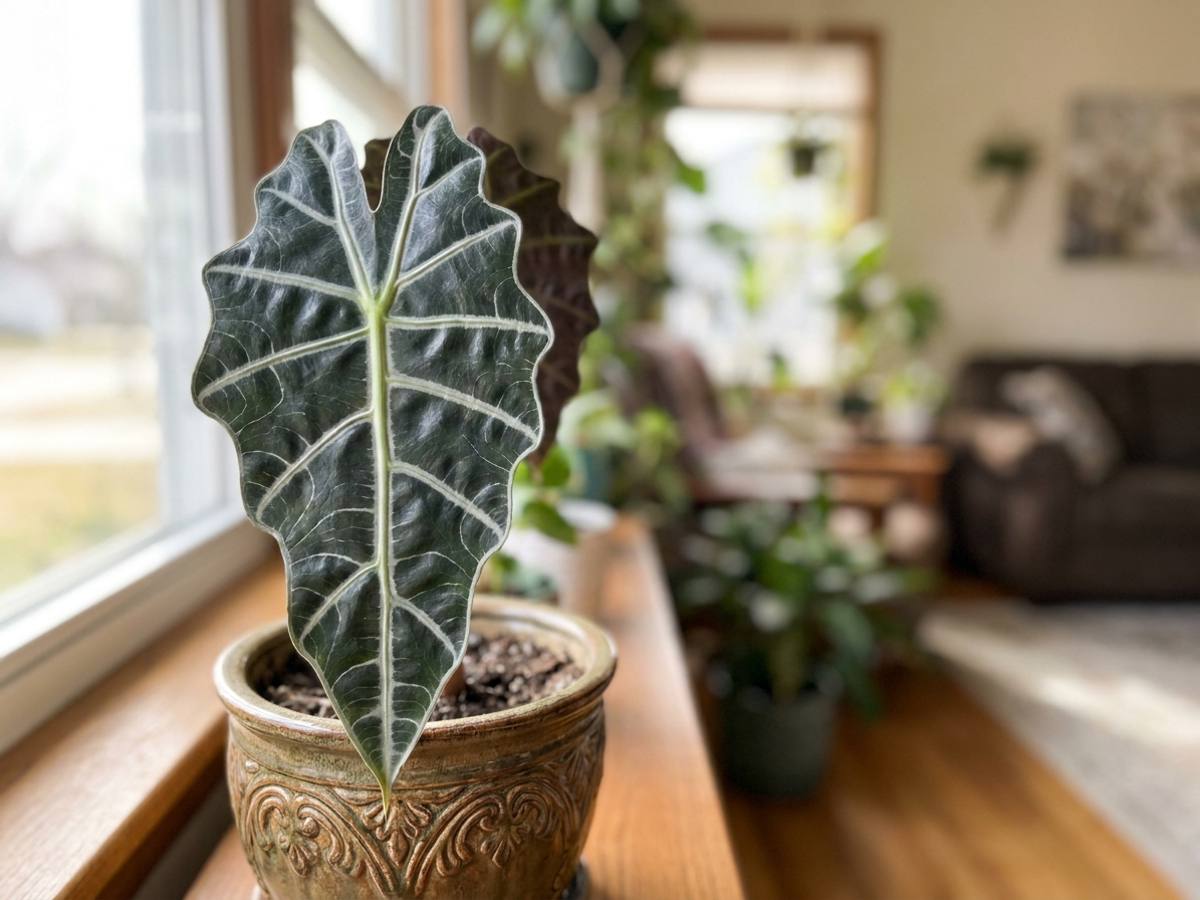
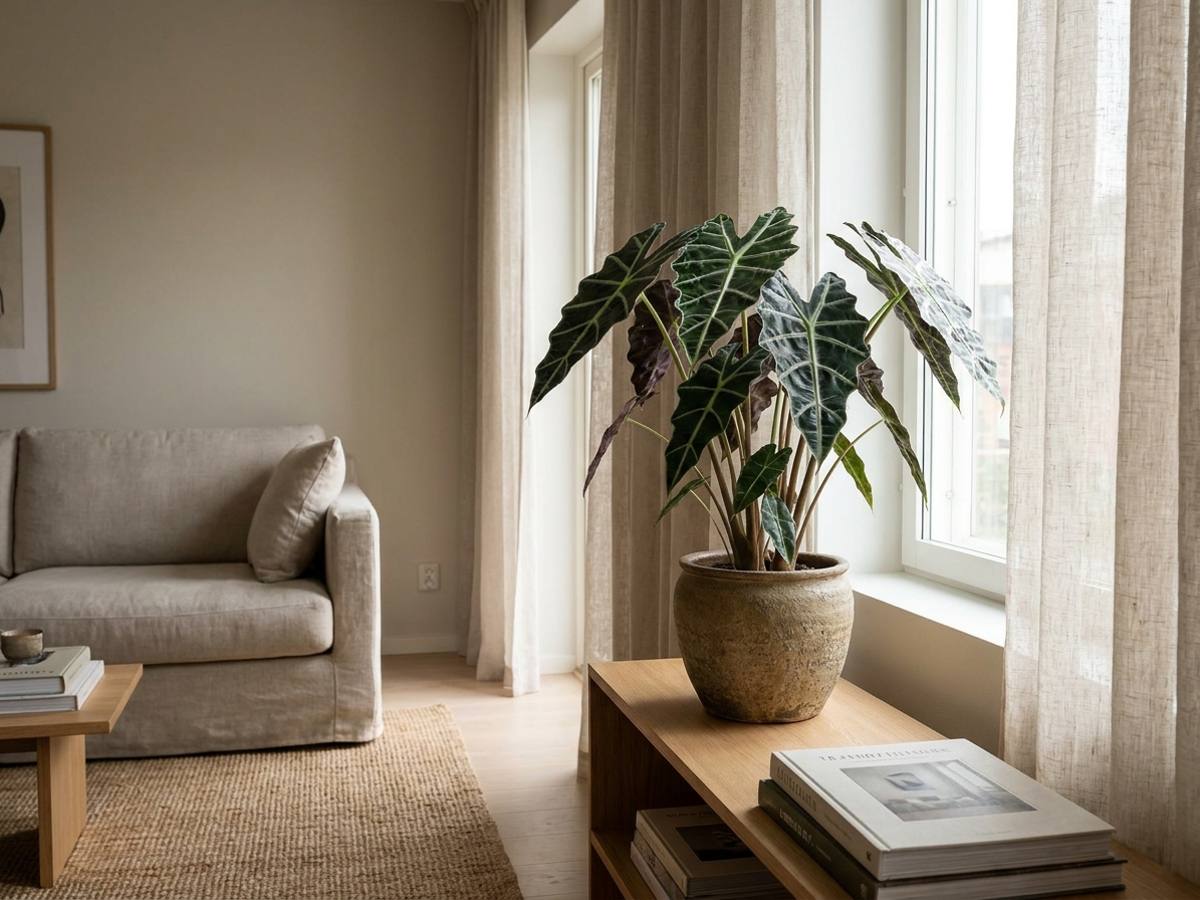
Alocasia amazonica, commonly known as the Elephant’s Ear or Amazon Elephant’s Ear, is a striking tropical foliage plant prized for its large, deeply lobed leaves with dramatic silvery-white veining. This exotic houseplant brings a sculptural, jungle-like presence to any indoor garden and is particularly popular among plant collectors seeking bold architectural specimens. Its distinctive arrow-shaped leaves and compact growth habit make it an impressive focal point on windowsills or shelves.
Growing conditions
Alocasia amazonica thrives in bright, indirect light and will struggle in deep shade. Position the plant near an east- or west-facing window with filtered sunlight, or 1–2 metres from a south-facing window to avoid leaf scorch. Direct midday sun can bleach the striking foliage, so gentle morning light is ideal.
This species requires well-draining, moisture-retentive compost rich in organic matter—a blend of houseplant compost, peat-free alternatives, and perlite works well. The soil should be slightly acidic (pH 6.0–6.5) and never waterlogged, as poor drainage encourages root rot. Ensure pots have adequate drainage holes and use terracotta or breathable containers to prevent excess moisture.
Alocasia amazonica is a tropical plant and cannot tolerate temperatures below 15 °C; it performs best between 18–24 °C. Keep the plant away from draughts, radiators, and air conditioning units, which cause stress and leaf drop. It is strictly a houseplant in the UK and must be brought indoors before the first frost.
How to plant Alocasia amazonica
Plant in spring when new growth emerges, as the plant establishes faster during the growing season. Repot every 12–18 months or when roots emerge from drainage holes, moving up by one pot size only.
Space at least 30–45 cm from neighbouring plants to allow air circulation and prevent fungal issues
Plant with the rhizome (tuber-like stem base) just below the soil surface—never bury it completely, as this causes rot
Prepare compost by mixing 2 parts houseplant compost with 1 part perlite and a handful of horticultural charcoal for drainage
Water gently after planting and allow excess to drain; do not saturate newly planted rhizomes
Propagate by rhizome division in spring—divide clumps carefully, ensuring each section has at least one growing point, and pot into moist compost
Deeply lobed leaves carry the dramatic silvery-white veining
Watering and feeding through the year at a glance
What this plant needs changes sharply with the seasons, and most losses come from treating a semi-dormant winter plant like a growing summer one. Use the table to see which regime applies before reading the detail below.
Watering and feeding through the year at a glance
Season
Watering
Feeding
Main task
Early to late spring
Resume regular watering as growth restarts
Diluted balanced fertiliser every two weeks
Check for spider mites and scale; repot if outgrown
Early to late summer
Water when the top 2–3 cm becomes dry; moist, never soggy
Fortnightly, easing off towards late summer
Mist with tepid water or stand on a pebble tray for humidity
Early to late autumn
Less frequently; let compost dry slightly between waterings
Stop feeding from early autumn onwards
Check for pests and move to winter position, away from draughts
Early winter to late winter
Reduced significantly as the plant is semi-dormant
None until spring growth resumes
Keep above 15 °C and move to the brightest available spot
Old leaves yellowing and dropping in winter is normal and not a sign of failure.
Care through the seasons
Spring: Resume regular feeding as new leaves unfurl; apply a diluted balanced fertiliser (such as tomato food) every two weeks. Check for spider mites and scale insects, which emerge as temperatures rise. Repot plants if they have outgrown their containers or the compost has become depleted.
Summer: Keep compost consistently moist but never soggy—water when the top 2–3 cm becomes dry. Mist foliage regularly with tepid water or place the pot on a pebble tray filled with water to increase humidity. Feed fortnightly and reduce feeding towards late August as growth naturally slows.
Autumn: Water less frequently as temperatures drop and growth slows; allow the compost to dry slightly between waterings. Stop feeding from September onwards and reduce misting. Check for pests before bringing indoor plants into their winter positions, away from potential draughts.
Winter: Maintain a minimum temperature of 15 °C and reduce watering significantly—the plant enters semi-dormancy. Place in the brightest available spot as daylight hours diminish. Do not feed until spring growth resumes; old leaves may yellow and drop naturally.
Best varieties to grow
Several cultivars and closely related hybrids offer variation in leaf size, pattern, and growth habit.
Alocasia amazonica ‘Polly’ — A compact, popular cultivar with deeply lobed leaves and prominent white veining; ideal for smaller spaces and shelves
Alocasia amazonica ‘Stingray’ — Features unusual elongated, wavy-edged leaves resembling a stingray tail; a distinctive collector’s variety
Alocasia amazonica ‘Purple Shield’ — Displays dark purple undersides to the leaves with silvery veining on the upper surface; stunning when back-lit
Alocasia × ‘African Mask’ — A robust hybrid with larger leaves and bold venation; similar care requirements and equally striking in appearance
Pests, diseases and common problems
Spider mites: Fine webbing appears on new growth and leaf undersides; leaves become speckled and pale. Spray affected foliage thoroughly with diluted insecticidal soap or neem oil every 5–7 days until resolved, and increase humidity to discourage reinfestation.
Scale insects: Brown, waxy bumps appear on stems and leaf veins; the plant weakens and may develop sticky honeydew. Remove scales manually with a soft brush and methylated spirits, then treat with neem oil every 10 days for 4–6 weeks.
Root rot: Leaves yellow and wilt despite moist compost; roots smell foul and appear black and soft. Allow compost to dry thoroughly, cut away rotten roots with sterile scissors, and repot into fresh, well-draining compost in a smaller pot.
Yellow leaves: Older leaves naturally yellow and die back; however, widespread yellowing suggests overwatering or low light. Reduce watering frequency, check drainage, and move the plant closer to a bright window.
Brown leaf edges: Hard water, low humidity, or solute accumulation causes browning tips. Use distilled or rainwater, mist leaves more frequently, and flush compost monthly to remove salt build-up.