Passion flower is the tangled, tendrilled vine whose dried leaves and stems end up in evening tea blends. This page is about Passiflora incarnata, the hardy maypop — which part to pick, how to brew it, what it actually tastes like, and who should leave it alone. Useful if your head still races at bedtime.
A flower named after a story
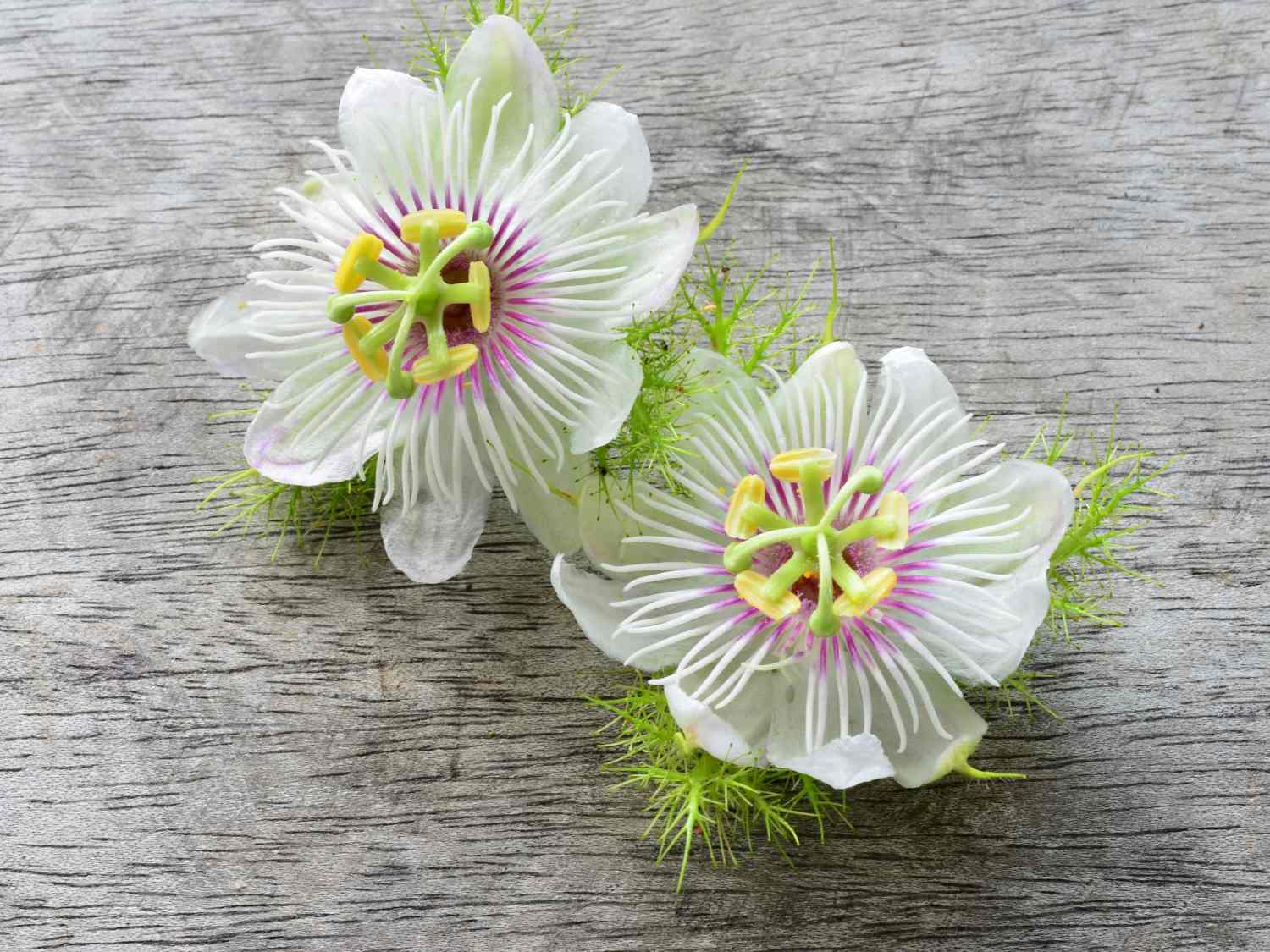
The flower parts that gave the plant its symbolic name
The ring of coloured filaments was read as the crown of thorns — said to number seventy-two.
The three-parted pistil stood for the three nails.
The five stamens with their red bases stood for the five wounds.
The pointed, lobed leaves stood for the lance.
The Italian monk Jacomo Bosio popularised the reading after the Mexican monk Emmanuel de Villegas described the plant to him in Rome. The flower was then unknown in Europe, and the name stuck.
Which passion flower are we talking about?
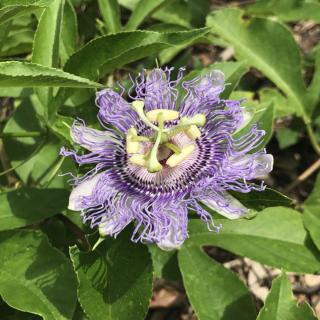
Passiflora incarnata — purple passion flower or maypop, the one used in herbalism for its aerial parts.
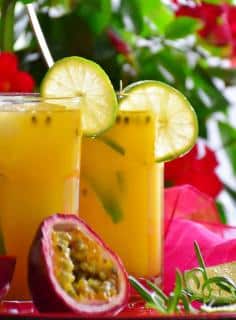
Passiflora edulis — the fruiting one, grown for juice, syrups and sorbets.
Passiflora caerulea — blue passion flower, the ornamental climber grown on walls and pergolas in temperate gardens.
Each species has its own chemistry. Everything below concerns Passiflora incarnata only.
Purple passion flower at a glance
Item
Detail
Botanical name
Passiflora incarnata
Common names
Purple passion flower, maypop, grenadille
Family
Passifloraceae
Part used
Aerial parts: leaves, stems, tendrils and flowers, without the roots
Forms of use
Infusion, tea blends, tincture, capsules, traditional external poultice
Harvest season
Midsummer to early autumn, while the vine is in flower
Taste
Green and hay-like, faintly grassy, mildly bitter at the finish
What it is credited with
Evening calm. Herbalists reach for the aerial parts as a soothing plant for people whose thoughts keep spinning at bedtime.
Nervous tension. Naturopathy credits it with taking the edge off everyday agitation, restlessness and a sense of over-stimulation.
Falling asleep. It has a long reputation as a bedtime infusion for those who find it hard to settle, rather than as a knock-out remedy.
Restlessness around menopause. In traditional European herbalism it was included in blends for night-time restlessness and irritability at that stage of life.
Cramping and tension. Traditional herbalism describes the plant as antispasmodic and used it where tension showed up in the body as much as in the head.
Skin, traditionally. Native American practice used crushed leaves as poultices on bruises, knocks, rashes and minor burns.
Part of a blend. Herbalists rarely use it alone: it is classically paired with lemon balm, hops, chamomile or lime blossom.
How to use it
The classic use: a mug of the infusion before bed
The simple bedtime infusion
Use a teaspoon of the dried, chopped aerial parts per mug.
Pour water just off the boil over it.
Cover and steep about ten minutes — covering keeps the aromatics in.
Strain, and sweeten with a little honey if the grassy edge bothers you.
Drink it warm, roughly half an hour to an hour before bed.
Traditional use is short and seasonal: a couple of weeks, then a break, rather than nightly all year.
An anti-fuss evening blend
Mix one cup of dried chamomile flowers with a quarter cup each of lavender buds, dried lemon verbena, rose hips and dried passion flower.
Store the mix in a jar away from light.
Use a tablespoon of the blend per mug, boiling water, five minutes covered, then strain.
The chamomile rounds off the hay-like note of the passion flower; the verbena lifts it.
Other forms
Tincture — the alcohol extract, taken in a little water; often combined with lemon balm or hops. Follow the maker’s instructions on the bottle.
Capsules and tablets — the powdered aerial parts, convenient when you travel. Again, go by the label.
Poultice — the old external use: fresh leaves crushed to a paste and laid on unbroken skin, held with a cloth.
Kitchen note — the tart, perfumed fruit of Passiflora edulis is a culinary ingredient, not the herbalist’s material.
The juicy fruit belongs to the kitchen, not the tea caddy
Forms of passion flower compared
Form
How it is prepared
What it is used for
Infusion
Dried aerial parts, water off the boil, ten minutes covered
The classic evening drink, traditionally taken before bed
Blended tea
Mixed with chamomile, lavender, verbena and rose hips
A gentler, better-tasting version for regular evening use
Tincture
Alcohol extract, diluted in water
Concentrated and portable; often paired with hops or lemon balm
Capsules
Dried aerial parts, powdered
For people who dislike the grassy taste
Poultice
Fresh leaves crushed to a paste, applied to intact skin
The old external use on bruises and irritated skin
Fruit from a different species: not the herbalist’s material
Frequently Asked Questions
The one thing to remember: steep a teaspoon of the dried aerial parts in a covered mug for ten minutes and drink it about an hour before bed.
Which part of the plant do I actually use?
The aerial parts of Passiflora incarnata: leaves, stems, tendrils and flowers, dried and chopped. The roots are not used. The fruit belongs to a different species and is a food, not a herbal preparation.
When should I drink the infusion?
Half an hour to an hour before bed is the traditional timing, so it is not the drink to have before driving home. Herbalists usually suggest a short run of a week or two, then a pause, rather than taking it every night indefinitely.
What does it taste like?
Green and hay-like, faintly grassy, with a mild bitterness at the end. Most people find it easier blended with chamomile, lemon verbena or rose hips, and a spoonful of honey softens it further.
Can I take it alongside my sleeping tablets?
Not without asking first. Passion flower may add to the effect of sedative medicines, of other calming herbs, and of anticoagulants. Check with your doctor or pharmacist before combining anything.
Can I harvest it from my own garden?
Yes, if you grow the maypop, Passiflora incarnata. Cut the aerial parts midsummer to early autumn while the vine is in flower, dry them in the shade somewhere airy, and store them in an airtight jar away from light.
This information is provided for general interest and reflects the traditional use of plants. It is not a substitute for medical advice. If you are on medication, pregnant, or in any doubt, ask a healthcare professional.