Juniper berries: traditional uses, kitchen forms and cautions
·
0
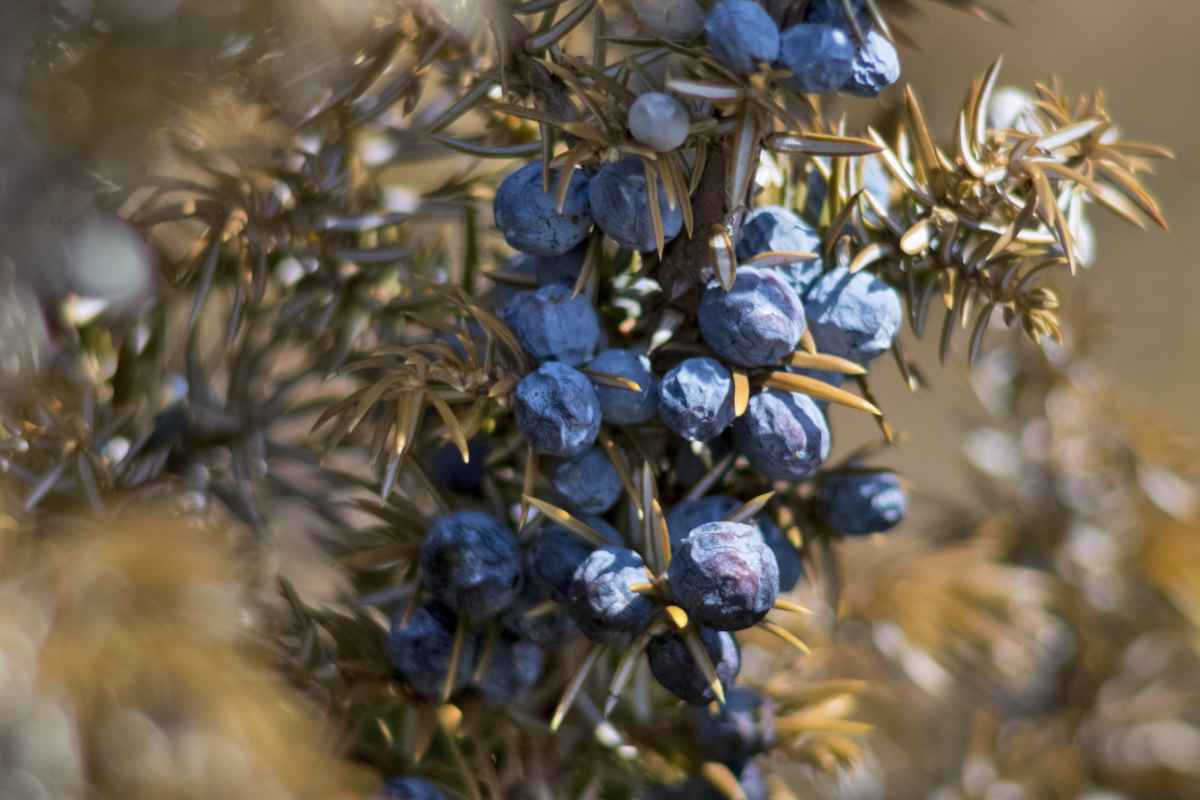
Juniper is the prickly little conifer of dry hillsides and windswept sand, and its blue-black berries are the part worth knowing. They flavour sauerkraut, game and gin, and they carry a long herbal reputation as a warming, aromatic spice. Here is which part to use, in what form, and the very real reasons to keep any use brief.
Juniper at a glance
Item
Detail
Botanical name
Juniperus communis
Family
Cupressaceae
Part used
Ripe berries (cones), young branch tips, young shoots
Forms of use
Infusion, crushed as a spice, syrup, herb bath, essential oil (external, diluted), diffusion
Harvest season
Ripe blue-black berries from early to mid-autumn; young shoots in mid-spring
Taste
Resinous and piney, bittersweet, finishing peppery
What it is credited with
Herbalists have long classed juniper berries among the strongest plant diuretics, and traditionally reached for them when the body was felt to be holding water.
European folk medicine of the Middle Ages valued the berry as a stomachic: a bitter aromatic taken to wake up a sluggish appetite and settle heavy eating.
Naturopathy credits the berries with supporting comfortable digestion and regular intestinal transit — which is why cooks add them to fatty and fermented dishes.
In traditional herbalism, warm juniper branch-and-berry baths were used to ease stiff, aching joints and the discomfort of rheumatic complaints.
Old herbals list juniper as a mild expectorant and describe a berry syrup taken for winter sore throats and rattling colds.
The plant also had a reputation as a diaphoretic and general tonic — a warming plant for damp, cold weather.
Aromatherapy uses diluted juniper essential oil in massage blends for tired, overworked muscles, and credits it with a clarifying effect on congested or dull-looking skin.
Diffused into the air, juniper oil has a reputation among aromatherapists for calming mental restlessness and easing a wound-up evening.
How to use it
Juniper is used in small amounts, briefly. It is a strong aromatic, not a daily beverage herb.
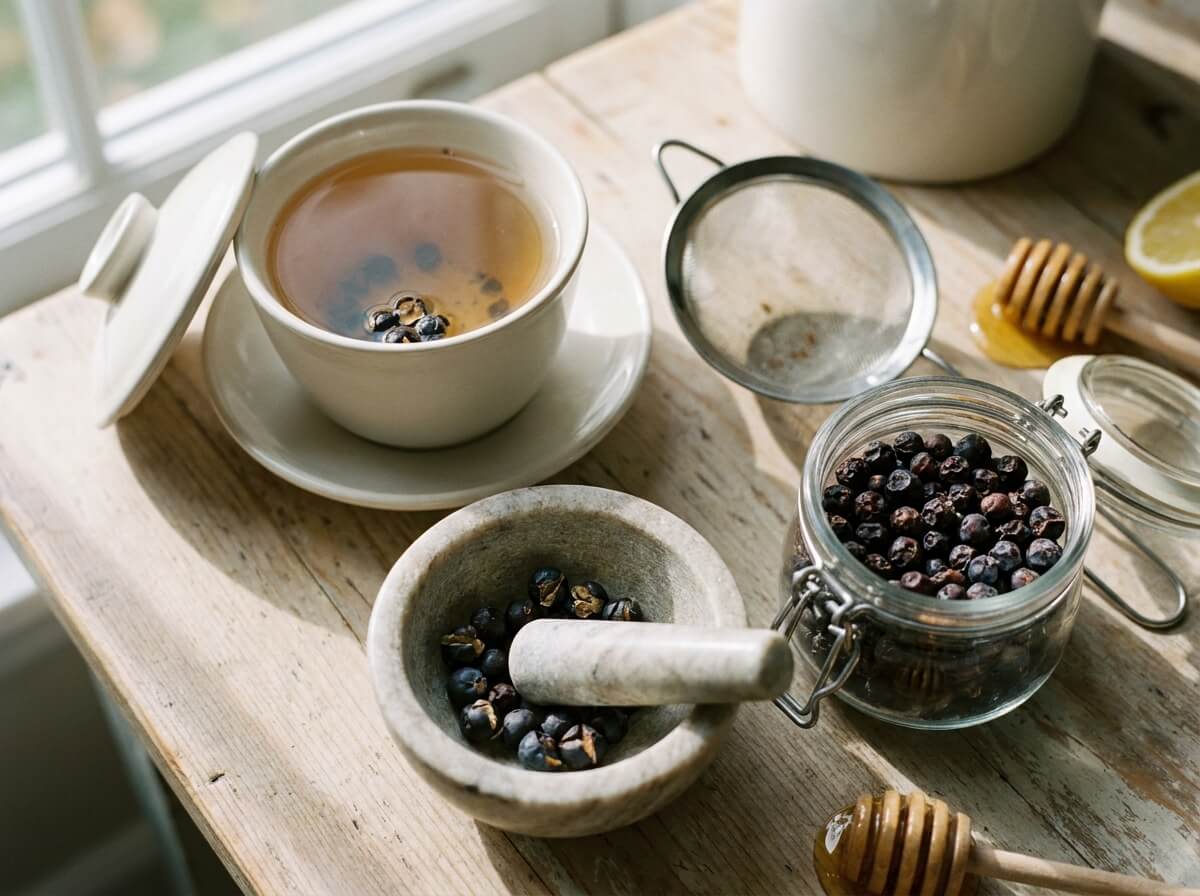
Crushed ripe berries, covered cup, ten minutes: the classic digestive infusion
Infusion of berries
Crush a few ripe berries lightly with the back of a spoon or a pestle — just enough to split the skins and release the scent.
Pour freshly boiled water over them in a covered cup and leave to steep for about ten minutes.
Strain and drink after a heavy meal. It is resinous and slightly bitter; a little honey or a slice of lemon rounds it off.
Traditional practice keeps this to short runs of a few days at a time, never as an ongoing habit.
Herb bath with branches and berries
Gather a good armful of young branch tips and a handful of berries.
Simmer them in a large pan of water, lid on, for around twenty minutes, then leave to stand until well coloured.
Strain the liquid into a warm bath and soak for fifteen to twenty minutes. The steam smells of pine forest.
Avoid on broken, inflamed or very sensitive skin.
Winter syrup
Simmer crushed berries in water until the liquid is deeply aromatic, strain well, then dissolve honey or sugar into the warm liquid.
Bottle, label, keep in the fridge and use within a few weeks.
Traditionally taken by the small spoonful, morning and evening, for a short spell only.
In the kitchen
Crush berries and rub them into game, venison, duck, pâté, terrines and smoked ham.
They are a defining flavour of sauerkraut and braised red cabbage, which they are also said to make easier to digest.
Add a couple to a stock, a marinade or a pot of beans; remove before serving, as they stay hard.
Very young shoots can be shredded into a mixed salad for a resinous note — use sparingly, the flavour is assertive.
Essential oil
External use only, always diluted in a carrier oil such as sweet almond or sunflower, for massaging tired muscles.
Patch-test on the inner forearm and wait a day before using it more widely.
For the air, a few drops in a diffuser or in a bowl of hot water is plenty.
Forms of juniper compared
Form
How it is prepared
Traditionally used for
Infusion
Crushed ripe berries, boiling water, covered, about ten minutes
After-dinner digestive comfort; the classic bitter-aromatic use
Herb bath
Young branches and berries simmered, liquid added to the bathwater
Soaking stiff, aching joints and muscles
Syrup
Berry decoction sweetened with honey or sugar, kept refrigerated
Winter throats and chesty colds, as a mild expectorant
Essential oil
Diluted in carrier oil for massage, or diffused in the air
Tired muscles; a calming, clarifying atmosphere
Culinary spice
Berries crushed whole into meats, cabbage, marinades, stocks
Flavour, and the old habit of pairing it with rich, fatty food
Frequently Asked Questions
The one thing to remember: crush a few ripe berries into a covered cup of boiling water for ten minutes after a rich meal — and keep any herbal use of juniper short.
Which part of the juniper do I actually use?
The ripe blue-black berries, which are technically small fleshy cones. Young branch tips are used for herb baths, and very young shoots can be shredded into salads. Pick the berries when they are fully dark and slightly soft, from early to mid-autumn.
What does juniper taste like?
Resinous and piney, bittersweet at first with a peppery finish. That assertiveness is exactly why it pairs with game, duck, smoked ham and sauerkraut. In an infusion the bitterness comes forward, so a little honey or lemon helps.
Why can’t I drink juniper tea every day?
Its diuretic action is strong and can irritate the kidneys, so herbal tradition and naturopathy both treat it as a short-course plant rather than a daily brew. Use it for a few days at a time with clear breaks, and avoid it altogether if you have any kidney or urinary problem.
Can I use juniper essential oil on my skin?
Only diluted in a carrier oil, and never swallowed. Aromatherapists blend it into massage oils for tired muscles and use it in diffusers for a calming atmosphere. Patch-test on the inner forearm first and wait a day before using it more widely.
Are all juniper berries edible?
No. Juniperus communis is the culinary species; several other junipers, including Juniperus sabina, are toxic and must never be eaten. If you are foraging, identify the plant with complete certainty, and buy from a reputable supplier if you have any doubt.
Growing your own juniper
Juniper wants full sun, even in hot, arid spots, and well-drained rocky or sandy soil.
It is very hardy, very slow-growing and extremely long-lived; scale insects are about its only real enemy.
Plant it well away from paths and doorways — the needles are painfully prickly.
This information is provided for general interest and reflects the traditional use of plants. It is not a substitute for medical advice. If you are on medication, pregnant, or in any doubt, ask a healthcare professional.
Written by Gaspard Lorthiois | Loves helping out, especially when it comes to growing things. Worked in herbal medicine, runs a farm, and dabbles in tech. Master's degree and engineer.