Home » Health » Marshmallow root (Althaea officinalis): traditional uses, preparations and cautions
Marshmallow root (Althaea officinalis): traditional uses, preparations and cautions
·
0
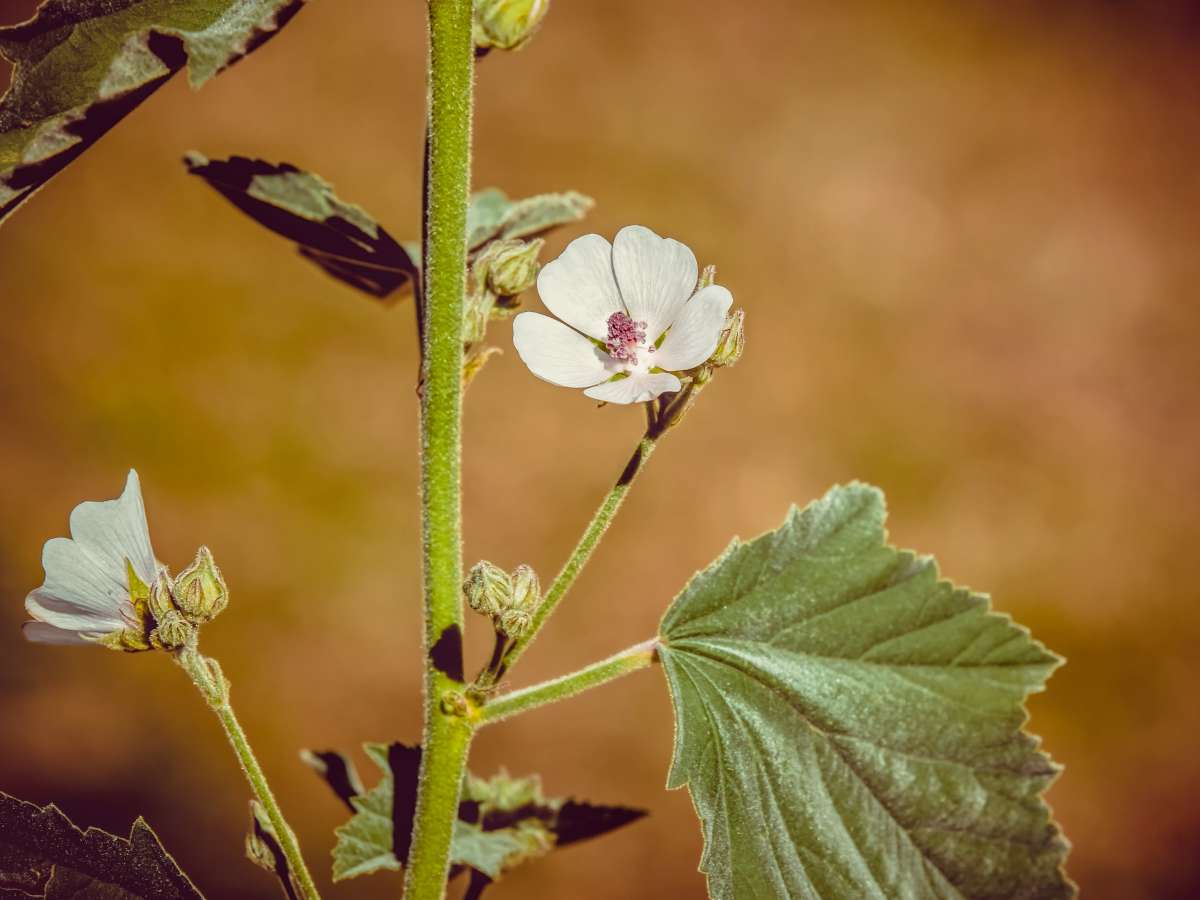
Marshmallow is the soft, grey-leaved perennial behind the old-fashioned cough syrups. Its root is packed with mucilage, a slippery gel that swells in cold water and coats whatever it touches. This page covers which part to pick, how to make the cold macerate, the decoction and the syrup, what herbalists credit them with, and who should leave the plant alone.
Leaves and flowers in midsummer to late summer; roots in mid-autumn to late autumn, from plants of two years or more
Taste
Faintly sweet, earthy, almost neutral; texture noticeably slippery
Root, leaf and flower are all used; the root holds the most mucilage
A plant with a long record
The soothing reputation of marshmallow has been recorded since antiquity.
Theophrastus described it steeped in honey-sweetened wine, a preparation traditionally taken to calm a cough.
The genus name Althaea comes from a Greek word meaning “to heal”, a sign of how long the plant has been in the herbal cupboard.
It grows wild in damp meadows, ditches and salt marshes, which is where the English name comes from.
What it is credited with
Traditional herbalism describes marshmallow, in all its parts, as emollient and softening — it is used to coat and soothe rather than to stimulate.
Naturopathy credits the root macerate with easing the feeling of a dry, scratchy throat.
The flowers are classed among the expectorant plants in the old herbals, and are traditionally added to cough blends.
Marshmallow root has a long-standing reputation for calming irritation of the mucous membranes: mouth, throat, the airways, the digestive tract and the urinary passage.
Herbalists have traditionally used the root for sluggish, difficult transit, on account of its gentle bulking mucilage.
Applied on the skin, it has a reputation for soothing dry, tight, reddened or chapped patches, and is a traditional dressing for insect bites.
Powdered root is a traditional ingredient of home poultices for sensitive, flaky skin.
How to use it
Cold macerate of root — the classic
Mucilage is spoiled by heat, so start cold: one heaped teaspoon of chopped dried root per large cup of cold water.
Leave to stand a good two hours, or overnight in the fridge, stirring once or twice.
Strain through a fine sieve. The liquid is slightly thick and slips over the tongue.
Warm it gently if you prefer it tepid, but do not boil.
Traditionally taken up to three cups across the day, between meals, for a short spell of a few days.
Infusion of leaves and flowers
A teaspoon of dried leaves or flowers per cup of just-boiled water, covered, for ten minutes.
Lighter and less slippery than the root; pleasant with a spoonful of honey.
Root, leaf and flower can be blended in the same pot — steep the leafy parts hot, then add the cold root macerate at the end.
Home syrup
Simmer chopped root in water for a quarter of an hour, strain, then dissolve sugar in the warm liquid until it thickens.
Bottle while hot, keep in the fridge, use within a few weeks.
Traditionally taken by the spoonful for a tickly, unproductive cough.
External preparations
Make a stronger decoction — roughly double the root, boiled fifteen minutes — and let it cool.
Use it as a gargle or mouth rinse, as a compress on irritated skin, or added to a sitz bath or a hand bath.
Powdered root mixed with a little warm water makes a soft paste for a poultice; leave twenty minutes, rinse with clear water.
Always use freshly made external preparations; they carry no preservative.
Which preparation for which purpose
Form
How it is made
Traditionally used for
Cold macerate (root)
Chopped root left in cold water two hours to overnight, then strained
Coating a dry throat and irritated mucous membranes
Infusion (leaves, flowers)
Ten minutes in covered just-boiled water
Light cough blends and everyday drinking
Syrup (root)
Short decoction, strained, sweetened and bottled
A tickly cough, taken by the spoonful
Strong decoction (root)
Double strength, boiled fifteen minutes, cooled
Gargles, mouth rinses, compresses, sitz baths
Powder (root)
Dried root ground, mixed to a paste
Poultices on dry, sensitive, flaky skin
Frequently Asked Questions
The one thing to remember: steep the chopped root in cold water for a couple of hours — boiling destroys the very mucilage you want.
Why cold water and not boiling water?
The mucilage in marshmallow root is a soluble gel that dissolves best cold and is degraded by prolonged heat. A cold macerate left two hours, or overnight in the fridge, gives that characteristic slippery texture. Leaves and flowers, which hold less mucilage, can be infused hot in the usual way.
Can I use the leaves and flowers instead of the root?
Yes. All parts of the plant are described in tradition as emollient, and the flowers are classed among the expectorant plants in old herbals. They are simply lighter than the root. Many people blend all three, infusing the leafy parts hot and adding the cold root macerate at the end.
Do the marshmallow sweets in the shop do anything?
No. The confectionery took its name from the plant because it was once baked with a decoction of the root. Modern versions are egg white, sugar syrup, gelatine, flavourings and colourings, with nothing of Althaea officinalis in them.
Can I take it at the same time as my medication?
Better not. The mucilage coats the lining of the digestive tract and may slow or reduce how well other substances are absorbed. Leave at least two hours between your medicines and your marshmallow, and check with your doctor or pharmacist if you take anything regularly.
When do I dig the roots?
From mid-autumn to late autumn, once the top growth dies back and the plant is at least two years old. Peel off the corky outer skin, slice thinly and dry slowly somewhere warm and airy. Store the dried pieces whole in an airtight jar and grind only what you need.
This information is provided for general interest and reflects the traditional use of plants. It is not a substitute for medical advice. If you are on medication, pregnant, or in any doubt, ask a healthcare professional.
Written by Gaspard Lorthiois | Loves helping out, especially when it comes to growing things. Worked in herbal medicine, runs a farm, and dabbles in tech. Master's degree and engineer.