Lady Bank’s Rose: varieties, planting and garden uses
0
Few climbers can drape an entire house wall in blossom quite like Rosa banksiae. This immensely vigorous Chinese rose smothers itself in tiny rosette flowers in mid to late spring, weeks before most other roses stir, and its slender, almost completely thornless stems make it an unusually pleasant climber to train and tie in. Give it a warm, sunny wall and it will repay you with one of the most spectacular displays in the garden.
Growing conditions
Sun is the single biggest factor in success. A warm, sheltered south- or west-facing wall ripens the wood in late summer, and well-ripened wood is what produces the following spring’s flower spurs. In shade the plant still grows enthusiastically but flowers sparsely or not at all.
Soil needs to be free-draining above all else. This rose is far happier on a hungry, stony or chalky soil than in cold, waterlogged clay, and it copes well with the dry conditions at the foot of a wall once established. A neutral to slightly alkaline pH of 6.0–7.5 suits it, though it is not fussy.
In mild maritime and Mediterranean climates it stays evergreen and reaches enormous size. Where winters regularly dip below −10 °C, grow it in the warmest, most sheltered corner available, or consider a conservatory or courtyard where walls radiate stored heat.
How to plant Rosa
Plant bare-root specimens between November and March while dormant, or container-grown plants at any frost-free time. Autumn planting allows roots to establish before the first flush of spring growth.
Allow at least 4–6 m between plants, and the same from a doorway or window — this rose will cover far more ground than gardeners expect.
Set the union or crown level with the surrounding soil; unlike many modern roses it does not need burying deeply.
Dig a generous hole 45 cm away from the wall footings and fork in garden compost, as soil against walls is usually dry and impoverished.
Water in with 10 litres at planting and keep it watered weekly through the first two summers.
Propagate from 20–25 cm hardwood cuttings taken in autumn, or by layering a low stem into the ground in spring — both root readily.
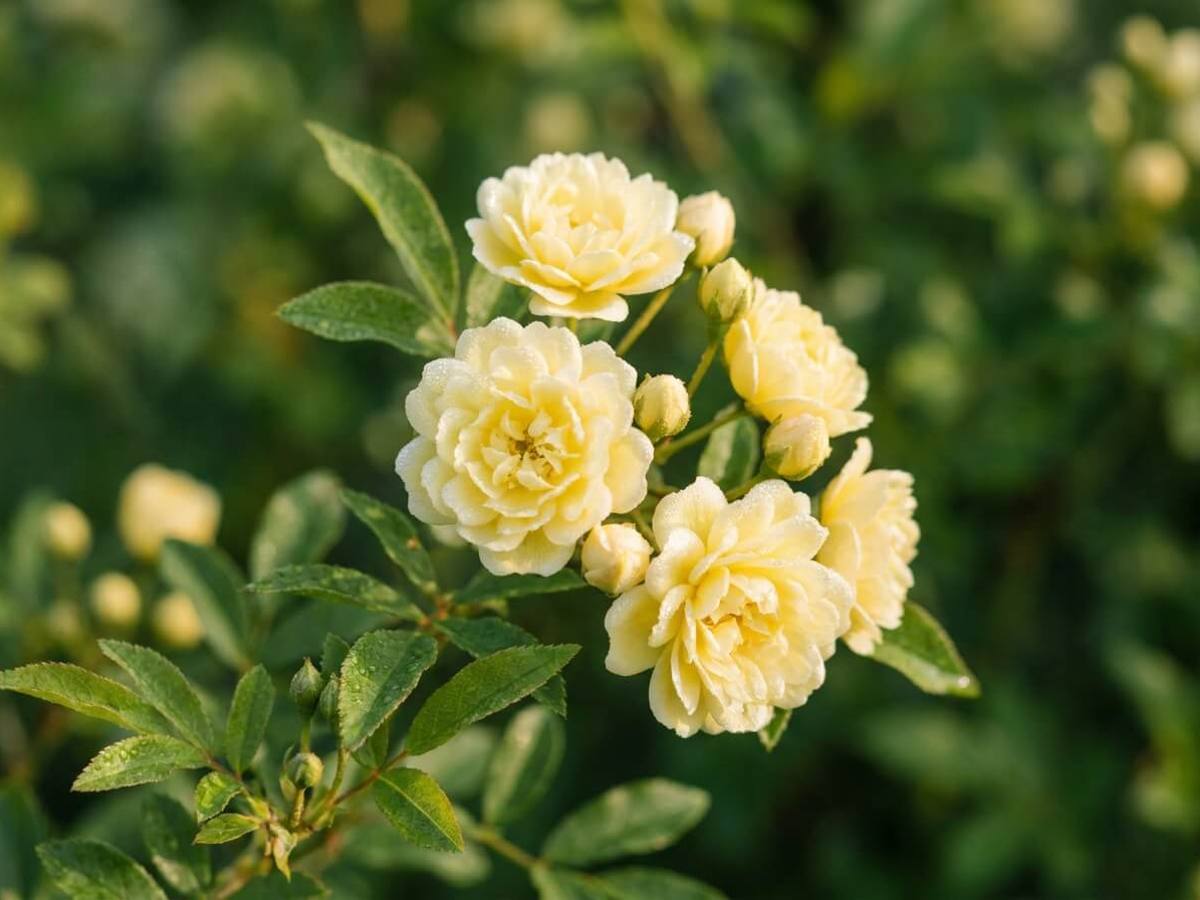
Rosa banksiae growing in a naturalistic garden border
Care through the seasons
Spring: Flowering begins on short spurs carried on two- and three-year-old wood, so simply enjoy the display and resist the secateurs. Once the last petals drop, usually by late May or early June, carry out any thinning and retie new shoots to their supports. A mulch of compost in early spring helps young plants, though mature specimens rarely need feeding.
Summer: Long whippy shoots appear after flowering; train these horizontally or fan them out, as near-horizontal stems flower far more freely than vertical ones. Water newly planted roses in dry spells, but established plants are notably drought-tolerant. Avoid high-nitrogen feeds, which push soft growth at the expense of flower buds.
Autumn: Check and renew ties before autumn gales, since the sheer weight of growth can tear a plant away from its wires. Take hardwood cuttings in October or November. Avoid late feeding so that stems harden off properly before the first frosts.
Winter: Growth pauses and foliage may thin in cold spells, but no routine winter pruning is required. In colder gardens, mulch the base with 8 cm of bark or leaf mould to insulate the roots.
Best varieties to grow
All forms are vigorous, but they differ markedly in flower colour and scent.
Rosa banksiae ‘Lutea’ — the most widely grown and the hardiest, with fully double butter-yellow rosettes and almost no scent; holds an RHS Award of Garden Merit.
Rosa banksiae var. banksiae ‘Alba Plena’ — the original double white introduction, carrying a distinct scent of violets.
Rosa banksiae var. normalis — the single white wild form, the most powerfully fragrant of all and the most vigorous.
Rosa banksiae ‘Lutescens’ — single pale-yellow flowers with a sweet fragrance, a good choice where the double yellow’s lack of scent disappoints.
Pests, diseases and common problems
Aphids: Clusters on soft new shoot tips in spring cause distortion and sticky honeydew. Dislodge with a jet of water and encourage ladybirds and hoverflies; infestations rarely last once predators arrive.
Scale insects: Brown limpet-like bumps on older stems, common on wall-trained plants in mild areas. Thin congested growth to improve airflow and brush affected stems with a soft brush and soapy water in late winter.
Frost-damaged flower buds: Because flowering starts so early, a sharp late frost can brown the buds and ruin the display. Site the plant against a warm wall and avoid frost pockets; the plant itself recovers without harm.
🌿 Nature & Garden Newsletter
Gardening tips, recipes & seasonal advice, twice a week.