
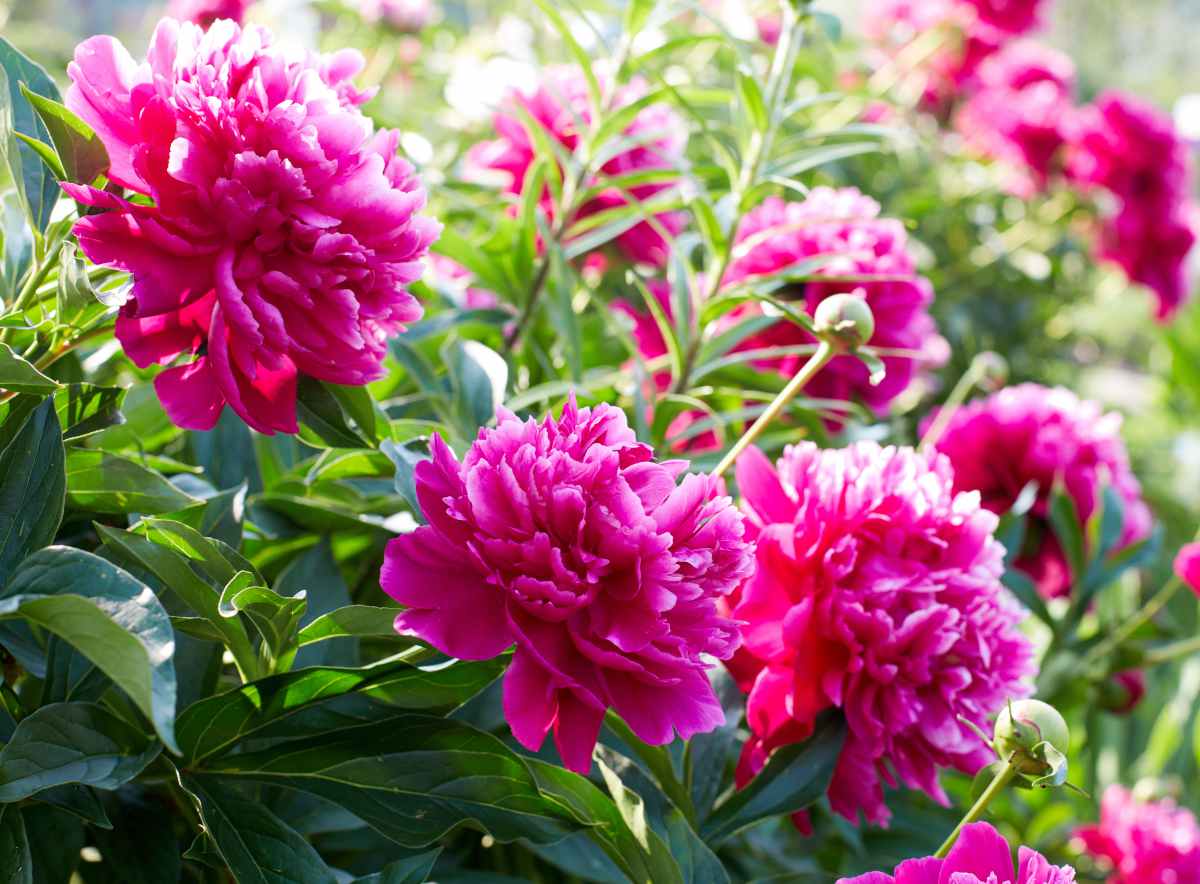
Each bloom stands out as an absolutely ravishing solitary round ball, sometimes fragrant, on a perennial that may be herbaceous or shrubby. Peonies earn their place in flower beds, along hedges and in the vase, where they hold for a very long time — give them a well-lit spot that isn’t too hot and the blooming is generous.
| Name | Paeonia |
|---|---|
| Family | Paeoniaceae |
| Type | perennial |
| Height | 1 ½ to 6 ½ ft (50 to 200 cm) |
| Exposure | full sun, part sun |
| Soil | rich and moist |
| Foliage | deciduous |
| Flowering | spring → summer |
The blooming depends heavily on how well it is cared for. From spring to winter and from planting to the removing of wilted flowers, here is all the advice needed to grow them.
It is recommended to plant your peonies in fall spacing them 30 to 40 inches (80 to 100 cm) apart.
If you have purchased your peonies in containers, you can wait until spring to plant them, once freezing is over and before the heat sets in. Provide for regular watering over the first year.
To enhance flower-bearing, add organic soil conditioner such as manure and seaweed.
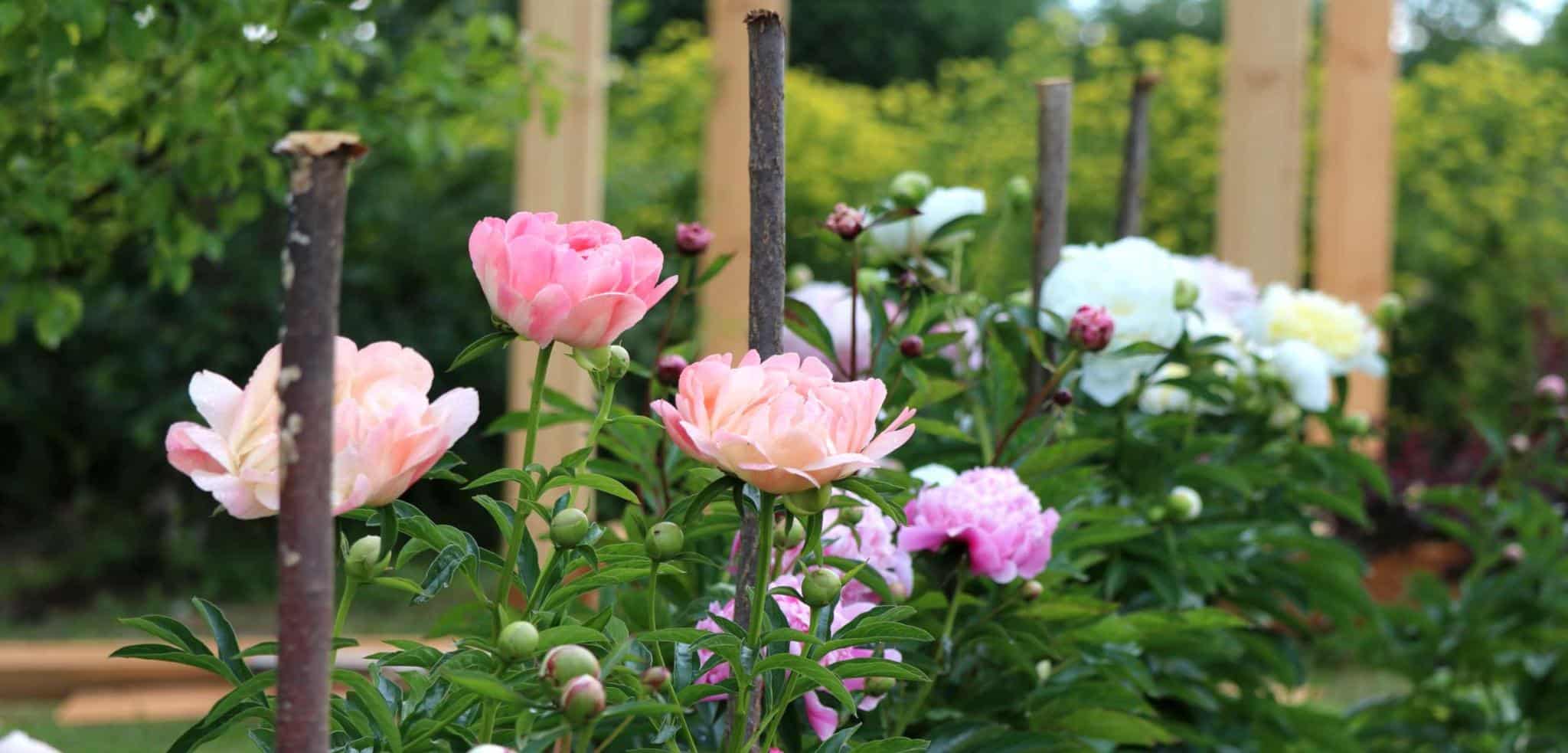
Peony propagation is best done through root division in fall or at the beginning of spring.
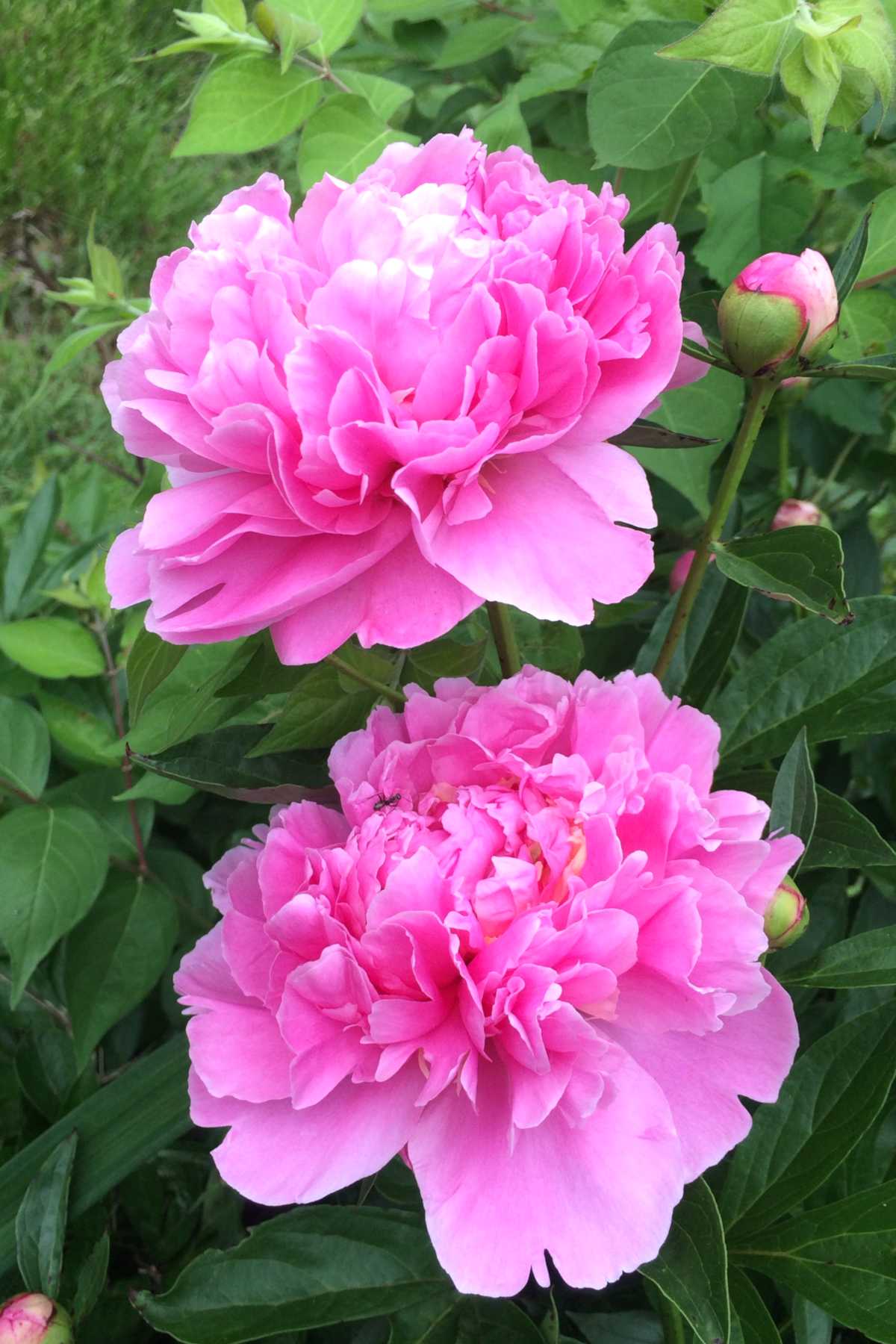
Pruning peonies, in their herbaceous or their tree form is not a necessity, but experts share that it boosts flower-bearing dramatically!
To stimulate budding of new flowers, remove wilted flowers regularly (deadheading).
Prune delicately in fall or at the end of winter, removing any dead wood and the more fragile branches.
Herbaceous peonies die away naturally when the cold spells start, and reappear in the following spring.
Do not remove leaves before they have died off, because peonies need them to stock up on nutrients for the next season’s blooming period.
Peonies love having lots of water!
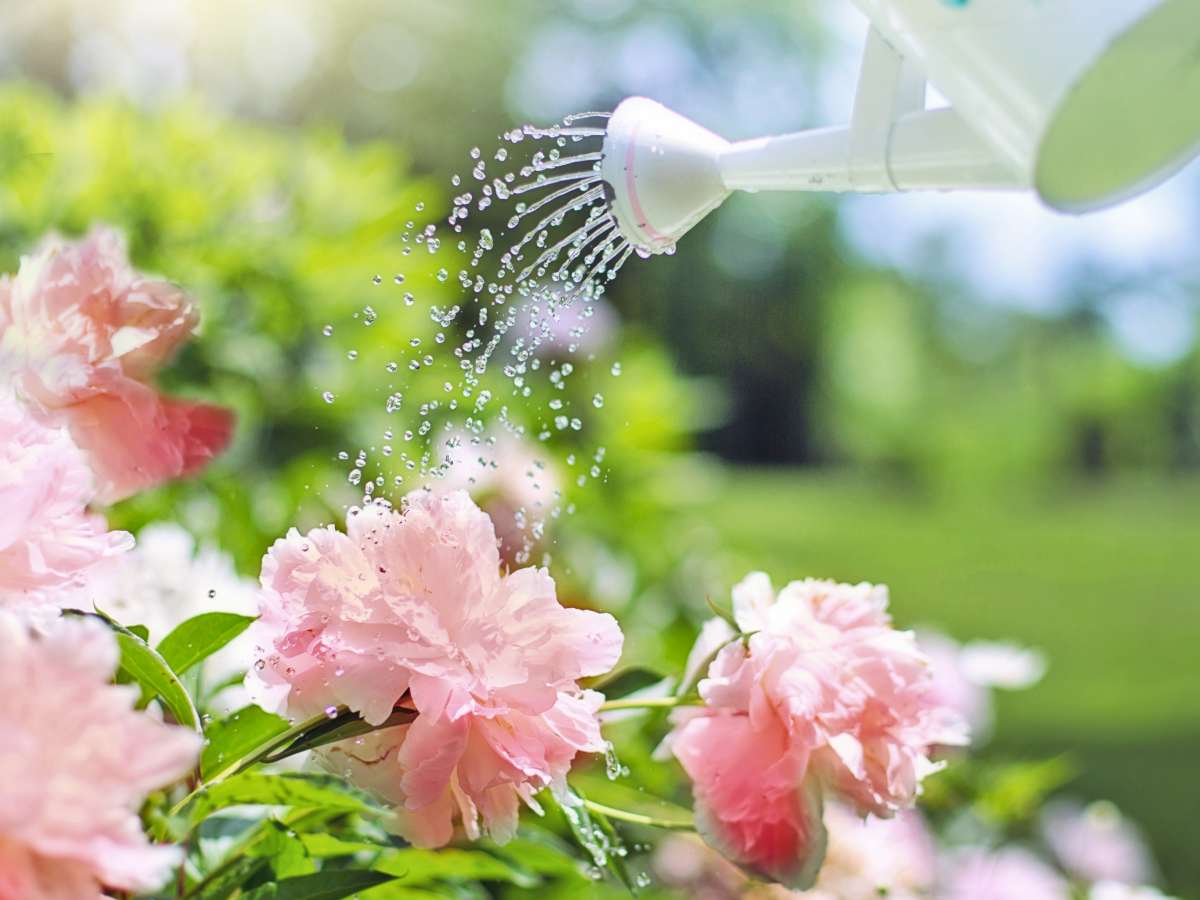
This will lead to lush growth and abundant blooming.
It’s best to use rainwater if you can collect it, and to water in the evening or early morning to limit losses due to evaporation.
Try not to get the foliage or flowers wet, because in hot weather the plant will get covered in powdery mildew if you do so.
As a cut flower in a vase, your peony will last quite a long time, but remember to top up the vase every day – it will drink it empty in no time!
Peony blooming depends heavily on doing the right job at the right moment. Here is how the main tasks fall across the seasons.
| Task | When | Why it matters |
|---|---|---|
| Planting, spaced 30 to 40 inches apart | Fall | Gives you the bloom in the following spring |
| Planting container-grown peonies | Spring, once freezing is over and before the heat | Needs regular watering over the first year |
| Propagating by root division | Fall or the beginning of spring | Repeated every 3 to 5 years for renewed vigour |
| Deadheading wilted flowers | Throughout the flowering period | Stimulates the budding of new flowers |
| Pruning tree peony | Fall or the end of winter | Removes dead wood and the more fragile branches |
| Clearing herbaceous foliage | End of fall or beginning of winter | Leaves must die off first to feed next season’s bloom |
Keep to this rhythm and the blooming will be generous, since it depends heavily on how well the plant is cared for.
– Verticillium wilt – peonies wilt and die.
– Thrips (tiny winged insects) and nematodes (worms) are aggressive pests.
– ‘Alba Plena’ – white, double flowers.
– ‘Rosea Plena’ – pink, double flowers.
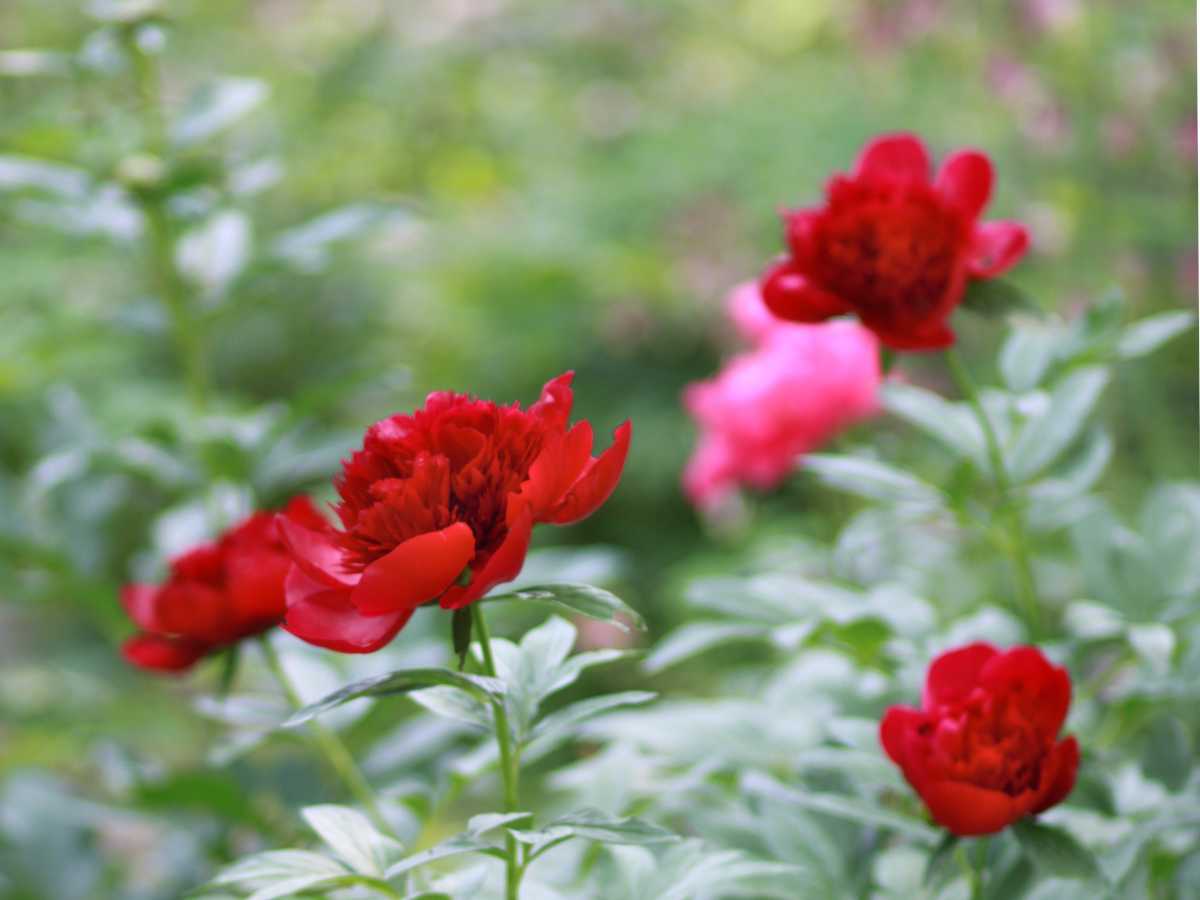
– ‘Crimson Globe’ – red flowers.
– ‘James Crawford Weguelin’ – large, carmine red flowers.
Peonies differ far more than their catalogue photos suggest, chiefly in habit, flower form and fragrance. The selection below gathers widely sold cultivars, several of them holding the RHS Award of Garden Merit, to help you match a plant to your bed or your vase.
| Variety | Type | Flower colour & form | Height | Scent |
|---|---|---|---|---|
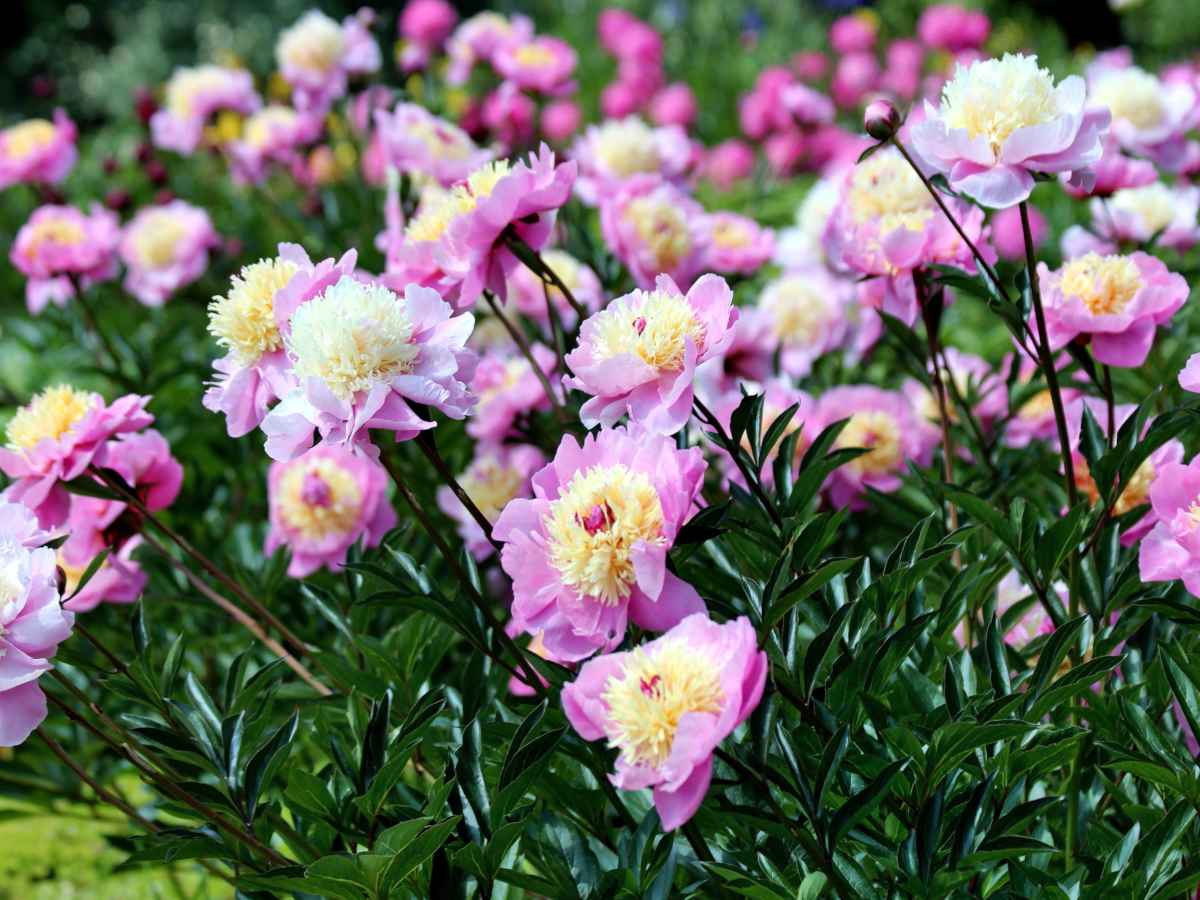
| ‘Bowl of Beauty’ | Herbaceous | Pink with cream centre, anemone | 3 ft (90 cm) | Light |
| ‘Festiva Maxima’ | Herbaceous | White flecked crimson, double | 3 ft (90 cm) | Strong |
| ‘Duchesse de Nemours’ | Herbaceous | White with cream centre, double | 2 ½ ft (80 cm) | Strong, lily-like |
| ‘Rubra Plena’ | Herbaceous | Deep red, double | 2 ½ ft (75 cm) | Faint |
| ‘Coral Charm’ | Herbaceous | Coral fading to peach, semi-double | 3 ft (90 cm) | Light |
| ‘Sarah Bernhardt’ | Herbaceous | Soft pink, fully double | 3 ft (90 cm) | Strong, sweet |
| ‘Karl Rosenfield’ | Herbaceous | Deep crimson, double | 3 ft (90 cm) | Light |
| ‘Bartzella’ | Intersectional | Lemon yellow, semi-double | 2 ½ ft (75 cm) | Light, citrus |
This perennial is herbaceous or shrubby, and its blooming period is generous and lasts for all of spring.
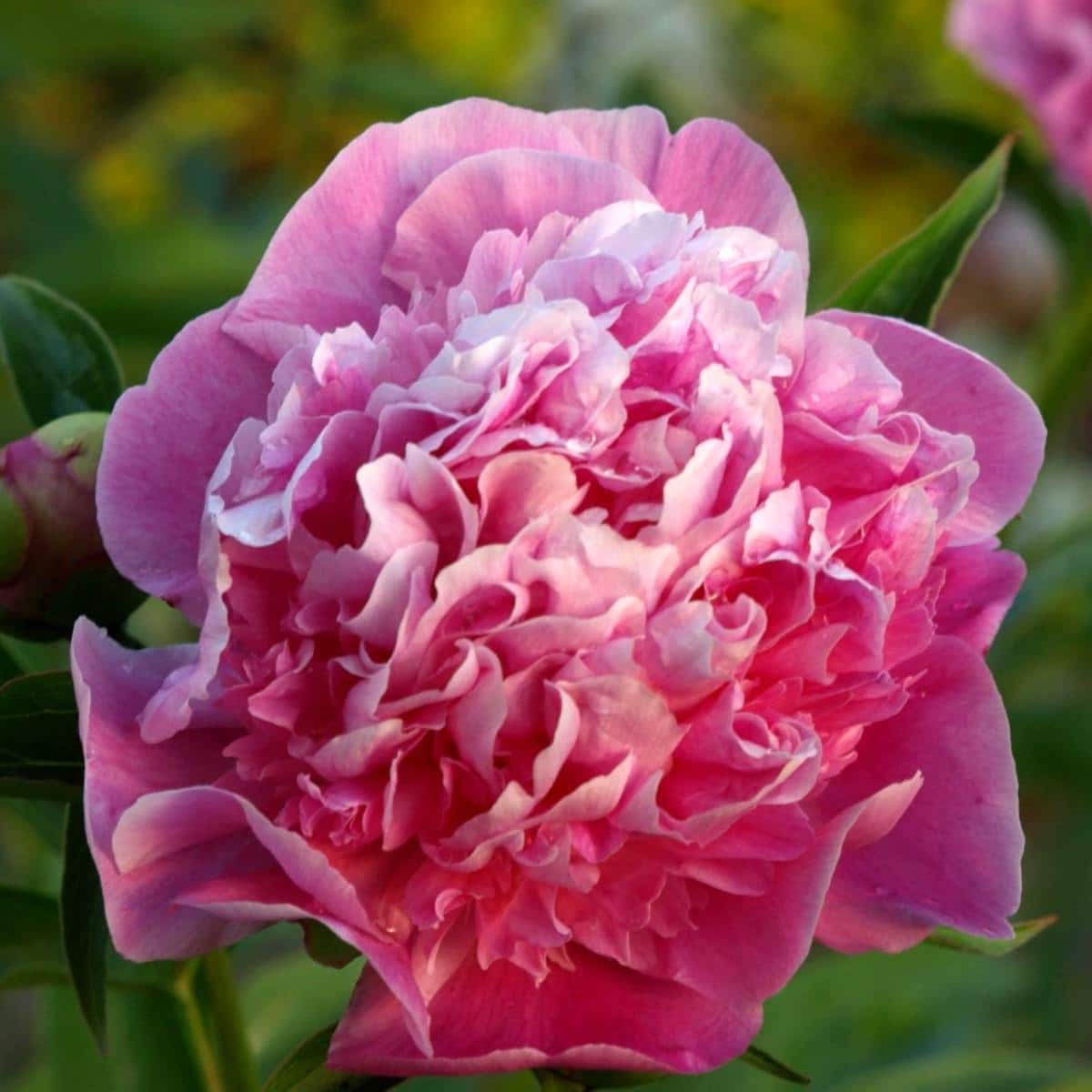
Their flowers may be fragrant, and stand out forming an absolutely ravishing solitary round ball.
Peonies are most commonly planted in perennial flower and shrub beds, along hedges or in secluded parts of the garden.
You can cut a peony flower and put it in a vase, it will hold for a very long time!
Peonies are rather fragile. If they are to be moved at all, handle them with utmost care.
I need to see more, a comprehensive pictorial with description on diseases and their treatment.