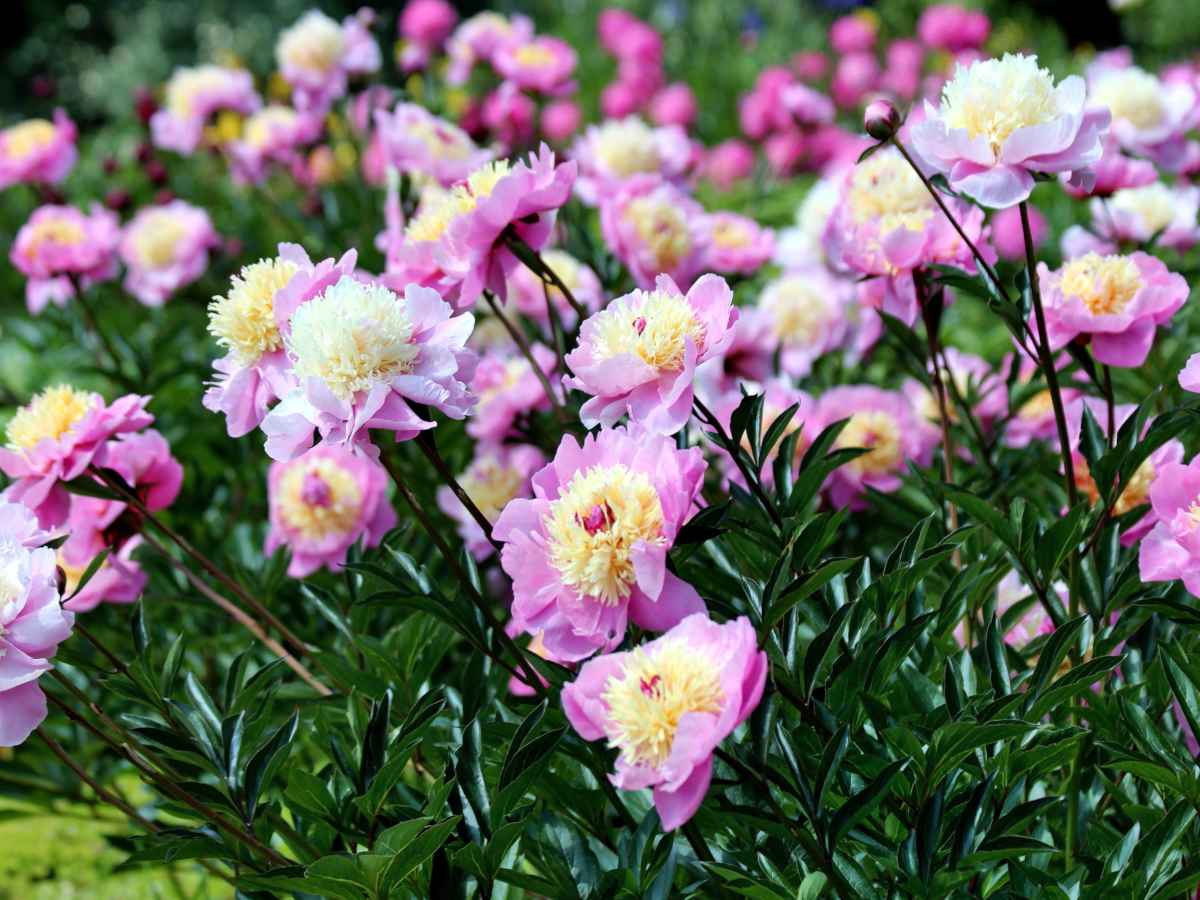
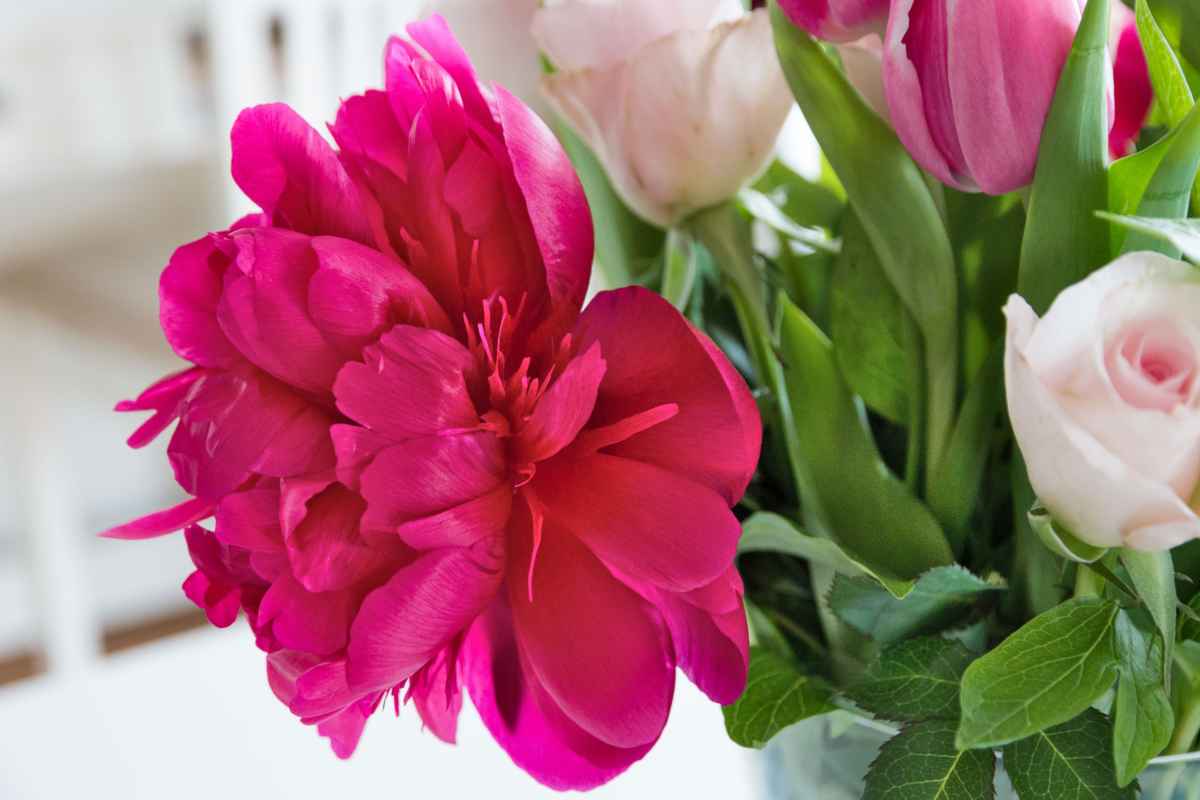
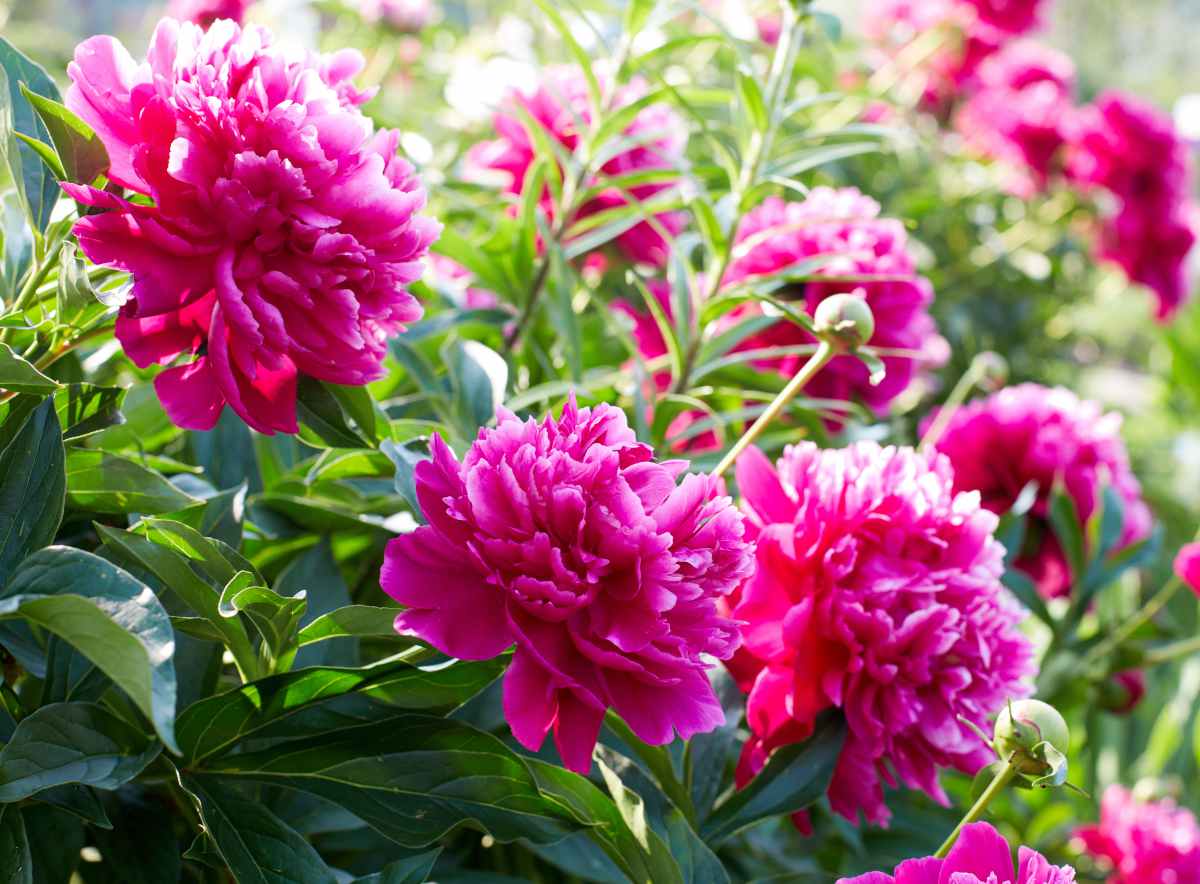
Round heads woven from countless petals sway at the tip of slender stalks, in pastel shades or in bolder fuchsia, carmine red and violet purple. The herbaceous peony dies back to its roots each winter and is a florist’s favourite for bouquets; give it neutral soil, sun and shelter from wind, and every year brings more flowers.
Queen of flowers in China, the peony was introduced to Europe in the 1800s. The Chinese emperor of the time sent a collection of the flowers to Napoleon Bonaparte’s wife Joséphine, and it became the instant must-have flower!
Today, thanks to two centuries of hybridization, a great many shapes and colors are available, especially for herbaceous peony varieties.
Swaying at the tip of their slender stalks, Chinese peonies charm us with their round heads woven from countless petals.
Round heads woven from countless petals on slender stalks
This oriental beauty symbolizes Love in its native country and seduces romantic souls to this today…
And it is a favorite of florists, too, because it’s perfect for bouquets!
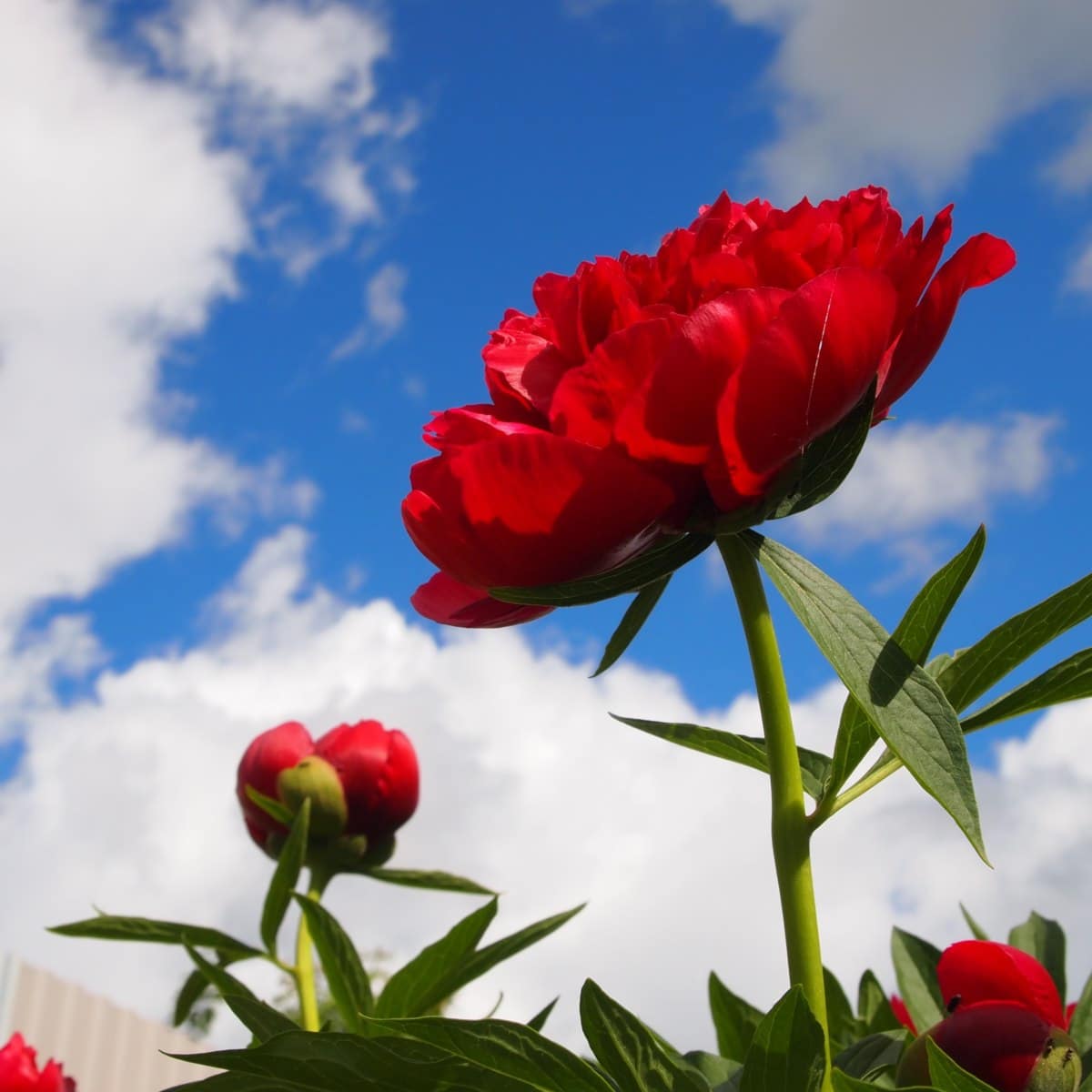
Initial light pastel hues grew bolder over the years and now include many colors, some even quite stark, like fuchsia or carmine red, even violet purple.
Flowers can be:
simple (one or two rows of petals),
Japanese or anemone blooms (still more petal rows, stamens still visible),
globular type (petals only with no trace of the stamens),
and even bomb double type (petals only, with longer petals in the center presenting a spherical flower shape).
Some herbaceous peony varieties are scented, like these:
‘Festiva Maxima’ which has white petals mottled with red spots,
‘Dr Alexander Flemming’ hosting bright pink flowers,
‘Bartzella’ has a lemony scent,
and the ‘Duchesse de Nemours’ which bears beautiful white pom poms!
The six peony flower forms compared
Two centuries of hybridisation have produced a whole range of flower shapes, from a single ring of petals to a tight petal ball. The quickest way to tell them apart is to look for the stamens.
The six peony flower forms compared
Flower form
Petal arrangement
Stamens visible
Simple
One or two rows of petals
Yes
Japanese or anemone
Still more petal rows
Yes, still visible
Semi-double
Multiple petal rows
Yes
Double
Numerous petals
No, hidden by the petals
Globular
Petals only
No trace of them
Bomb double
Petals only, longer ones in the centre
No
Whichever form you choose, the same neutral soil, sun and shelter from wind apply.
Caring for peonies well
Neutral soil, full sun and shelter from wind
Herbaceous peonies like neutral soil, good exposure to the sun, and protection from drafts and wind. Usually, depending on the species, they bloom from mid-spring to early summer.
Often purchased in nursing pots, they are preferably planted at the end of spring in a wide hole, with a handful of soil-enriching compost.
You can also add them to your vegetable patch: they like it when the soil is soft and well-tilled, and are great companion flowers for vegetables, herbs and spices.
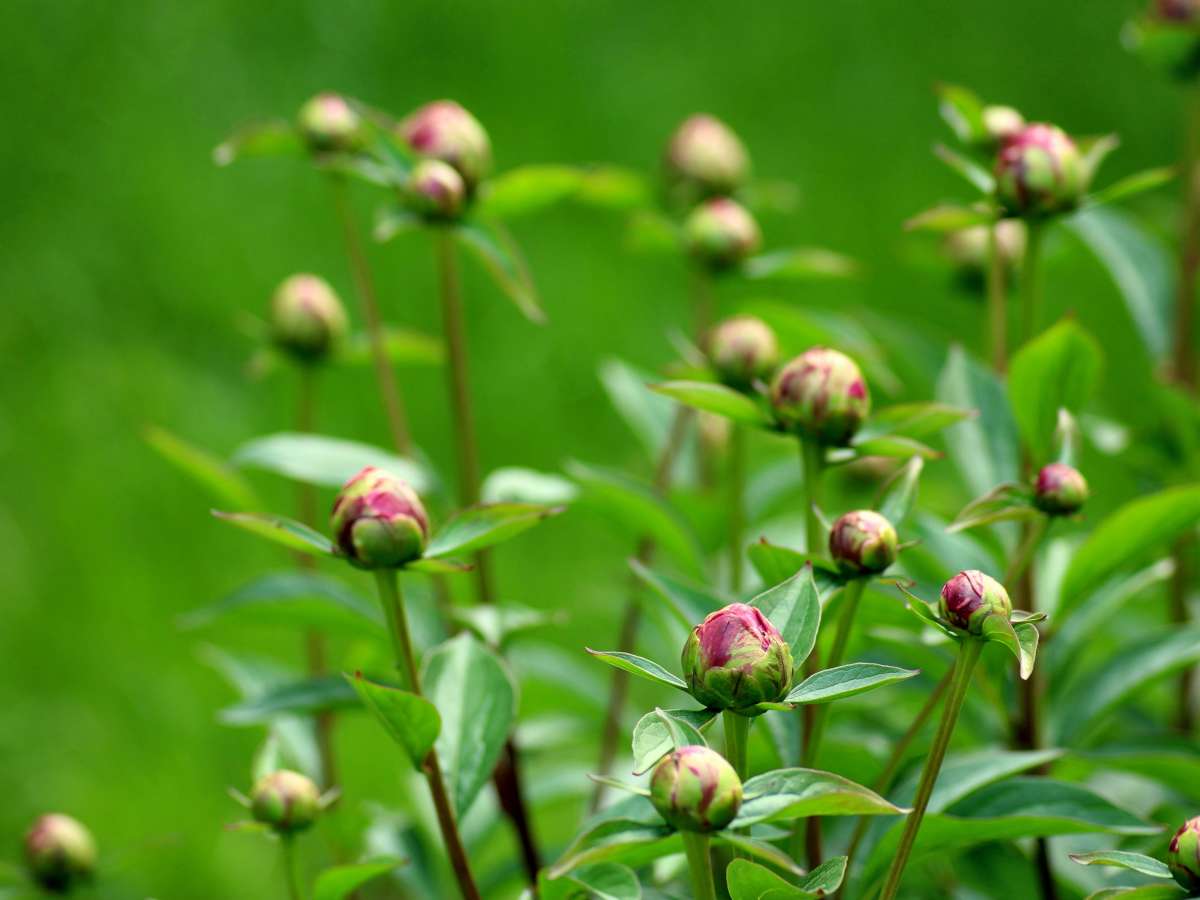
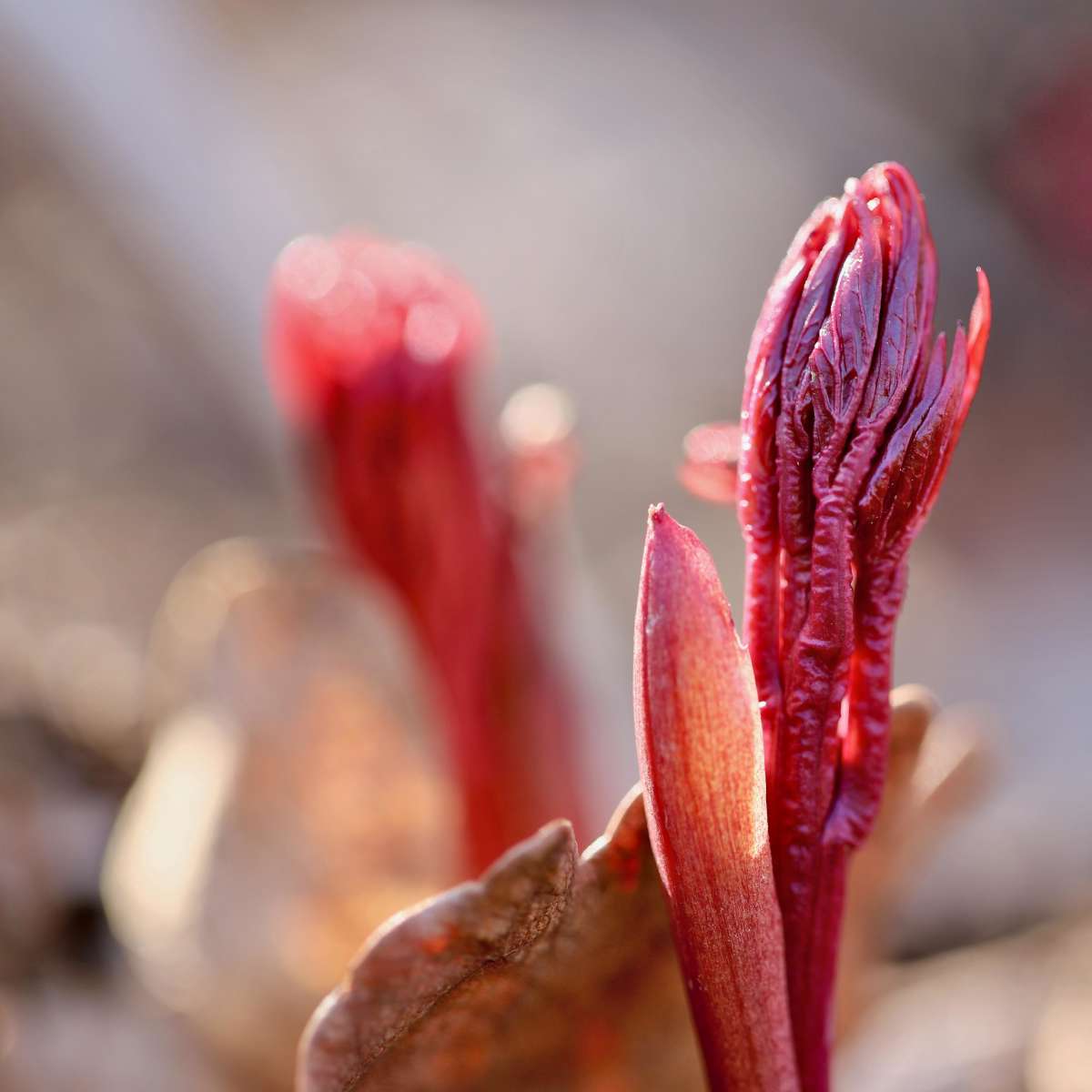
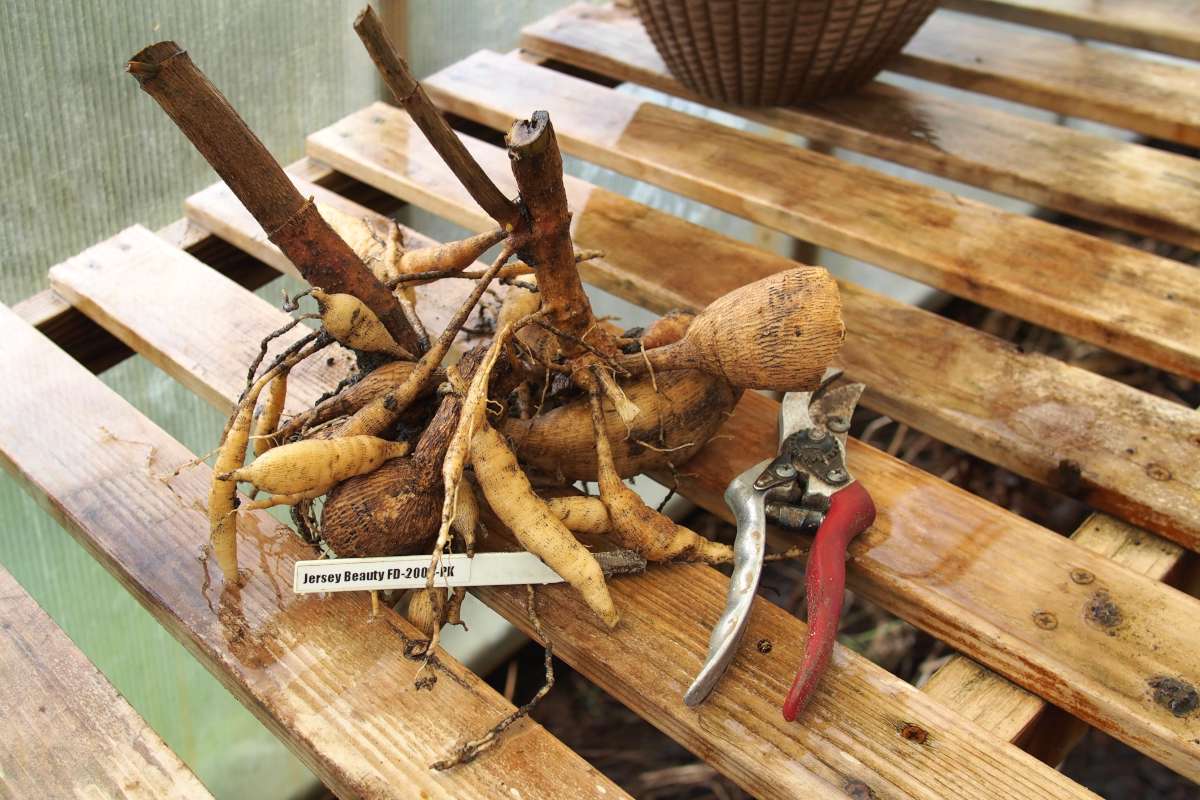
Stems die back in winter and regrow from the roots
Water over the first summer, and then refrain from water, except in cases of drought: peonies are vulnerable to excess moisture. Add fertilizer (manure, compost or powdered bones) at the beginning of fall and in spring after the blooming phase.
If your peonies don’t bloom during the first year, wait it out.
They may need time to start blooming, but once they have started, each following year will see more and more flowers appear…
Written by Gaspard Lorthiois | Loves helping out, especially when it comes to growing things. Worked in herbal medicine, runs a farm, and dabbles in tech. Master's degree and engineer.