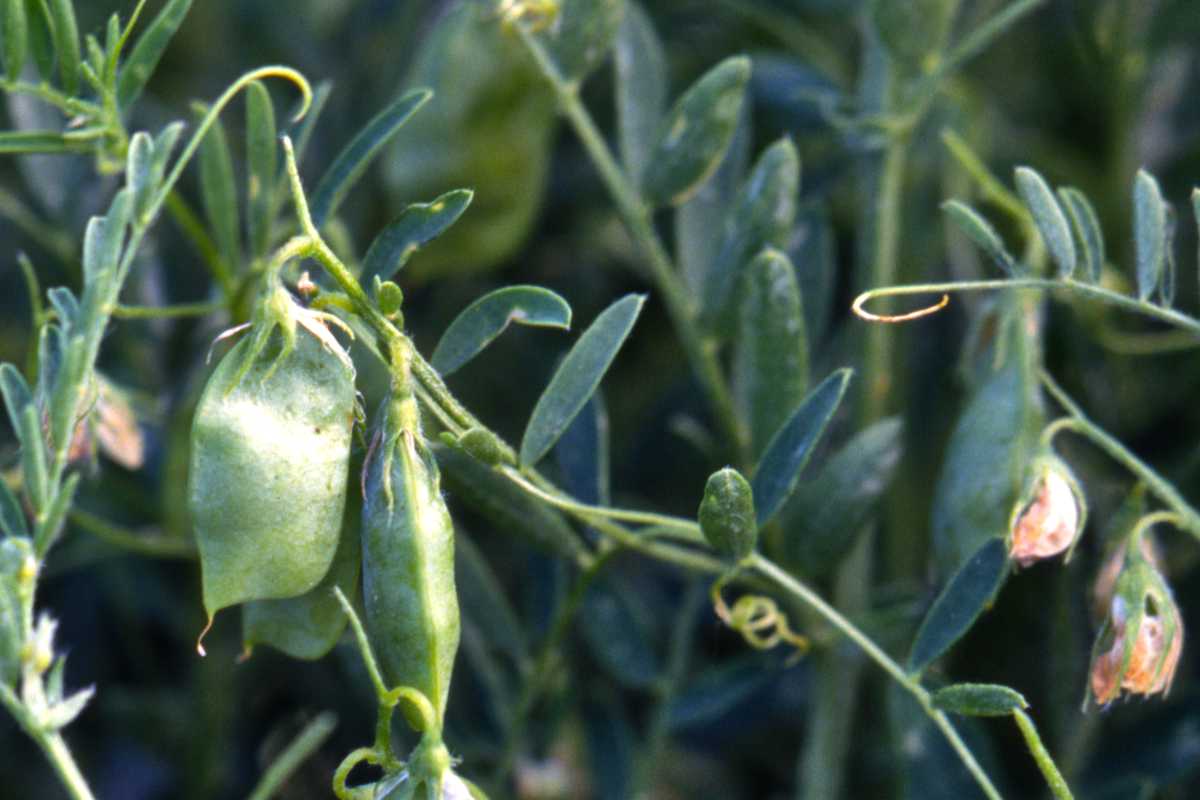
A slender annual of 16 to 20 inches (40 to 50 cm), the lentil (Lens culinaris) belongs to the same family as broad beans, beans and peas, and is grown for dried seeds valued for their proteins, fibres and minerals. It asks only for full sun, light or even sandy soil and regular hoeing, and repays that with a July harvest.
| Name | Lens esculenta or culinaris |
|---|---|
| Family | Fabaceae |
| Type | Annual |
| Height | 16 to 20 inches (40 to 50 cm) |
| Exposure | Full sun |
| Soil | Light, or even sandy |
| Harvest | July, before it has matured completely |
Read also:
Green, red and even pink lentil, there are a great number of lentil varieties but they all share the same growing steps. These are similar to other plants of the bean family.
If you wish to grow a AOC-label variety, opt for the ‘Verte du Puy’ lentil. For Red Label varieties, go for the ‘Berry’ or the ‘Blonde de Saint Flour’ varieties.
Lentil sowing season
Lentil is sown in the plot directly in seed holes in spring and is harvested in summer.
Sprouting is quite swift, since it takes place about 10 days after sowing.
Spacing lentil seeds
This depends on the lentil variety.
The lentil is part of the same family as broad beans, beans and peas.
All lentils are grown in exactly the same way, so the choice comes down to seed colour, size and how the lentil behaves in the pan. Here are the varieties most often found in seed catalogues and on the shelf.
| Variety | Seed colour | Seed size | Holds shape when cooked | Kitchen use |
|---|---|---|---|---|
| Verte du Puy | Dark green, blue-marbled | Small | Very well | Salads, warm side dishes |
| Beluga | Glossy black | Very small | Very well | Salads, garnishes |
| Pardina | Brown | Small | Fairly well | Stews, braises |
| Laird | Green | Large | Moderately | Soups, general cooking |
From sowing to the drying rack, lentil asks for very little, but each stage has its own moment. Here is what happens when, and what you have to do about it.
| Stage | When | What to do | Why it matters |
|---|---|---|---|
| Sowing | Spring, in seed holes | Space the seed holes 14 inches (35 cm) apart on all sides | Full sun and light, even sandy soil suit it best |
| Sprouting | About 10 days after sowing | Run the hoe along between the rows | Lentil loathes weeds and hoeing is the one compulsory task |
| Ridging | When plants are 6 to 8 inches (15 to 20 cm) tall | Draw earth up around the stems | Increases the root system and keeps plants upright when heavy with seed |
| Watering | Only during an extended dry spell | Leave the plants dry; no fertilizer, no soil amendment | Excess water gives leaves instead of flowers, so fewer seeds |
| Harvest | Beginning of summer, July | Cut the stems before they are completely mature | Catches the seed neither too ripe nor too young |
| Drying and keeping | Straight after cutting | Hang the stems head down in a dry, ventilated place | The seed finishes ripening and keeps for months in its pods |
Once the harvest is in, pull the plants up and dig them into the earth, since lentil does not grow back the following year.
Lentil is easy to grow and care for, the only compulsory task is to hoe the soil on a regular basis because it loathes weeds.
Lentil sprouts can be ridged when they reach a height of 6 to 8 inches (15 to 20 cm), this will increase their root system and they will stand more upright when heavy with seed.
Lentil doesn’t require fertilizer nor must the soil be amended.
Lentil also doesn’t require regular watering, and in particular only needs water in case of extended dry spell.
Excess water would tend to lead to more leaves growing instead of flowers, so you would have less seeds.
At the end of the harvest, you can pull out the plants and mix them into the earth, because lentil doesn’t grow back from one year to the next.
The average productivity of lentil is about 5½ oz (150 g) per sq. yard (m²). So since we can plant about 10 to 12 specimens to a square yard (1 m²), the average productivity of a single lentil plant is ½ oz (15 g).
One might say that producing lentils requires a great many plants in order to gather a significant harvest!
How can one determine when the right time to harvest lentils is, to ensure that they’re neither too ripe nor too young?
Lentil seeds keep for much longer when they are still in their pods.
It’s thus best to keep them in their pods and collect them only as you need them.
But lentil seeds can still be kept for several months in a dry spot, preferably in an airtight jar such as a mason jar.
Lentil doesn’t need to be stored in the refrigerator.
The main diseases that impact lentil are:
The best treatment against these diseases is to spray Bordeaux mixture preventively and routinely when the weather is warm and moist (for example, after it rains in summer).
As for parasites, you’ll possibly discover aphids and slugs.
Dried lentil seeds are recommended for their proteins, fibers and minerals that they provide.