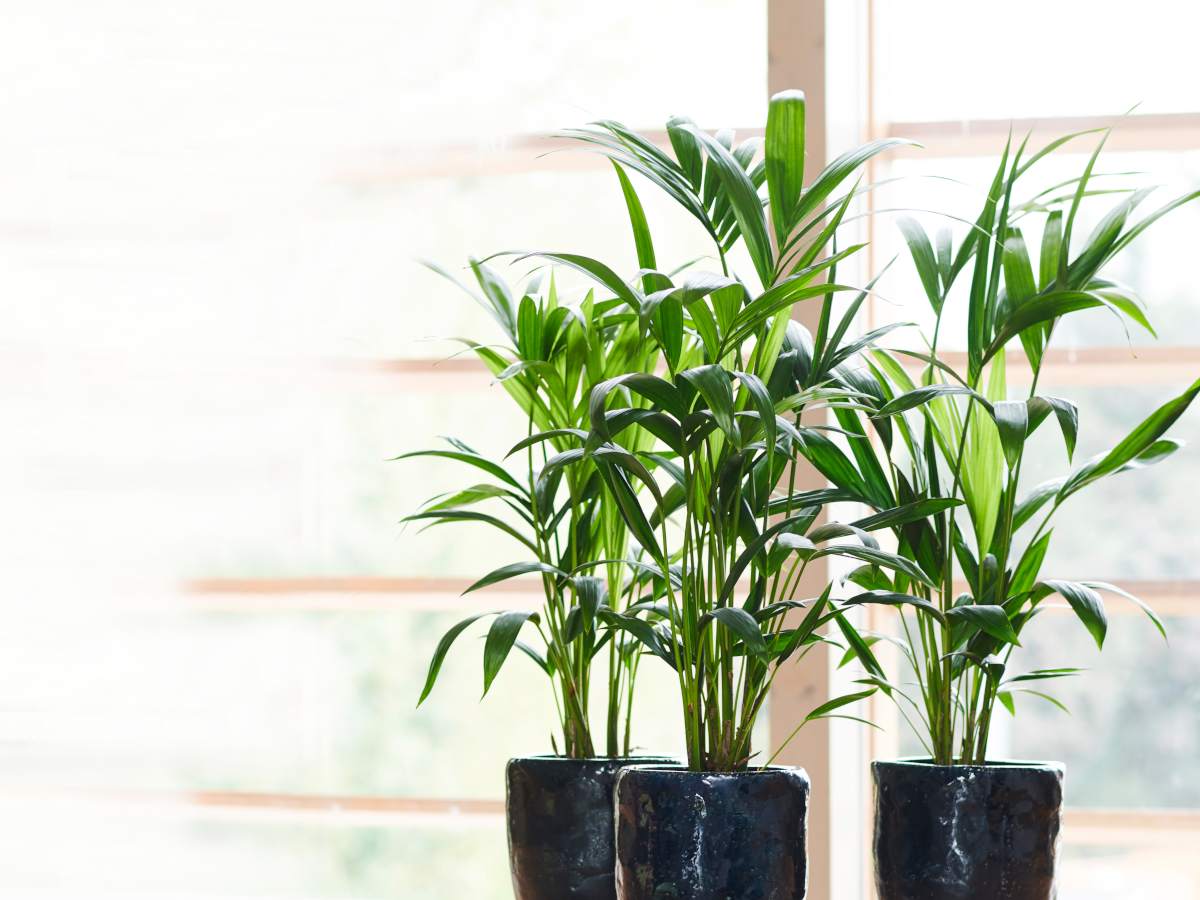
Wide fronds that stay green all year long give the kentia palm (Howea forsteriana) its exotic bearing indoors, where over the years it can reach two or three metres. Raised on a storm-battered island, it forgives missed watering, dim corners and winter heating — give it bright light without direct sun and it stays green.
| Name | Howea forsteriana |
|---|---|
| Family | Arecaceae |
| Type | indoor palm |
| Height | 3 to 6 ½ feet (1 to 2 meters) |
| Exposure | abundant indirect light indoors |
| Foliage | evergreen |
| Care | easy |
| Diseases | red spider mite |
With its wide leaves that stay green all year long, Howea (or kentia palm) is appealing for its its exotic bearing and its hardiness. Indoors, it’s very similar to the more common areca palm.
Whether it lacks water, light, or is subjected to too much heating in winter, this palm tree can survive almost any of its owner’s shortcomings. In its natural habitat, it was brought up to survive in extreme conditions, what with hurricanes, tropical monsoons and droughts and such.
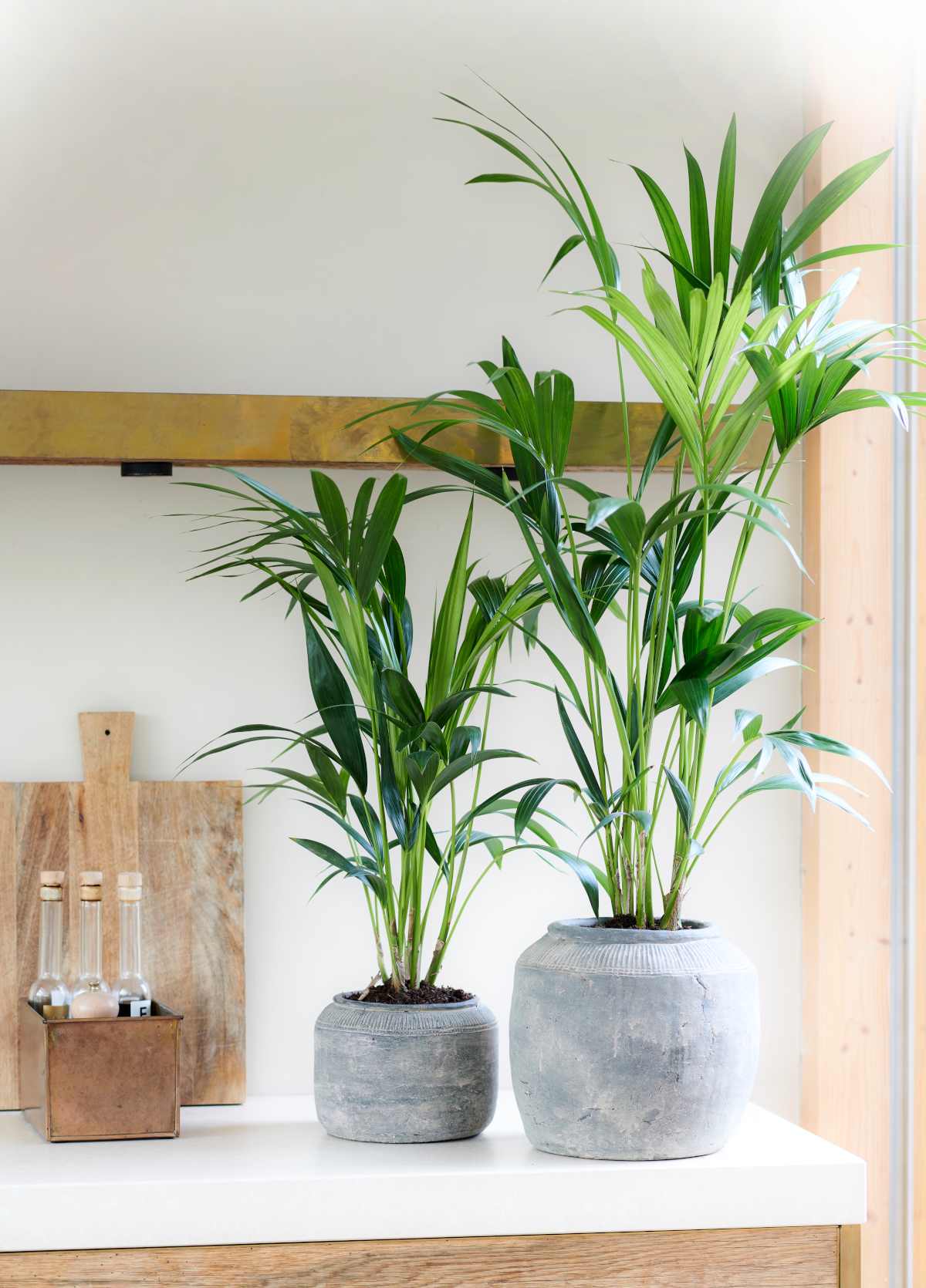
Howea is a palm tree that requires proper planting and repotting to grow well.
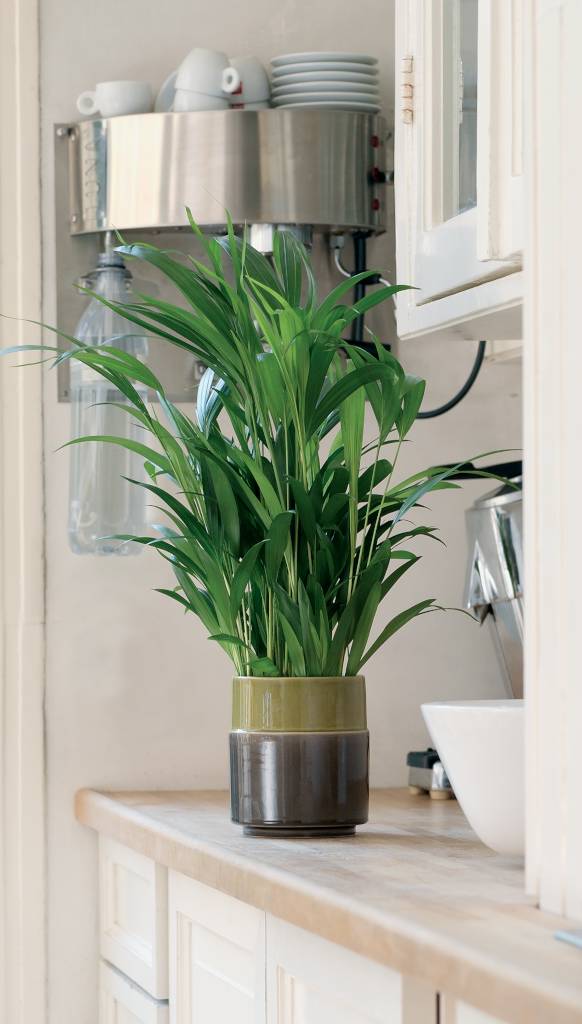
For your palm tree to stay green, place it in a luminous spot without direct sunlight. It can cope with light shade, which makes it well suited to darker rooms. Every week, immerse its trunk in lukewarm water, and drip-dry well. During the rest phase, only water every 10 days.
If the tips of the leaves are dry and turn yellow, it means your howea needs water. If they turn brown, it means it must be moved to another location: either it lacks space or people brush against it too often.
Dust it from time to time with a moist rag, or bring it out under the rain.
Do try and place several specimens near one another, in the living room near the couch for instance, this will create a miniature jungle and you’ll notice your mind wander to exotic places!
The kentia palm asks for very little, but what it does ask for follows a rhythm. Here is what to do, and how often, through the year.
| Task | How often | What to do |
|---|---|---|
| Watering, growing season | Every week | Immerse the trunk in lukewarm water, then drip-dry well |
| Watering, rest phase | Every 10 days | Reduce watering while growth has slowed |
| Repotting | Every two years | Move into well-draining soil mix, in a pot with a drainage hole |
| Topdressing | When the pot is already large | Add fresh soil mix along the surface instead of repotting |
| Cleaning the leaves | From time to time | Wipe with a moist rag, or set the plant out under the rain |
Keep to this rhythm and the fronds stay green from one year to the next.
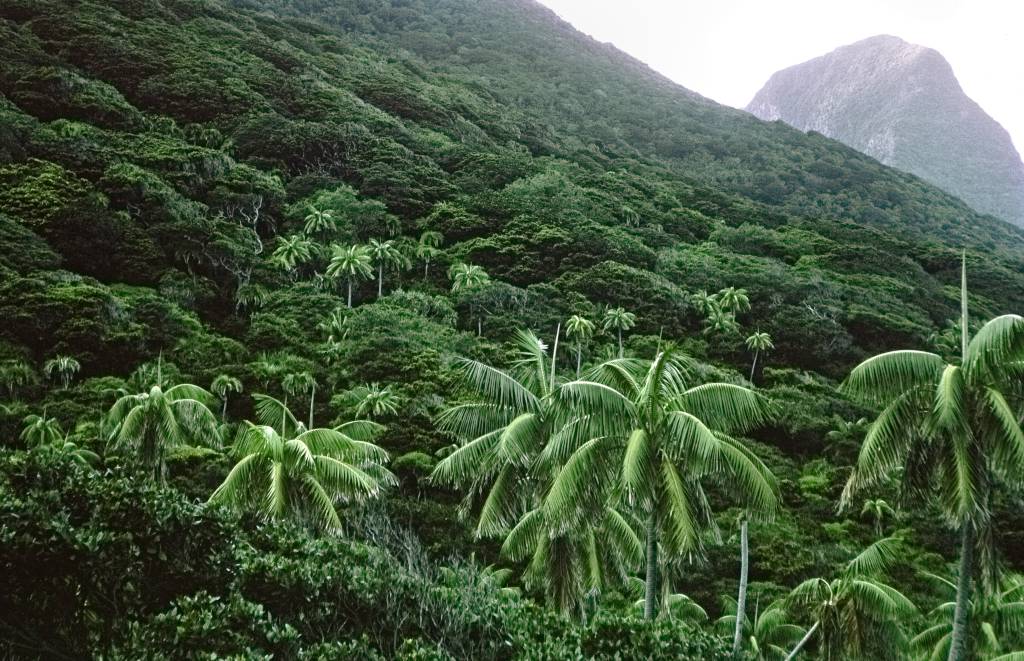
Howea comes from a tiny island called Lord Howe Island, about 400 miles (500 km) East of Australia. Howea has been growing there for two million years, and its bearing is that of a tall palm tree.
This single island comprises its entire natural habitat.
Howea is endemic to that island: it doesn’t grow in the wild anywhere else.
Islands of the area are facing a grave problem: rising sea levels. Because of this, howea is endangered in its native habitat.
Every single indoor Howea is thus a descendant of a tree on that island.
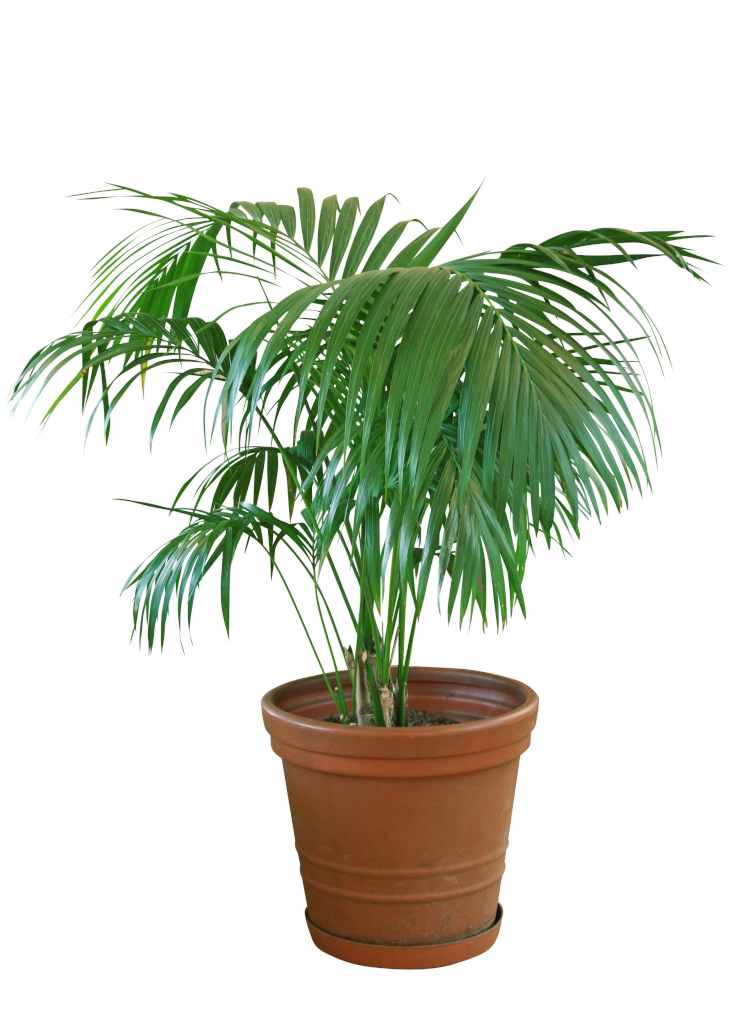
Usually, several young specimens are planted together in a single pot to produce a plant that looks more voluminous.
Since it tends to grow tall, it doesn’t have a large footprint.
If you live where it doesn’t freeze, you can try growing it outdoors. It’s great to line a walkway without blocking out the view too much.