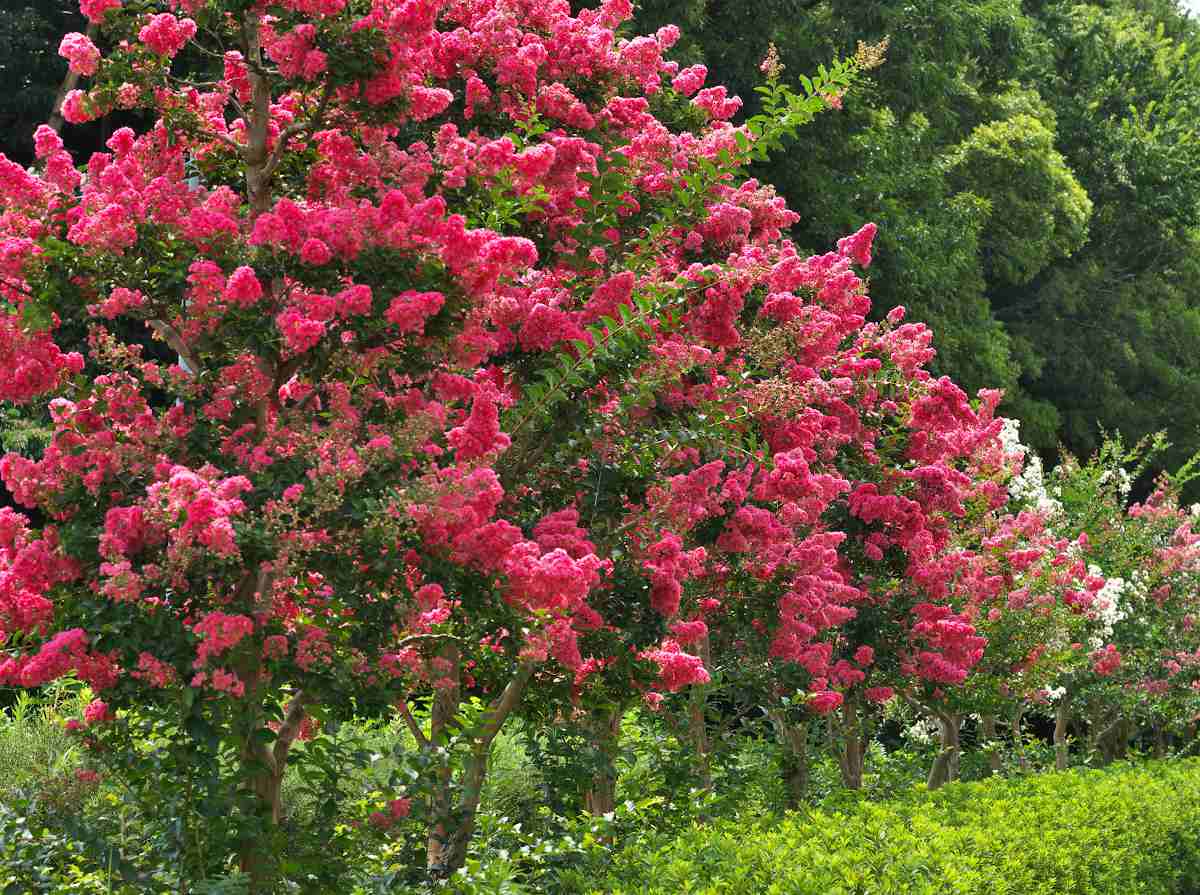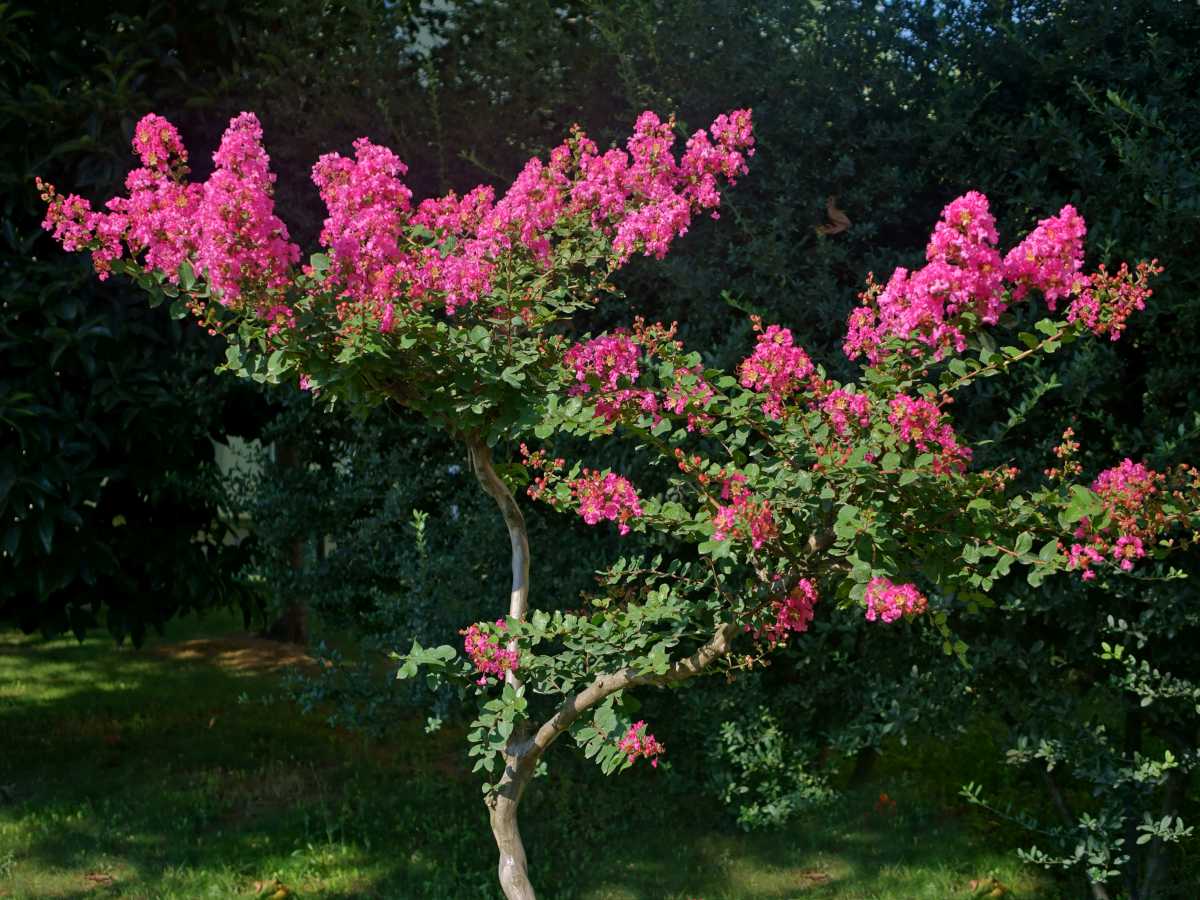
Walk past a crape myrtle in full summer bloom. Something stops you. Panicles of flower — pink, deep red, white, lavender — stacked so densely the foliage almost disappears beneath them. And this is not a brief spring performance. Crape myrtles bloom for up to 120 continuous days, peaking precisely when most other flowering trees have long gone quiet. If a corner of your garden feels flat and underworked right now, this is the tree that properly transforms everything.
Most flowering trees bloom in spring, when cool temperatures and long days trigger a single, brief flush. Crape myrtle is wired differently. Lagerstroemia indica and its hybrids are primed to bloom in response to heat — genuine, sustained summer heat. The season that exhausts most ornamentals is the one that brings crape myrtle fully alive.
Flower panicles — each one a dense, upright cluster stretching 20 to 40 cm long — open progressively from the base up, unfurling its display over weeks rather than days. A single established tree can carry dozens of these panicles simultaneously.
Stand beneath one on a still morning and you will catch the faint honey scent drifting down through the warm air. That is not a metaphor. It genuinely smells of summer.
The heat-lover credentials are real. NC State Extension affirms most Lagerstroemia hybrids as hardy to USDA Zone 6, with improved varieties surviving Zone 5 winters. But their bloom quality is directly tied to summer temperatures. The hotter and sunnier the position, the more flower the tree sets.
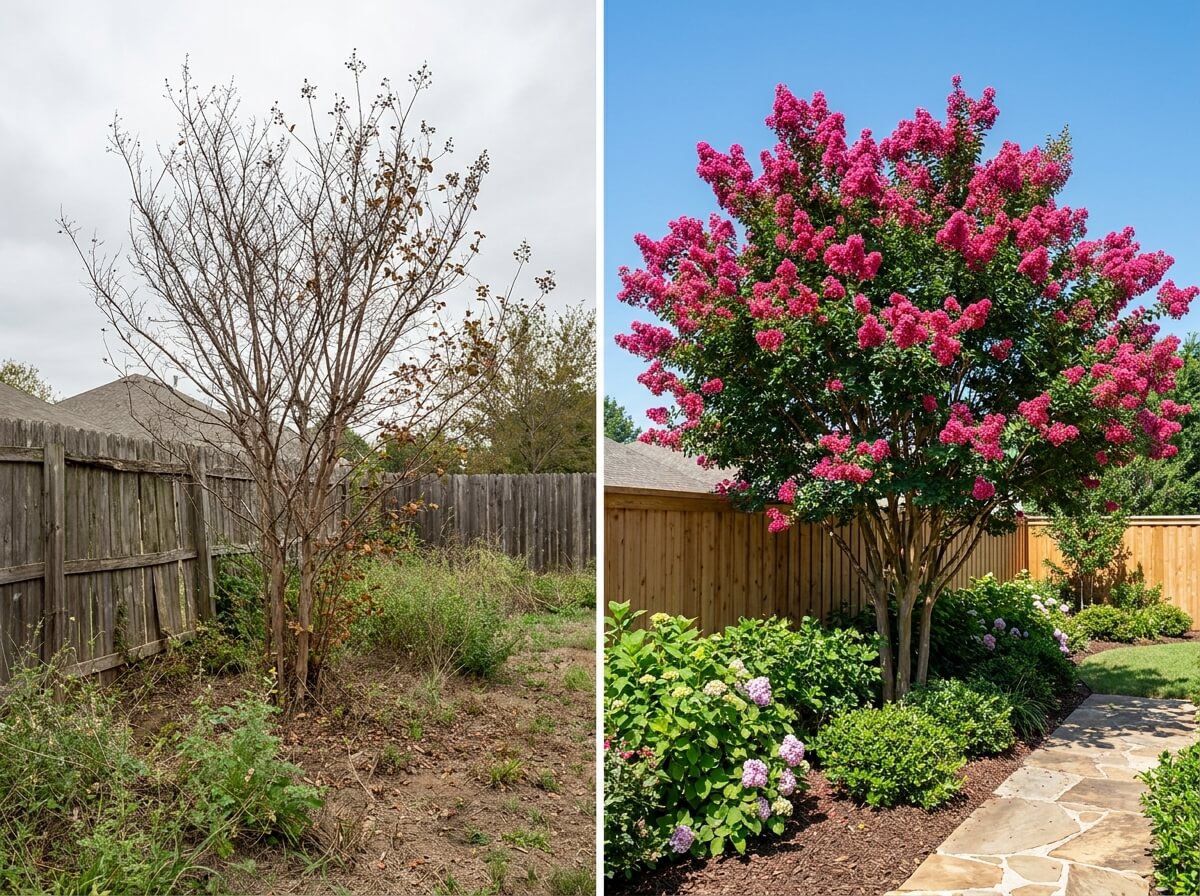
A bare fence line. A dull corner between two walls. A stretch of gravel that has never known colour. Crape myrtle is almost purpose-built for these situations. It unleashes colour at height — 2 to 8 metres, variety depending — while casting only light, dappled shade beneath it.
Compact selections like ‘Dynamite’ (deep crimson, around 3 metres), ‘Natchez’ (pure white, up to 7 metres) and ‘Tuscarora’ (coral pink, mid-sized) each work differently in space. For a small urban garden, ‘Pocomoke’ retains its stature below 1.5 metres. It flowers with the same intensity as its larger relatives. Bang on for smaller spaces.
For a wide, open border that needs anchoring, a multi-stemmed specimen of ‘Natchez’ against a dark fence creates the kind of visual contrast that makes garden designers reach for their cameras. Proper eye candy.
Pair crape myrtle with low ornamental grasses — Pennisetum or Nassella — at the base. The upright flower panicles suddenly have a soft, flowing foreground. Or plant it where the summer evening sun catches it from the west. The backlit panicles glow.
Really glow. It is the kind of effect that makes a garden feel designed rather than just planted.
For anyone interested in other trees that carry serious summer presence, the silk tree (Albizia) is one to remember. Its feathery pink blooms overlap with crape myrtle season. And the two together are a spectacle in a large garden.
Crape myrtle will bloom without any intervention. But with one simple action, you can spark a second — and sometimes third — flush of flowers before summer ends. Sorted.
One thing to avoid absolutely: the brutal summer scalping sometimes called “crape murder” — a practice of cutting main branches back to ugly stubs. It disfigures the tree’s natural shape permanently and undermines next year’s bloom. Yes, it is tempting when a tree feels too large. Do not. A light tip-prune after each flush is all the intervention needed. The RHS confirms that hard pruning is superfluous for healthy specimens and only serves nurseries wishing to shift replacement trees. A dodgy practice, quite frankly.
Crape myrtle needs one thing non-negotiably: full sun. Six hours minimum, eight hours preferred.
In partial shade it sulks, produces sparse flowers, and becomes more susceptible to powdery mildew — the one genuine weakness of the genus. A south-facing wall in the UK significantly boosts what is possible in cooler northern gardens.
For UK gardeners in particular, the silk tree is often grown in similar sunny, sheltered spots — crape myrtle is a superb foil or alternative. And if you are building out a whole summer-colour palette in shrubs and trees, the full category of summer-flowering ornamentals is bountiful. Hibiscus syriacus blooms slightly later in the season and assumes the mantle beautifully as crape myrtle’s third flush fades.
In Australia, South Africa, and the warmer parts of New Zealand, crape myrtles are near-indestructible performers. Plant in well-drained soil, stand back, and let the summer do the rest. Effortless.
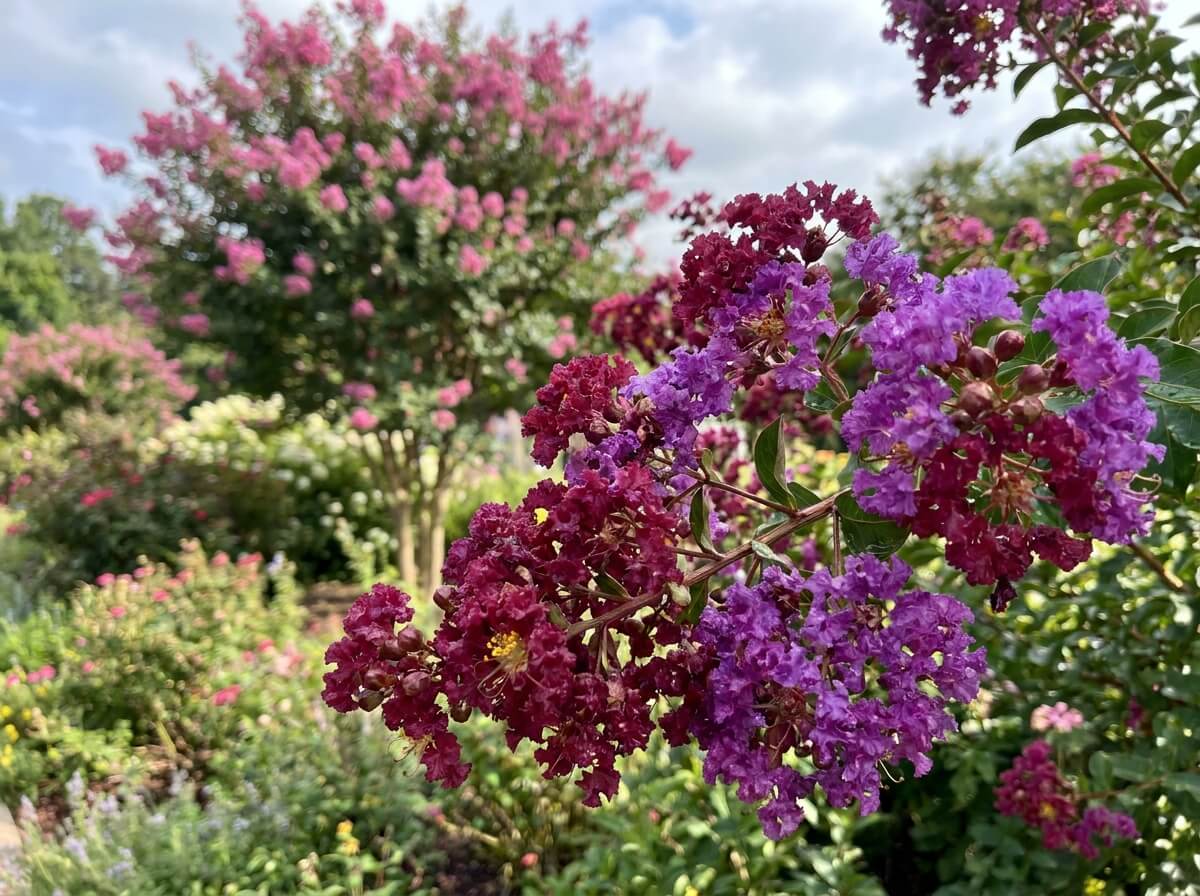
Smart tip: Deadhead each spent panicle immediately. Waiting even two weeks pushes back the next flush by nearly a month. A real nuisance.
Yes, in sheltered, south-facing positions in southern England and coastal areas. Against a warm wall it flowers reliably from midsummer onward. But in colder or shadier spots it rarely hits its stride.
Expect 30 to 60 cm of new growth per year under good conditions. Most compact varieties reach their mature height within 5 to 7 years.
Almost always one of two causes: insufficient sun, or pruning too late in spring into wood that was carrying flower buds. Move it to a sunnier spot, or prune only in late winter before new growth begins.
Identical plant, two spellings — both refer to Lagerstroemia indica and its hybrids. “Crape” is the more common American spelling; “crepe” appears more often in UK and Australian usage.