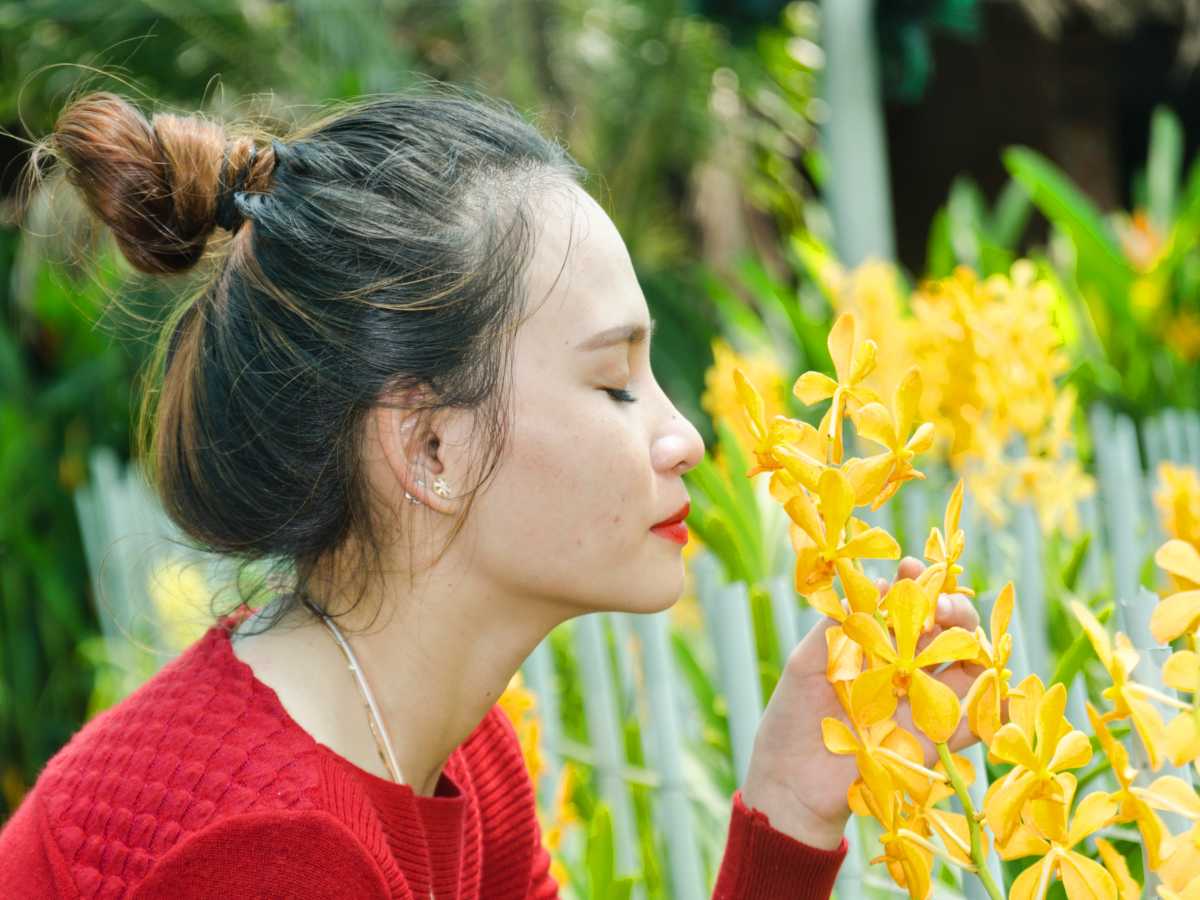
Drooping stems hung with 5-inch red-spotted yellow flowers, waxy starry clusters, blooms smelling of forest underbrush or of Lily-of-the-Nile: a lot of orchid species pair stunning beauty with pleasant scents. Most share one requirement, strong light and a marked difference between night and day temperatures, and meeting it brings heady fragrance right through the house.
Let’s focus on lovely fragrant orchid with our selection of delicious-smelling fragrances.
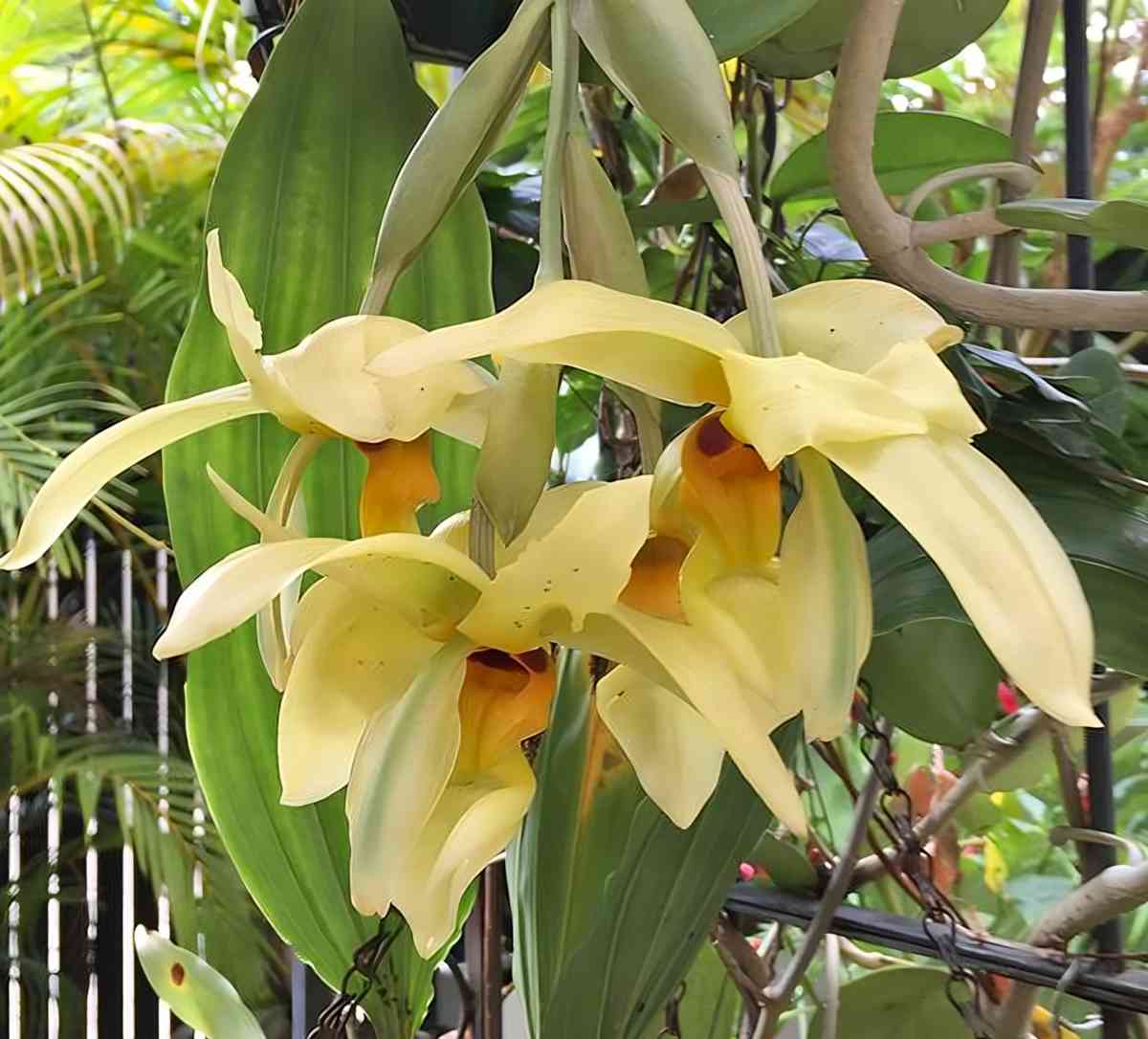
Truly one of a kind, Stanhopea wardii is an orchid with a long, drooping flower stem. The best way to grow it is to hang it in an open, well-ventilated basket.
In summer, large 5-inch flowers (12 cm) appear, displaying reversed red-spotted yellow petals and sepals. From them, a heady, fabulous scent wafts out.
The blooming is particularly abundant when you can guarantee a 15°F (10°C) variation in temperature between night and day.
Grow Stanhopea wardii in a slatted wooden basket or open mesh lined with sphagnum, because the flower spike burrows downwards and has to exit through the base.
From among the most fragrant orchids, the ‘Sweet Memory’ stands out with a thick, star-shaped flower that releases its fragrance when it gets hot. This species also boasts another unique trait: leaves are very wide, and a fresh, bright green color.
Do not cut the spike back once the last flower drops, because Phalaenopsis ‘Sweet Memory’ opens fresh buds from the same elongating stem over a long spell.
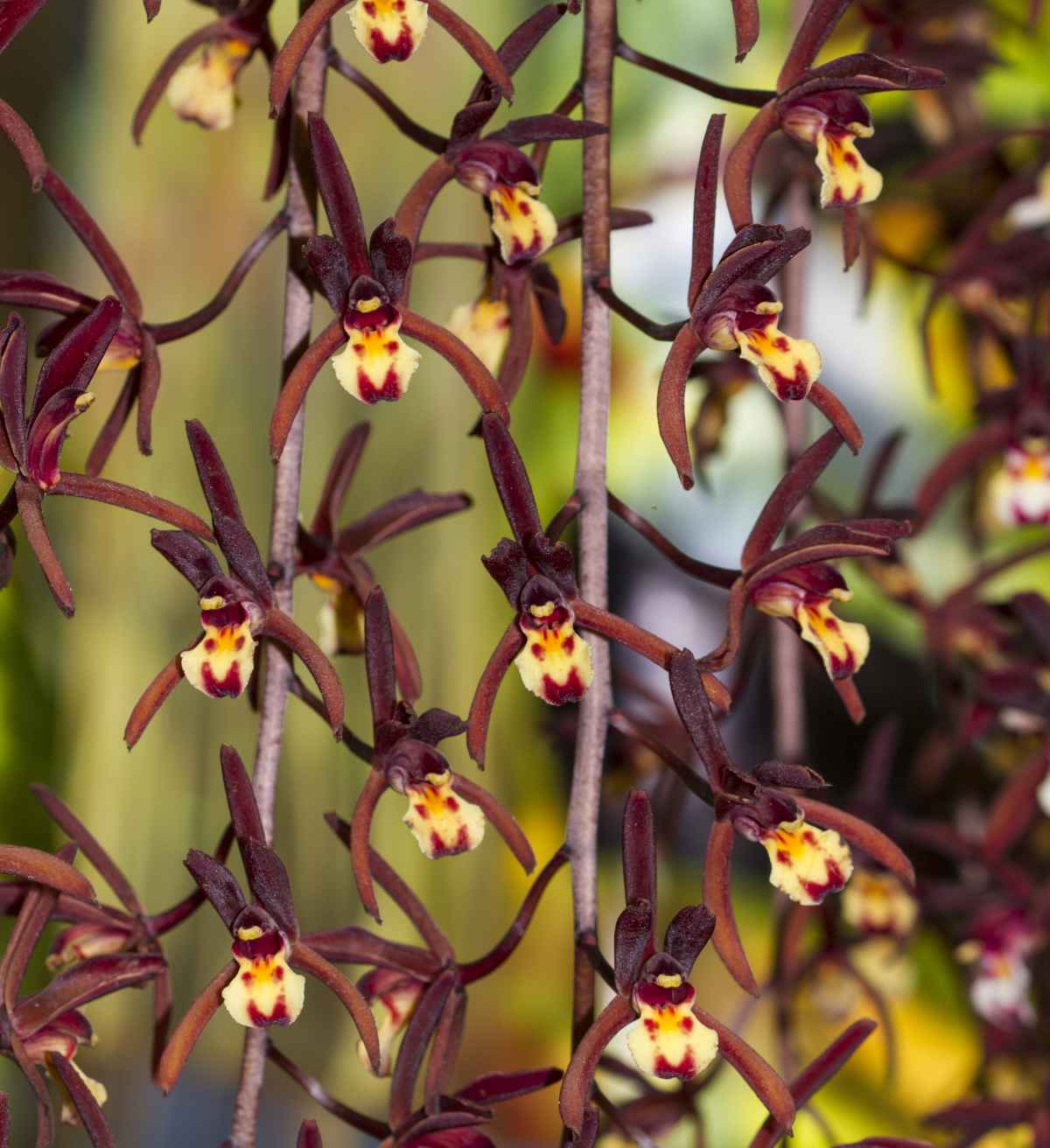
This orchid, Cymbidium atropurpureum has a particularly appealing feature: the blooming lasts a very long time, from the end of summer deep into fall.
Its fascinating flowers are a sharp purple color, clashing with a labellum that’s white with red spots. A sweet fragrance adds even more appeal!
Bolster blooming of this sweet flower with a lot of light, and again a strong drop in temperatures between night and day.
To learn more:
In an ideal environment, Cattleya intermedia ‘Alba’ produces large, very odoriferous white flowers over the course of spring.
Trigger this exceptional flowering with bright light and strong temperature jumps between night (60°F / 15°C) and day (70-75°F / 20-25°F).
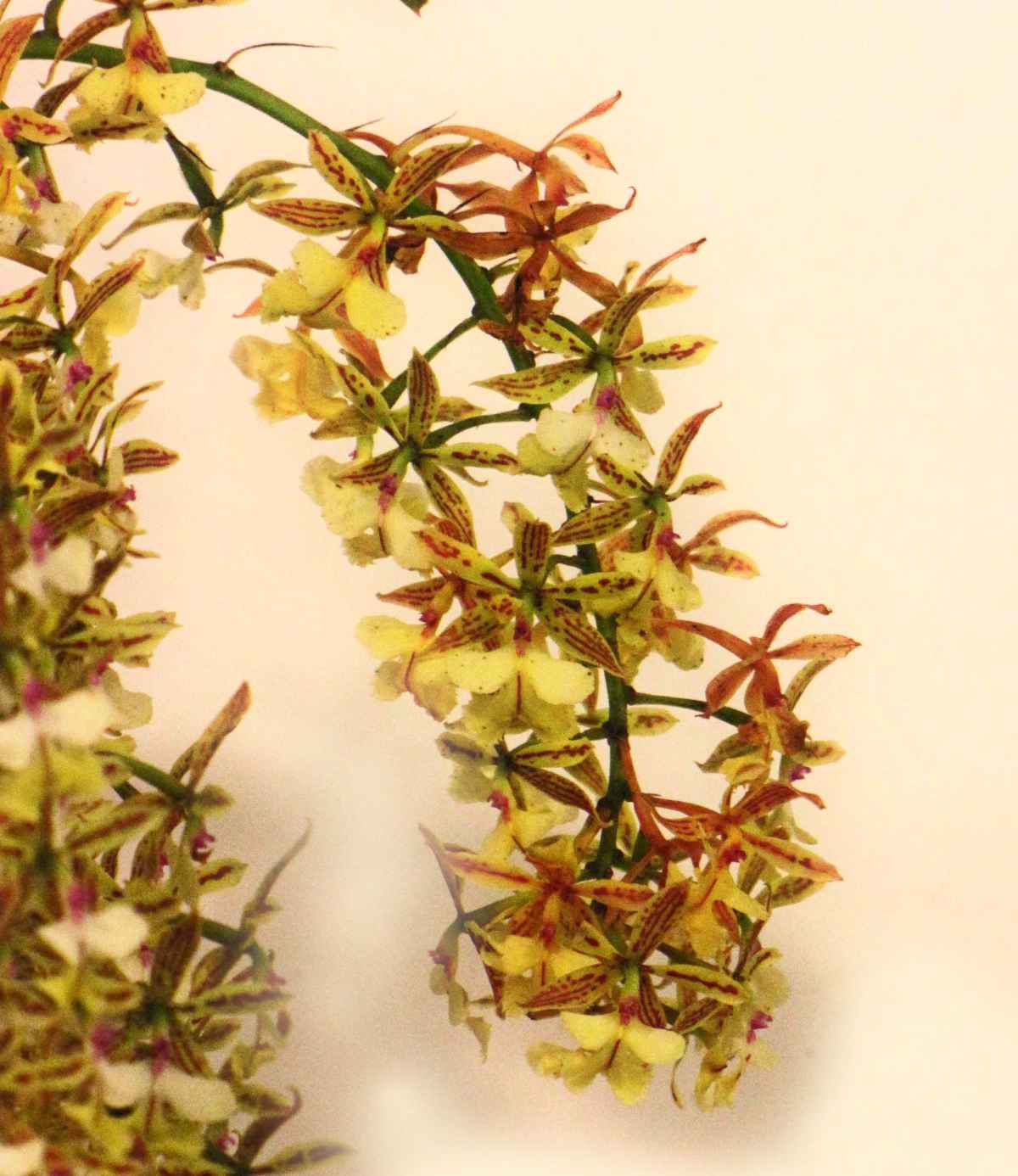
The starry clusters of Epidendrum stamfordianum ‘Galaxy’ also satisfy another sense – smell – with their strong perfume.
They’re of course very ornamental, with a waxy touch and yellow, purple-mottled livery. All in all, it’ll droop down more than 3 feet (1 meter), so hang it accordingly for flowers to be appreciated!
Another defining characteristic is that it’s a part-sun orchid.
It’s also simply called “Epidendrum orchid”.
Acineta superba ‘Monique’ is a resilient orchid that produces hanging clusters of flowers. They’re usually tan with uncountable tiny white spots.
Their surprising scent is similar to that of lush growth in forest underbrush. This orchid also appreciates relatively low temperatures.
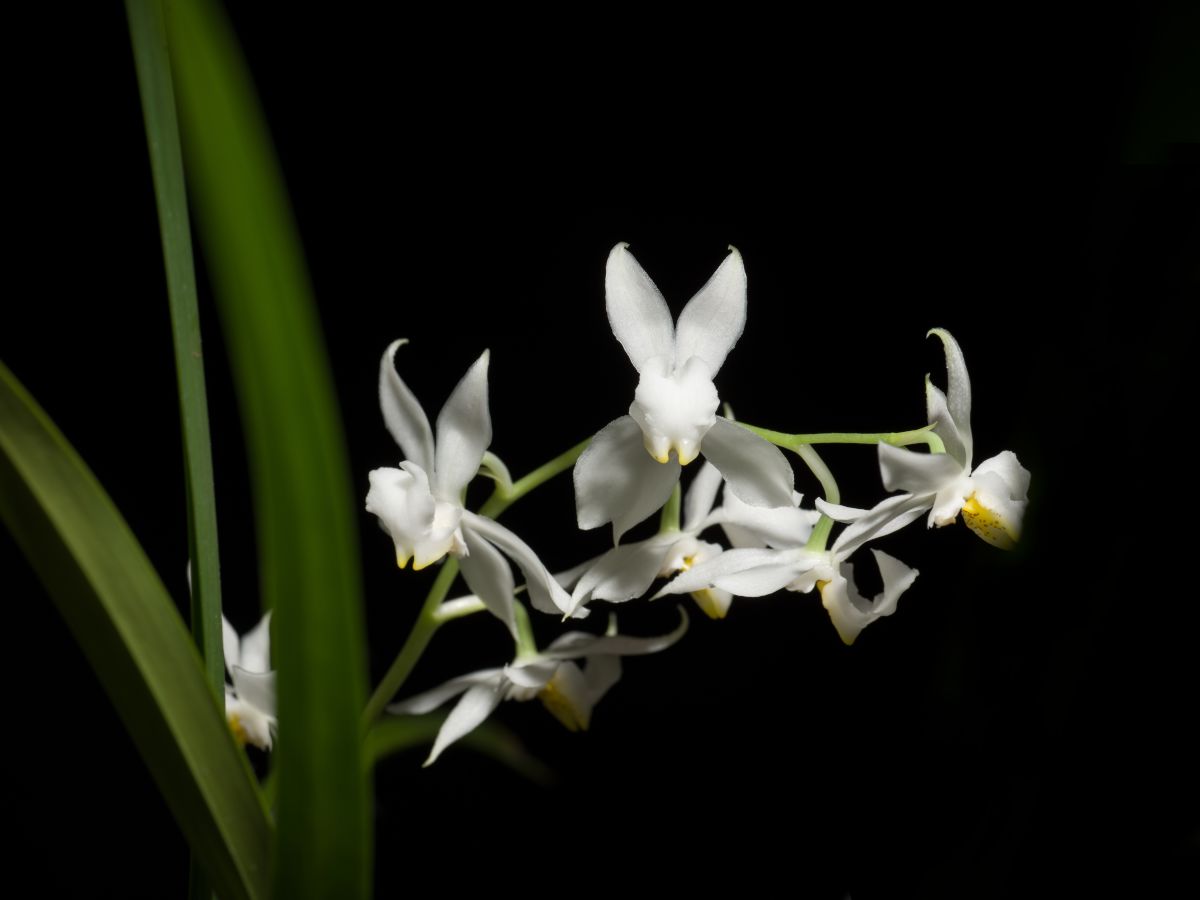
The winter blooming of Osmoglossum pulchellum releases a pleasant smell similar to that of Lily-of-the-Nile.
In a lean-in or in a room without much heating, it produces cute white flowers, staged along 2-foot (50 cm) flower scape.
The tight flower clusters, with white and purple-spotted blooms, of the Rhynchostylis retusa ‘Jairak’ orchid will spread a heady fragrance throughout the house in the springtime.
With its long, hanging flower scape, this orchid is best grown in a hanging pot, and always in full light.
Very rare, Angraecum longicalcar is a vigorous orchid that produces surprising white flowers equipped with a green spur that’s nearly 2 feet long (50-60 cm) long! Surprising flowers indeed, delivering a fresh night-like scent.
Angraecum longicalcar is an orchid that needs a setting that’s both well-lit and warm 68-75°F (20 à 24 °C).
Orchids without pseudobulbs, such as Phalaenopsis and Paphiopedilum, lack that water-storing organ, so their potting medium is generally kept evenly moist rather than allowed to dry out completely between waterings.
Also worth seeking are Oncidium ‘Sharry Baby’ and Oncidium ‘Twinkle’, fine-rooted orchids to repot into a fine-grade bark mix once flowering has finished, and Cymbidium ‘Golden Elf’, from a genus whose blooming is bolstered by plenty of light and a strong night-day temperature drop.
Each of these orchids perfumes in its own way, and each asks for something slightly different in return. Use the table to match a scent to the season and the spot you can offer.
| Orchid | Scent | Flowering time | Key growing condition |
|---|---|---|---|
| Stanhopea wardii | Heady, fabulous | Summer | Hanging basket, 15°F (10°C) night/day swing |
| Phalaenopsis ‘Sweet Memory’ | Released when it gets hot | In warm weather | Warmth; wide, bright green leaves |
| Cymbidium atropurpureum | Sweet | End of summer deep into fall | Plenty of light and a strong drop in night temperatures |
| Cattleya intermedia ‘Alba’ | Very odoriferous | Spring | Bright light, night 60°F / day 70-75°F |
| Epidendrum stamfordianum ‘Galaxy’ | Strong perfume | Starry clusters drooping over 3 feet | Part sun, hung high |
| Acineta superba ‘Monique’ | Forest underbrush | Hanging clusters of tan, white-spotted flowers | Relatively low temperatures |
| Osmoglossum pulchellum | Like Lily-of-the-Nile | Winter | A lean-in or room without much heating |
| Rhynchostylis retusa ‘Jairak’ | Heady, fills the house | Springtime | Hanging pot, always in full light |
| Angraecum longicalcar | Fresh, night-like | White flowers with a 2-foot spur | Well-lit and warm, 68-75°F (20-24°C) |
Most of them share one requirement: strong light and a marked difference between night and day temperatures.
Some orchids of the Bulbophyllum group release an unpleasant smell. Bulbophyllum beccari , for instance, exhales an odor not unlike that of runny old cheese, whereas Bulbophyllum echinolabium smells like horse manure, and Bulbophyllum putridum will make you search around the house for a dead rat.
But these aren’t the only stinkers of the orchid realm! Masdevallia flowers come a close second, if not first… For example, the orchid called Masdevallia colossus also has a stomach-turning smell of rotting flesh, and Masdevallia triangularis reminds of overgrown mold.
To learn more: