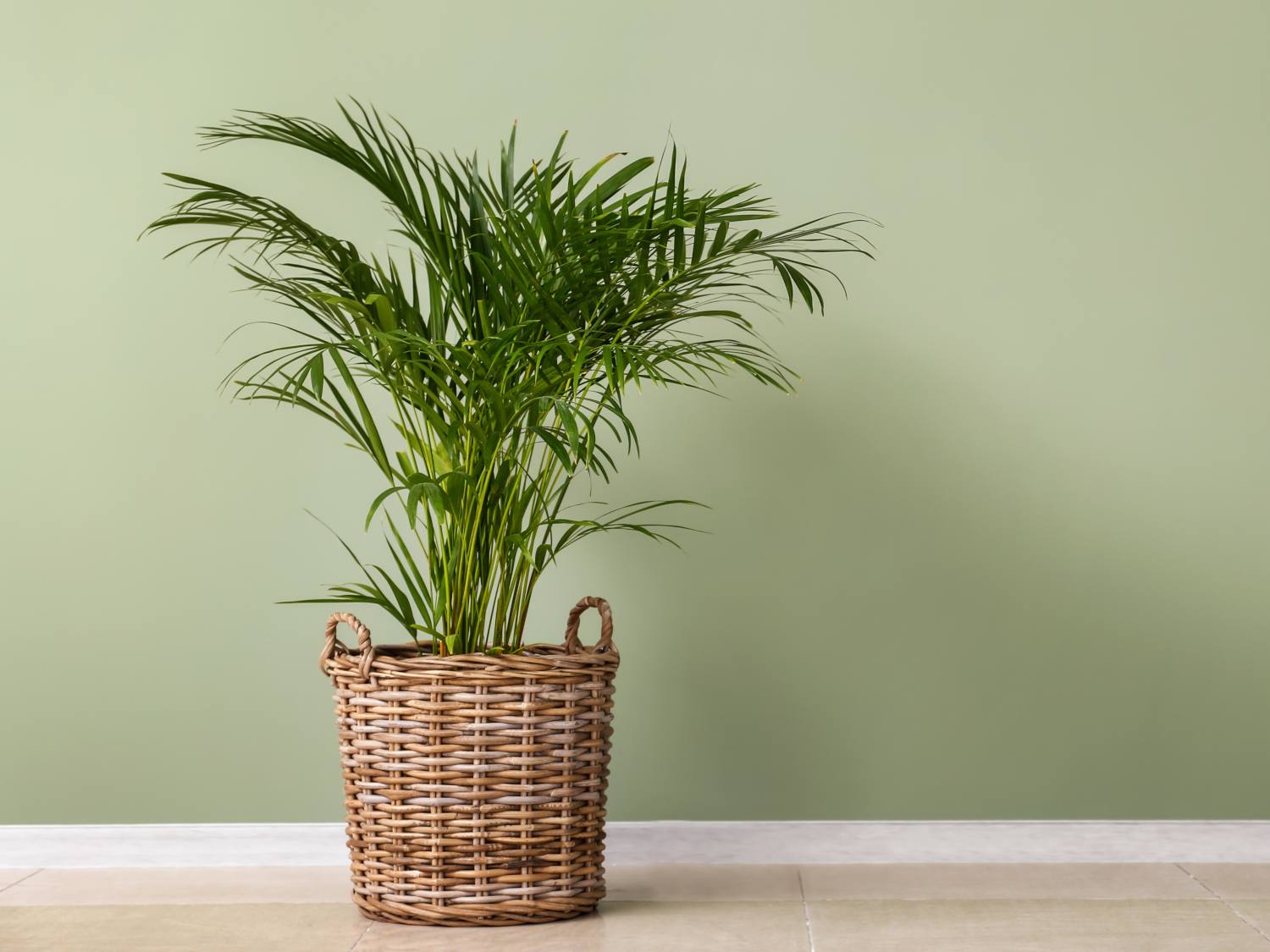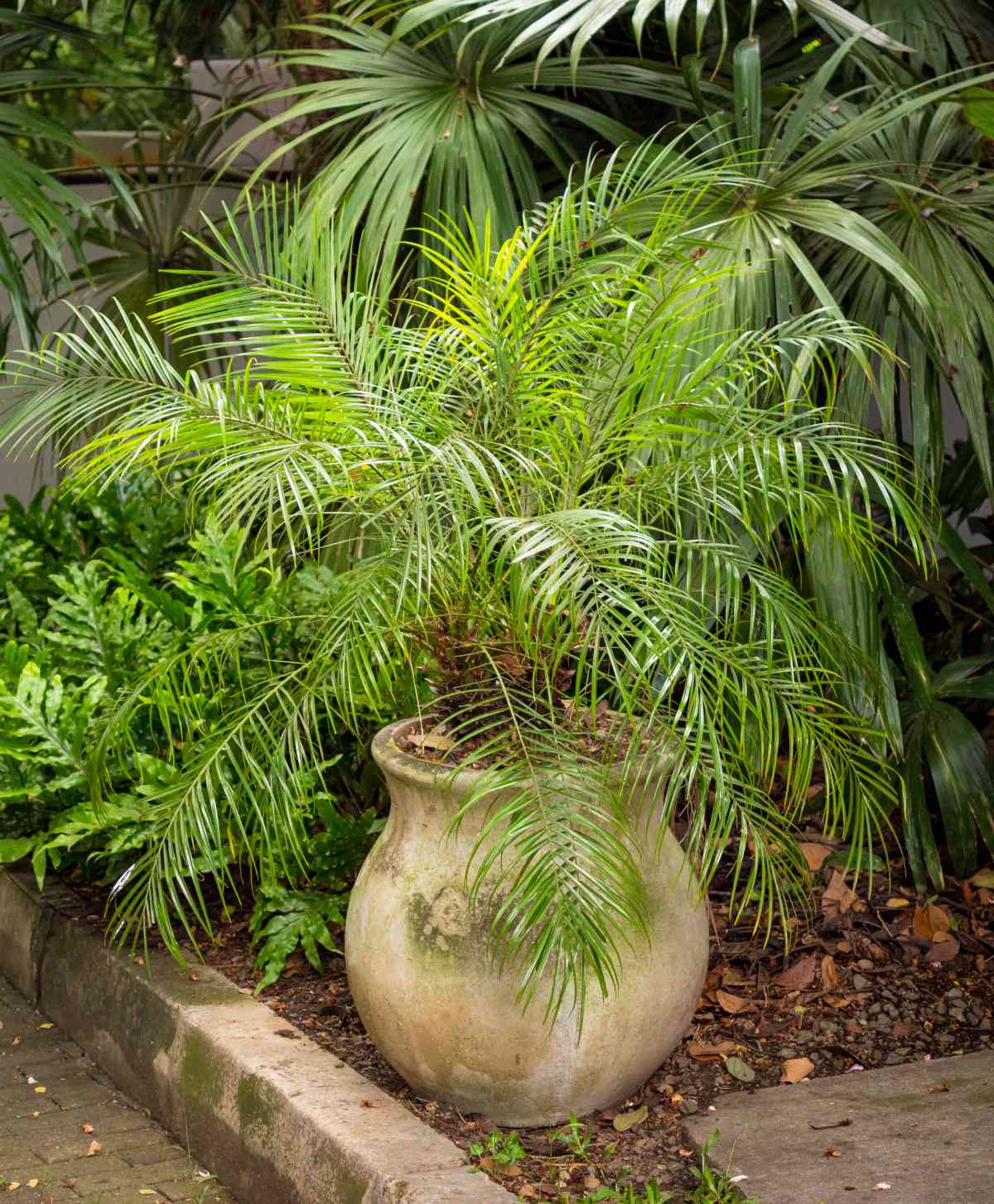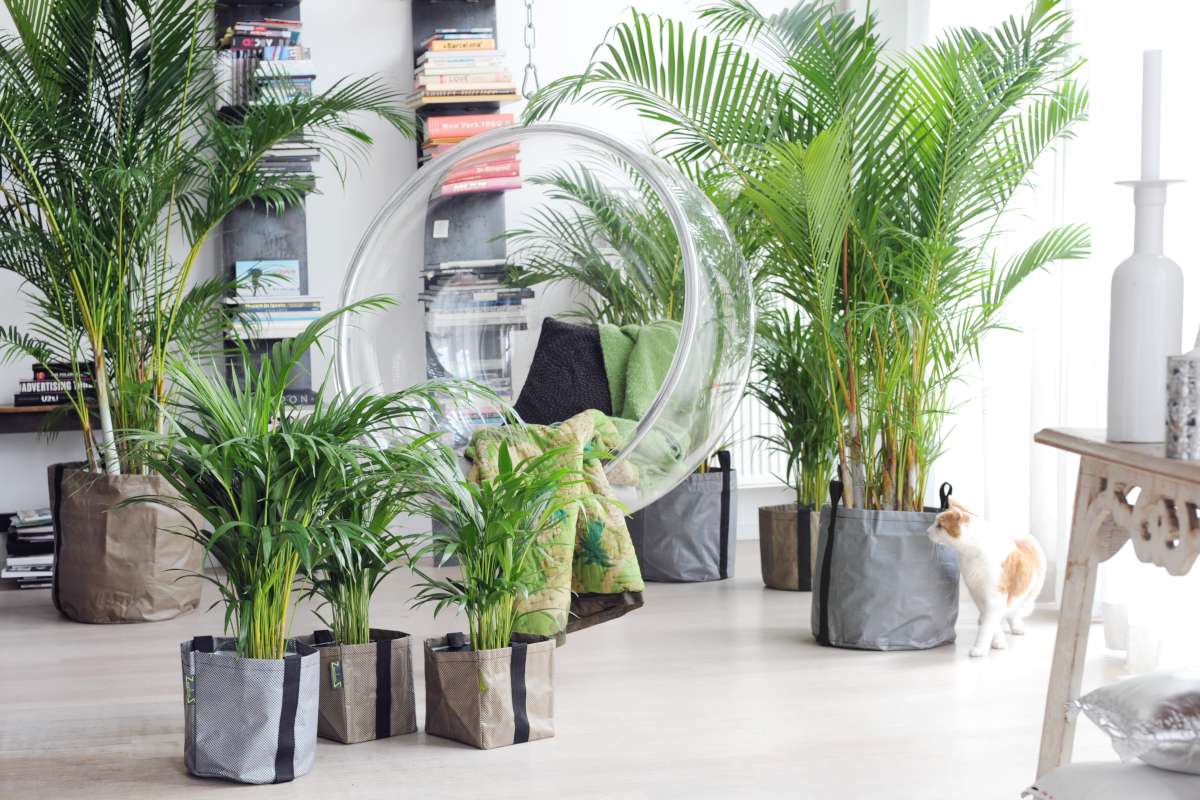
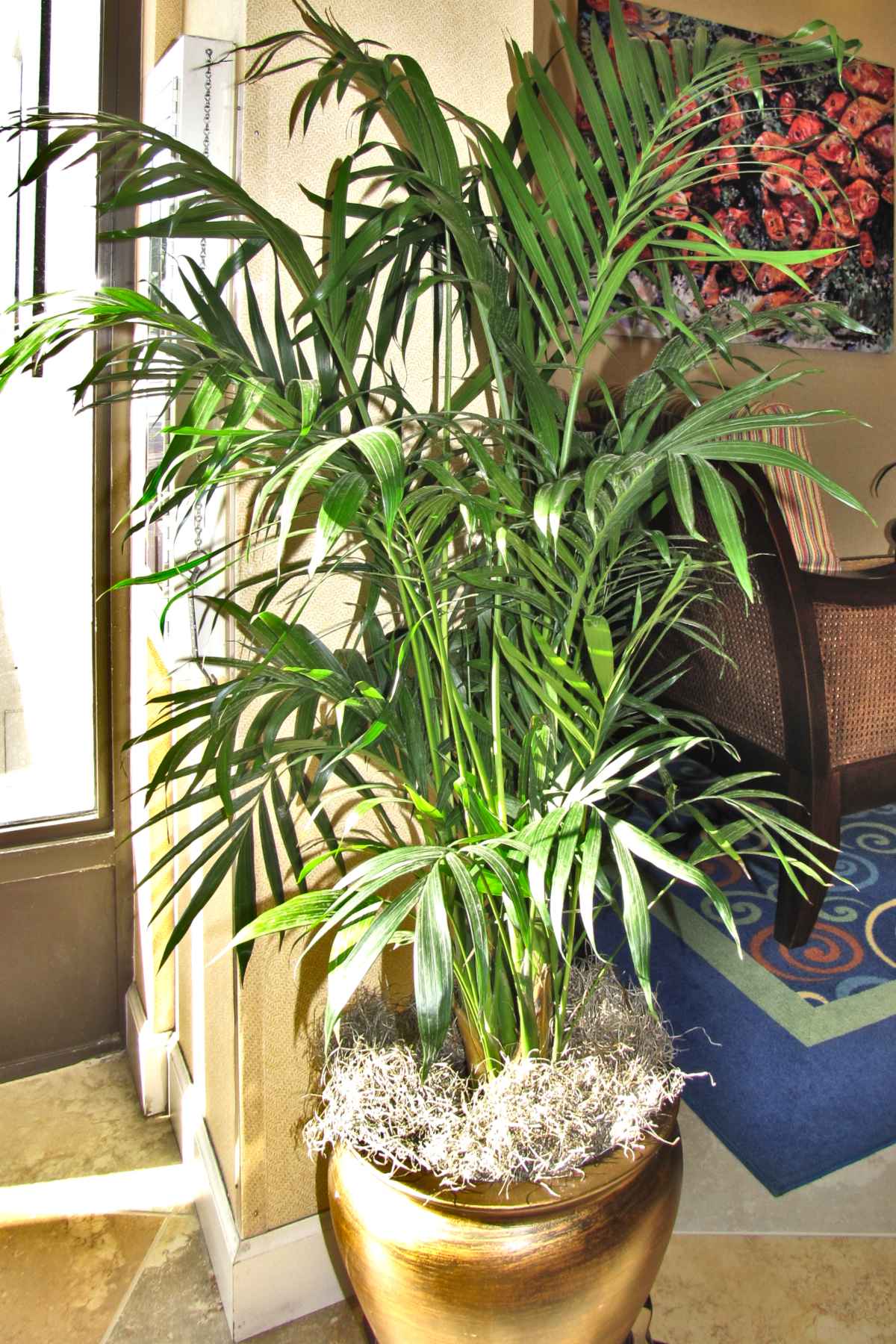
Elegant foliage that brings a touch of exotic life to a living room or dining area: this is the areca palm (Chrysalidocarpus lutescens), among the most appreciated and often-purchased of all indoor plants. Give it very good light, even a little direct sun — a dark room will not do — and it stays resilient and easy to grow.
| Name | Chrysalidocarpus lutescens |
|---|---|
| Family | Arecaceae (also called Palmaceae) |
| Type | palm tree, indoor plant |
| Height | 5 to 8 feet (1.5 to 2.5 m) indoors |
| Exposure | Very well-lit |
| Soil | soil mix |
| Foliage | evergreen |
These are some of the questions to answer when you have the joy of owning a magnificent Chrysalidocarpus.
Here is where we gathered all our advice on caring for Chrysalidocarpus, the areca palm.
Chrysalidocarpus requires good soil mix that can be amended with ⅓ compost, if you’ve got some.
In order to enhance drainage, pour clay pebbles or small stones into the pot to form a layer at the bottom.
This will help ensure that roots won’t wallow in water, which could be fatal to it.
Generally speaking, Chrysalidocarpus doesn’t tolerate the cold and can only be planted outdoors in regions where the climate in winter is mild.
Just as might be done in pots, feel free to place a bed of gravel, small stones or clay pebbles to ensure proper drainage.
Atop this layer, you’ll be using a blend of soil mix, garden soil and sand.
Under our climates, Chrysalidocarpus adapts well to living indoors in our apartments and homes.
It grows best when surrounding temperatures hold around 65 to 72°F (18 to 22°C) and requires very good light, even some direct sunlight.
Best to place it near a window facing to the West so that it would still have a good deal of light.
If you live in a house that is quite dark, avoid purchasing Chrysalidocarpus because it won’t cope well with the lack of luminosity.
Chrysalidocarpus asks for two very different watering rhythms, one for its growing months and one for its resting months. Use this table to see at a glance which one you are in.
| Period | Watering | Feeding | Extra care |
|---|---|---|---|
| Spring and summer | Every 2 or 3 days, letting the surface of the soil mix dry between waterings | Liquid fertiliser roughly every fortnight, on soil moistened beforehand | Main growing season — regular but limited watering so roots don’t suffocate |
| Autumn and winter | 2 or 3 times a month, only once the soil is dry down to the first inch | Stop feeding, from mid-autumn through to early or mid-spring | A plant standing in full sun will need more than this |
| All year round | Mist water on the leaves regularly, whatever the season | — | Especially important in winter, when heating dries the indoor air |
Repotting, when needed, belongs to spring and comes round only every 2 or 3 years.
Anytime during the year, it is important to mist water on the leaves regularly to recreate its natural environment living conditions which are rather moist. This is especially true in winter, because heating tends to reduce indoor air moisture levels.
This is most often the time of the year when Chrysalidocarpus grow most.
Water regularly while letting the soil mix dry in the surface before watering again.
Watering must be regular but limited, in order to not suffocate the plant’s roots.
You might say that watering every 2 or 3 days is often needed.
More or less every two weeks, you can offer it some liquid fertilizer, taking great care to moisten the soil mix beforehand.
Start reducing the watering because Chrysalidocarpus water needs begin to decrease.
Only when the soil is dry down to the first inch or so (a couple centimeters), water to moisten the soil mix again.
Again, one might contend that watering 2 or 3 times a month should be enough.
But this really depends on where your Chrysalidocarpus is placed: if it is in full sun, its needs will surely be higher.
Finally, this season is also the one to stop adding fertilizer, from October all the way to March and April.
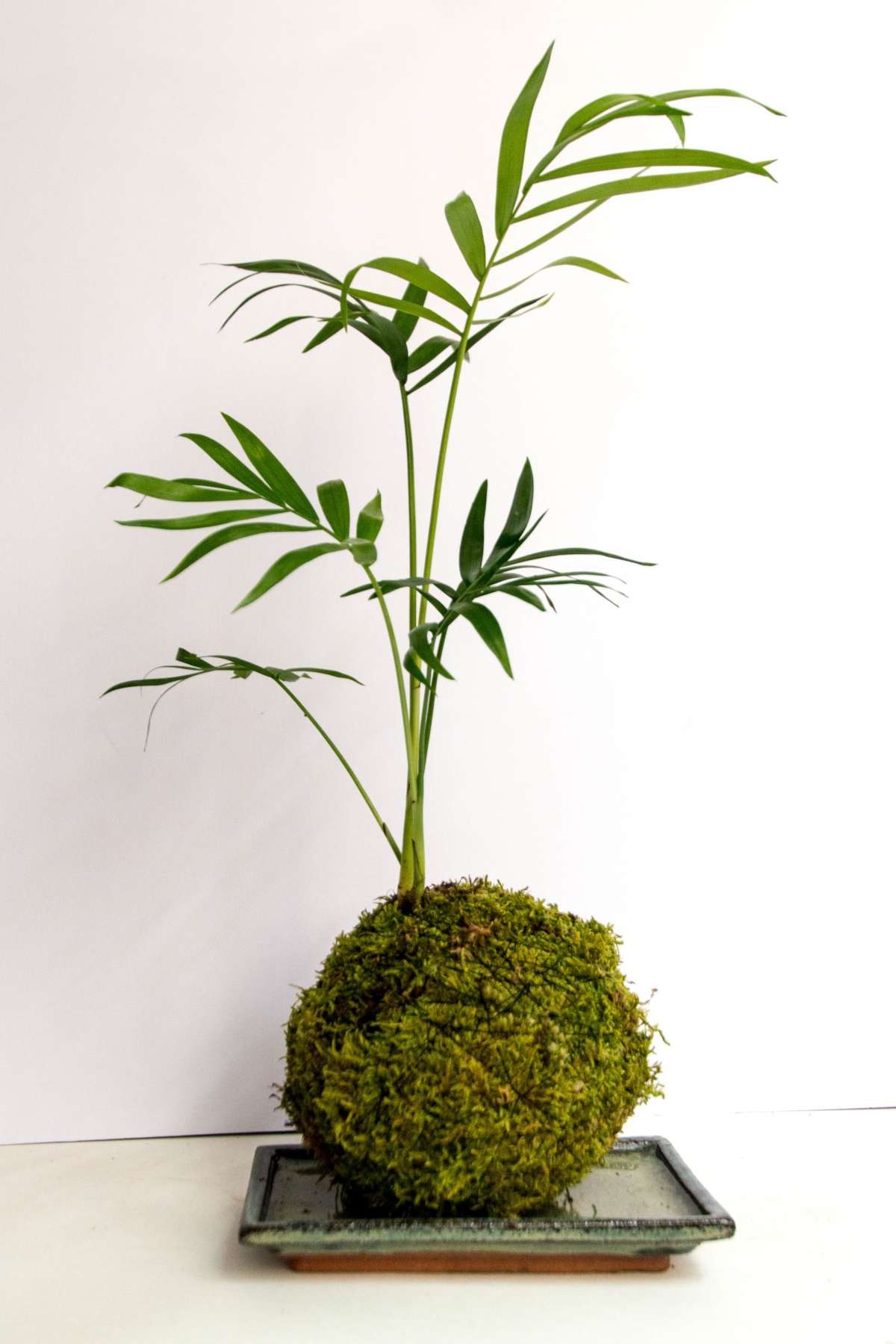
Chrysalidocarpus is a very elegant palm tree that adapts very well to indoor life in an apartment or house.
All in one aesthetic, resilient and very easy to grow, this is one of the most appreciated and often-purchased indoor plants.
Its foliage is quite elegant and brings a touch of exotic life to a living room, dining area, or any other room of the house that is well-lit.
This is undoubtedly due to lack of light or excess water.
If the plant continues to produce new leaves, this is part of its natural cycle. Trees, even evergreen trees, lose their leaves to renew them.
Read also: